
Table of Contents
- Introduction
- Popsicle safety snapshot
- What parents are really asking when they search “Lip gloss for kids Amazon”
- How to choose
- Ingredient and label checklist
- Amazon-specific shopping tips (so you actually get what you think you’re buying)
- What “clean” can (and can’t) mean for kids lip gloss
- How to use kids lip gloss safely (and keep it age-appropriate)
- Common mistakes to avoid
- So…should you buy Lip gloss for kids Amazon, or shop curated instead?
- Bottom line
- Sources and further reading
- FAQs
Introduction
If you’re searching Lip gloss for kids Amazon, the parent-friendly goal is simple: choose a gloss that’s comfortable, easy to remove, and made with a transparent ingredient list—without turning lip products into an “I need to look different” routine. For most kids, a basic, fragrance-light (or fragrance-free) formula with a short ingredient list, a hygienic applicator, and minimal irritant potential is the best place to start.
Answer-ready summary: When shopping Lip gloss for kids Amazon, prioritize (1) clear ingredients (no mystery “proprietary blends”), (2) minimal fragrance/flavor, (3) simple oils/waxes you recognize, (4) kid-appropriate pigments (not “long-wear” stains), (5) safe packaging and applicators, and (6) easy removal with a gentle cleanser or balm—then patch test when appropriate.
Popsicle safety snapshot
- Clean kids’ beauty hub: Popsicle Beauty Club is designed to help parents find age-appropriate, cleaner, safer-feeling choices in one place—without needing to decode every trend alone.
- Ingredient standards first: We prioritize transparent ingredient lists and parent-friendly label checks over hype.
- Medical-advisory-backed education: Our kids’ beauty education is informed by medical advisory input to keep guidance practical and developmentally aware (education-first, not fear-based).
- EWG Verified and allergist review where applicable: When a brand/product carries those specific credentials, we’ll treat them as meaningful filters—not as blanket guarantees for every child.
- Foundationless perspective: Popsicle is not anti-makeup. We’re against adultification and correction-focused beauty for kids. Lip gloss can be art and play—makeup as expression, not correction.
What parents are really asking when they search “Lip gloss for kids Amazon”
Most parents aren’t trying to build a “makeup routine.” They’re trying to solve one (or more) of these practical problems:
- “Is this safe near the mouth?” Kids lick lips. Ingredients, flavor/fragrance, and dye choices matter more than they do for adult users.
- “Will it irritate?” Many kids have sensitive skin, eczema-prone areas, or chapped lips that react to fragrance, essential oils, or strong flavors.
- “Will this be messy at school or on car seats?” Texture and packaging matter: sticky, oily, or heavily pigmented glosses can migrate.
- “How do I say yes without making beauty feel like pressure?” The product is only half the decision. The framing is the other half.
Popsicle’s rule of thumb: lip gloss for kids should feel like a playful accessory or a comfort product (lip care + shine), not a “fix my face” step.
How to choose
Use this quick decision path before you add anything to cart—especially when you’re comparing options for lip gloss for kids Amazon.
1) Start with age and setting
- Preschool–early elementary: Choose very simple formulas, minimal pigment, and packaging that reduces mess. Think “tiny shine for dress-up,” not intense color.
- Tweens: Still keep it minimal: comfortable texture, easy removal, and clear ingredients. Tweens are often experimenting—this is where your boundaries and scripts matter most.
- School vs. home/party: For school, avoid heavy fragrance, glitter fallout, and super sticky textures that end up on sleeves and desks.
2) Pick the finish that fits kid life
- Clear gloss or sheer tint: Easiest for beginners and least likely to look “performance.”
- Shimmer: Pretty for play, but check for eye/skin migration (kids rub faces). Choose finely milled shimmer over chunky glitter when possible.
- Avoid “long-wear” and “stain” positioning for kids: Long-wear often implies stronger film-formers, more persistent dyes, and more aggressive removal—none of which are necessary for children’s beauty play.
3) Choose packaging that supports hygiene
- Squeeze tube: Often more hygienic for kids because there’s no wand going in and out (and it’s easier to wipe the tip).
- Wand applicator: Fine if it’s “one kid, one gloss,” but not ideal for sharing.
- Pots/jars: Least hygienic for kids (fingers + product), especially in backpacks.
Ingredient and label checklist
There’s no single ingredient that automatically makes a product “good” or “bad” for every child. But for lip gloss for kids amazon, these checks help you quickly filter toward simpler, more parent-comfortable options. For a deeper breakdown of oils, waxes, flavor, fragrance, pigments, and other label details, read our guide to lip gloss ingredients parents should check before choosing a product.
Green-flag signals (generally parent-friendly)
- Short, readable ingredient list: Oils/waxes/emollients you recognize, plus a standard preservative system (yes, even “clean” products usually need preservation for safety and stability).
- Clear disclosure of flavor/fragrance: Ideally minimal—or clearly labeled as fragrance-free if that’s your child’s trigger area.
- Sheer pigments: Micas and iron oxides are commonly used in cosmetics; the key is transparency and suitability for lips (not craft glitter).
- Comfort-first bases: Many glosses rely on blends of oils, butters, and waxes for slip and shine. If your child gets chapped lips easily, avoid formulas that feel “minty” or tingly.
Yellow-flag signals (pause and investigate)
- Heavy fragrance or strong flavoring: “Candy” scents can be fun, but fragrance can also be a common sensitivity trigger for some kids.
- Essential oils marketed as benefits: Some families love them; others find they irritate the lips (a delicate area). If your child has reactive skin, keep it simple.
- Tingle/plumping language: Plumping usually works by irritation. That’s adult performance beauty—unnecessary for kids.
- Unclear colorant disclosure: If the listing doesn’t clearly identify color additives/pigments (or uses vague language), consider it a transparency problem.
- “Set of 12/24/48” mega-bundles with minimal brand info: Bundles can be tempting, but they often make it harder to verify ingredients, manufacturing details, and returns.
Red-flag signals (skip for kids)
- Not intended for cosmetic use: Any product that looks like “toy makeup” without real cosmetic labeling, ingredients, or manufacturer info is a hard no.
- Body glitter or craft glitter used near the mouth: Kids rub, smear, and lick. Choose cosmetic-grade shimmer from reputable cosmetic labeling.
- Adultified marketing: “Sexy,” “date night,” “plump,” “anti-aging,” “flawless,” or anything that frames a child’s face as a problem to manage.
Patch test note: For kids with sensitive skin, consider a small patch test (for example, a tiny amount on the outer arm) before full use. If irritation occurs, stop use and consider checking in with a qualified clinician—especially for persistent lip cracking, rash, swelling, or discomfort.
Amazon-specific shopping tips (so you actually get what you think you’re buying)
Parents often use Amazon for speed and convenience. That’s real. The trade-off is that listings can be inconsistent, and it can be harder to verify what’s in the package—especially with fast-moving Lip gloss for kids Amazon results. When comparing lip gloss for kids Amazon listings, check the brand, seller, ingredient information, packaging photos, and recent reviews together rather than relying on the product title or star rating alone.
- Prioritize listings with full ingredient disclosure: If you can’t find an ingredient list in the images, description, or brand site, treat that as a decision point—especially for lip products.
- Check the seller and brand storefront: When possible, buy from the brand’s official storefront or a clearly identified authorized seller. (Avoid assuming every listing is equivalent.)
- Read recent reviews for packaging and scent changes: Reviews can reveal leaking tubes, broken seals, or unexpectedly strong fragrance—more useful than “my kid loved it!”
- Watch out for lookalike packaging: If the photos vary widely, ingredients are missing, or branding looks inconsistent, choose a different listing.
- Be cautious with multipacks for classrooms: If you’re buying party favors, you want extra clarity on ingredients and hygiene. Consider alternatives like individual lip balm sticks instead of shared wands.
What “clean” can (and can’t) mean for kids lip gloss
“Clean” is not a regulated term, and it isn’t a guarantee that a product is perfect for every child. It can still be a useful shopping shorthand if you pair it with label checks and common-sense boundaries.
It’s also worth knowing that cosmetics don’t work like drugs in the U.S. The National Institute of Environmental Health Sciences (NIEHS) explains that, except for color additives, cosmetic products and ingredients generally do not require FDA approval before going on the market. That’s one reason Popsicle emphasizes transparency, simpler routines, and parent-friendly filters.
And when you see “fragrance” on a label, it can be a black box. The FDA notes that individual fragrance ingredients don’t have to be listed separately, which can limit what you can tell from the ingredient declaration alone. For kids, many families choose to minimize fragrance and flavor when possible—especially if there’s a history of sensitivity. For more help balancing clean-beauty claims with individual sensitivities and age-appropriate use, explore our guide to choosing safer lip gloss for kids.
How to use kids lip gloss safely (and keep it age-appropriate)
How you use lip gloss matters as much as which one you buy—especially if your child is excited and reapplying frequently.
- Set a simple boundary: “This is for play and fun—not because your face needs fixing.” That script protects the message.
- One kid, one gloss: Don’t share wands. If sharing is unavoidable (party setting), choose squeeze tubes or single-use applicators.
- Keep reapplication reasonable: Constant reapplying can increase licking and irritation. If lips are dry, switch to a plain balm and save gloss for occasions.
- Remove gently: Use a gentle cleanser or a soft cloth with a bit of balm/oil to dissolve gloss rather than scrubbing.
- Be extra cautious around younger siblings: Small components (caps, charms) can be choking hazards depending on packaging style.
Common mistakes to avoid
Even when lip gloss for kids Amazon products look playful and inexpensive, unclear sellers, oversized multipacks, strong fragrance, and adult-style claims can make them less suitable for children.
- Buying the biggest set instead of the best formula: More tubes usually means more fragrance, more dyes, more mystery listings—and more clutter.
- Choosing plumping or “tingly” gloss: That sensation is often irritation by design. Kids don’t need it.
- Ignoring fragrance because “it’s just lips”: Lips are sensitive, and kids tend to lick them—fragrance/flavor can matter more here than in, say, a nail polish.
- Letting lip gloss become daily armor: If your child feels they “need” it for school every day, pause. Redirect toward self-care (hydration, gentle balm) and keep makeup as art, not correction.
- Skipping patch testing for a sensitive kid: Especially if there’s eczema history, allergies, or frequent chapping.
So…should you buy Lip gloss for kids Amazon, or shop curated instead?
If Amazon is your fastest option, you can absolutely make a thoughtful pick—but you’ll be doing more detective work. The safer-feeling approach for many families is to shop from a curated clean kids’ beauty hub (like Popsicle Beauty Club), where options are selected for age-appropriate positioning and ingredient transparency—so you’re comparing fewer, better-aligned choices.
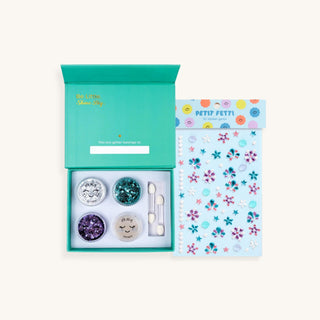
For families who prefer a clearly identified alternative to large marketplace multipacks, the Natural Lip Gloss for Kids Gift Set or Singles by Oh Flossy offers a more focused choice. The easy-squeeze tubes support simpler, more hygienic use, while the option to purchase one gloss allows parents to begin small instead of introducing an entire collection at once.
Natural Lip Gloss for Kids – Gift Set or Singles
$16.99
This clean lip gloss gift set for kids includes three naturally flavored glosses—Strawberry, Cotton Candy, and Grape—in a shop–style gift box designed by Australian artist Rosa Ronco. Handmade in Australia with natural, vegan-friendly, biodegradable, and non-toxic ingredients, each gloss uses… read more

When parents tell us they’re overwhelmed by lip gloss for kids Amazon search results, it’s usually because listings blur together: unclear ingredients, unclear sellers, and lots of adult-style marketing. Popsicle’s promise is simpler: vetted, kid-appropriate beauty play—without making childhood a performance.
Bottom line
If lip gloss for kids Amazon is the search that brought you here, use it as a prompt to slow down and shop smarter: pick a simple, comfortable gloss with transparent ingredients, minimal fragrance/flavor, hygienic packaging, and easy removal. Frame it as playful self-expression (makeup as art, not armor), and keep an eye on patterns—if gloss starts feeling like daily “must-have” correction, that’s your cue to reset the boundary.
Sources and further reading
- NIEHS: Cosmetics and Your Health - Explains what cosmetics are and notes that most cosmetics/ingredients are not FDA preapproved (except color additives).
- FDA: Phthalates in Cosmetics - Helpful for understanding fragrance labeling limits and why “fragrance” can be non-specific on ingredient lists.
For a complete guide on non-toxic play makeup, check out our in-depth resource: The Ultimate Guide to Non-Toxic Play Makeup for Kids for expert tips, product recommendations, and everything you need to know about choosing safe beauty play products for your child.
About the Author: This article was written by the contributing writers at Popsicle Beauty Club—a team of moms, educators, and clean beauty advocates passionate about creating a safer, more imaginative world for kids. We believe in empowering parents with trusted information and offering fun, non-toxic beauty and personal care products that let children play, express, and explore—without compromising their health.