
Table of Contents
- Introduction
- Answer-ready checklist (for parents)
- Popsicle safety snapshot
- How to choose a clean kids makeup set (by age + use case)
- Ingredient and label checklist (what to actually look for)
- Safer-use routine: how to apply, share rules, and remove
- Common mistakes to avoid
- What Popsicle Beauty Club recommends (shopping path)
- Bottom line: the “best” clean kids makeup set is the one that keeps it kid
- Sources and further reading
- FAQs
Introduction
If you’re searching for a clean kids makeup set, the parent-friendly goal is simple: choose a small, clearly labeled kit that supports play and self-expression, removes easily, and doesn’t push kids into adult-style “fix my face” beauty. The best options are usually the most boring on paper: fewer products, shorter ingredient lists, and formats that are easy to control (think lip balm/gloss, simple powders, and washable color for special occasions).
Quick rule: a clean kids makeup set should feel like arts-and-crafts for the face—not a daily routine, not “coverage,” and not a milestone you need to rush. Popsicle Beauty Club is pro-kids having fun with color; we’re against adultification, performance beauty, and correction-focused beauty landing too early.
Answer-ready checklist (for parents)
- Start small: 2–5 items is plenty (lip balm/gloss, a simple shimmer, nail color if you want it, and a brush/applicator you can wash).
- Prefer transparent labels: full ingredient list on the package or brand site; avoid vague mystery marketing.
- Be cautious with “fragrance”: fragrance can be a common irritation trigger, and individual fragrance ingredients aren’t always listed.
- Skip “complexion” messaging: avoid kits that normalize concealing, correcting, or “perfecting” skin for kids.
- Watch glitter around eyes: choose age-appropriate sparkle (and supervise) to reduce migration into eyes.
- Choose easy removal: kid makeup should come off with gentle cleanser; less scrubbing = happier skin barrier.
- Patch test when appropriate: especially for sensitive skin, eczema-prone kiddos, or first-time use.
Popsicle safety snapshot
Popsicle Beauty Club is designed to be the practical clean kids’ beauty hub for parents who want safer, vetted options in one place—without turning childhood into a 10-step routine.
- Curated marketplace: Popsicle carries a curated assortment of kids’ beauty, skincare, hair, nails, fragrance, and wellness so parents can compare options without starting from scratch.
- Ingredient-first lens: Popsicle prioritizes clear labels and cleaner, safer-feeling choices for families—because “clean” marketing isn’t a guarantee.
- Medical-advisory-backed education: our kids’ beauty guidance is shaped with medical-advisory input to keep it practical, calm, and age-aware.
- EWG Verified positioning where applicable: when a product is actually EWG Verified, that can be a useful filter—but we don’t assume it for every product in the category.
- Allergist review process where applicable: for products/brands that have allergist review, we treat that as one data point—not a promise that a product will work for every child.
Foundationless note: Popsicle is not anti-makeup. We’re pro “makeup as art, not armor.” Foundation, concealer, simple skin care, simple moisturizers, and correction-focused products are developmental milestones worth delaying—not routine childhood purchases.
How to choose a clean kids makeup set (by age + use case)
The right clean kids makeup set depends less on trends and more on where it will be used (home play vs. party vs. stage) and how much supervision you can realistically provide.
Ages 3–6: keep it “play at home” simple
- Best formats: tinted lip balm or very simple gloss; nail polish that you’re comfortable removing; occasional washable face paint for costumes (not daily wear).
- Parent goal: minimize eye-area products and glitter; choose items you can apply for them or help them apply.
- Set expectations: makeup is for dress-up, not for being “prettier.”
Ages 7–10: structured “beauty play” with boundaries
- Best formats: lip gloss/balm, a soft shimmer or playful color, maybe a gentle highlighter for costume/party vibes (not “contouring”).
- Hygiene matters more: include a washable brush, and teach “no sharing” at sleepovers.
- Choose sets with fewer duplicates: one gloss is better than five sticky ones that sit open in a backpack.
Tweens/teens: expression-first, skin-comfort-first
- Best formats: lip products, a simple blush or eyeshadow for fun looks, brow gel if they want grooming (not “reshaping” their face), and gentle skincare basics.
- What to delay: anything pitched as coverage, correction, concealing, or “perfecting.”
- If acne is the issue: focus on gentle cleansing, non-stripping hydration, and clinician guidance if it’s persistent or distressing—don’t make complexion makeup the “solution.”
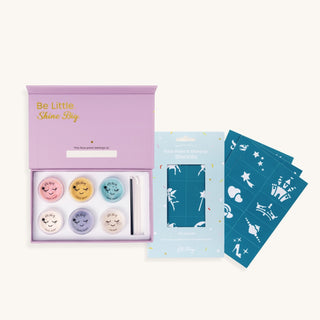
If you’re considering a themed kit (for example, a “mermaid” or “unicorn” set), treat it like any other clean kids makeup set: the theme is fine; the label decides. Before choosing a themed or multi-piece option, use our guide to evaluating a kids play makeup set for product purpose, ingredient transparency, hygiene, supervision, and easy removal.
Ingredient and label checklist (what to actually look for)
Parents often ask for “non-toxic” kids makeup, but the more useful approach is: What’s in it? How is it scented? How close is it going to eyes and lips? How easy is it to remove? For a broader explanation of fragrance, pigments, formula transparency, and age-appropriate product formats, read our guide to clean kids makeup ingredients and labels. Here’s a practical label checklist you can use while shopping.
- Full ingredient list (INCI) visible: If you can’t find a complete list, pause. Transparent labels are a baseline for a clean kids category.
- Fragrance: If you see “fragrance” (or “parfum”), know it’s a common sensitivity issue for some kids. FDA notes that individual fragrance ingredients do not have to be listed separately on cosmetic labels, which can make it harder to know what’s inside the scent mixture.
- Flavor in lip products: “Flavor” can be another umbrella term. If your child is sensitive, consider simpler, less flavored options.
- Glitter + eye area: Loose glitter can migrate. Prefer pressed formulas, minimal fallout, and supervise application. If the product is marketed for very young children, be extra conservative around eyes.
- Colorants and dyes: “Lake” pigments and FD&C colors can be part of cosmetic color systems. If your family avoids certain synthetic dyes in food, you may choose to avoid them in cosmetics too. (This is values-based shopping; not every child reacts.)
- Talc vs. talc-free powders: Some parents prefer talc-free. If you’re unsure, choose creams/balms or talc-free powders. (Don’t assume “talc-free” alone makes something kid-appropriate; application and removal still matter.)
- Preservatives: Water-based products need preservation to reduce microbial growth. “Preservative-free” isn’t automatically better, especially for items kids will open repeatedly.
- Essential oils and botanicals: “Natural” ingredients can still irritate sensitive skin. If your child has eczema or reactive skin, less is often more.
Parent-friendly shortcut: the most comfortable clean kids makeup set is often the one with fewer “extras” (strong scent, intense flavor, big glitter, long-wear claims) and a straightforward ingredient list you can read without decoding.
Safer-use routine: how to apply, share rules, and remove
Even a well-chosen clean kids makeup set can cause issues if it’s used like a toy that lives at the bottom of a backpack. The routine matters.
- Patch test when appropriate: Especially for first-time users, sensitive skin, or new brands. Test a small amount on the inner arm and wait (following the brand’s guidance if provided). If irritation occurs, discontinue and consider clinician advice for persistent reactions.
- Make “clean hands” the first step: Kids touch everything. Hand-washing before makeup reduces the chance of transferring irritants or germs to the face.
- Use separate applicators: If a set includes sponge tips or brushes, wash them. If it doesn’t, consider adding a washable brush.
- No sharing rule: This is a big one at sleepovers and dance. Sharing increases the risk of spreading irritation and eye infections.
- Eyes and lips: supervise closely: Keep products out of the waterline; avoid applying too close to lash roots on younger kids.
- Remove gently, same day: The goal is “comes off without a fight.” A gentle cleanser and lukewarm water should be enough most nights.
When to pause: If your child is itching, burning, developing a rash, or feels stressed about needing makeup to be “okay,” step back. That’s a sign the routine—or the message—needs to be reset.
To make cleanup part of the play routine, the Heart-Shaped Makeup Remover Puff gives children a soft, reusable tool for gently lifting away light makeup with water or a familiar gentle cleanser. Its washable design also makes it easier for parents to keep the removal tool clean between uses.
Heart-Shaped Makeup Remover Puff
$9.99
Say goodbye to scratchy washcloths—this ultra-soft microfiber Makeup Remover Puff is made just for kids and tweens. Gentle on young skin, it makes washing up after beauty play a breeze. A handy hanging tag lets it dry between uses, and… read more

Common mistakes to avoid
- Buying a kit that’s secretly a mini adult routine: If the language is about “perfecting,” “flawless,” “hiding,” or “coverage,” it’s not aligned with age-appropriate beauty play.
- Turning makeup into a daily requirement: Kids don’t need a daily face routine beyond basic hygiene and (when appropriate) sun protection. Keep makeup occasional and fun.
- Over-indexing on “clean” buzzwords: “Clean,” “natural,” and “hypoallergenic” are not universal guarantees. The ingredient list and use pattern matter more.
- Choosing glitter-heavy sets for younger kids: Sparkle can be adorable, but loose glitter near eyes is where many parents wish they’d chosen differently.
- Ignoring shelf life and storage: If it smells “off,” looks separated, or has been open for ages, toss it. Kids’ products get contaminated faster because they’re handled more.
- Letting “foundation culture” sneak in early: Even if a set doesn’t include foundation, kids can absorb the idea that skin needs fixing. Keep the narrative on color, creativity, and care—makeup as art, not armor.
What Popsicle Beauty Club recommends (shopping path)
If you want a practical way to shop without spiraling, here’s the Popsicle approach:
- Decide the purpose: dress-up play, a party, dance stage makeup, or experimenting at home. Buy for the moment—not “stocking up.”
- Pick 1–2 categories max: For many families, a clean kids makeup set that focuses on lips + a single playful color is the sweet spot. A well-planned clean kids makeup set can also include one washable applicator or removal tool, helping children learn that hygiene and gentle cleanup are part of beauty play.
- Choose transparency over hype: prioritize brands with clear ingredient lists and straightforward usage instructions.
- Favor easy removal: “Long-wear” and “all-day” aren’t kid benefits if they require more rubbing to remove.
- Use Popsicle as your filter: Shop products curated by Popsicle Beauty Club so you can compare vetted clean kids’ beauty options in one place—without accidentally importing adult performance beauty into childhood.
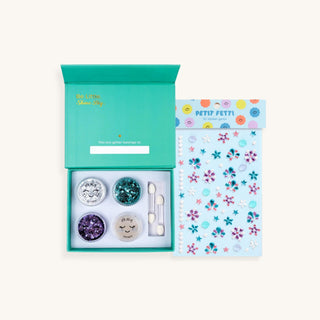
If you’re specifically looking at a themed option like a 9-Piece Mermaid or Unicorn Makeup Set for Kids, use the same rules: check the full ingredient list, watch fragrance, be conservative around eyes, and keep it positioned as occasional play.
Bottom line: the “best” clean kids makeup set is the one that keeps it kid
The right clean kids makeup set should make your child feel creative and in control—without teaching them they need to correct their face. Keep the kit small, the label transparent, the sparkle supervised, and the routine gentle. If you want a simpler way to shop, Popsicle Beauty Club is built to be the clean kids’ beauty hub where parents can find vetted, age-appropriate options and keep beauty in its proper place: expression, not correction.
Sources and further reading
- NIEHS: Cosmetics and Your Health - Explains what counts as cosmetics and notes that most cosmetics/ingredients do not require FDA preapproval (except color additives).
- FDA: Phthalates in Cosmetics - Notes how phthalates may be used and explains label limitations for fragrance/flavor components.
- NIEHS: Endocrine Disruptors - Background on endocrine-disrupting chemicals and possible everyday exposure routes, including some personal care contexts.
For a complete guide on non-toxic play makeup, check out our in-depth resource: The Ultimate Guide to Non-Toxic Play Makeup for Kids for expert tips, product recommendations, and everything you need to know about choosing safe beauty play products for your child.
About the Author: This article was written by the contributing writers at Popsicle Beauty Club—a team of moms, educators, and clean beauty advocates passionate about creating a safer, more imaginative world for kids. We believe in empowering parents with trusted information and offering fun, non-toxic beauty and personal care products that let children play, express, and explore—without compromising their health.