

Table of Contents
- Introduction
- What “safe” means for kids’ lip gloss (and what it doesn’t)
- Label-reading basics: where to look and what to ignore
- Ingredients that are often a good sign in kids lip gloss
- Ingredients to be cautious about (especially for sensitive kids)
- Shopping criteria beyond ingredients: applicators, packaging, and texture
- How to patch test and introduce lip gloss safely
- Kid-friendly routine and use advice (so gloss stays fun, not fussy)
- Bottom line: a quick checklist for safe shopping
- FAQs
Introduction
Gloss is often a “first makeup” moment: fun, low-commitment, and easy to wipe off. But because lip products sit right next to the mouth (and inevitably get tasted), parents naturally want safe lip gloss for kids—not just cute packaging. The good news: you don’t need to panic or memorize a chemistry textbook. You do need a simple system for reading labels, avoiding common irritants, and choosing a formula and applicator that make sense for kids’ sensitive skin and habits.
This guide is designed for beauty shoppers who want practical, non-alarmist criteria. We’ll cover how to scan an ingredient list, what to prioritize (and what to avoid when possible), plus realistic use tips—because safe lip gloss for kids is as much about how it’s used as what’s inside.
What “safe” means for kids’ lip gloss (and what it doesn’t)
When parents search for safe lip gloss for kids, they’re usually looking for a product that is:
- Gentle (less likely to sting, dry, or cause redness)
- Low-mess (so it doesn’t end up all over cheeks, hands, or shared surfaces)
- Age-appropriate (simple, lightly tinted, comfortable—without “plumping” sensations)
- Clearly labeled (ingredients listed, brand contact info, reasonable claims)
“Safe” doesn’t mean “edible” or “risk-free.” Any cosmetic can irritate someone, especially kids with sensitive skin. And even the most gentle gloss shouldn’t be treated like food. Think of safe lip gloss for kids as: thoughtfully formulated, clearly labeled, and used with basic hygiene and supervision.
For a broader comparison of cleaner formulas, parents can also review our guide to clean lip gloss for kids before choosing a first gloss.
Label-reading basics: where to look and what to ignore
Before you evaluate ingredients, make sure you’re looking at the right info:
- Ingredient list (INCI): Usually on the box, a sticker on the tube, or the retailer’s product page. If it’s missing, consider that a reason to skip.
- Fragrance disclosure: “Fragrance,” “Parfum,” or essential oils may be listed. Flavor can also be present (“Aroma” or “Flavor”).
- Warnings and use instructions: Especially around age guidance, choking hazards (small caps), and storage.
- Lot/batch info: Helpful for quality control and if you ever need to contact the brand.
And a few common label pitfalls:
- “Natural” and “clean” are marketing terms, not safety guarantees.
- “Hypoallergenic” isn’t standardized the same way across all regions—still read the ingredient list.
- “Non-toxic” can be vague. For safe lip gloss for kids, ingredients and usage guidance matter more than broad claims.
When in doubt, choose the product with the clearest full ingredient list and the simplest formula.
Ingredients that are often a good sign in kids lip gloss
Most glosses are built from a base (oils/waxes/film formers), texture agents, and optional color/flavor. For safe lip gloss for kids, these ingredient types tend to be compatible with sensitive lips—though individual allergies can still happen.
Comforting bases and emollients
- Petrolatum: Classic occlusive that helps reduce moisture loss. Some parents prefer to avoid it for personal reasons, but it’s widely used for lip comfort.
- Hydrogenated polyisobutene and similar emollients: Common in modern gloss for slip and shine.
- Mineral oil: Another traditional emollient base; often very simple and predictable.
- Plant oils (like jojoba, sunflower, coconut): Can feel nourishing, but remember that “plant-based” doesn’t automatically mean less allergenic.
Waxes and thickeners for structure
- Beeswax, candelilla wax, carnauba wax: Help prevent runny, messy formulas that migrate outside the lip line.
- Castor oil: Very common in lip products for shine and pigment suspension.
Simple, familiar humectants (when present)
- Glycerin: A straightforward hydrator used in many personal-care products.
A practical tip: “Good” ingredients won’t help if the formula is sticky enough to encourage constant licking. For safe lip gloss for kids, aim for a comfortable texture that discourages repeated reapplication and lip licking.
Ingredients to be cautious about (especially for sensitive kids)
Many ingredients are safe for plenty of people, but some are more likely to cause stinging, dryness, or contact irritation—especially on kids’ lips. If your child has eczema-prone skin, frequent chapped lips, or you’ve had reactions in the past, consider avoiding these when possible.
Fragrance, flavor, and essential oils
- Fragrance/Parfum and strong flavor blends can be irritating on the lip area.
- Essential oils (peppermint, citrus, cinnamon, clove, etc.) can be sensitizing for some kids, even if they smell “natural.”
- “Tingly” additives: Anything marketed as cooling, plumping, or tingling can be uncomfortable for kids and may prompt rubbing or licking.
Potential irritants and “active” vibes
- Menthol, camphor, or strong cooling agents: Not ideal for a first gloss experience.
- Acid-based exfoliating claims (if you see them in lip products): Kids generally don’t need exfoliating “treatments” on lips.
Glitter and shimmer considerations
- Large glitter particles can feel scratchy and may migrate. If you choose shimmer, look for fine, smooth pearl rather than chunky glitter.
None of this means a product is “bad”—it’s about increasing your odds of finding safe lip gloss for kids that feels comfortable and doesn’t trigger a cycle of irritation and wiping.
Shopping criteria beyond ingredients: applicators, packaging, and texture
The safest formula can still be a headache if the packaging invites germs, spills, or sharing. Consider these criteria when shopping for safe lip gloss for kids:
- Applicator hygiene: Squeeze tubes or click-up balms reduce back-and-forth contamination compared to doe-foot wands—especially if kids share.
- Cap security: A tight, clicky cap helps prevent leaks in backpacks and reduces accidental access for younger siblings.
- Less-mess texture: Very runny gloss migrates outside the lip line. A slightly thicker, gel-oil or balm-gloss hybrid is often more kid-friendly.
- Sheer color payoff: A light tint is easier to apply evenly without looking patchy. It’s also easier to reapply without a mirror.
- No “plumping” positioning: Skip products that advertise plumping/tingling; comfort is the priority.
If your child is in the “apply it everywhere” stage, you can also choose a clearer gloss or a very soft tint so mistakes aren’t obvious.
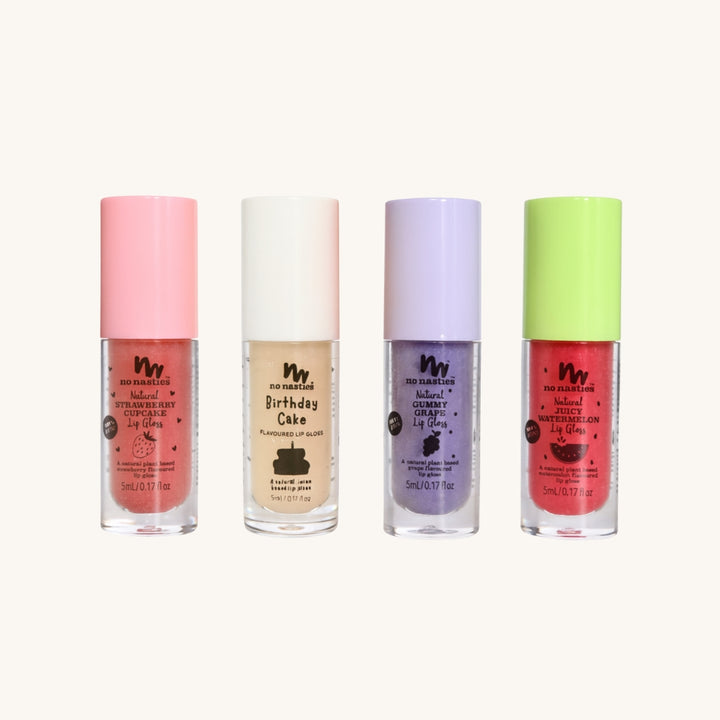
If you are in the market for an all-natural lip gloss, we highly recommend this product by No Nasties. A yummy, all-natural treat for little lips, this natural flavor lip gloss for kids adds a whisper of color while keeping lips soft and nourished with sunflower, olive, coconut, and jojoba oils.
Formulated for even the most sensitive skin, it’s nut-free, gluten-free, dairy-free, and made without wheat derivatives or almond oil—making it our most allergy-friendly lip gloss yet.
Natural Flavor Lip Gloss for Kids
$7.99
A yummy, all-natural treat for little lips, this natural flavor lip gloss for kids adds a whisper of color while keeping lips soft and nourished with sunflower, olive, coconut, and jojoba oils. Formulated for even the most sensitive skin, it’s… read more
How to patch test and introduce lip gloss safely
Even when you’ve found what looks like safe lip gloss for kids, do a simple patch test—especially for fragrance, flavor, and botanical-heavy formulas.
Simple patch test steps
- Start small: Apply a tiny amount to the inner forearm or behind the ear (a common spot for observing sensitivity).
- Wait and watch: Check the area over the next day for redness, bumps, or itchiness.
- Try a controlled lip test: If the skin test looks fine, apply a thin layer on the lips at home (not right before school or a party), so you can monitor comfort.
- Stop if it stings: If your child reports burning, tingling, or tightness, remove it with a gentle cleanser or a bit of plain balm/oil on a tissue, then discontinue.
If your child has known allergies or persistent lip irritation, it’s reasonable to choose the simplest, fragrance-free option and keep new-product testing slow and supervised.
Kid-friendly routine and use advice (so gloss stays fun, not fussy)
How your child uses gloss can determine whether it stays comfortable. These practical habits support safe lip gloss for kids in real life:
- Start with clean lips: A quick rinse and dry helps gloss wear more evenly.
- Use a tiny amount: One thin layer reduces migration and the urge to lick.
- Set “no sharing” rules: Lip products are personal items. Sharing spreads germs easily.
- Keep it out of heat: Don’t store in a hot car or direct sun; texture can change and caps can leak.
- Remove at bedtime: Wipe off with a soft cloth; follow with a plain, comfortable lip balm if needed.
- Replace if it smells off or changes: If the odor, texture, or color shifts noticeably, toss it.
For school-age kids, consider a “home-only” gloss at first to build good habits. Once application is neat and they understand not to share, a backpack-friendly tube can make sense.
Bottom line: a quick checklist for safe shopping
Choosing safe lip gloss for kids comes down to three things: simple formulas, low-irritant choices, and hygienic packaging. Use this checklist when you’re comparing options:
- Ingredient list is available and easy to read (avoid products with missing INCI info)
- Prefer fragrance-free or very lightly scented; be cautious with essential oils and strong flavors
- Avoid plumping/tingling/cooling claims for kids
- Choose smoother shimmer over chunky glitter to reduce scratchiness
- Pick a less-mess format (squeeze tube or balm-gloss) and a secure cap
- Patch test before regular wear, and discontinue if stinging or irritation shows up
With those basics, you can confidently shop for safe lip gloss for kids that feels comfortable, looks cute, and stays a fun part of play—without turning into a daily irritation mystery.
Curious about which harmful ingredients to avoid in your child's beauty products? Read The Truth About Harmful Beauty Ingredients for Kids to uncover the hidden toxins in mainstream makeup, skincare, and hair care—and discover safer alternatives.
About the Author: This article was written by the contributing writers at Popsicle Beauty Club—a team of moms, educators, and clean beauty advocates passionate about creating a safer, more imaginative world for kids. We believe in empowering parents with trusted information and offering fun, non-toxic beauty and personal care products that let children play, express, and explore—without compromising their health.