


Table of Contents
- Introduction
- Why choosing lip gloss for 8 year olds is different (and what “safe” really means)
- A parent-friendly label-reading checklist: what to prioritize
- Ingredients parents often choose to avoid (and why)
- Allergens, irritants, and fragrance: how to shop if your child is sensitive
- Shade, texture, and packaging: practical features that make kid use easier
- How to use lip gloss for 8 year olds in a low-mess routine (plus patch testing)
- Bottom line: the simplest way to choose lip gloss for 8 year olds with confidence
- FAQs
Introduction
Shopping for lip gloss for 8 year olds can feel oddly high-stakes: it’s a “tiny” product, but it sits on the mouth (hello, accidental licking), gets shared at school, and can turn into a sticky mess if the formula or packaging isn’t kid-friendly. The good news is you don’t need to be a cosmetic chemist to make a smart choice. You just need a simple way to read the label, a short list of ingredients you may want to approach carefully, and a realistic routine for how an 8-year-old will actually use it.
This guide is written for parents and gift-givers who want practical, non-alarmist shopping criteria for lip gloss for 8 year olds—with the emphasis on checking labels, choosing simple formulas when possible, and patch testing when appropriate.
Why choosing lip gloss for 8 year olds is different (and what “safe” really means)
Kids’ lip products live in a unique zone: they’re used on a sensitive area, often applied without a mirror, and may be reapplied more frequently than an adult would. That doesn’t mean you need to fear every ingredient. It means you should aim for predictable, well-labeled formulas and packaging that reduces contamination and over-application.
When parents ask if a product is “safe,” what they usually mean is:
- Low irritation potential (especially if a child has dry lips, eczema-prone skin, or seasonal allergies).
- Clear labeling so you can avoid known triggers (like specific fragrance allergens).
- Reasonable wear without constant reapplication.
- Hygienic use (minimizing germ sharing and keeping the product clean).
If you’re also comparing lip gloss for 7 year olds or lip gloss for 9 year olds, the same principles apply—though older kids may handle a wand applicator more cleanly, and younger kids may do better with a squeeze tube you can supervise. If you're deciding between gloss and balm for a younger child, our kids lip balm guide explains what parents should look for in a gentle everyday lip-care option before moving on to glosses.
A parent-friendly label-reading checklist: what to prioritize
When evaluating lip gloss for 8 year olds, start with what you can confirm quickly on the packaging or product page. If the brand doesn’t disclose an ingredient list, consider that a reason to keep shopping—especially if your child is sensitive.
What to look for first
- Full ingredient list (INCI): This is the backbone of informed shopping. Marketing terms like “clean” or “natural” don’t replace it.
- Simple base ingredients: Many kid-friendly glosses rely on common emollients/occlusives (oils, waxes, butters, petroleum-derived emollients) plus flavor/fragrance and color. Fewer “extras” can mean fewer potential triggers.
- Clear shade description: For lip gloss for 8 year old girls (and any kid who wants color), look for “sheer,” “tinted,” or “wash of color” if you want minimal pigment and easy application.
- Packaging that supports hygiene: A squeeze tube or click-pen can be easier to keep clean than a doe-foot wand that touches lips and goes back into the tube repeatedly—especially if a product gets shared.
Quick “green flags” for everyday use
- Sheer shine rather than intense pigment (less staining, easier to wipe).
- Non-gritty feel (chunky glitter can feel scratchy on sensitive lips).
- Comfortable texture (not overly sticky, not overly runny).
Ingredients parents often choose to avoid (and why)
Different families have different comfort levels. The goal here isn’t to label ingredients as “bad,” but to highlight what parents commonly screen out when shopping for lip gloss for 8 year olds, especially if there’s a history of irritation or if you want the simplest possible formula.
- Strong fragrance and heavy flavoring: “Fragrance/Parfum” and flavor blends can smell fun but are common sources of sensitivity around the mouth. If your child has ever reacted to scented lotions or soaps, consider fragrance-free or lightly scented options.
- Minty or “plumping” sensations: Ingredients that create a cooling/tingling feel (often used in plumping products) can be uncomfortable and may irritate some kids’ lips. For lip gloss for kids, many parents prefer “no tingle” formulas.
- Essential oils: Some families avoid essential oils (like peppermint, citrus, cinnamon) on lips due to potential irritation. “Natural” doesn’t automatically mean gentler.
- Exfoliating particles: Sugar-scrub-style glosses or gritty textures can over-exfoliate if a child rubs lips together repeatedly.
If you’re buying a set marketed as kids lip gloss, be extra attentive to scented assortments. A bundle can look convenient, but it can also include multiple fragrance profiles—making it harder to pinpoint what caused irritation if one shade bothers them.
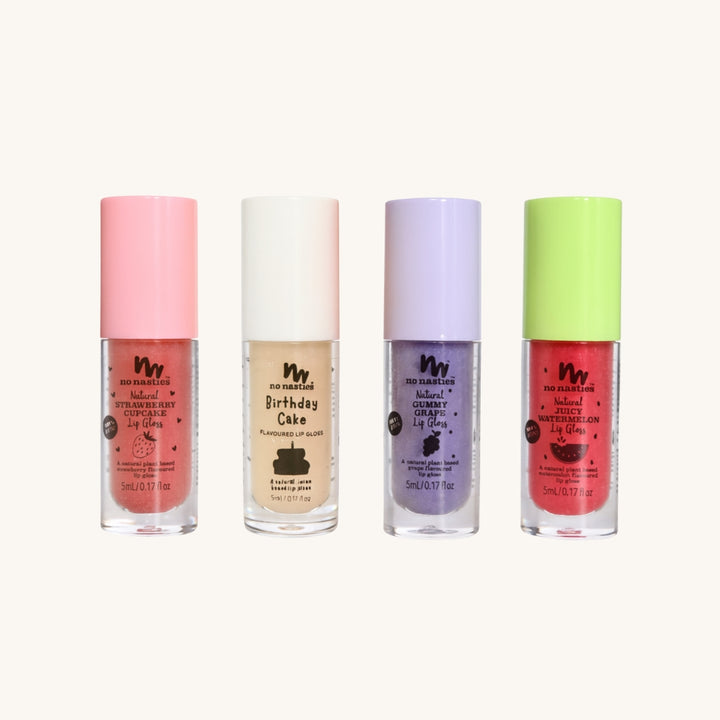
If you are in the market for an all-natural lip gloss, we highly recommend this product by No Nasties.
Natural Flavor Lip Gloss for Kids
$7.99
A yummy, all-natural treat for little lips, this natural flavor lip gloss for kids adds a whisper of color while keeping lips soft and nourished with sunflower, olive, coconut, and jojoba oils. Formulated for even the most sensitive skin, it’s… read more
Allergens, irritants, and fragrance: how to shop if your child is sensitive
Lip skin is thin and reactive for many people. If dryness, chapping, or perioral irritation is already an issue, focus on comfort-first formulas. For sensitive kids, lip gloss for 8 year olds often works best when it behaves more like a protective balm-gloss hybrid: smooth, cushioning, and uncomplicated.
Common sensitivity triggers to consider
- Fragrance allergens: Even if a product smells “light,” it can still contain fragrance components that bother sensitive users. Look for fragrance-free if you’re unsure.
- Lanolin: A popular lip-conditioning ingredient that some people love, but others prefer to avoid due to sensitivity. If you know your child reacts to wool/lanolin-containing products, choose lanolin-free.
- Nut-derived oils: Some glosses contain almond, coconut, or other plant oils. Many kids use these without issue, but if you manage food allergies, read labels closely and follow your family’s comfort level.
- Colorants and lake dyes: Most are commonly used in cosmetics, but if your child has reacted to certain tinted products before, try a clear gloss first.
Practical tip: if your child has a known history of reactions, consider starting with one clear, minimally scented option before buying a multi-pack. It’s the easiest way to assess tolerance.
Shade, texture, and packaging: practical features that make kid use easier
Parents often focus on ingredients (as they should), but everyday usability is what determines whether the gloss stays fun or becomes a sticky problem. When shopping for lip gloss for 8 year olds, these details matter.
Texture and finish
- Less sticky: Very tacky glosses can migrate outside the lip line and attract hair, dust, and lint.
- Sheer tint: A sheer pink or clear shimmer is forgiving if applied quickly. Highly pigmented gloss can look uneven and may stain clothing when wiped.
- Skip gritty glitter for everyday: Fine shimmer is usually more comfortable than chunky sparkle. If your child loves glitter, reserve it for supervised “dress-up” moments.
Packaging that parents tend to like
- Squeeze tube: Easy to control a pea-sized amount, less likely to be shared lip-to-lip (if you teach kids to dispense onto a clean finger).
- Twist-up balm-gloss stick: Great for car rides and backpacks; less mess than wands.
- Wand applicator: Can be neat for older kids, but it’s easier for germs to transfer if kids share products. If you choose a wand, consider setting a “no sharing” rule.
For families shopping across ages—say lip gloss for 7 year olds and lip gloss for 9 year olds—it can help to pick the same formula in different shades, so everyone follows the same routine and rules.
How to use lip gloss for 8 year olds in a low-mess routine (plus patch testing)
Even the best formula can cause problems if it’s layered endlessly or applied over irritated skin. A simple routine keeps lip gloss for 8 year olds fun and comfortable.
Realistic, kid-proof application steps
- Start with clean lips: Wipe with a soft, damp cloth if there’s food residue. (This also helps the gloss sit evenly.)
- Use a tiny amount: For most squeeze tubes, a rice-grain to pea-size is enough.
- Keep it on the lips: Teach “dot-dab-smile”—one dot on the lower lip, then press lips together lightly.
- Cap it immediately: This prevents leaks in backpacks and helps the product stay fresh.
- Set sharing boundaries: Ideally, no sharing lip products. If sharing happens anyway, opt for packaging that can dispense onto a clean fingertip rather than direct lip contact.
Patch testing, without making it scary
If your child is prone to sensitivity, it’s reasonable to patch test a new lip product. You can do a small dab on the inner arm or just at the edge of the jawline (away from the lips), then wait to see if irritation shows up before using it on the mouth. If any discomfort or visible irritation appears, stop using the product and choose a simpler, fragrance-free option. When in doubt, checking in with a qualified healthcare professional is always appropriate.
Also: if lips are already cracked or very irritated, pause the gloss and focus on a plain, protective lip balm until things calm down. Gloss on compromised skin can sting even if the ingredients are generally well tolerated.
Bottom line: the simplest way to choose lip gloss for 8 year olds with confidence
The most dependable strategy for buying lip gloss for 8 year olds is to choose a comfortable, sheer formula with a full ingredient list, minimal fragrance/flavor, and packaging that supports hygienic use. Read labels, avoid known triggers for your child, and consider patch testing—especially with scented or highly flavored lip gloss for kids. With those basics in place, lip gloss for 8 year olds can be a fun, age-appropriate step into beauty without turning into an everyday hassle.
Curious about which harmful ingredients to avoid in your child's beauty products? Read The Truth About Harmful Beauty Ingredients for Kids to uncover the hidden toxins in mainstream makeup, skincare, and hair care—and discover safer alternatives.
About the Author: This article was written by the contributing writers at Popsicle Beauty Club—a team of moms, educators, and clean beauty advocates passionate about creating a safer, more imaginative world for kids. We believe in empowering parents with trusted information and offering fun, non-toxic beauty and personal care products that let children play, express, and explore—without compromising their health.