


Table of Contents
- Introduction
- What “non toxic” means (and doesn’t) for kids lip products
- Ingredient label checklist: what to look for in a kid-friendly formula
- Ingredients parents may want to question (not panic about)
- Fragrance, flavor, and “natural” claims: where irritation often starts
- Packaging and applicators that keep things cleaner (and safer in real life)
- How to patch test kids lip gloss non toxic options (and when to skip)
- Realistic use advice: making gloss safer and more comfortable
- Shopping checklist + bottom line
- FAQs
Introduction
Searching for kids lip gloss non toxic options can feel surprisingly confusing: packaging is cute, claims are loud, and ingredient lists are tiny. The goal for most families isn’t “perfectly risk-free” (nothing is), but lower-exposure, lower-irritation products that are made and labeled responsibly—and that are practical for everyday use.
Below is a parent-friendly guide to what to scan for on the label, which ingredients and features tend to be better tolerated, and where “non-toxic” marketing can be fuzzy. You’ll also find realistic routine tips (because kids often reapply a lot) and when it makes sense to patch test.
What “non toxic” means (and doesn’t) for kids lip products
The phrase kids lip gloss non toxic is popular because parents want reassurance. But in beauty, “non-toxic” is not a single regulated standard. Brands may use it to mean any of the following:
- No intentionally added ingredients from their “no list” (for example, certain parabens or phthalates).
- Made without specific fragrances, dyes, or allergens.
- Formulated to meet certain regional cosmetic rules (which can vary by market).
- Tested for particular contaminants (sometimes, but not always stated clearly).
So instead of relying on the phrase alone, treat kids lip gloss non toxic as a prompt to check labels and choose a formula that fits your child’s sensitivity level and habits (licking lips, sharing, frequent reapplication). Also look for clear brand transparency: a complete ingredient list, a customer service contact, and straightforward usage directions.
For a broader label-reading foundation, our guide to clean beauty for kids explains how parents can evaluate ingredient claims without relying only on front-of-package marketing.
Ingredient label checklist: what to look for in a kid-friendly formula
When you’re comparing a few “non toxic lip gloss for kids” picks, a quick scan of the ingredient list can tell you a lot about how the gloss is likely to feel and wear. These are common components in well-tolerated lip products:
1) Simple emollients and occlusives (the “base” of the gloss)
- Plant oils (like castor oil, coconut oil, sunflower seed oil): help with slip and shine.
- Waxes (like beeswax, candelilla wax): add structure and reduce dripping.
- Butters (like shea butter, cocoa butter): can feel more balm-like and cushiony.
- Petrolatum/mineral oil: very common, stable occlusives in many lip products; some families prefer to avoid, others like the predictability. If your goal is kids lip gloss non toxic by a “clean list,” you may see these excluded—but they can be helpful for dryness.
Shopping tip: If your child’s lips get dry easily, consider a gloss that behaves like a balm (more wax/butter, less slippery oil) so it stays put longer and reduces constant reapplication.
2) Texture helpers and thickeners
- Hydrogenated oils (for example, hydrogenated castor oil): can improve texture and reduce stickiness.
- Silica or similar texture modifiers: can help a gloss feel less greasy (depends on formula).
Shopping tip: If a label lists many texture agents plus strong flavor/fragrance, it may feel “fun,” but not always the best match for sensitive lips.
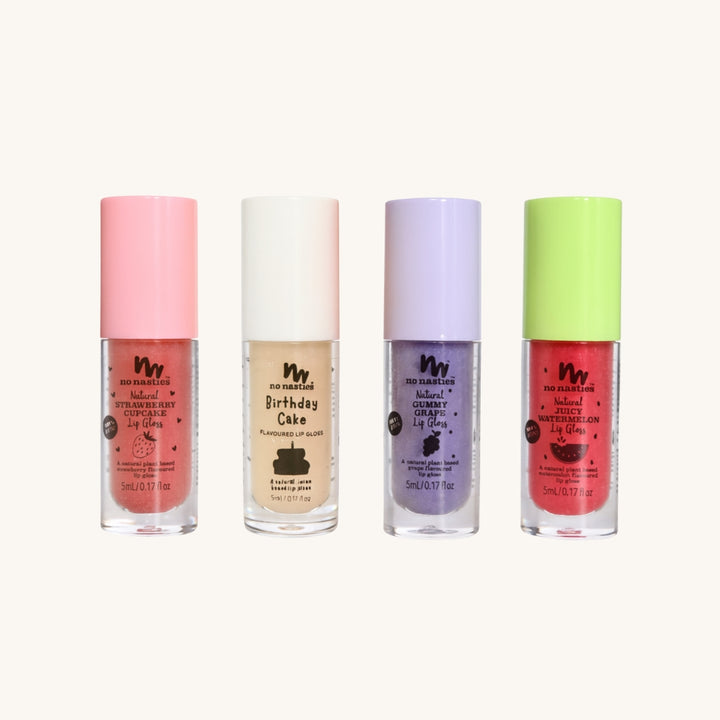
If you are in the market for an all-natural lip gloss, we highly recommend this product by No Nasties.
Natural Flavor Lip Gloss for Kids
$7.99
A yummy, all-natural treat for little lips, this natural flavor lip gloss for kids adds a whisper of color while keeping lips soft and nourished with sunflower, olive, coconut, and jojoba oils. Formulated for even the most sensitive skin, it’s… read more
3) Colorants (if tinted)
Tinted glosses may use mineral pigments or approved cosmetic dyes. If you’re prioritizing kids lip gloss non toxic for sensitive kids, consider starting with a clear gloss or a very lightly tinted option so you can rule out color-related irritation more easily.
Ingredients parents may want to question (not panic about)
Many ingredients are safe for many people, but kids’ lip products come with extra practical concerns: frequent application, lip-licking, and sharing. When evaluating non toxic kids lip gloss claims, these are common “pause and read closely” categories:
- Fragrance/parfum: a top trigger for irritation for some kids, especially around the mouth.
- Flavor blends: can encourage licking and may contain potential sensitizers (even when labeled “natural”).
- Essential oils (peppermint, citrus, cinnamon, etc.): can sting on chapped lips and may irritate sensitive skin. A “tingle” is not a benefit for kids.
- Cooling/heating agents: menthol, camphor, and similar ingredients can be uncomfortable around the mouth.
- Strong plumping-style ingredients: generally unnecessary for kids; choose comfort over effects.
None of this is meant to be alarming. It’s a way to narrow down which products are most likely to be comfortable. For many families, the easiest route to kids lip gloss non toxic shopping is: minimal ingredient list + no added fragrance + gentle, balm-like texture. Parents who want a deeper ingredient checklist can also review our guide to non toxic lip gloss for kids before comparing flavored or scented glosses.
Fragrance, flavor, and “natural” claims: where irritation often starts
For a lot of kids, the first issue with lip products isn’t “toxicity”—it’s irritation. The skin around the mouth is sensitive, and gloss can migrate. Here’s how to think about common claims:
- “Unscented” vs “fragrance-free”: “Unscented” can still include masking fragrance. If you’re shopping for kids lip gloss non toxic for a sensitive child, “fragrance-free” is the clearer phrasing.
- “Natural flavors”: This is broad and may still include compounds that bother reactive skin. If your child has had reactions to flavored balms before, prioritize unflavored.
- Essential oils: Often marketed as gentle because they’re plant-derived, but “natural” doesn’t automatically mean non-irritating.
Practical rule: If your child is prone to perioral redness, chapping, or eczema-like irritation, start with a plain, fragrance-free option and add “fun” (tint, sparkle) later once you know the base formula works.
Packaging and applicators that keep things cleaner (and safer in real life)
Even the best “lip gloss for kids non toxic” formula can become a problem if the packaging encourages germ-sharing or messy application. These details matter:
- Squeeze tube over wand for younger kids: easier to control, less likely to be shared mouth-to-mouth.
- Wide, soft applicator tips (if present): can be more comfortable and reduce poking at the lip line.
- Cap security: a tight, clicky cap reduces leaking in backpacks and keeps the product cleaner.
- Single-user policy: the simplest hygiene upgrade is teaching kids not to share lip products, even with siblings.
Routine tip: If gloss is going to school, choose a format that’s easy to apply without fingers. Fingers add dirt, and kids tend to touch faces more often.
How to patch test kids lip gloss non toxic options (and when to skip)
Because lips are sensitive and kids may reapply often, patch testing is a smart step—especially if your child has sensitive skin, seasonal allergies, or a history of reacting to fragranced products. You don’t need a complicated process:
- Choose a low-risk area like the inner forearm.
- Apply a tiny amount once daily for 2–3 days.
- Watch for discomfort such as redness, itching, or bumps. If anything shows up, stop using it.
- Then test near (not on) the lip line with a small amount if the arm test is fine, before full-lip use.
When to skip and choose a simpler product instead: If your child’s lips are currently cracked, bleeding, or very inflamed, a new gloss can sting. In that moment, a bland, protective non toxic lip balm for kids-style product (simple occlusive, no fragrance/flavor) is usually the more comfortable choice until lips calm down. If irritation persists, consult a qualified clinician.
Realistic use advice: making gloss safer and more comfortable
How kids use gloss matters as much as what’s in it. These small habits make a big difference with kids lip gloss non toxic products:
- Apply on clean, dry lips: wipe after snacks to reduce mixing food residue into the tube.
- Use a thin layer: less product means less migration around the mouth and less urge to lick.
- Set “reapply moments”: after lunch, after outdoor play, before going home—rather than constant swiping.
- Don’t use as a remedy for chapping unless it’s truly balm-like: some glossy formulas feel slippery but don’t protect well, which can lead to more licking and dryness.
- Retire old products: if it smells “off,” separates strangely, or has been rolling around uncapped, replace it.
Parent checkpoint: If a gloss routinely causes redness at the corners of the mouth, switch to a simpler, fragrance-free formula and consider reducing flavors that encourage licking.
Shopping checklist + bottom line
When you’re narrowing down kids lip gloss non toxic choices, use this quick checklist in-store or online:
- Ingredient list is complete and easy to find (avoid products with vague labeling or missing INCI lists).
- Fragrance-free if your child is sensitive; be cautious with essential oils and strong flavors.
- Comfort-first texture: balm-gloss hybrids often work well for kids who reapply frequently.
- Packaging that discourages sharing: squeeze tube is often the most parent-friendly.
- Clear use directions and a brand that encourages checking labels and discontinuing if irritation occurs.
- Patch test when appropriate, especially for new-to-you formulas.
Bottom line: The best kids lip gloss non toxic pick is usually the one with a short, transparent ingredient list, minimal fragrance/flavor, and kid-proof packaging. Check labels, patch test when it makes sense, and prioritize comfort over trendy “tingle” effects—because a gloss your child actually tolerates (and uses hygienically) is the most practical definition of “non toxic” in daily life.
Curious about which harmful ingredients to avoid in your child's beauty products? Read The Truth About Harmful Beauty Ingredients for Kids to uncover the hidden toxins in mainstream makeup, skincare, and hair care—and discover safer alternatives.
About the Author: This article was written by the contributing writers at Popsicle Beauty Club—a team of moms, educators, and clean beauty advocates passionate about creating a safer, more imaginative world for kids. We believe in empowering parents with trusted information and offering fun, non-toxic beauty and personal care products that let children play, express, and explore—without compromising their health.