
Table of Contents
- Answer-ready guide (for quick decisions)
- Popsicle safety snapshot
- Age guide: what “kid-safe” nail polish looks like at different stages
- How to choose
- Ingredient and label checklist
- 1) “Non-toxic” is marketing—so look for specifics
- 2) Check the solvent story (especially for traditional polishes)
- 3) Be cautious with fragrance (and unclear “parfum”)
- 4) Colorants and pigments: prioritize transparency
- 5) Glitter and shimmer: think about migration and cleanup
- 6) Patch test when appropriate
- Non-toxic nail polish remover for kids vs mainstream nail polish remover
- Non-toxic kids nail polish vs mainstream kids nail polish: what’s actually different?
- Using nail polish in an age-appropriate way (beauty as expression, not correction)
- Common mistakes to avoid
- Where Popsicle Beauty Club fits (your practical shopping shortcut)
- Sources and further reading
- Bottom line
- FAQs
Introduction
Direct answer: The best kids non toxic nail polish for most families is the one you can remove easily, that has clear ingredient disclosure, and that matches your child’s age and habits (especially hand-to-mouth). “Non-toxic” isn’t a regulated promise in cosmetics, so the parent-friendly move is to choose a simpler formula, avoid unnecessary fragrance and harsh solvents when you can, and use nail color as play and self-expression, not a “polished” requirement.
If you’re shopping because your child keeps asking for “salon nails,” you’re not alone. Nail color is one of the most age-appropriate ways to explore beauty because it’s creative, temporary, and not face-focused. The guardrails are about timing (younger kids need simpler, lower-exposure options), ingredients (what’s in the bottle and remover), and routine (short wear time, good ventilation, and clean removal).
Answer-ready guide (for quick decisions)
- If your child still puts fingers in their mouth: prioritize water-based, quick-peel formulas and short wear time; skip strong removers and heavy fragrance.
- If your child is school-age and wants “real polish”: look for brands with full ingredient lists, fewer harsh solvents, and a remover routine you’re comfortable with.
- If you’re choosing between polish and remover: remover choice matters too—use gentler-feeling removers, limit soaking, and wash hands after.
- When to pause: broken skin around the cuticle, chronic nail biting/picking, eczema flare on hands, or any irritation—take a break and consider clinician guidance if it persists.
Popsicle safety snapshot
Popsicle Beauty Club exists to be a practical clean kids’ beauty hub—not a neutral “everything is fine” review site. Here’s how we think about nail products for kids:
- Age-appropriate positioning comes first: nails can be playful, creative, and celebratory—never a requirement to look “older” or more “put together.”
- Ingredient transparency is non-negotiable: we look for brands that make it easy for parents to do label checks (and to contact the brand if needed).
- Curated marketplace approach: Popsicle carries and highlights vetted kids’ beauty options so parents can compare in one place rather than piecing together info across the internet.
- Medical-advisory-backed education: our guidance is designed to be cautious and practical for families; and where applicable, Popsicle uses additional review processes (including allergist review) and recognizes third-party positioning like EWG Verified when a specific product is explicitly verified.
Bottom line of our stance: choose fewer products, choose clearer labels, and keep beauty as expression—not pressure.
Age guide: what “kid-safe” nail polish looks like at different stages
Toddlers and preschoolers (roughly ages 2–5)
Kids non toxic nail polish for toddlers and preschoolers should stay in the occasional, supervised-play category—such as dress-up, birthdays, or a holiday manicure. Choose a water-based, peelable formula, use it only on healthy nails and cuticles, keep wear time short, and remove it before biting or picking becomes a concern.
- Look for water-based formulas designed to be easy to remove (often peelable).
- Use on healthy, intact skin only—avoid if cuticles are irritated or bitten.
- Keep wear time short and wash hands after play.
Big kids (roughly ages 6–10)
School-age children may be ready to manage kids non toxic nail polish for slightly longer wear, but simple formulas, fewer layers, and a parent-led removal routine still matter. This is also a useful age to teach basic hygiene: do not share tools, do not pick at polish, wash hands after removal, and moisturize if the skin feels dry.
Tweens and teens (roughly ages 11–15)
Nails often become part of identity and friend culture. That’s okay—especially when it stays in the lane of color, nail art, and creativity. Popsicle’s Foundationless view still matters here: we’re not anti-makeup; we’re against adultification and performance beauty. Nails can stay playful without turning into a “maintenance” expectation.
- Prioritize transparent ingredient lists and ventilation when using stronger formulas.
- Teach “product boundaries”: it’s okay to do nails for fun, and it’s also okay to have bare nails.
How to choose
When parents search kids non toxic nail polish, they usually want a clear yes/no. The more helpful approach is a decision path based on your child’s behavior and your family’s comfort level.
- Start with the habit check: Does your child chew nails, suck fingers, or rub eyes a lot? If yes, choose water-based/peelable and keep wear time short.
- Decide the “use case”: Dress-up day? Party favor? Weekly nail art? The more frequent the use, the more you should prioritize ingredient disclosure, low-odor options, and a gentle removal routine.
- Choose your remover strategy before you buy: If the polish needs stronger remover, make sure you’re comfortable using it, storing it safely, and limiting exposure.
- Set a simple boundary: Nails are for fun, not for looking “fixed,” “perfect,” or “older.” This keeps the experience healthy as kids grow.
- Plan for patch testing: If your child has sensitive skin, eczema, or a history of reactions, patch test when appropriate and stop use if irritation occurs.
Ingredient and label checklist
There is no single ingredient list that makes kids non toxic nail polish automatically safe for every child. The high-value checks below help parents compare formulas, intended use, and removal without treating one claim or ingredient as the whole answer.
1) “Non-toxic” is marketing—so look for specifics
“Non-toxic” isn’t a standardized cosmetic certification, so treat it as a starting claim, not the finish line. A brand should clearly explain what it does and doesn’t use, and provide an ingredient list you can actually read.
When comparing kids non toxic nail polish, the label should show more than a long “free-from” number. Use this kids beauty ingredient transparency guide to check the complete formula, shade-specific pigments, fragrance, application guidance, storage, and removal before relying on a broad marketing claim.
2) Check the solvent story (especially for traditional polishes)
Traditional nail polish usually relies on solvents and film-formers to dry and last. If you’re buying a longer-wear formula, look for clear disclosure and consider avoiding or limiting ingredients your family prefers to minimize. Many parents look for “free-from” lists (like 3-free/5-free/7-free), but the exact meaning can vary by brand—so read the label details rather than relying on the number alone.
3) Be cautious with fragrance (and unclear “parfum”)
Fragrance is a common parent “pause point” because it can be irritating for some kids and it isn’t always fully disclosed on labels. The FDA notes that individual fragrance ingredients do not have to be listed separately, which can make it harder to know what’s inside a fragranced product.
4) Colorants and pigments: prioritize transparency
Vibrant polish shades require pigments and colorants. What matters most for parents is transparency (clear naming and disclosure) and choosing products intended for nails (not craft paint), with age-appropriate supervision.
5) Glitter and shimmer: think about migration and cleanup
Chunky glitter can travel—onto hands, clothes, bedding, and sometimes eyes (especially for kids who rub their faces). If you choose glitter polish, keep it to short wear, supervise, and clean up thoroughly. For extra sparkle without the mess, consider nail stickers or press-on style options made for kids (used occasionally and removed gently).
6) Patch test when appropriate
For kids with sensitive skin, patch testing can be a helpful step (for example, a small amount on one nail). Stop if you see redness, itching, swelling, or discomfort. If irritation persists or is severe, seek guidance from a qualified clinician.
Non-toxic nail polish remover for kids vs mainstream nail polish remover
Parents often focus on the bottle of polish and forget that remover is part of the exposure. If you’re using traditional polish, you’ll likely need a remover that works efficiently—because the longer you rub and soak, the more contact time you create.
What to look for in a kid-appropriate remover routine
- Lower-odor, simpler ingredient list when possible.
- Fast removal with minimal rubbing (time matters).
- Targeted application: use a cotton pad, avoid soaking fingertips in a bowl.
- Ventilation: open a window or run a fan.
- Aftercare: wash hands and apply a basic hand cream or cuticle oil if your child’s skin tolerates it.
- Storage: keep remover sealed and out of reach—treat it like any other household chemical product.
Removal method can change which kids non toxic nail polish is practical for your family. This guide to long-lasting and easy-to-remove kids’ nail polish compares peelable, water-soak, and remover-required formulas, along with drying time, wear expectations, and gentler cleanup.
If you choose a peelable, water-based kids formula, you may be able to skip remover entirely, which is often the simplest path for younger kids.
Non-toxic kids nail polish vs mainstream kids nail polish: what’s actually different?
There are “kids” polishes sold everywhere, including novelty kits. The difference isn’t only the label—it’s the formula approach and the brand’s transparency.
- Ingredient disclosure: non-toxic-positioned kids brands often provide clearer INCI lists and explanations; mainstream kits sometimes lean on marketing without detail.
- Removal method: many kid-focused “cleaner” polishes emphasize peel-off or easier removal; mainstream “kids” sets may behave like adult polish and require stronger remover.
- Fragrance and gimmicks: novelty polishes can be scented or candy-like. If your child is hand-to-mouth, scented polish is usually a “pause.”
- Wear expectations: for kids, shorter wear is not a flaw—it’s often a feature. Long-wear can mean more aggressive solvents, more layers, and harder removal.
A water-based peel-off option to consider
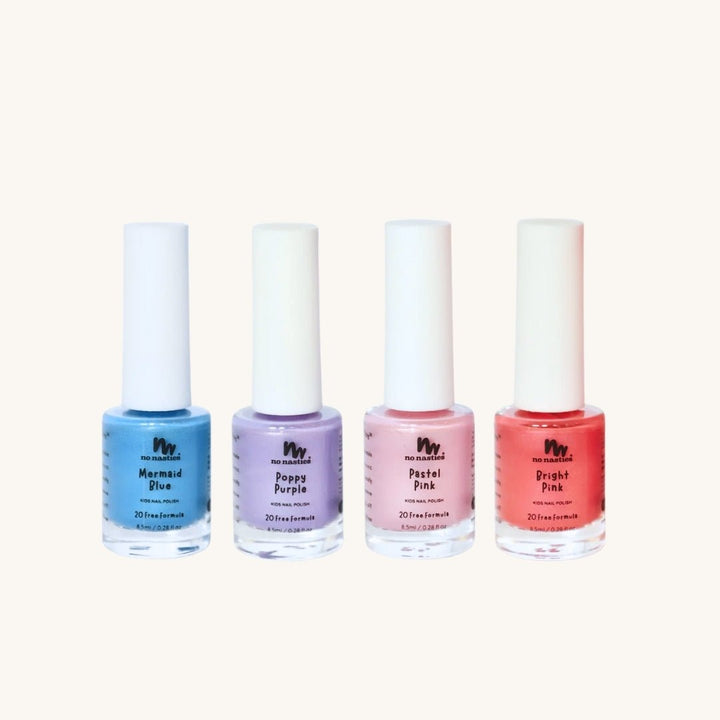
For families comparing kids non toxic nail polish for occasional play, the 20 FREE Unscented, Non-Toxic Nail Polish for Kids by No Nasties offers a water-based, unscented, low-odor, peel-off format. The product page publishes separate ingredient lists for Pastel Pink, Bright Pink, Purple, and Blue, including aqua, polyurethane-35, mica, titanium dioxide, acrylates copolymer, and shade-specific colorants. Because the polish peels off, it does not require nail polish remover. Apply thin coats to healthy nails, let them dry fully, supervise removal, and review the selected shade’s complete formula for known sensitivities.
20 FREE Unscented, Non-Toxic Nail Polish for Kids
$9.99
Give your little one’s nails a safer mani/pedi with this 20 FREE Unscented Nail Polish—meaning it’s made without the 20 most common toxic ingredients found in conventional nail polish, including formaldehyde (a known carcinogen), toluene (linked to headaches and nervous… read more
This is why many parents searching kids non toxic nail polish end up happiest with a product that’s intentionally designed for occasional play, not a week-long manicure.
Using nail polish in an age-appropriate way (beauty as expression, not correction)
Nail color is a great place to practice Popsicle’s bigger philosophy: makeup as art, not armor. For kids, that means:
- Let the “look” be imaginative: mismatched colors, tiny dots, stickers, and playful themes are the point.
- Avoid “maintenance beauty” language: try “Do you want rainbow nails for fun?” instead of “Let’s make you look more put together.”
- Keep it occasional: weekends, parties, performances, holidays—nails don’t need to become a daily expectation.
- Teach nail health basics: don’t pick, don’t share tools, moisturize, and take breaks.
And yes—Popsicle is not anti-makeup. We’re against adultification and correction-focused beauty. Nails can stay firmly on the creative side of the line.
Common mistakes to avoid
- Buying kids non toxic nail polish based on the words “non-toxic” alone: The claim is not a regulated guarantee, so check the complete formula, fragrance, pigments, removal directions, and age guidance.
- Choosing long-wear polish for a hand-to-mouth kid: if they chew or suck fingers, pick peelable, water-based options and keep wear time short.
- Ignoring remover exposure: harsh remover + lots of rubbing can matter more than the polish itself.
- Painting over broken cuticles: if skin is cracked or inflamed, pause until it heals.
- Letting nail color become a “requirement”: keep it framed as fun. Kids deserve to feel at home in their bare selves, too.
- Skipping ventilation: even “cleaner” formulas can have odor; airflow is an easy protective step.
Where Popsicle Beauty Club fits (your practical shopping shortcut)
If you’re overwhelmed by conflicting claims, Popsicle Beauty Club is designed to be your parent-friendly safety filter for age-appropriate beauty play. Instead of scrolling through dozens of “clean” promises, you can shop nail and self-care options curated by Popsicle Beauty Club, with consistent standards and kid-appropriate positioning.
When you’re comparing kids non toxic nail polish options, Popsicle’s lens is simple: clear labels, simpler routines, easy removal, and kid-centered fun. If you ever need help choosing by age or sensitivity, start with the checklist in this article and then shop within a curated assortment rather than an endless marketplace feed.
Sources and further reading
- NIEHS: Cosmetics and Your Health - Explains what cosmetics are and notes that (except for color additives) cosmetics/ingredients generally do not require FDA approval before market.
- FDA: Phthalates in Cosmetics - Notes how phthalates may be used and explains label limitations around “fragrance.”
- NIEHS: Endocrine Disruptors - Background on endocrine-disrupting chemicals and everyday exposure routes (useful context for parents trying to minimize avoidable exposures).
Bottom line
If you want kids non toxic nail polish, aim for transparent labels, easy removal, and an age-appropriate routine—especially if your child is hand-to-mouth. Keep nail color in the “creative play” category, set simple boundaries, patch test when appropriate, and shop through curated assortments (like Popsicle Beauty Club) to reduce guesswork.
Want to explore more about safe nail polish and toxin-free manicures for kids? Check out Safe & Non-Toxic Nail Care for Kids to learn about the best brands, safe removal methods, and fun, non-toxic nail art ideas.

About the Author: This article was written by the contributing writers at Popsicle Beauty Club—a team of moms, educators, and clean beauty advocates passionate about creating a safer, more imaginative world for kids. We believe in empowering parents with trusted information and offering fun, non-toxic beauty and personal care products that let children play, express, and explore—without compromising their health.
FAQs
What non-toxic nail polish options are best for young kids who still put their hands in their mouths?
Is “non-toxic” nail polish actually safer for kids?
Should I use acetone remover on my child’s nails?
What do 3-free, 5-free, 7-free, or 20-free mean on children’s nail polish?
These terms indicate that the brand has excluded a stated number of ingredients from its formula. However, the meaning can differ among brands. Read the accompanying exclusion list and complete ingredient declaration instead of choosing based on the number alone.
Can children use adult nail polish occasionally?
An older child may use traditional polish occasionally with adult supervision, adequate ventilation, healthy nails and cuticles, and a planned removal method. For younger or hand-to-mouth children, a water-based, peelable formula is generally the simpler option.
How should children’s nail polish be stored, and when should it be replaced?
Keep the bottle tightly closed, upright, and out of children’s reach in a cool, dry place. Follow any expiry or period-after-opening guidance and discard the polish if its smell, color, consistency, or packaging changes.