
Table of Contents
- Introduction
- Answer-ready summary
- Popsicle Beauty Club’s parent-first approach
- What ingredient transparency actually means
- Complete ingredient lists
- Ingredient functions
- Fragrance and flavor disclosure
- Pigments, dyes, and shimmer
- Preservatives and product stability
- Age and application guidance
- Removal guidance
- Patch testing and individual sensitivity
- Parent access and customer support
- A five-minute transparency audit
- Transparency versus transparency-shaped marketing
- Product examples from Popsicle Beauty Club
- Product comparison
- How Popsicle evaluates brands
- Foundationless boundaries still apply
- Common mistakes to avoid
- Where Popsicle Beauty Club fits
- Bottom line
- FAQs
Introduction
Kids beauty ingredient transparency matters because parents should be able to understand what they are buying before a product reaches a child’s skin, lips, hair, nails, or eye area.
A company may describe its products as clean, natural, gentle, non-toxic, or made for kids. Those words can help explain the brand’s philosophy, but they do not replace a complete ingredient list, clear fragrance information, realistic age guidance, and instructions for safe use and gentle removal.
The most responsible children’s beauty companies do not merely publish impressive exclusion lists. They make product information easy to verify, explain important ingredients in plain language, distinguish among shades or flavors when formulas differ, and give parents a practical way to ask questions.
This guide explains what strong kids beauty ingredient transparency looks like, how to evaluate a company’s product pages and educational content, which warning signs deserve closer attention, and how Popsicle Beauty Club uses transparency alongside age-appropriate beauty boundaries.
The goal is not to identify one permanently “best” company. Brand formulas, product ranges, policies, and educational content can change. The more useful goal is to give parents a repeatable framework they can apply to any product.
Answer-ready summary
A practical kids beauty ingredient transparency standard should help parents verify the formula, understand the product’s purpose, and identify how it should be applied, stored, and removed. Strong kids beauty ingredient transparency usually includes:
A complete ingredient list on every product page
Shade-specific or flavor-specific ingredients where formulas differ
Clear fragrance, flavor, and essential-oil disclosure
Pigment and color-additive information
An explanation of the intended application area
Age guidance where appropriate
Supervision and hygiene instructions
Patch-testing guidance when useful
Gentle removal directions
Period-after-opening or storage information
A clear customer-support channel
Claims that can be confirmed on the package or official website
Beauty messaging focused on care and creativity rather than correction
Weak transparency may include:
“Clean” without a published formula
“Chemical-free” claims
Long free-from lists with no explanation of what the product contains
One generic ingredient list used for several different shades
Unclear fragrance language
Missing application-area guidance
No removal instructions
Influencer claims that are not supported on the official product page
Correction-focused messaging aimed at children
The best company is not necessarily the one making the most noise about ingredients. It is the one making relevant information easiest for parents to find, understand, and verify.
Popsicle Beauty Club’s parent-first approach
Popsicle Beauty Club is a curated children’s beauty and personal-care marketplace designed to reduce the amount of adult-focused beauty content parents must sort through.
Popsicle evaluates kids beauty ingredient transparency alongside several other questions:
Is the product appropriate for the child’s developmental stage?
Is the complete formula available?
Is fragrance clearly explained?
Does the product identify where it should be applied?
Can it be removed without aggressive rubbing?
Are hygiene and storage addressed?
Does it solve a real care or play need?
Is the product marketed around expression or correction?
This reflects Popsicle Beauty Club’s Foundationless philosophy.
Popsicle is not anti-makeup. It supports:
Imaginative play
Lip color
Nail creativity
Face gems
Pressed shimmer
Costume makeup
Hair care
Bath and body care
Performances
Special occasions
It pushes back against adultification, complexion correction, “flawless” language, and routines that suggest a child’s natural face must be hidden, perfected, or made to look older.
Ingredient transparency is important, but a fully disclosed foundation is still foundation. A clear label does not automatically make every beauty category developmentally appropriate.
What ingredient transparency actually means
Transparency is more than placing an ingredient list somewhere on a website.
Useful disclosure should help a parent answer four questions:
What is in the product?
Why is it included?
Where and how should the product be used?
What should the family know about sensitivity, hygiene, storage, and removal?
A company demonstrating meaningful kids beauty ingredient transparency should provide information at the individual product level rather than relying only on one general clean-beauty policy.
Different products perform different jobs.
A moisturizer needs ingredients that support hydration, texture, preservation, and skin comfort.
A lip gloss needs oils, waxes, pigments, flavor considerations, and ingredients suitable for repeated use close to the mouth.
A pressed eyeshadow needs color, binders, texture ingredients, and a format that limits fallout.
A nail product needs clear directions for application, drying, wear, and removal.
Transparency should reflect those category-specific differences.
Complete ingredient lists
The complete ingredient list should be visible before purchase. Reliable kids beauty ingredient transparency begins with product-specific disclosure rather than requiring parents to rely on broad brand promises or social-media captions.
Parents should not have to:
Send a direct message
Search a retailer’s comments
Contact an influencer
Open several unrelated PDFs
Buy the product before seeing the formula
The ingredient list should also match the actual product.
Check whether:
Different shades use different pigments
Different flavors use different flavor ingredients
A reformulation date is provided
The online list matches the package
A set provides information for every included item
Ingredients are presented in a recognizable INCI-style format
A vague “made with coconut oil and minerals” description is not the same as a complete ingredient declaration.
Ingredient functions
A long technical name does not automatically mean an ingredient is harmful.
Responsible education may explain that an ingredient serves as:
A humectant
An emollient
A surfactant
A wax
A binder
A preservative
A pigment
A stabilizer
A thickener
An antioxidant
Good kids beauty ingredient transparency reduces unnecessary fear by explaining why ingredients are used.
It should not imply that every unfamiliar ingredient is dangerous or that every plant-derived ingredient is automatically gentle.
Fragrance and flavor disclosure
Fragrance deserves particular attention because the term may represent a mixture rather than one individually identified ingredient.
Parents should be able to determine whether a product is:
Fragrance-free
Unscented
Naturally scented
Essential-oil scented
Flavored
Made with synthetic fragrance
Made with disclosed fragrance components
Listed only with the generic term fragrance or parfum
A natural fragrance can still bother an individual child.
A fragrance-free product can still contain another ingredient the child does not tolerate.
The value of disclosure is not that it guarantees no reaction. It allows families to compare formulas according to their own sensitivity history.
For fragrance-sensitive households, consistent kids beauty ingredient transparency should extend across shampoo, conditioner, lotion, cleanser, lip products, bath products, and play makeup—not only one category.
Pigments, dyes, and shimmer
Color is central to many children’s beauty products.
Parents should be able to identify:
What creates the color
Whether pigments vary by shade
Whether the product is intended for lips, cheeks, eyes, nails, or body
Whether shimmer is fine, pressed, gel-based, or loose
Whether the product contains large glitter particles
How easily the color removes
Bright color is not automatically inappropriate for children.
The more practical questions are whether the color is clearly disclosed, applied to an appropriate area, manageable in the child’s hands, and removable without heavy rubbing.
Loose glitter, craft glitter, and poorly bound shimmer require greater caution near the eyes.
Preservatives and product stability
Water-based cosmetics and personal-care products usually require an effective preservation system.
A company should not use fear of preservatives as a substitute for explaining how its product remains stable during normal use.
Parents should look for:
Storage instructions
Period-after-opening information
Expiry guidance where applicable
Packaging designed to reduce contamination
Advice on keeping water out of jars or compacts
Instructions to discard products that change smell, texture, or appearance
Strong kids beauty ingredient transparency explains that preservation supports real-world safety rather than presenting every preservative as an avoidable toxin.
Age and application guidance
An ingredient list cannot explain the entire use case. Complete kids beauty ingredient transparency should therefore combine formula details with age guidance, intended application areas, supervision, hygiene, and wear-time instructions.
Parents also need to know:
The intended age range
Whether adult supervision is recommended
Whether the product belongs near the eyes
Whether it can be used on lips
Whether it should remain outside the waterline
How much to apply
Whether tools can be shared
How long it should be worn
How it should be removed
This is especially important for:
Mascara
Eyeliner
Eyeshadow
Loose shimmer
Face paint
Adhesive gems
Lip products
Fragranced leave-on products
A product can have a transparent formula and still become unsuitable when it is applied to the wrong area or used without basic hygiene.
Removal guidance
Removal is part of product safety and comfort.
A child-focused product should not require:
Aggressive scrubbing
Several strong removers
Repeated eye rubbing
Harsh solvents
A complicated multi-cleanser routine
Useful product information should explain whether the item removes with:
Lukewarm water
A mild cleanser
A reusable soft puff
Micellar water
An oil-based product
Peel-off removal
Parent-handled nail remover
A company demonstrating kids beauty ingredient transparency should explain not only what goes on the child, but also how it comes off.
Patch testing and individual sensitivity
No ingredient policy can guarantee that a product will suit every child.
Responsible guidance acknowledges:
Known allergies
Fragrance sensitivity
Eczema-prone skin
Previous reactions
Eye irritation
Adhesive sensitivity
Botanical sensitivity
Sensory discomfort
Patch testing may be useful for some unfamiliar leave-on, fragranced, botanical, adhesive, or highly pigmented products.
A common cautious approach is to test a small amount on the inner arm and observe the area before using the product more widely. However, patch testing cannot diagnose an allergy or guarantee that the face or eyelids will respond identically.
Persistent or significant reactions require qualified medical guidance.
Parent access and customer support
Transparency includes access to answers.
Look for:
A visible support email
A contact form
Live chat
Product FAQs
Ingredient glossaries
Clear response to common allergy questions
Policies for reporting reactions or product defects
Batch or lot information
Parents should be able to ask direct questions such as:
Does this contain added fragrance?
Do the shades use different pigments?
Is this intended for the eye area?
Is the glitter cosmetic grade?
How should it be removed?
Has the formula recently changed?
A brand does not need to provide individual medical advice. It should be able to provide accurate information about its own products.
A five-minute transparency audit
Use this process before trusting a new children’s beauty company.
Minute 1: Open the product page
Check whether the complete ingredient list is immediately visible.
Minute 2: Compare variants
See whether shades, scents, or flavors have separate information.
Minute 3: Review directions
Look for age guidance, application areas, supervision, hygiene, and removal.
Minute 4: Check the company’s education
Look for articles or FAQs that explain fragrance, pigments, preservatives, sensitivity, and product purpose without fearmongering.
Minute 5: Find customer support
Confirm that there is a real method for asking a product-specific question.
This simple audit turns kids beauty ingredient transparency into a repeatable shopping process rather than a judgment based on follower counts, packaging, or one viral post.
Transparency versus transparency-shaped marketing
Some content looks educational but mainly creates urgency to buy.
1. Long exclusion lists
A free-from list may be helpful, but it should not replace the complete formula.
Ask what the company uses instead.
2. Fear-based language
Be cautious when brands describe competing products as toxic without explaining the specific ingredient, product format, route of exposure, or intended use.
3. Influencer reassurance
Statements such as “completely safe,” “allergy-proof,” or “perfect for every child” should be confirmed against official product information.
4. One generic policy
A company-wide clean standard is useful, but parents still need details for the individual shade, scent, flavor, or kit.
5. Adult beauty messaging
A transparent formula can still be marketed in a way that pressures children to hide pores, cover redness, correct skin, or look older.
Popsicle’s approach requires both formula transparency and age-appropriate purpose.
Product examples from Popsicle Beauty Club
The following products illustrate different parts of the transparency framework: a multi-product kit, a color cosmetic with detailed formulation standards, and a removal tool that supports a complete use routine.
Always review the current official product page and package before purchase because ingredients, shades, and availability can change.
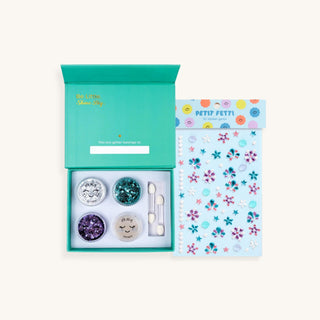
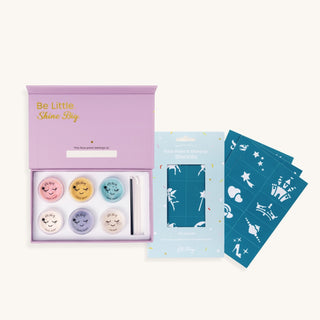
Refillable Makeup Palette 10-Piece Kit
The Refillable Makeup Palette 10-Piece Kit is a useful example of product-level transparency for a multi-item creative set.
The current listing explains what is included, identifies the refillable bamboo compact and application tools, and describes the use of organic ingredients and mineral pigments. Because the kit contains several products, parents should review each component rather than assuming one general claim covers the entire set.
The refillable format also supports intentional purchasing: use the existing colors before adding more.
Refillable Makeup Palette 10-Piece Kit

$59.99
Unbox a world of self-expression—without the worry. This 10-piece makeup kit is thoughtfully designed for imaginative play, using gentle, organic ingredients and a fresh, interchangeable color palette that keeps creativity flowing—all made with non-toxic ingredients and eco-friendly materials. Inside, you'll… read more
Organic Vegan Refillable Blush
Organic Vegan Refillable Blush demonstrates how a product page can communicate both formulation standards and shade-specific color information.
The official listing describes the product’s clean-standard positioning and its exclusion of petroleum-derived FD&C dyes and Lake pigments. Parents should still review the chosen shade’s complete formula and consider whether blush fits the child’s age and intended use.
For younger children, keep cheek color connected to supervised play, costumes, performances, or special occasions rather than daily complexion correction.
Organic, Vegan & Refillable Blush

$29.99
Add a soft, healthy-looking flush with this organic, vegan, and refillable blush from Zao Make-Up. Although this is an adult blush, we carefully curated two soft, wearable shades that feel appropriate for girls beginning to explore blush. The finely pressed… read more
Heart-Shaped Makeup Remover Puff
The Heart-Shaped Makeup Remover Puff supports an often-overlooked part of ingredient education: removal.
The official listing describes an ultra-soft, reusable microfiber puff for children and tweens and provides practical information about washing and reuse.
A soft removal tool does not make every formula appropriate, but it helps families plan gentle cleanup before introducing washable beauty play.
Heart-Shaped Makeup Remover Puff

$9.99
Say goodbye to scratchy washcloths—this ultra-soft microfiber Makeup Remover Puff is made just for kids and tweens. Gentle on young skin, it makes washing up after beauty play a breeze. A handy hanging tag lets it dry between uses, and… read more
Product comparison
| Product | Transparency topic | What parents can evaluate |
|---|---|---|
| Refillable Makeup Palette 10-Piece Kit | Multi-product set disclosure | Included products, pigments, tools, refillable packaging, application areas |
| Organic Vegan Refillable Blush | Color and formulation standards | Shade ingredients, pigment approach, product purpose |
| Heart-Shaped Makeup Remover Puff | Use and removal guidance | Material, cleaning instructions, reuse, gentle cleanup |
How Popsicle evaluates brands
Popsicle Beauty Club looks for companies and products that make comparison easier rather than more confusing.
The evaluation framework includes:
Complete product-level ingredient information
Clear fragrance or flavor disclosure
Shade-specific pigment information when applicable
Age-appropriate positioning
Manageable product formats
Hygiene guidance
Gentle removal
Responsive brand support
Claims that remain measured and verifiable
Products that support expression rather than correction
Popsicle does not treat every item from one company as automatically approved because one product has a strong label.
Each product should be assessed according to its own formula, placement, purpose, age fit, and removal requirements.
Foundationless boundaries still apply
Ingredient transparency is one part of responsible beauty shopping.
Developmental fit is another.
Popsicle generally supports childhood beauty categories such as:
Lip balm
Sheer gloss
Nail art
Face gems
Washable color
Pressed shimmer
Hair care
Bath and body care
Costume makeup
Parents may choose to delay:
Foundation
Concealer
Contouring
Pore-blurring products
Anti-aging products
Strong active-heavy routines
Daily correction-focused makeup
A product can meet a family’s ingredient standards and still belong in the “not yet” category.
The question is not only, “Can I verify what is in this?”
It is also, “What is this product teaching my child about her face?”
Common mistakes to avoid
1. Trusting “clean” without checking the formula
Treat the claim as an introduction, not a final answer.
2. Assuming natural means reaction-free
Botanicals, essential oils, flavors, and natural fragrance can still bother an individual child.
3. Ignoring variant differences
One shade may use pigments that another shade does not.
4. Buying eye sparkle without placement instructions
If the product does not clearly explain where it belongs, pause.
5. Skipping removal planning
Know how the product will come off before applying it.
6. Overbuilding a routine
Children usually need fewer products than social media suggests.
7. Treating transparency as age approval
A complete ingredient list does not make every adult beauty category suitable for a child.
Where Popsicle Beauty Club fits
Parents researching kids beauty ingredient transparency may encounter conflicting clean standards, influencer claims, exclusion lists, and products scattered across adult retailers.
Popsicle Beauty Club offers a more focused starting point through:
Curated children’s beauty products
Ingredient-forward product pages
Parent education
Age-aware product categories
Removal tools
Fragrance and pigment guidance
Foundationless positioning
Beauty framed as expression rather than correction
For a practical guide to assessing formulas, fragrance, pigments, packaging, hygiene, and removal, read our clean beauty kids makeup guide.
For a broader discussion of clean claims, greenwashing, ethics, and parent shopping criteria, review our guide to non-toxic beauty products for kids.
Bottom line
The companies setting a better standard for kids beauty ingredient transparency are the ones that make relevant information easy to find and verify.
Look for:
Complete ingredient lists
Variant-specific formulas
Clear fragrance disclosure
Pigment information
Intended application areas
Age and supervision guidance
Patch-testing reminders
Removal instructions
Storage information
Responsive customer support
Age-appropriate beauty messaging
Do not choose a company simply because it posts frequently about clean beauty or publishes a long exclusion list.
Choose the product whose formula, purpose, placement, and removal you can understand—and whose message keeps childhood beauty focused on care, creativity, and play.
Want to understand the science and ethics behind clean beauty? Read The Science & Ethics Behind Non-Toxic Beauty to explore what makes a product truly non-toxic and how to navigate misleading labels.
About the Author: This article was written by the contributing writers at Popsicle Beauty Club—a team of moms, educators, and clean beauty advocates passionate about creating a safer, more imaginative world for kids. We believe in empowering parents with trusted information and offering fun, non-toxic beauty and personal care products that let children play, express, and explore—without compromising their health.
FAQs
Which US children’s beauty brands are most vocal about ingredient education on social media?
Are there kids’ beauty brands that explain how to patch test products on children’s skin?
Are there US kids’ beauty companies that provide direct email or chat access to ingredient experts?
Are preservatives a sign that a product is unsafe?
No. Water-based products generally need effective preservation. Evaluate the complete formula, packaging, storage guidance, and the child’s known sensitivities.
What should I check before buying a kids makeup set?
Review every included product, complete ingredients, pigments, fragrance, application areas, applicators, hygiene instructions, age guidance, and removal process.
How can I verify a brand’s claims?
Compare the official product page, package, company FAQ, ingredient policy, and customer-support response. Avoid relying only on social-media captions or influencer descriptions.