

Table of Contents
- Introduction
- Quick, answer-ready cheat sheet for Kids Hair Care Trends 2026
- Popsicle safety snapshot
- Trend 1: “Scalp care” goes mainstream—what it means for kids
- Trend 2: Ingredient-led shopping (and “clean” language) gets louder
- Trend 3: Fragrance-forward hair products and “hair perfume” energy
- Trend 4: Bond repair and intensive masks—useful tool or unnecessary step?
- How to choose (a parent decision path by age and hair needs)
- Ingredient and label checklist (what to check before you buy)
- Common mistakes to avoid
- Sources and further reading
- Bottom line
- FAQs
Introduction
The biggest Kids Hair Care Trends 2026 aren’t about building a complicated “routine.” They’re about parents getting more ingredient-literate, kids seeing more scalp-care content online, and brands pushing skincare-style language into hair care. For most families, the best move is to keep hair care simple (cleanse, condition, detangle, protect from sun/chlorine/heat when relevant), choose products that rinse and remove easily, and treat intensive “treatment” steps as occasional tools—not daily expectations for kids.
If you’re shopping because your child asked for “scalp serum,” “bond repair,” or a trendy scented mist, this guide translates what’s actually happening in Kids Hair Care Trends 2026 into parent-friendly guardrails—without fear, and without adultifying kids’ self-care.
Quick, answer-ready cheat sheet for Kids Hair Care Trends 2026
- What’s in: ingredient-led shopping, scalp comfort, gentler wash days, detangling support, and simplified routines.
- What to be cautious with: strong fragrance, “treatment stacking” (serum + mask + leave-in + oil + heat protectant every day), and adult-targeted scalp acids/actives for young kids.
- What’s usually enough: a gentle shampoo, a conditioner, and a detangler/leave-in suited to your child’s hair texture and activity level (swimming, sports, styling).
- Parent-friendly rule: if a product trend makes your child feel like their natural hair or scalp is a “problem,” pause. Keep beauty as expression and care, not correction.
Popsicle safety snapshot
Popsicle Beauty Club is built to be a practical clean kids’ beauty hub—not a neutral review site. When we curate hair care, we look for parent-friendly label checks and age-appropriate positioning.
- Medical-advisory-backed kids’ beauty education: our content is designed to help parents set boundaries and build skills (like reading labels) without panic.
- EWG Verified positioning/products where applicable: when a product is actually EWG Verified, that can be a helpful shortcut—but we still encourage reading the full ingredient list.
- Allergist review process where applicable: “sensitive” is personal; where an allergist review applies, we treat it as one input, not a universal guarantee.
- Curated marketplace of vetted clean kids’ beauty brands: Popsicle carries vetted options in one place so you can compare basics (like fragrance level, intended age, and ease of removal) without scrolling for hours.
Important: no product is “allergy-proof.” Always check labels and patch test when appropriate—especially with new leave-ins, styling creams, or fragranced products that sit on hair and skin longer.
Trend 1: “Scalp care” goes mainstream—what it means for kids
One of the most noticeable Kids Hair Care Trends 2026 is the spillover of skincare thinking into hair care: scalp “health,” targeted serums, and ingredient talk moving from adult TikTok into family shopping carts. Vogue’s 2026 hair trend coverage notes that hair care is becoming more ingredient-led and scalp-focused, with consumers reading labels more closely.
How to translate this for kids:
- Start with comfort basics: if your child has an itchy scalp after sports, sweating, swim, or product buildup, simplify first (gentle shampoo, thorough rinse, avoid heavy leave-ins near the roots).
- Be cautious with “skincare actives” for young scalps: many adult scalp products are designed for adult oil patterns, adult styling habits, or specific conditions. For kids, less is often more.
- When to seek guidance: if there’s persistent flaking, redness, pain, oozing, or significant distress, it’s worth checking in with a qualified clinician instead of escalating products.
In other words, scalp care can be a helpful lens, but it shouldn’t become a new pressure-filled routine for children.
Trend 2: Ingredient-led shopping (and “clean” language) gets louder
Another core theme inside Kids Hair Care Trends 2026 is ingredient literacy: parents (and increasingly kids) want to know what’s in the bottle, what “clean” means, and what’s actually disclosed on labels. Vogue’s reporting on Gen Alpha highlights how kids influence household purchases and show growing ingredient awareness—often driven by social media.
Parent reality check: “clean,” “non-toxic,” “hypoallergenic,” and even “for kids” are marketing terms, not automatic proof of suitability. What you can verify is the ingredient list, the product’s intended use, and how it performs for your child (including whether it rinses well and doesn’t leave buildup).
Why Popsicle leans into transparency: The National Institute of Environmental Health Sciences (NIEHS) explains that cosmetics (which include many hair products) generally do not require FDA approval before going to market, except for color additives. That’s one reason Popsicle emphasizes clearer labels and simpler choices for younger users.
Trend 3: Fragrance-forward hair products and “hair perfume” energy
Across 2026 beauty reporting, fragrance formats and sensory experiences keep expanding (mists, hybrid body/hair scents, “smell good” routines). Good Housekeeping’s 2026 trend roundup points to innovation in fragrance formats that can include moisturizing ingredients—fun, but still something parents should gate with age-appropriateness in mind.
How to handle this trend with kids:
- Remember that fragrance is a common parent concern: it can be irritating for some kids, and it’s harder to evaluate what’s inside when labels simply say “fragrance.” The FDA notes that individual fragrance ingredients typically don’t have to be listed separately on cosmetic labels, which limits transparency for families trying to avoid specific triggers.
- Choose “rinse-off” over “leave-on” when in doubt: fragranced leave-ins and mists stay in contact with hair, neck, and sometimes face longer. Parents comparing gentle wash products can also review our guide to safe shampoo and conditioner for kids before choosing hair care for sensitive scalps.
- Set a boundary that keeps beauty playful: occasional “special occasion” scent can be fine for some families, but daily scent-layering can quietly become performance beauty. Kids don’t need to manage their body like a brand.
Trend 4: Bond repair and intensive masks—useful tool or unnecessary step?
Bond-repair language and “repair” treatments are everywhere. In adult hair care, they’re often marketed for frequent heat styling, chemical processing, or damage. For kids, this is where Kids Hair Care Trends 2026 can accidentally push adult routines into childhood.
Practical guidance:
- Most kids don’t need “repair” as a category: if a child isn’t bleaching, coloring, or heat-styling frequently, a gentle conditioner + detangler can do most of the work.
- When a deeper conditioning step can make sense: frequent swimming, very dry climates, lots of detangling friction, or tight curl patterns that do better with regular moisture support.
- Keep it occasional and observable: use an intensive mask occasionally, then reassess. If hair gets coated, limp, or harder to rinse, that’s a sign to scale back.
This is also a good place to reinforce Popsicle’s broader stance: we’re not anti-beauty. We’re against adultification and correction-focused routines reaching kids too early—whether that’s “perfect skin” pressure or “perfect hair” pressure.
How to choose (a parent decision path by age and hair needs)
If you’re shopping inside the swirl of Kids Hair Care Trends 2026, use this quick decision path to choose fewer, better-fitting products.
Step 1: Pick your child’s “hair reality” category
- Fine/straight hair that gets oily: prioritize a gentle shampoo that rinses clean; keep leave-ins light and off the scalp.
- Wavy/curly/coily hair: prioritize slip (conditioner + detangler/leave-in) and gentle detangling habits; avoid over-shampooing if it causes dryness.
- Very active/swimmer: prioritize rinse-and-wash consistency, conditioner, and a detangler to reduce breakage from knots; consider a simple “swim day” routine.
- Sensitive scalp / easily irritated: prioritize simpler formulas and minimal fragrance; introduce one new product at a time and patch test when appropriate.
Step 2: Build the simplest routine that works
1. Cleanse: shampoo as needed for sweat, swim, and buildup (not because a trend said “daily scalp reset”).
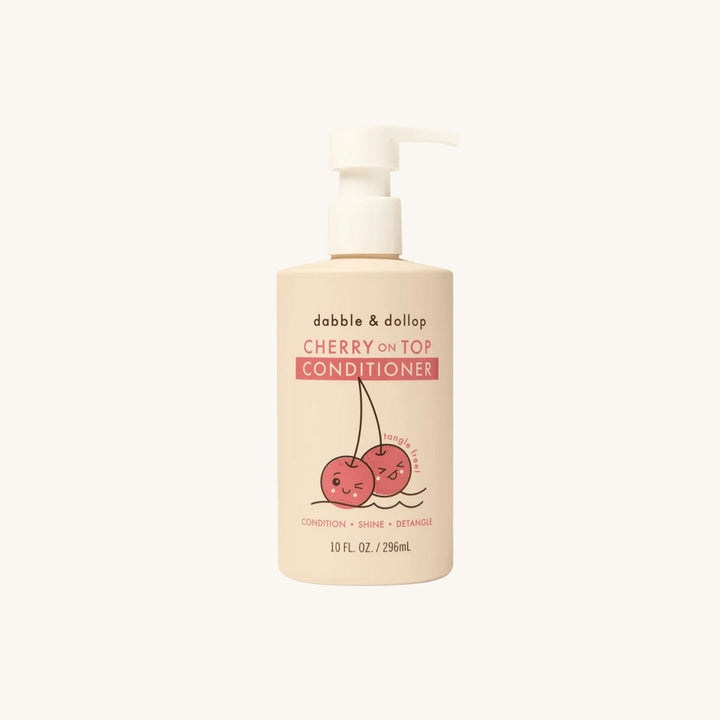
2. Condition: focus on mid-lengths to ends; rinse well.
Tear-Free Conditioner for Kids
$15.99
Indulge your little one's locks with Dabble & Dollop's Cherry on Top, Tear-Free Conditioner for Kids, a luxuriously creamy formula infused with the sweet, natural aroma of cherries. Lovingly made in California from vegan, plant-based ingredients, it's specifically formulated to be… read more
3. Detangle: use a detangler/leave-in if needed, plus a wide-tooth comb or gentle brush suited to texture. For families building a broader hygiene routine, our guide to kids body care explains how to keep cleansing and care simple without adult-style steps.
4. Style (optional): one styling product max for kids who want definition or frizz control—then reassess.
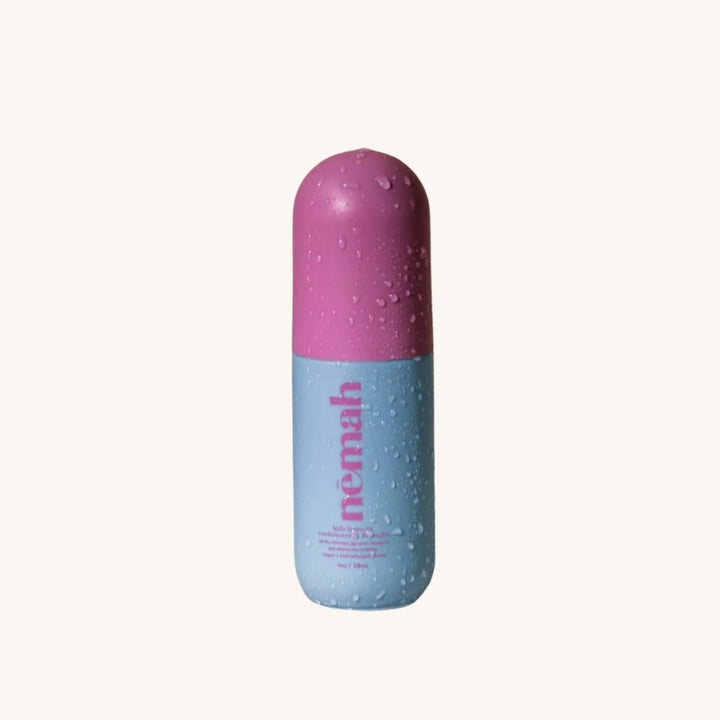
If you want to keep your child’s hair routine simple while following the healthier direction of Kids Hair Care Trends 2026, start with one gentle hair-care essential—such as a detangler, shampoo, or conditioner—that supports comfort, easy rinsing, and age-appropriate care without adding unnecessary steps.
Detangler & Leave-In Conditioner for Kids
$16.99
Nemah’s Detangler & Leave-In Conditioner for Kids is a clean, lightweight formula designed to make brushing simple and stress-free. Powered by olive-derived squalane, it locks in weightless moisture to keep strands soft and manageable, while coconut oil deeply nourishes, smooths rough… read more
Step 3: Decide what to delay
- Delay “treatment stacking”: multiple serums, oils, masks, and scalp products can create irritation and buildup—and turns hair care into a performance routine.
- Delay strong scent routines: especially daily leave-on fragrance for young kids.
- Delay adult problem/solution language: kids don’t need to “fix” their hair; they need comfort, hygiene, and confidence.
Where Popsicle fits: if you want to shop with fewer tabs open, Popsicle Beauty Club is designed to help you compare vetted, kid-appropriate hair care options in one place—guided by cleaner standards and age-aware positioning.
Ingredient and label checklist (what to check before you buy)
Use this checklist to turn Kids Hair Care Trends 2026 into practical, calmer shopping.
- Fragrance disclosure: if the ingredient list includes “fragrance,” know that you may not be able to see the individual components. The FDA explains that fragrance ingredients typically don’t need to be listed separately.
- Leave-on vs rinse-off: leave-ins, styling creams, and mists sit longer on hair and often touch skin (neck, ears, forehead). If your child is sensitive, start with rinse-off products first.
- Scalp placement: products marketed as “scalp” products are more likely to contact skin directly. Introduce slowly and stop if discomfort shows up.
- Colorants and “fun” visuals: brightly colored gels or glittery styling products can be fun, but think about where they end up (pillowcases, hands, faces). If a product is likely to migrate near eyes, choose more cautiously.
- Ease of removal: build-up can look like flakes and can trigger more washing. Prefer products that rinse clean with your child’s normal wash schedule.
- Patch test when appropriate: especially with new leave-ins, fragranced products, and anything intended for scalp contact.
Common mistakes to avoid
- Buying a “routine” instead of solving a problem: if the issue is tangles, you likely need slip + technique, not five new products.
- Letting social media set the standard: a 9-step scalp routine is not a developmental milestone. It’s content.
- Over-washing to chase a trend: daily “reset” messaging can backfire for some hair types, especially curls.
- Using adult haircare “repair” language on kids: it subtly teaches kids their natural texture is damaged or wrong.
- Ignoring the basics: gentle detangling tools, protective styles for sports, and rinse-after-swim habits often outperform trendy add-ons.
Sources and further reading
- Vogue (2026): 2026's Biggest Hair-Care Trends Start With Ingredients - Reporting on ingredient-led hair care and scalp-focused shopping.
- Vogue: Generational Breakdown: Gen Alpha - Context on kids influencing purchases and ingredient awareness.
- Good Housekeeping (2026): The Biggest 2026 Beauty Trends - Broader beauty-format trends, including fragrance formats.
- NIEHS: Cosmetics and Your Health - Background on what counts as cosmetics and premarket approval limitations.
- FDA: Phthalates in Cosmetics - Explains how fragrance labeling works and why some ingredients may not appear individually on labels.
Bottom line
The most helpful takeaway from Kids Hair Care Trends 2026 is not a new product category—it’s a better filter. Keep kids’ hair care focused on hygiene, comfort, and confidence. Choose simpler, clearly labeled products, go easy on fragrance and leave-on buildup, and treat intensive “treatments” as occasional tools when there’s a real need. If you want vetted, age-appropriate options without the overwhelm, Popsicle Beauty Club is your practical clean kids’ beauty hub to compare curated hair care in one place.
To learn more about choosing the safest shampoos, conditioners, and detanglers for kids, visit Non-Toxic Hair Care for Kids for a complete guide to gentle, chemical-free hair care.
About the Author: This article was written by the contributing writers at Popsicle Beauty Club—a team of moms, educators, and clean beauty advocates passionate about creating a safer, more imaginative world for kids. We believe in empowering parents with trusted information and offering fun, non-toxic beauty and personal care products that let children play, express, and explore—without compromising their health.