
Table of Contents
- Introduction
- 1) What “non toxic” really means (and why it’s not a regulated label)
- 2) Label reading for a non toxic kids body wash: the ingredients that usually matter
- 3) Choosing the right option by age, skin type, and bath habits
- 4) Quick shopping checklist: how to pick a non toxic kids body wash in under 5 minutes
- 5) How to use a non toxic kids body wash (and avoid the most common irritation traps)
- 6) If your kid also wants skincare or play makeup: face wash and makeup shopping notes
- 7) Bottom line: what “good” looks like in a non toxic kids body wash
- FAQs
Introduction
Shopping for a non toxic kids body wash can feel oddly complicated: “clean” marketing is everywhere, ingredient lists are long, and every family has a different definition of what “safe enough” means. The good news is you don’t need to memorize chemistry to make a smart choice. You just need a few concrete label and routine criteria—plus a realistic sense of what a body wash can and can’t do.
This guide is written for parents and beauty shoppers who want practical, non-alarmist guidance. We’ll cover what “non toxic” usually signals (and what it doesn’t), which ingredients commonly matter for kid comfort, and how to build a simple bath routine that keeps skin calm. You’ll also find guidance if your child is asking for a non toxic face wash for kids or playful cosmetics, including what to look for in non toxic kids makeup without turning bathtime into a science project.
1) What “non toxic” really means (and why it’s not a regulated label)
There’s no single legal definition of “non toxic” in the personal care aisle. Most of the time, the phrase is shorthand for a product that:
- avoids certain ingredient categories (like some sulfates or certain fragrance components),
- leans on milder cleansing agents,
- and emphasizes transparency (full INCI ingredient list, allergy notes, and clear usage directions).
That’s helpful, but it also means you should treat non toxic kids body wash as a starting point—not a guarantee. Any product can still irritate a particular child’s skin, eyes, or nose depending on sensitivities, fragrance exposure, and how it’s used (too much, too often, too hot water, etc.). The goal is to choose a formula and routine that are low drama: gentle, rinseable, and unlikely to cause dryness.
Practical mindset: focus less on chasing a perfect “clean” badge and more on minimizing the most common triggers for kids—strong fragrance, harsh surfactants, and over-cleansing.
2) Label reading for a non toxic kids body wash: the ingredients that usually matter
If you only read one section, make it this one. A non toxic kids body wash worth considering usually gets four things right: cleansing system, fragrance approach, preservative system, and overall simplicity.
Cleansers (surfactants): look for “gentle enough, still effective”
Body wash needs surfactants to remove sweat, sunscreen, and dirt. The question is how stripping it feels after rinsing. Many families prefer gentler surfactants, often found in formulas marketed as mild or for sensitive skin. Ingredient lists vary by brand, but here’s the shopping logic:
- Good sign: the product is positioned for sensitive skin and emphasizes mild cleansing (often with a softer lather).
- Watch-outs: if your child gets tightness or itch after baths, consider avoiding very strong, high-foaming cleansers and look for a gentler formula or use less product.
You don’t need a completely foam-free wash—some kids hate the “not clean” feeling. But you can choose a formula that rinses clean without leaving skin squeaky.
Fragrance: the most common make-or-break factor
Fragrance is often the reason a “kid” wash smells like candy or bubblegum—and it’s also a common irritant for sensitive skin. If you’re prioritizing a non toxic kids body wash, consider:
- Fragrance-free if your child has eczema-prone, reactive, or easily reddened skin.
- Lightly scented if fragrance-free is a non-starter for your household, but keep it subtle and avoid products that smell strong in the bottle.
- Essential oils: “natural fragrance” can still irritate. Don’t assume essential oils are automatically gentler.
Also note: “unscented” can still contain masking fragrance. If you want truly fragrance-free, scan the ingredient list for “fragrance,” “parfum,” or “aroma,” and consider products that clearly state “fragrance-free” on the front.
Preservatives: necessary for water-based washes
Most body washes are water-based and need preservatives to stay safe and stable during use (especially in warm, humid bathrooms). A “preservative-free” water-based wash is usually not realistic. Instead, look for brands that are transparent and don’t overpromise. If your child is very sensitive, choose a simple formula and avoid keeping products for years after opening.
Allergens and extras: keep it simple if your child is reactive
Botanical extracts, dyes, shimmer, and “fun” additives can be fine for many families but are often unnecessary for sensitive skin. If you’re shopping for a non toxic kids body wash because your child gets dry or itchy, simpler is typically better.
3) Choosing the right option by age, skin type, and bath habits
The best product is the one that fits how your kid actually bathes. A great non toxic kids body wash on paper can still be a bad fit if it stings eyes, doesn’t rinse well from thick hair, or encourages overuse.
For very young kids (and anyone who hates rinse time)
- Prioritize: mild formula, easy rinse, low or no fragrance.
- Packaging matters: pumps are easier to dose than flip caps in slippery hands.
For dry or eczema-prone skin
- Prioritize: fragrance-free, minimal ingredients, and a routine that limits cleanser use (you can wash “hot spots” and rinse the rest).
- Pair with: a plain moisturizer after the bath while skin is still slightly damp.
For active kids wearing sunscreen and bug spray
- Prioritize: a body wash that removes residue without harsh scrubbing.
- Routine tip: use a soft washcloth on arms/legs where sunscreen builds up, rather than adding more product.
For kids who insist on “bubbles”
If bubbles are a non-negotiable, look for a gentle formula and control dose. Often irritation isn’t the product alone—it’s using a large squeeze every bath.
4) Quick shopping checklist: how to pick a non toxic kids body wash in under 5 minutes
Use this checklist in-store or while scrolling.
- Fragrance choice: fragrance-free if sensitive; otherwise lightly scented (avoid very strong “candy” smells).
- Simple formula: fewer dyes/extras if your child is reactive.
- Gentle positioning: look for cues like “sensitive,” “gentle,” or “for kids” from brands that list full ingredients clearly.
- Easy rinse: creamy or gel textures that rinse without leaving a film tend to be easiest for kids.
- Packaging: pump/top that helps you measure (a little goes a long way).
- Realistic claims: avoid products that imply dramatic health benefits from a body wash. A good cleanser cleans; it doesn’t “detox.”
- Household compatibility: consider who else will use it—sometimes a gentle family wash is the simplest solution.
If you’re comparing two options and can’t decide, choose the one with lighter fragrance and a shorter, more straightforward ingredient list. That’s often the most comfortable route for a non toxic kids body wash.
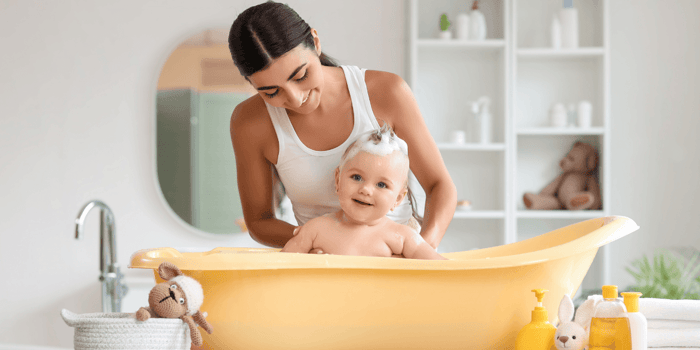
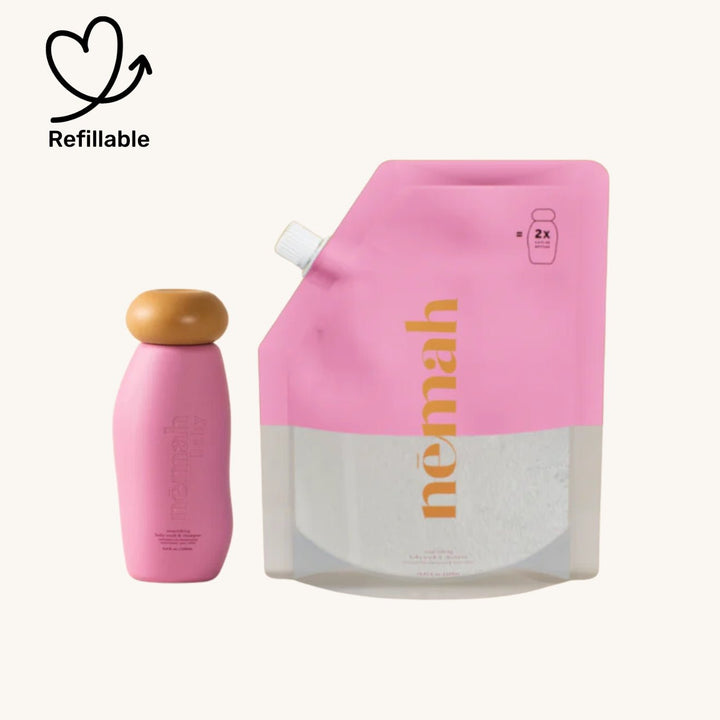
Choosing a cleanser for babies and young children often comes down to finding a formula that cleans effectively while remaining gentle enough for sensitive skin and hair.
Non-Toxic Baby & Kids Body Wash & Shampoo – Refillable Set
$19.99
Nemah’s Baby & Kids Body Wash & Shampoo is a gentle, plant-derived formula designed to cleanse and protect delicate skin and hair. Unlike many mainstream baby shampoos loaded with synthetic fragrances, sulfates, parabens, and dyes that can dry or irritate… read more
5) How to use a non toxic kids body wash (and avoid the most common irritation traps)
Even the best formula can irritate if it’s used like an adult shower gel ad. Here’s a kid-friendly routine that keeps skin comfortable.
Step-by-step routine
- Keep water lukewarm. Hot water increases dryness and can make any cleanser feel harsher.
- Use less than you think. Start with a small amount (think: a coin-sized dollop) and add only if needed.
- Focus on the zones that need cleansing. Underarms, feet, groin area, and any sunscreen-covered areas—everything else can often be rinsed with water alone.
- Rinse thoroughly. Residue can cause itchiness for some kids, especially along the neck and hairline.
- Moisturize after. If your child runs dry, apply a basic lotion/cream after patting skin mostly dry.
Patch test when appropriate
If your child has sensitive skin, is prone to rashes, or you’re switching products, it’s smart to patch test. Apply a small amount of the non toxic kids body wash (diluted with water, as it would be used in the bath) to a small area like the inner forearm, rinse, and watch for irritation over the next day. If anything stings or redness persists, discontinue and consider a simpler, fragrance-free option. Always check labels for usage directions and avoid getting cleanser in the eyes.
6) If your kid also wants skincare or play makeup: face wash and makeup shopping notes
It’s common for kids to want “their own” products—especially if they’re watching older siblings or parents. If you’re already focused on a non toxic kids body wash, here’s how to think about adjacent categories without overcomplicating things.
Non toxic face wash for kids: do they even need one?
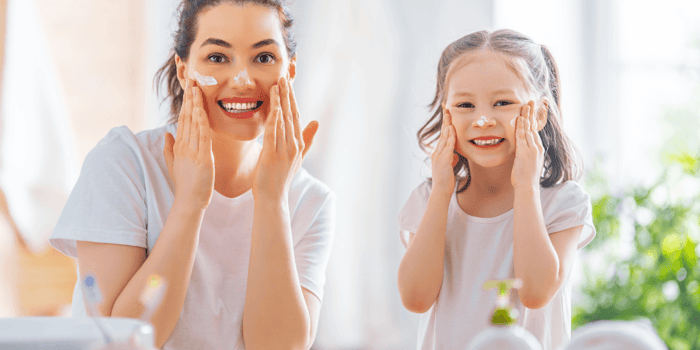
Many kids don’t need a dedicated cleanser; lukewarm water (and a soft washcloth if needed) can be enough. If you do want a non toxic face wash for kids, prioritize the same fundamentals: gentle cleansing, fragrance-free or very lightly scented, and easy rinse. Avoid strong “acne” positioning unless a professional has advised it. For shoppers searching for the best non toxic face wash for kids, “best” usually means the one your child will tolerate daily without tightness or stinging—simple wins.
Non toxic makeup for kids: what to prioritize
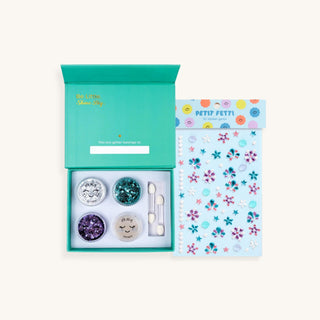
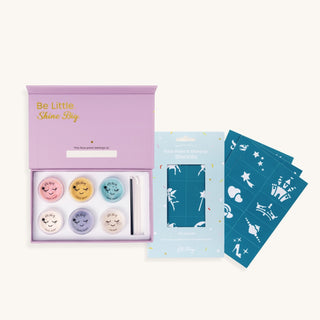
For dress-up and occasional play, non toxic makeup for kids is mostly about minimizing irritation and making removal easy. Look for:
- Clear ingredient lists and basic directions for removal.
- Lower fragrance (especially for lip and cheek products).
- Simple colors without heavy scent or lots of extra botanical additives if your child is sensitive.
- Hygiene-friendly formats (avoid sharing products between kids; wash applicators).
When people search for non toxic kids makeup or the best non toxic makeup for kids, they’re often trying to avoid products that stain skin, trigger redness, or are hard to wash off. A good rule: if it takes aggressive scrubbing to remove, it’s not ideal for kid skin. Choose options that come off with a gentle cleanser and lukewarm water. For children who do need a dedicated cleanser, our guide to children's face wash explains what to look for in a gentle, age-appropriate formula.
7) Bottom line: what “good” looks like in a non toxic kids body wash
A strong non toxic kids body wash is one that cleans effectively, rinses easily, and keeps your child comfortable—without relying on heavy fragrance or over-the-top claims. The most parent-approved wins tend to be simple: gentle cleansing agents, fragrance-free (or very lightly scented), no unnecessary dyes, and packaging that helps prevent “oops, I used half the bottle” baths.
Before you buy, check labels for fragrance and overall simplicity, and consider a patch test if your child is sensitive or you’re switching formulas. With the right product and a low-stress routine (lukewarm water, small amount of cleanser, moisturize after), choosing a non toxic kids body wash can be less about fear and more about everyday comfort and practicality.
For a deeper dive into safe skincare for kids, visit Safe & Non-Toxic Skincare for Kids to discover the best clean beauty products, DIY recipes, and tips for keeping your child’s skin healthy and toxin-free.

About the Author: This article was written by the contributing writers at Popsicle Beauty Club—a team of moms, educators, and clean beauty advocates passionate about creating a safer, more imaginative world for kids. We believe in empowering parents with trusted information and offering fun, non-toxic beauty and personal care products that let children play, express, and explore—without compromising their health.