

Table of Contents
- Introduction
- 1) What “dye free” typically means on a lip gloss label
- 2) Color additives to recognize (and how they show up on ingredient lists)
- 3) Kid-focused “watch-outs” that matter as much as dyes
- 4) A parent’s label checklist for dye free + allergen-aware shopping
- 5) Patch testing and first-use routine (especially for sensitive lips)
- 6) Common ingredients parents ask about (and what to consider)
- 7) Bottom line: how to choose dye free lip gloss with confidence
- FAQs
Introduction
Shopping for dye free lip gloss can feel oddly complicated: a tube might look clear in the package, but still contain trace colorants; another might be tinted but marketed as “clean.” If you’re buying for a child (or anyone with sensitive lips), “dye free” is usually about minimizing certain synthetic color additives that can be irritating for some people. The most helpful approach is to treat dye free lip gloss as a label-reading project: confirm what’s not included, but also check what is included—because flavorings, fragrance, and certain base ingredients can matter just as much.
Below is a parent-friendly, non-alarmist guide to reading ingredient lists, understanding common colorants, and choosing dye free lip gloss that fits real life: school days, playdates, and the inevitable “gloss everywhere” moments. Always check labels (formulas change), and patch test when appropriate—especially for first-time use.
1) What “dye free” typically means on a lip gloss label
In everyday shopping language, dye free lip gloss usually means the product is made without certain synthetic color additives often listed as FD&C dyes (like Red 40) or their “lake” versions. Some brands use “dye free” to mean “no added colorants at all,” while others mean “no synthetic dyes, but mineral pigments are okay.”
Because there isn’t one universal definition across all brands, the most reliable method is simple: use the ingredient list as the source of truth. Marketing callouts can guide you, but the INCI list (the standardized ingredient list on packaging) tells you what’s actually inside.
Quick clarity check
- Clear gloss is not automatically dye-free; it may contain tiny amounts of colorants for tone correction.
- Tinted gloss can still be “dye free” if the tint comes from mineral pigments or other non-FD&C colorants.
- “No artificial colors” is not identical to dye-free; read the list to confirm what type of colorants are used.
2) Color additives to recognize (and how they show up on ingredient lists)
When parents are specifically hunting for dye free lip gloss, these are the colorant terms that commonly trigger a “maybe not” decision. You don’t need to memorize them all—just know what patterns to scan for.
FD&C dyes and lakes
- FD&C Red 40 / Red 40 Lake
- FD&C Yellow 5 / Yellow 5 Lake
- FD&C Blue 1 / Blue 1 Lake
- D&C Red 6, D&C Red 7 (often used in lip products; may appear as “CI” numbers depending on region)
Lakes are dye pigments that have been converted into an insoluble form, often used to color oil-based cosmetics. If you’re avoiding dyes, watch for both the dye name and the “Lake” version.
Other colorants you may want to decide on case-by-case
- Carmine (sometimes listed as CI 75470): a red pigment derived from insects. Many families avoid it for personal, dietary, or ethical reasons. It’s not an FD&C dye, but it is a color additive.
- Mica: used for shimmer. Not a dye, but it can make a “clear” gloss look sparkly or slightly tinted. If you’re shopping for kids, consider whether shimmer is acceptable for school or sensitive eyes (glitter migration happens).
- Iron oxides (CI 77491/77492/77499) and titanium dioxide (CI 77891): mineral pigments used for tint/opacity. Some families are comfortable with these in a dye free lip gloss; others prefer fully clear formulas.
Practical takeaway: if your goal is no FD&C dyes, you can still choose a gloss with minerals. If your goal is no colorants at all, look for an ingredient list without any CI numbers, lakes, carmine, mica, or mineral pigments.
3) Kid-focused “watch-outs” that matter as much as dyes
When buying lip gloss for kids, remember that kids often reapply frequently, smear outside the lip line, and may lick their lips. That doesn’t mean you need to panic—it just means it’s smart to keep formulas simple and comfortable.
Flavor and fragrance
Strong candy flavors are fun, but they can also encourage licking and reapplying. If your child gets chapped or reactive lips easily, consider a dye free lip gloss that is fragrance-free or lightly flavored. On labels, fragrance can appear as “fragrance,” “parfum,” or “aroma.” Flavor may be listed as “flavor” or specific aromatic compounds.
Cooling/tingling ingredients
Some glosses include cooling agents (often sold as “minty” or “plumping” sensations). For many kids, that can feel uncomfortable. If you’re looking for non toxic lip gloss for kids in the practical, everyday sense of “gentle and age-appropriate,” it’s often best to skip anything marketed as plumping, tingling, or intense mint.
Sticky texture and transfer
Ultra-sticky gloss can trap hair, dust, and playground grit—especially on windy days. For kids lip gloss, a smoother, less tacky texture is usually more wearable and less messy. Look for a balance: cushiony shine without the gluey feel.
For a deeper ingredient-focused breakdown, our guide to kids lip gloss non toxic products covers many of the same label-reading principles in more detail.
4) A parent’s label checklist for dye free + allergen-aware shopping
Use this quick checklist when choosing dye free lip gloss. It’s designed to work whether you’re browsing online or reading a box in-store.
- Confirm the colorant situation. Scan for FD&C dyes, “Lake,” D&C dyes, carmine, and CI numbers. Decide your comfort level with mineral pigments and mica.
- Check for fragrance/flavor intensity. If your child is sensitive, choose fragrance-free or very lightly flavored options. Less “candy” can mean less lip licking.
- Look at the base ingredients for comfort. Many glosses use a mix of emollients and thickeners. If lips get dry easily, choose formulas that feel cushioning rather than thin and slick.
- Consider a “short list” formula. Fewer ingredients can make it easier to identify what caused irritation if it happens.
- If you need nut free lip gloss, don’t assume. “Nut free lip gloss” depends on the specific oils used (and sometimes facility handling). Scan for ingredients like almond oil, hazelnut oil, macadamia, argan, or shea (shea is a seed butter but can still be a concern for some families). If nut avoidance is strict, look for clear brand statements and contact the brand for allergen handling details.
- Look for an age-appropriate applicator. For younger kids, a doe-foot can get messy fast. A squeeze tube can be more hygienic if used correctly, but it can also dispense too much. Pick what matches your child’s coordination and routine.
If you’re also searching for toxic free lip gloss, treat that wording as marketing shorthand—not a regulated guarantee. It’s more useful to focus on what’s actually listed (and what’s not), plus how the product feels and behaves on lips.
5) Patch testing and first-use routine (especially for sensitive lips)
Even a dye free lip gloss can cause irritation if a person reacts to fragrance, flavor, or a specific emollient. Patch testing is a simple way to lower the odds of an unpleasant surprise.
How to patch test a lip product (practical version)
- Pick a small area of skin (many people use the inner forearm). Apply a tiny amount.
- Wait and observe for any redness, itching, or discomfort over the next day. (Everyone’s skin is different; if you’re unsure, err on the side of caution.)
- First lip wear: start with a thin layer on clean, dry lips at home rather than right before school or an event.
Kid-friendly use tips
- Use a “rice grain” amount for shine without stickiness.
- Set a reapply rhythm (after snack, after lunch) rather than constant layering.
- Wipe applicators if the gloss gets gritty (playground days happen). If it’s a wand, avoid sharing between kids to reduce germ transfer.
6) Common ingredients parents ask about (and what to consider)
Parents often ask for a simple yes/no list. Realistically, ingredient decisions are personal, and what matters most is your child’s sensitivity, your allergen needs, and your comfort level with certain materials. Here are a few common categories to help you evaluate dye free lip gloss options without spiraling.
- Petrolatum/mineral oil: Often used for slip and barrier feel. Some families prefer to avoid it; others like the protective feel, especially in dry climates. Not a dye, but it affects texture and wear.
- Waxes and butters: Can add comfort and reduce feathering. If you’re looking for lip gloss for kids that doubles as a comfort product, a balm-gloss hybrid texture can be easier than a very slick shine.
- Essential oils: Sometimes used for scent/flavor. “Natural” doesn’t always mean gentler on lips; if your child is sensitive, this is a category to approach carefully.
- Preservatives: Many products need a preservation system, especially if there’s any water content. Rather than avoiding preservatives broadly, focus on choosing products from reputable brands, storing them well, and replacing them when they smell off or change texture.
For families searching “non toxic lip gloss for kids,” the practical goal is usually predictable, gentle wear: minimal stinging, minimal scent, minimal mess, and an ingredient list you understand.
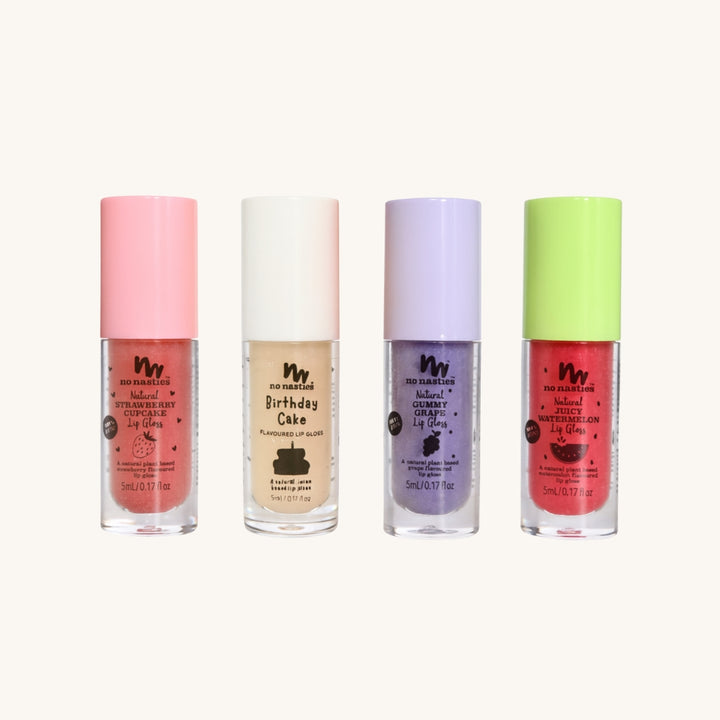
Looking for an all-natural lip gloss? We highly recommend this product by No Nasties.
Natural Flavor Lip Gloss for Kids
$7.99
A yummy, all-natural treat for little lips, this natural flavor lip gloss for kids adds a whisper of color while keeping lips soft and nourished with sunflower, olive, coconut, and jojoba oils. Formulated for even the most sensitive skin, it’s… read more
7) Bottom line: how to choose dye free lip gloss with confidence
If you want dye free lip gloss for your child, the best strategy is to shop with a short, consistent checklist: confirm no FD&C dyes/lakes if that’s your goal, keep fragrance/flavor mild, and choose a comfortable texture that won’t tempt nonstop licking or cause sticky chaos. If allergies are part of your household, look for clear brand allergen statements and treat “nut free lip gloss” as a claim you verify, not assume.
Most importantly, check labels every time you repurchase (formulas change), and patch test when appropriate—especially if your child has had lip sensitivity before. With those habits, finding a dye free lip gloss that feels fun, wearable, and parent-approved becomes much simpler.
Curious about which harmful ingredients to avoid in your child's beauty products? Read The Truth About Harmful Beauty Ingredients for Kids to uncover the hidden toxins in mainstream makeup, skincare, and hair care—and discover safer alternatives.
About the Author: This article was written by the contributing writers at Popsicle Beauty Club—a team of moms, educators, and clean beauty advocates passionate about creating a safer, more imaginative world for kids. We believe in empowering parents with trusted information and offering fun, non-toxic beauty and personal care products that let children play, express, and explore—without compromising their health.