
Table of Contents
- Introduction
- Why kids haircare needs its own “safe” checklist
- What “clean,” “natural,” and “organic” mean (and don’t mean)
- Ingredients and formula features to look for in kid-friendly shampoo
- Ingredients and features many parents choose to avoid (and why)
- How to read labels: a practical, parent-friendly guide
- Shopping checklist: how to choose safe shampoo and conditioner for kids by hair type
- Routine and use advice: getting results without irritation
- Bottom line: the easiest way to choose safe shampoo and conditioner for kids
- FAQs
Introduction
Shopping for safe shampoo and conditioner for kids can feel oddly complicated: there are “tear-free” promises, “natural” marketing, fruity scents, and ingredient lists that look like chemistry class. The good news is you don’t need to memorize every INCI term to make a smart, low-stress choice. You just need a few clear criteria that match a child’s scalp, hair type, and sensitivities—and a realistic routine that keeps bath time calm.
This guide breaks down what to look for, what many families prefer to avoid, and how to actually shop for safe shampoo and conditioner for kids in a way that’s evidence-aware and non-alarmist. As always: read labels, introduce one new product at a time, and patch test when your child has reactive skin or a history of irritation.
Why kids haircare needs its own “safe” checklist
Kids aren’t tiny adults—especially when it comes to bathing habits. Products for children often need to work well with:
- More frequent eye exposure (kids wiggle, rinse imperfectly, and rub their eyes)
- Fine hair and tangles that need slip without heavy buildup
- Variable scalp needs (some kids are dry and sensitive; others get sweaty from sports)
- Fragrance sensitivity (both the child and the household may react to strong scents)
Choosing safe shampoo and conditioner for kids often means prioritizing gentle cleansing, manageable fragrance, and formulas that rinse clean. It also means being cautious with “extra active” ingredients unless a pediatrician or dermatologist has suggested them for a specific reason.
What “clean,” “natural,” and “organic” mean (and don’t mean)
Search terms like best natural shampoo and conditioner for kids and organic shampoo and conditioner for kids are popular because parents want straightforward safety. But these words can be used loosely in marketing. A few practical reminders:
- “Natural” doesn’t automatically mean gentler. Some natural extracts and essential oils are common irritants for sensitive skin.
- “Clean” usually signals a brand’s ingredient philosophy (like avoiding certain preservatives or fragrances), but definitions vary by retailer and brand.
- “Organic” can refer to some ingredients being organic, not necessarily the whole formula. It also doesn’t guarantee a formula will be non-irritating around eyes.
Instead of relying on front-label buzzwords, use the ingredient list and a few performance cues to identify safe shampoo and conditioner for kids that fits your child. Families wanting a clearer understanding of clean beauty standards can also learn how ingredient transparency and safer formulations apply specifically to children’s skincare and personal care products.
Ingredients and formula features to look for in kid-friendly shampoo
When you’re browsing for a safe shampoo for kids, the goal is typically a cleanser that’s effective but not harsh, and that rinses easily. Here are useful things to look for on labels.
Milder surfactants (cleansers)
Shampoos need surfactants to lift oil and dirt. Many kid-friendly formulas use milder options or blends, such as:
- Cocamidopropyl betaine (often used to boost foam and reduce harshness in blends; some people are sensitive, so patch testing matters)
- Sodium cocoyl isethionate or disodium laureth sulfosuccinate (commonly used in gentler cleansing systems)
- Decyl glucoside or coco glucoside (non-ionic surfactants often found in “gentle” formulas)
It’s not about one “perfect” surfactant—look for a formula designed for frequent use and easy rinsing, especially if you’re trying to land on safe shampoo and conditioner for kids for the whole family.
Simple conditioning and slip (especially for long hair)
For conditioner, kids often benefit from light detangling ingredients that don’t feel heavy:
- Behentrimonium chloride or cetrimonium chloride (conditioning agents used for slip and detangling; usually used in rinse-off products)
- Panthenol (pro-vitamin B5; commonly used for hair feel and manageability)
- Humectants like glycerin (useful for softness, especially in dry climates—though too much can feel sticky for some hair types)
Soothing, straightforward base formulas
Many parents prefer fewer “extras” in safe shampoo and conditioner for kids, especially if a child is sensitive. A shorter, simpler ingredient list can be easier to troubleshoot if irritation occurs. If your child has eczema-prone or reactive skin, consider starting with fragrance-free or lightly scented options and avoiding layered botanical blends until you know what works.
Ingredients and features many parents choose to avoid (and why)
Not every family avoids the same ingredients. What matters is understanding why people skip certain features—usually due to irritation potential, strong fragrance, or build-up—not because a single ingredient is universally “bad.” Here are common watch-outs when choosing safe shampoo and conditioner for kids:
- Strong fragrance and parfum-heavy formulas: Fragrance is a top source of sensitivity complaints. If you’re trying to minimize reactions, choose fragrance-free or very lightly scented products. Also watch for lots of essential oils (lavender, peppermint, citrus) which can be irritating for some kids.
- “Tingle” ingredients: Cooling or warming sensations (often from minty components) can be uncomfortable for kids and may increase eye irritation at rinse time.
- Harsh cleansing feel: Some families avoid stronger sulfate-based cleansers because they can feel drying on certain scalps/hair types. Others use them occasionally for heavy buildup. If you’re unsure, start gentle and adjust based on results.
- Heavy buildup ingredients for fine hair: Some richer oils and butters can be great for coils and very dry hair, but can weigh down fine hair, making it look greasy faster. This can lead to over-washing, which can create a cycle of dryness and irritation.
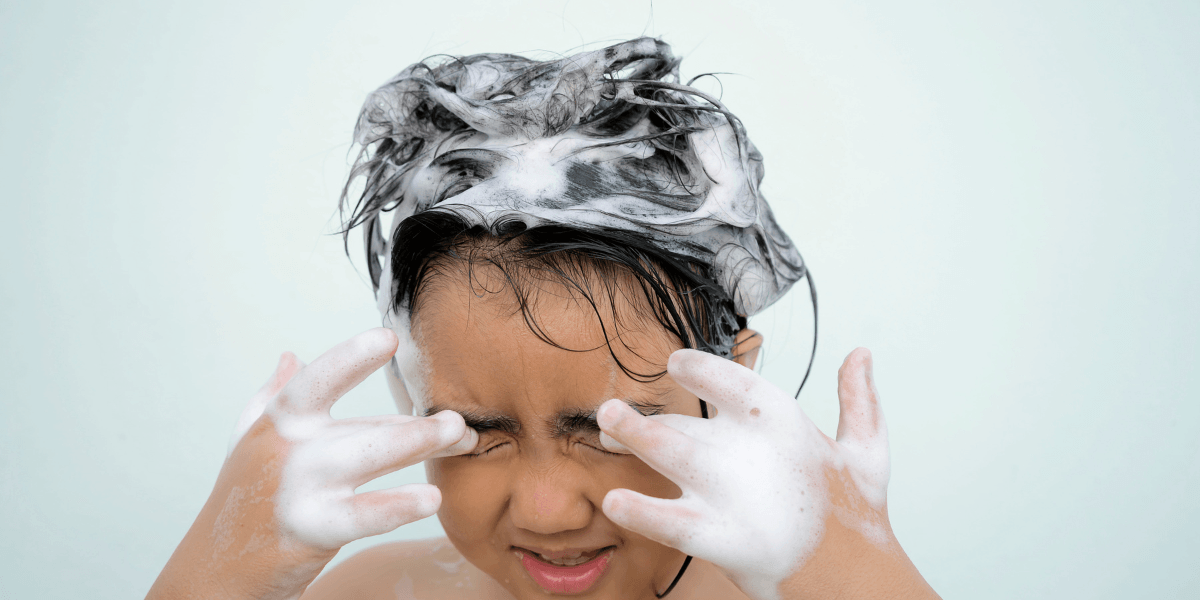
- Eye-sting risk: “Tear-free” is a marketing claim and doesn’t guarantee zero sting for every child. If your child is sensitive, prioritize easy-rinse formulas, use smaller amounts, and consider rinsing with a handheld sprayer to keep product away from the eyes.
If you’re navigating allergies or recurring irritation, it’s reasonable to keep notes (product, date introduced, reaction) and to patch test new safe shampoo and conditioner for kids before full use.
Parents trying to decode ingredient labels more confidently can also explore the most common cosmetic additives linked to irritation and sensitivity in children’s beauty products.
How to read labels: a practical, parent-friendly guide
Ingredient lists are ordered roughly from highest to lowest concentration, but you don’t need to decode every term. Use this quick method to shop smarter:
- Start with fragrance strategy: Decide if you’re going fragrance-free, lightly scented, or you’re okay with fragrance. If sensitivity is a concern, pick fragrance-free first and branch out later.
- Scan for “extra” actives: Kids rarely need scalp acids, intense anti-dandruff ingredients, or strong exfoliating agents unless advised by a professional. For most families, simpler is better for daily or weekly use.
- Look for detangling support in the conditioner: If hair snarls easily, choose formulas with conditioning agents (often the “-trimonium” ingredients) and good slip.
- Avoid ingredient overload if you’re troubleshooting: A long list of plant extracts can be fine, but if your child reacts, it’s harder to isolate the cause.
- Confirm usage instructions: Some conditioners are meant to be left on for a couple of minutes. If bath time is short, pick one that works with a quick rinse.
This is also where parents looking for the best clean kids shampoo and conditioner can ground “clean” in reality: a product isn’t automatically better because it has trendy claims—what matters is how your child’s hair and scalp respond.
Shopping checklist: how to choose safe shampoo and conditioner for kids by hair type
Use this checklist when comparing options in-store or online. It’s designed to help you choose safe shampoo and conditioner for kids based on what you’ll actually notice at home.
If your child has fine hair that gets oily fast
- Choose a lightweight conditioner and apply it only from mid-length to ends.
- Look for easy-rinse formulas to prevent limpness.
- Skip very heavy butters/oils if hair looks greasy within a day.
If your child has thick, curly, or coily hair
- Prioritize slip in conditioner (detangling is half the battle).
- Consider a richer conditioner or a detangling product used during comb-out.
- Wash less frequently if the scalp is comfortable; focus on gentle scalp cleansing and conditioning lengths.
If your child has a sensitive scalp
- Start with fragrance-free or very lightly scented options.
- Avoid “tingly” or heavily botanically fragranced products until you know tolerance.
- Introduce one product at a time and patch test if sensitivity is a pattern.
If your child swims or plays sports frequently
- Consider a gentle shampoo used after swim days, and a conditioner with good slip to prevent tangles.
- Rinse hair with plain water before swimming when possible; it can help reduce how much pool water hair absorbs.
- Use conditioner on ends to minimize dryness from frequent rinsing.
These criteria help you land on safe shampoo and conditioner for kids that performs well, not just one that sounds good on a label.
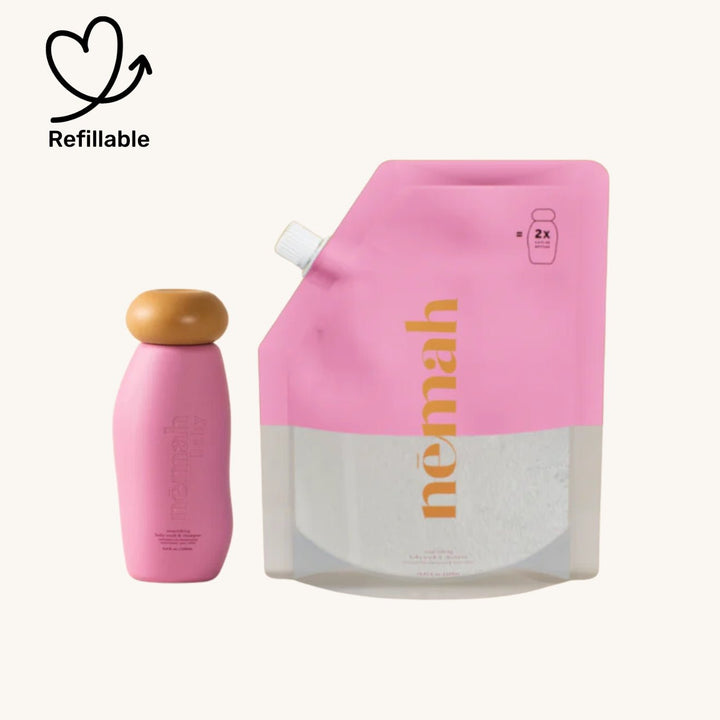
We highly recommend this shampoo & Body wash set by Nemah. Nemah’s Baby & Kids Body Wash & Shampoo is a gentle, plant-derived formula designed to cleanse and protect delicate skin and hair. Unlike many mainstream baby shampoos loaded with synthetic fragrances, sulfates, parabens, and dyes that can dry or irritate sensitive skin, Nemah’s formula is crafted with non-toxic, dermatologist-approved ingredients you can trust.
Non-Toxic Baby & Kids Body Wash & Shampoo – Refillable Set
$19.99
Nemah’s Baby & Kids Body Wash & Shampoo is a gentle, plant-derived formula designed to cleanse and protect delicate skin and hair. Unlike many mainstream baby shampoos loaded with synthetic fragrances, sulfates, parabens, and dyes that can dry or irritate… read more
If you're looking for a conditioner, then this conditioner below by Dabble & Dollop comes highly recommended. Say goodbye to tangles and tears with Dabble & Dollop’s Cherry on Top® Detangler Leave-In Conditioning Spray, a lightweight conditioning mist that makes brushing easier and more enjoyable. This gentle, weightless formula smooths knots without residue, leaving hair soft, manageable, and ready for the day. It’s made for everyday use on all hair types and works beautifully on both damp and dry hair.
Detangler Leave-In Conditioner Spray
$10.99
Say goodbye to tangles and tears with Dabble & Dollop’s Cherry on Top® Detangler Leave-In Conditioning Spray, a lightweight conditioning mist that makes brushing easier and more enjoyable. This gentle, weightless formula smooths knots without residue, leaving hair soft, manageable,… read more

Routine and use advice: getting results without irritation
The safest formula can still irritate if it’s overused or applied in a way that increases eye contact. A few realistic tips:
- Use less than you think: Start with a small amount (especially for short hair). You can always add a bit more if needed.
- Shampoo the scalp, not the ends: Focus cleansing on the scalp; let suds run through lengths during rinse.
- Condition the lengths: Apply conditioner from mid-length to ends, not directly on the scalp unless hair is very dry and the formula is lightweight.
- Detangle with product in: For tangly hair, detangle gently while conditioner is in, using fingers or a wide-tooth comb. Rinse after.
- Rinse thoroughly: Residue can cause itchiness or a “dirty” feel that makes you shampoo more often than necessary.
- Patch test when appropriate: If your child is sensitive, test a small amount on the inner arm or behind the ear and wait to see if irritation develops before full scalp use.
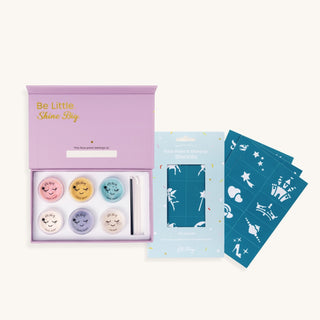
If you’re also shopping for other kid-friendly personal care, the same principles apply to items like kids safe makeup: fewer potential irritants, clear labeling, and patch testing before a big event or full-face application.
Bottom line: the easiest way to choose safe shampoo and conditioner for kids
The best safe shampoo and conditioner for kids is the one your child tolerates well, rinses clean, and makes hair easy to manage—without turning bath time into a struggle. Focus on gentle cleansing systems, manageable (or no) fragrance, and the right level of conditioning for your child’s hair type. Ignore hype when it doesn’t match your real needs, check labels every time you repurchase (formulas can change), and patch test if your child is prone to irritation. With those basics, finding safe shampoo and conditioner for kids becomes a practical shopping decision, not a stressful research project.
To learn more about choosing the safest shampoos, conditioners, and detanglers for kids, visit Non-Toxic Hair Care for Kids for a complete guide to gentle, chemical-free hair care.
About the Author: This article was written by the contributing writers at Popsicle Beauty Club—a team of moms, educators, and clean beauty advocates passionate about creating a safer, more imaginative world for kids. We believe in empowering parents with trusted information and offering fun, non-toxic beauty and personal care products that let children play, express, and explore—without compromising their health.