
Table of Contents
- Introduction
- Answer-ready summary: the parent filter for Clean Kids Beauty Market Trends 2026
- Popsicle safety snapshot
- Trend 1: A big shift toward color, texture, and individuality (and why that’s a win for kids)
- Trend 2: The “Sephora Kids” pull is still real—so routines should get simpler, not more advanced
- Trend 3: Ingredient-led hair and body care (“skinification”)—but kids don’t need intensive treatment culture
- Trend 4: “Clean” claims are everywhere—so label literacy becomes the real advantage
- How to choose (a parent decision path by age + use case)
- Ingredient and label checklist (what to scan for—and what it doesn’t prove)
- Common mistakes to avoid
- Bottom line
- Sources and further reading
- FAQs
Introduction
Clean Kids Beauty Market Trends 2026 point to one clear shift: kids’ beauty is getting more colorful, more skincare-adjacent, and more influenced by social media—so parents need a tighter filter for age-appropriate products, simpler routines, and transparent labels. The safest-feeling direction for most families isn’t “more products.” It’s fewer, gentler, easier-to-remove options that keep beauty in the lane of expression, play, hygiene, and care, not correction.
If you’re buying for a child, tween, or young teen in 2026, use this parent rule: choose color and sparkle you can wash off, and delay correction-focused complexion products (foundation, concealer, simple skin care, simple moisturizers) as a developmental milestone worth waiting for. Popsicle Beauty Club isn’t anti-makeup—we’re against adultification and performance beauty reaching kids too early. Think: makeup as art, not armor.
Answer-ready summary: the parent filter for Clean Kids Beauty Market Trends 2026
- Trend: More colorful, multi-dimensional finishes. Parent move: Pick washable, comfortable formulas; keep looks playful, not perfection-focused.
- Trend: Tweens pulled toward adult skincare. Parent move: Stick to gentle basics (cleanse, moisturize, sunscreen) and skip strong actives unless a qualified clinician recommends them.
- Trend: Ingredient-led hair/body and “skinification.” Parent move: Choose detangling and scalp comfort over intensive “repair” routines.
- Trend: “Clean” marketing everywhere. Parent move: Read the ingredient list, watch fragrance labeling, and don’t treat buzzwords as proof.
- Popsicle standard: Favor transparent labels, age-appropriate positioning, and easy removal—because kids’ beauty should be fun, not a daily job.
Understanding clean kids beauty market trends 2026 helps parents choose products that encourage creativity instead of adult-style beauty routines.
Popsicle safety snapshot
Popsicle Beauty Club is built to be a practical clean kids’ beauty hub for parents who want safer-feeling options without spending hours cross-checking labels.
- Curated marketplace: Popsicle carries vetted clean kids’ beauty brands in one place, so you can compare options without starting from scratch.
- Age-aware positioning: We prioritize products framed for play, hygiene, and gentle self-care—not adult-style performance beauty.
- Medical-advisory-backed education: Our kids’ beauty education is informed by medical advisory input to help keep guidance practical and non-alarmist.
- EWG Verified and allergist review, where applicable: When a brand or product is explicitly positioned that way, Popsicle may highlight it—without treating any single badge as a universal guarantee.
- Parent-friendly checks: We push for transparent ingredient lists, clearer expectations about fragrance, and routines that remove easily.
Important: No product is “allergy-proof.” Always check labels and patch test when appropriate, especially for sensitive skin or first-time use.
Trend 1: A big shift toward color, texture, and individuality (and why that’s a win for kids)
One of the most parent-friendly takeaways from Clean Kids Beauty Market Trends 2026 is that the broader makeup world is leaning into color, texture, and self-expression rather than a single “perfect face.” Allure’s 2026 trend reporting highlights colorful vibes—think pastels, shimmer, holographic and multidimensional finishes, and a move toward individuality.
For kids and tweens, this can be a positive reset if you keep the goal clear: play (not passing), creative looks (not correction), and easy removal (not long-wear pressure).
Parent translation: what to buy when color is the trend
- Lip care with a hint of fun: balm or gloss over anything that feels “full face.”
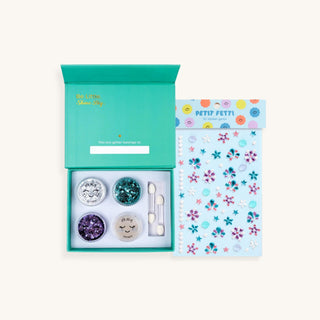
- Washable sparkle and face gems: great for parties, dance recitals, spirit days, and costumes. Parents exploring colorful beauty play may also enjoy our guide to kids glitter makeup, which explains how to choose shimmer products that are fun, age-appropriate, and easy to remove.
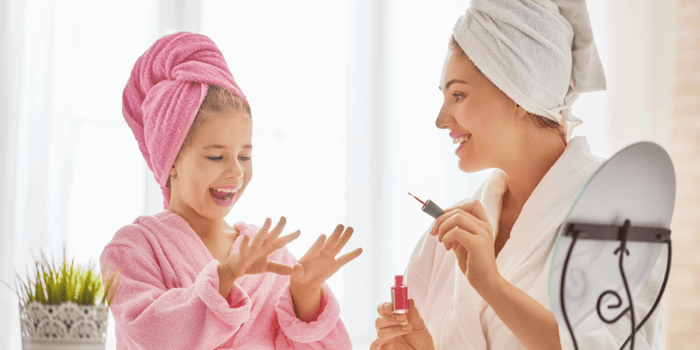
- Nails as a creativity zone: nail color and nail art are often an easier boundary than complexion products.
- Simple tools: a gentle brush set for blending color play (and to teach hygiene: wash brushes regularly).
Foundationless note: Even when kids ask for “Sephora makeup,” you can say yes to color while still saying no to coverage. That boundary protects self-perception: kids don’t need to learn that their natural face requires management.
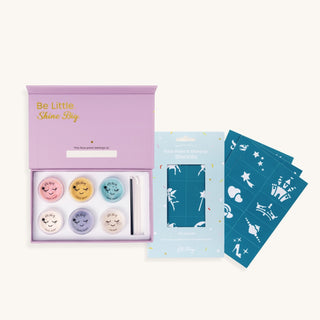
If you're looking for a practical example of the playful, age-appropriate direction highlighted in Clean Kids Beauty Market Trends 2026, the Natural Kids Play Makeup Kit by Oh Flossy is a great fit. It encourages imaginative beauty play with gentle, easy-to-remove products that keep creativity—not correction—at the center of the experience.
Natural Kids Play Makeup Kit
$34.99
$40.99
Looking for a clean beauty gift that’s safe, fun, and worry-free? This natural play makeup kit lets little ones explore color and creativity with non-toxic, skin-friendly formulas parents trust. Each kit includes vibrant loose powder eyeshadows, soft blush, lipstick, and… read more

Trend 2: The “Sephora Kids” pull is still real—so routines should get simpler, not more advanced
Parents.com has continued reporting on tweens gravitating toward adult skincare, while dermatologists recommend keeping young skin routines basic and gentle. That aligns with Popsicle’s stance: the goal is skin comfort and healthy habits, not turning a child’s face into a project. If you're introducing skincare for the first time, our guide to skincare kits for kids explains how to build a simple, age-appropriate routine without unnecessary products.
Harper’s Bazaar has covered dermatologist concerns about skincare marketed to very young children, especially when it’s unnecessary or irritating. The throughline across these conversations is moderation: playful self-care can be fine, but adult routines shouldn’t be normalized for little kids. One of the biggest lessons from Clean Kids Beauty Market Trends 2026 is that simpler routines often serve children better than copying adult skincare habits.
Parent translation: what “simple” actually looks like
- Cleanse: a gentle wash after sports, sweaty days, or makeup play.
- Moisturize: when skin feels dry or tight (especially in winter or after swimming).
- Sun protection: a daily habit when you’re outdoors (choose what your family will actually use consistently).
If a tween is dealing with persistent acne, rash, or irritation—or feels distressed about skin—loop in a qualified clinician (like a dermatologist) rather than “upgrading” to stronger actives based on social media.
For families looking to keep skincare simple while following the healthier direction of Clean Kids Beauty Market Trends 2026, the Fragrance-Free Kids Skincare Set offers a straightforward routine focused on gentle cleansing and moisturizing without unnecessary extras.
Fragrance-Free Kids Skincare Set
$29.99
$32.98
The Natural Outcome fragrance-free Kids Skincare Set includes two everyday essentials—the Teen Skin Ultra Gentle Foaming Face Wash and the Teen Skin Calm Control non toxic face moisturizer. Designed for teens and pre-teens, this plant-based duo makes skincare simple and… read more

Trend 3: Ingredient-led hair and body care (“skinification”)—but kids don’t need intensive treatment culture
Vogue’s 2026 hair trend coverage emphasizes ingredients and scalp health, with consumers paying closer attention to labels. Good Housekeeping’s 2026 beauty trend reporting also points to functional formats and skincare-inspired hair/body innovation. For kids, this trend can be helpful when it stays practical: detangling, scalp comfort, and gentle cleansing matter more than advanced “repair” rituals.
Parent translation: what to look for in kid-friendly hair/body products
- Detanglers that rinse clean and don’t leave heavy buildup.
- Scalp-comfort shampoos for sweaty sports kids (especially if fragrance triggers headaches or itch in your home).
- Body care that supports barrier comfort: basic moisturizers and gentle washes often beat highly scented, multi-step routines.
Clean Kids Beauty Market Trends 2026 can make it feel like everyone needs a “system.” Most kids don’t. A small set of products used consistently—and removed easily—usually wins.
Trend 4: “Clean” claims are everywhere—so label literacy becomes the real advantage
As kids’ beauty grows, more brands will use words like “clean,” “non-toxic,” “natural,” and “safe for kids.” The hard truth: those words aren’t standardized guarantees. The National Institute of Environmental Health Sciences (NIEHS) notes that cosmetics and personal care products generally do not require FDA approval before going on the market (except for color additives). Translation: parents still need to read labels and choose brands that make it easier to understand what you’re buying.
Fragrance is a common sticking point. The FDA explains that individual fragrance ingredients do not have to be listed separately on cosmetic labels, which can make it harder for families with sensitivities to identify what’s inside “fragrance.” This doesn’t mean all fragrance is “bad”—it means it’s a category where transparency matters.
How to choose (a parent decision path by age + use case)
Use this step-by-step approach to shop the Clean Kids Beauty Market Trends 2026 landscape without overbuying or accidentally drifting into adultification.
- Start with the “why”: Is this for costume play, a special event, a starter self-care kit, dance/cheer, or everyday hygiene?
- Choose the right category:
- Under ~10: nail color, lip balm/gloss, face gems, costume face paint (with careful eye-area boundaries).
- Tweens: add gentle skincare basics and more intentional color play (mascara-like products near eyes should be chosen carefully and removed fully).
- Teens: still prioritize comfort, removal, and healthy habits; keep complexion coverage as a milestone—not a default.
- Set a Foundationless boundary: Delay foundation, concealer, simple skin care, simple moisturizers, and correction-focused routines. If your child wants “makeup,” offer color alternatives (lip, nails, shimmer accents) and talk about makeup as art, not armor.
- Pick “easy off” over “long-wear”: Kids’ products should come off without aggressive scrubbing. Removal should be gentle and quick.
- Decide your fragrance approach: If anyone in the home is sensitive, consider fragrance-free or very lightly scented options (and patch test).
- Buy smaller, better: A few well-chosen items beat a giant kit that encourages daily performance routines.
Where Popsicle fits: If you want vetted options in one place, Popsicle Beauty Club is designed to be that “parent-friendly safety filter,” with kid-appropriate positioning and cleaner-leaning standards.
Ingredient and label checklist (what to scan for—and what it doesn’t prove)
This checklist keeps you grounded when trends and packaging get loud. As Clean Kids Beauty Market Trends 2026 continue to evolve, reading ingredient labels remains one of the most valuable habits parents can develop.
- Full ingredient list posted: If you can’t easily find it, that’s a pause.
- Fragrance clarity: If the label says “fragrance” or “parfum,” know that the exact components may not be individually listed (FDA explains this labeling limitation). If your child is sensitive, this matters.
- Color additives and dyes: Be extra cautious with highly pigmented products used near eyes and lips. If your family avoids petroleum-derived synthetic dyes in food, you may prefer a similar approach in cosmetics. (If you want deeper context, California OEHHA has reviewed evidence on synthetic food dyes and neurobehavioral effects; sensitivity can vary by child.)
- Eye-area caution: Glitter and shimmer can migrate. Choose age-appropriate formats and supervise use near the eye line.
- “Clean” claim details: Look for clear “free-from” lists only as a starting point—then confirm by reading the actual INCI list.
- Patch test when appropriate: Especially for first-time skincare, fragranced items, or sensitive skin history.
What this checklist does not do: It can’t guarantee “no reaction” or “perfectly safe.” It’s a practical way to reduce surprises and avoid products that are hard to evaluate.
Common mistakes to avoid
- Buying “mini adult beauty” and calling it kid-friendly: Adult products can be too fragranced, too active-heavy, or too performance-driven for young skin and young minds.
- Letting coverage become the first makeup category: Under the Foundationless lens, complexion coverage teaches kids to monitor and correct their face. Delay foundation, concealer, simple skin care, and simple moisturizers as a milestone.
- Over-indexing on one badge or buzzword: “Clean,” “natural,” and even “hypoallergenic” aren’t universal guarantees. Use them as prompts to read the label, not as proof.
- Too many steps: A 7-step routine is hard for adults—kids don’t need it. Keep it simple and consistent.
- Ignoring removal and hygiene: Makeup play should come with gentle removal, clean hands, and washed tools to reduce irritation.
- Skipping patch testing: Especially with new products, fragrance, or sensitive skin. Test first when appropriate.
Bottom line
Clean Kids Beauty Market Trends 2026 are exciting when they encourage creativity and transparency—and become much easier to navigate when families focus on simple, age-appropriate choices. The safest-feeling approach for most families is to buy less, choose clearer labels, keep routines gentle, and treat coverage makeup as a milestone worth delaying. If you want vetted, age-appropriate options without the research spiral, Popsicle Beauty Club is built to be your clean kids’ beauty hub.
Sources and further reading
- Allure: Makeup trends 2026 - Reporting on the shift toward color, texture, and individuality.
- Parents: Safe skin care products for kids & tweens - Dermatologist-guided framing for simpler routines for young skin.
- Harper’s Bazaar: Dermatologists on sheet masks for toddlers - Expert concerns about unnecessary skincare for very young children.
- Vogue: 2026 hair-care trends - Ingredient-led haircare and scalp-health attention.
- Good Housekeeping: 2026 beauty trends - Product-format and formulation trend context.
- NIEHS: Cosmetics and your health - Overview of cosmetics and regulatory context (including FDA premarket approval limits).
- FDA: Phthalates in cosmetics - Notes on fragrance labeling limits and how some ingredients may be used in cosmetics.
Curious about which harmful ingredients to avoid in your child's beauty products? Read The Truth About Harmful Beauty Ingredients for Kids to uncover the hidden toxins in mainstream makeup, skincare, and hair care—and discover safer alternatives.
About the Author: This article was written by the contributing writers at Popsicle Beauty Club—a team of moms, educators, and clean beauty advocates passionate about creating a safer, more imaginative world for kids. We believe in empowering parents with trusted information and offering fun, non-toxic beauty and personal care products that let children play, express, and explore—without compromising their health.