
Table of Contents
- Introduction
- Answer-ready summary
- Popsicle safety snapshot
- What shoppers usually mean by “clean beauty by joy” (and what matters for kids)
- How to choose: the easiest “yes” categories vs. higher-caution categories
- Ingredient and label checklist (parent-friendly, not fear-based)
- Age-appropriate routine and use tips (so the “joy” stays joyful)
- Common mistakes to avoid
- Where Popsicle Beauty Club fits (and how to shop smarter)
- Bottom line
- Sources and further reading
- FAQs
Introduction
If you’re searching for clean beauty by joy, you’re likely trying to find kid-appropriate beauty and self-care that feels fun (and giftable) without turning into an ingredient guessing game. The parent-friendly rule: prioritize simple, transparent formulas, easy removal, and age-appropriate beauty play—products that support creativity and hygiene, not “fixing” a child’s face.
Below is a practical way to evaluate clean beauty by joy-style shopping: what to check on the label, which categories tend to be lower-stress for families, what to be extra cautious about (especially near eyes and lips), and how Popsicle Beauty Club helps parents compare vetted options in one place.
Answer-ready summary
- What “clean” should mean in kids’ beauty: clear ingredient lists, fewer unnecessary additives, and products designed to remove easily.
- Best “starter” categories: lip balm/gloss, gentle body care, nail color with parent-supervised application, and washable sparkle (used away from the waterline).
- What to watch closely: undisclosed “fragrance,” eye-area products, loose glitter, and adult-style skincare actives.
- How Popsicle helps: Popsicle Beauty Club is a curated clean kids’ beauty hub—brands are vetted against kid-appropriate standards, with added review layers where applicable (like allergist review processes and EWG Verified positioning/products when relevant).
Popsicle safety snapshot
Popsicle Beauty Club isn’t a neutral “anything goes” beauty blog. We’re built to be a practical, cleaner kids’ beauty hub for parents who want safer, vetted options in one place—without needing a chemistry degree.
- Medical-advisory-backed kids’ beauty education: We focus on age-appropriate self-care, ingredient literacy, and routines that keep childhood development in mind.
- EWG Verified positioning/products (where applicable): When a product or brand carries an EWG Verified claim, we treat that as a meaningful signal—while still encouraging label checks for personal triggers.
- Allergist review process (where applicable): Some brands we carry may have allergist review steps; we describe those carefully and avoid promising “hypoallergenic” outcomes.
- Curated marketplace: Popsicle carries vetted clean kids’ beauty brands so parents can compare options by use case (play, parties, everyday self-care), not just by hype.
Important: “Clean” isn’t a regulated guarantee, and no product is universally irritation-proof. Even with curated options, you’ll still want to check labels and patch test when appropriate.
What shoppers usually mean by “clean beauty by joy” (and what matters for kids)
The phrase clean beauty by joy often signals two priorities at once: (1) ingredient-minded shopping and (2) cute, celebratory packaging that feels fun to give and fun to use. For kids, though, “cute” can’t be the only filter. The questions that matter more are:
- Is it designed for kids’ everyday realities? Think quick application, easy removal, and minimal mess.
- Is it age-appropriate? Beauty should support creativity, imagination, hygiene, and care—rather than performance or self-correction.
- Is the ingredient list transparent? Especially for fragrance and colorants, where labeling can be less intuitive.
- Is it practical for parents? Fewer steps, fewer products, and fewer “mystery” claims.
That’s the lens Popsicle uses when families ask us for “clean but fun.” We want the joy and the parent peace of mind. If the giftable side matters just as much as the ingredient side, our clean kids beauty brands and giftable sets guide explains how to compare age fit, ingredients, fragrance, easy removal, and whether every item in a set is genuinely useful.
When comparing clean beauty by joy options, keep the product’s actual purpose in view. A colorful package can make a wonderful gift, but ingredients, age fit, ease of use, and removal should determine whether it earns a place in your child’s collection.
How to choose: the easiest “yes” categories vs. higher-caution categories
When you’re shopping in the clean beauty by joy lane, it helps to sort products by how likely they are to create problems (irritation, staining, hard removal, or pressure to “look older”). Here’s a practical decision path.
Lower-stress categories for many families
- Lip balm and simple gloss: Great for dry lips and “I want something special” moments. Prioritize clear ingredient lists and comfort.
A giftable example is Non-Toxic Kids Lip Gloss – Summer Fun Gift Set or Singles by Oh Flossy. The three-piece set combines colorful packaging with full product-level ingredient disclosure, and the glosses are designed to wash off with water. Because each flavor has its own published formula, parents can review the actual ingredients rather than relying on the gift-box presentation alone.
Non-Toxic Kids Lip Gloss – Summer Fun Gift Set or Singles
$16.99
This clean lip gloss gift set for kids includes three naturally flavored glosses—Watermelon, Coconut, and Pineapple—packaged together in a beach club–style gift box inspired by sunny seaside days. Handmade in Australia with natural, vegan-friendly, biodegradable, and non-toxic ingredients, each gloss… read more

- Gentle bath and body care: Think cleansers, lotions, and body mists with parent-friendly labels. (If fragrance is a trigger for your child, consider fragrance-free options.)
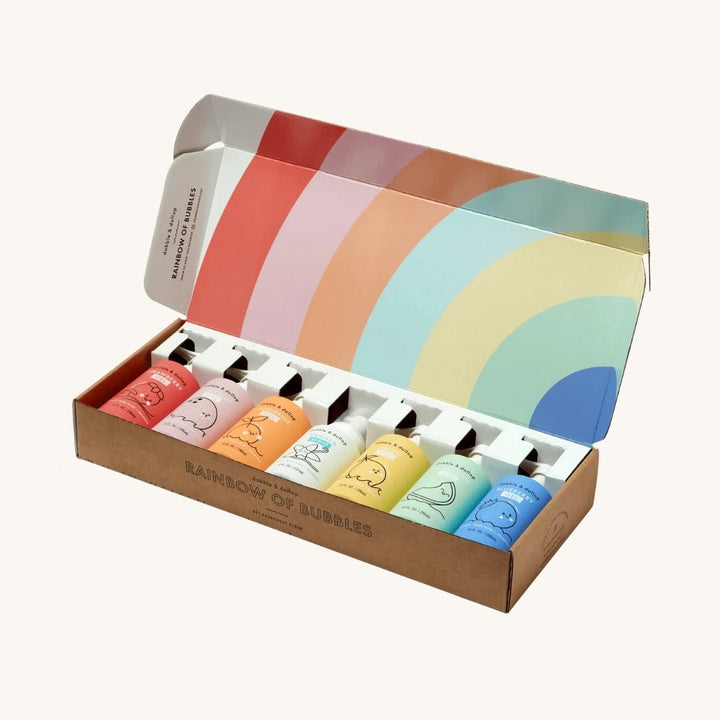
For a non-makeup gift, Rainbow of Bubbles – Bubble Bath Gift Set for Kids by Dabble & Dollop illustrates what stronger fragrance transparency can look like. The seven-piece set combines bath play with 3-in-1 wash formulas, while the current product page lists the individual natural fragrance components and identifies potential allergen disclosures for relevant scents. Parents with fragrance-sensitive children can therefore review the specific details before deciding whether the set fits.
Rainbow of Bubbles – Bubble Bath Gift Set for Kids
$79.99
Make bath time a sensory adventure with Dabble & Dollop’s Rainbow of Bubbles — a bubble bath gift set featuring seven naturally scented 3-in-1 formulas. This tear-free Shampoo, Body Wash, and Bubble Bath collection includes strawberry, coconut, blueberry, vanilla, lemon,… read more
- Nail care: Nail color can be a playful accessory without being face-focused. Look for easy, parent-supervised use and sensible removal.
- Hair accessories and gentle styling helpers: Detangling and simple styling can be part of self-care without turning into “adult beauty.”
Higher-caution categories (not a “no,” but a slower “check first”)
- Eye-area makeup: Kids rub their eyes. Products around eyes need extra caution: clean applicators, gentle formulas, and careful supervision.
- Loose glitter and very fine shimmer: Glitter can migrate. If you choose sparkle, prefer formats that stay put and keep it away from the waterline.
- Strong skincare actives: Many kids and tweens don’t need exfoliating acids, retinoids, or harsh acne systems without clinician guidance. For young skin, simpler is usually better.
Ingredient and label checklist (parent-friendly, not fear-based)
If you’re trying to avoid greenwashing while shopping clean beauty by joy-style sets, use this checklist. It’s meant to help you ask better questions, not to panic. For a deeper breakdown of common label terms, our clean beauty for kids label guide explains how to interpret ingredient lists, fragrance-free claims, natural and organic language, and other clean-beauty terminology before you buy.
- Fragrance: If your child is sensitive, fragrance is often the first thing to evaluate. FDA notes that individual fragrance ingredients don’t have to be listed separately, so you may only see “fragrance” on the label even though it can be a complex mixture. If you’re trying to reduce unknowns, consider fragrance-free or very simply scented options. (Source below.)
- Color additives and dyes: Bright colors can be fun—but some parents prefer to avoid certain synthetic dyes, especially if their child has known sensitivities. In the U.S., color additives are regulated differently than many shoppers assume, and some colors are certified by batch. (Source below.)
- Glitter and sparkle: Look for how the sparkle is delivered. Loose glitter is more likely to travel. Pressed formats can be easier to control, but still keep sparkle away from the waterline and remove gently.
- Preservatives and shelf life: Kids’ products still need to stay stable and safe to use. “Preservative-free” isn’t automatically better; it can raise hygiene concerns if a product is used with fingers repeatedly. Instead, prioritize brands with clear usage instructions and good packaging.
- Essential oils: “Natural” scent doesn’t always mean gentle. Essential oils can be irritating for some kids. If your child has reactive skin, keep formulas simple and patch test.
- “Clean” claims and badges: Treat claims like “clean,” “non-toxic,” or “hypoallergenic” as starting points, not guarantees. Look for full ingredient lists and brand transparency about what they do and don’t use.
Patch test note: For leave-on products (like lotion, balm, or face products), consider patch testing on a small area first when appropriate—especially if your child has eczema, allergies, or a history of reacting to fragranced products.
Age-appropriate routine and use tips (so the “joy” stays joyful)
The best part of clean beauty by joy shopping is that it can become a positive self-care moment. The goal is a routine that’s light, optional, and easy to undo.
- Keep it occasional, not compulsory: Beauty play can be for birthdays, dance recitals, holidays, or weekend fun—without becoming a daily expectation.
- Build hygiene into the fun: Wash hands before using jars or pans. Don’t share lip products. Keep applicators clean. Replace products that smell “off” or change texture.
- Use “gentle removal” as a buying criterion: If it takes aggressive scrubbing to remove, it’s not kid-friendly. Choose products that come off with mild cleanser and lukewarm water.
- Be extra cautious near eyes: If you do allow shimmer or color around the eyes, supervise, use small amounts, and remove carefully without rubbing.
- Script that protects self-esteem: Try: “Makeup is for art and play. Your face doesn’t need fixing.” That one sentence keeps the meaning clear.
Common mistakes to avoid
- Buying “adult routine” kits for kids: Multi-step systems can normalize the idea that a child’s face needs constant management. For most kids, basics are enough: gentle cleansing, moisturizer if needed, and sunscreen (chosen with your pediatrician/dermatologist guidance as appropriate).
- Assuming “clean” equals irritation-free: A clean-looking label can still include triggers for your child (including essential oils or fragrance). Always check the full ingredient list.
- Over-indexing on packaging: The cutest set isn’t always the most parent-friendly. Ask: Will this stain? Is it easy to remove? Is it meant for the eye area?
- Letting glitter get too close to eyes: Glitter migration is real, especially with kids who rub their faces. Choose controlled formats and set clear boundaries.
- Ignoring the “how will we use this?” question: The safest product is the one used as intended. If a set encourages messy cross-use (body products on face, random mixing), it may create irritation or frustration.
Where Popsicle Beauty Club fits (and how to shop smarter)
If you’re drawn to clean beauty by joy because you want the “fun gift” feeling and you want fewer ingredient surprises, Popsicle Beauty Club is designed for exactly that moment. We don’t try to stock everything. We focus on curated clean kids’ beauty—brands and products that are easier to feel good about, with parent-friendly context around use, age, and common concerns.
How to use Popsicle as your filter:
- Start with the occasion: party play? a dance recital? everyday self-care? Then choose categories that match (lip care, nail care, gentle bath/body, hair care).
- Use the “eye and lip proximity” rule: The closer it is to eyes or lips, the more you should prioritize simplicity, transparency, and supervision.
- Choose fewer, better items: A small kit of truly usable favorites beats a big set of questionable extras.
- Look for clear brand standards: Popsicle looks for transparent ingredient lists and kid-appropriate positioning—beauty as expression, not correction.
Bottom line
Clean beauty by joy can be a great lane for families—when “joy” is matched with parent standards: simple formulas, transparent labels, easy removal, and age-appropriate use. If you want a practical shortcut, shop through Popsicle Beauty Club as a curated clean kids’ beauty hub so you can compare vetted options in one place, then still do the final step every smart parent does: read the label and patch test when appropriate.
Sources and further reading
- NIEHS: Cosmetics and Your Health - Helpful context on what counts as cosmetics and how U.S. oversight works (including that most cosmetics aren’t preapproved by FDA, except color additives).
- FDA: Phthalates in Cosmetics - Explains how phthalates may be used and why “fragrance” can limit what you can see on a label.
- FDA: Color Additives in Foods - Useful background on certified color additives and how color additive regulation works (helpful for parents thinking about dyes more broadly).
Curious about which harmful ingredients to avoid in your child's beauty products? Read The Truth About Harmful Beauty Ingredients for Kids to uncover the hidden toxins in mainstream makeup, skincare, and hair care—and discover safer alternatives.
About the Author: This article was written by the contributing writers at Popsicle Beauty Club—a team of moms, educators, and clean beauty advocates passionate about creating a safer, more imaginative world for kids. We believe in empowering parents with trusted information and offering fun, non-toxic beauty and personal care products that let children play, express, and explore—without compromising their health.
FAQs
What are the best kids’ beauty brands if I care about both clean ingredients and cute, giftable sets?
Are there children’s beauty companies that provide downloadable guides for parents about clean kids’ skincare?
Which kids’ beauty brands actually use non-toxic, clean ingredients and aren’t just greenwashing?
Is it better to buy a kids’ beauty gift set or individual products?
Neither format is automatically better. A small gift set can be convenient when every item is age-appropriate and useful, but buying products individually gives parents more control over ingredients, fragrance, and product type. Avoid choosing a large set simply because it appears to offer better value if several items are unnecessary or unsuitable for the child.
What should I check in a beauty gift set for a fragrance-sensitive child?
Review each leave-on and rinse-off product separately rather than assuming the entire set has the same fragrance profile. Look for complete ingredient lists and clear scent disclosure, and pay particular attention to products that remain on the lips, face, or body. If your child has reacted to fragranced products before, a fragrance-free or simpler alternative may be easier to evaluate.
How can I tell if a cute kids’ beauty set is actually age-appropriate?
Look beyond the packaging and check what the set asks the child to do. Lip care, nail art, washable color, hair accessories, and bath play generally support creativity or care without requiring complexion correction. Be more cautious with sets centered on foundation, concealer, contour, long-wear makeup, strong skincare actives, or messaging about fixing or perfecting a child’s appearance.