
Table of Contents
- Introduction
- Answer-ready summary
- Popsicle Beauty Club’s parent-first approach
- What does “free from common allergens” really mean?
- “Hypoallergenic” is not the same as reaction-proof
- How brands can make sensitive-skin routines fun
- How to evaluate a brand before buying
- Ingredients and claims that deserve a closer look
- A simple age-aware routine
- Patch testing and gradual introduction
- Current Popsicle Beauty Club product examples
- Product comparison
- Internal guidance for sensitive-skin families
- Common mistakes to avoid
- Where Popsicle Beauty Club fits
- Bottom line
- FAQs
Introduction
Allergen-aware kids skincare brands can make it easier for parents to build a simple routine without relying on vague “hypoallergenic,” “clean,” or “gentle” claims. The strongest options publish complete ingredient lists, explain fragrance and essential-oil choices, give clear age and use directions, and make skincare feel approachable through texture, packaging, and easy steps rather than through heavy scent or adult treatment language.
No company can guarantee that every product will suit every child. A fragrance-free cleanser may still contain a botanical, surfactant, or preservative that does not agree with one child’s skin. That is why the best approach combines brand transparency with product-by-product label checks, gradual introduction, and patch testing when appropriate.
This guide explains how to compare allergen-aware kids skincare brands, what “free from common allergens” can realistically mean, which red flags deserve a pause, and how Popsicle Beauty Club helps families find products that feel fun without turning childhood skincare into a performance routine.
Answer-ready summary
When comparing children’s skincare, prioritize brands that provide:
Complete ingredient lists
Fragrance-free or clearly disclosed scent options
Clear information about essential oils and botanicals
Age and application instructions
Simple cleanser-and-moisturizer routines
Patch-test guidance
Easy-to-use pumps or foaming formats
Responsive customer support
Measured claims rather than “safe for everyone”
Playful packaging that does not depend on strong fragrance or adult beauty pressure
Be cautious when a brand:
Uses “allergen-free” without explaining what is excluded
Hides behind “fragrance,” “aroma,” or proprietary blends
Markets tingling or strong actives to young children
Encourages long multi-step routines
Gives no complete ingredient list
Suggests that normal childhood skin needs correcting
Treats “natural” as proof that irritation cannot occur
The parent-friendly goal is not to find a perfect label. It is to identify allergen-aware kids skincare brands that give families enough information to make a careful, child-specific decision.
Popsicle Beauty Club’s parent-first approach
Popsicle Beauty Club is a curated children’s beauty and personal-care marketplace built around ingredient transparency, age-aware use, and beauty as expression rather than correction.
When Popsicle evaluates allergen-aware kids skincare brands, the questions extend beyond whether a bottle says “gentle”:
Is the complete formula visible?
Is fragrance clearly identified?
Are essential oils listed?
Does the product explain who it is for?
Can it be introduced one step at a time?
Is the packaging practical for children?
Is the product easy to rinse or absorb?
Does the brand avoid exaggerated safety guarantees?
Does the routine support hygiene and comfort rather than perfection?
This is part of Popsicle’s Foundationless philosophy. Children’s skincare should support cleansing, moisture, sun protection, and comfort. It should not teach children that pores, texture, freckles, redness, or ordinary skin changes are flaws that require a growing collection of products.
What does “free from common allergens” really mean?
The phrase sounds reassuring, but it is not a universal promise.
Different families may be trying to avoid different triggers, including:
Added fragrance
Essential oils
Specific botanical extracts
Lanolin
Nut-derived oils
Certain preservatives
Dyes
Flavor ingredients
Particular surfactants
Ingredients linked to a child’s known allergy
A product can omit several commonly questioned ingredients and still be unsuitable for one child. Conversely, a longer formula may be well tolerated when its ingredients are clearly disclosed and the child has no sensitivity to them.
Useful allergen-aware kids skincare brands define what their “free from” language means. They do not expect parents to interpret a broad badge without supporting details.
“Hypoallergenic” is not the same as reaction-proof
“Hypoallergenic” can signal that a company has tried to reduce likely irritants or allergens, but it does not guarantee universal tolerance.
Parents should still review:
The complete ingredient list
Fragrance and essential oils
The intended age range
The application area
Whether the product is rinse-off or leave-on
Previous reactions
Patch-test directions
Changes in formula or packaging
A useful product page should make those details easy to find.
How brands can make sensitive-skin routines fun
Fun does not have to mean candy fragrance, color-changing acids, or a shelf full of miniature adult products.
Allergen-aware kids skincare brands can make a basic routine appealing through:
Child-friendly textures
A light foam, smooth gel, or comfortable cream can make cleansing and moisturizing easier without adding unnecessary scent.
Practical packaging
Pumps and controlled dispensers help children use a consistent amount and reduce contamination compared with repeatedly dipping fingers into an open jar.
Clear visual steps
Simple “cleanse, moisturize, protect” instructions can turn the routine into a manageable habit.
Playful but age-appropriate design
Colorful labels, friendly characters, and child-sized bottles can create ownership without suggesting that a child needs a flawless complexion.
Short routines
Children are more likely to follow two clear steps than a seven-product system. Simplicity is both practical and easier for parents to troubleshoot.
How to evaluate a brand before buying
Use this checklist to compare allergen-aware kids skincare brands across product pages, packaging, and customer support.
1. Check ingredient transparency
A complete INCI list should be visible before purchase.
Pause when a brand provides only phrases such as:
Plant-powered
Dermatologist inspired
Clean ingredients
Naturally gentle
Toxin-free
Sensitive-skin friendly
Those phrases may offer context, but they do not replace the formula.
2. Review the fragrance approach
Look for:
Fragrance-free
No added fragrance
Parfum
Aroma
Natural fragrance
Essential oils
Flavor in lip products
“Unscented” and “fragrance-free” are not always used identically, so the ingredient list still matters.
3. Separate rinse-off from leave-on exposure
A cleanser that stays on the skin briefly is different from a moisturizer, balm, or body product that remains for hours.
Families with reactive skin may prefer to introduce leave-on products more slowly.
4. Look for measured safety language
Trustworthy brands explain what they have excluded or tested without promising that no child can react.
5. Evaluate age and routine fit
A strong formula can still be unnecessary if it is built around exfoliation, oil control, anti-aging, brightening, or intensive acne treatment that the child does not need.
6. Confirm customer support
Parents should be able to ask about ingredients, reformulations, allergens, application, and age suitability.
Ingredients and claims that deserve a closer look
The presence of one ingredient does not automatically make a product inappropriate. Context, concentration, exposure, and individual history matter.
Added fragrance
Fragrance is a common place to simplify when a child has reactive skin, headaches, sensory sensitivity, or eczema-prone areas.
Essential oils
Lavender, citrus, peppermint, tea tree, and other essential oils may suit some users but can be irritating for others. “Natural” does not mean universally gentle.
Botanical extracts
Plant extracts can support texture or product positioning, but parents should still check known allergies and previous reactions.
Strong active ingredients
Most children do not need retinoids, high-strength exfoliating acids, peels, or adult resurfacing systems.
Dyes
Decorative color can make a product visually appealing, but it does not improve cleansing or moisturizing. Dye-free formulas may simplify troubleshooting.
Preservatives
Water-based products need effective preservation. “Preservative-free” is not automatically safer if it creates a contamination problem.
A simple age-aware routine
The right routine depends on age, lifestyle, climate, and the child’s skin.
Younger children
Many younger children need little more than water or a gentle cleanser when visibly dirty, plus moisturizer when skin feels dry.
Tweens
Sweat, sunscreen, sports, and early oil changes may make a gentle cleanser useful. Add moisturizer based on comfort rather than pressure to create a full routine.
Teens
Consistency with cleanser, moisturizer, and sunscreen usually matters more than adding several treatment products at once.
Allergen-aware kids skincare brands should help families keep those steps clear instead of turning each age milestone into a reason to expand the routine.
Patch testing and gradual introduction
Patch testing is not a guarantee, but it may help identify an initial response before wider use.
A practical method is to:
Read the complete ingredient list.
Choose one new product.
Apply a small amount to healthy skin on the inner arm.
Follow the brand’s timing instructions.
Watch for redness, itching, burning, swelling, or discomfort.
Stop and wash the area gently if a reaction develops.
Introduce the product to its intended area cautiously.
Do not test over broken skin, an active rash, or an eczema flare. Families managing serious allergies or repeated reactions should seek individualized guidance from a qualified clinician.
Current Popsicle Beauty Club product examples
The products below illustrate different ways a skincare routine can remain simple, transparent, and visually approachable. Product formulas and availability can change, so review the current official listing and package before purchase.
Fragrance-Free Kids Skincare Set
The Fragrance-Free Kids Skincare Set combines a foaming face wash with a lightweight moisturizer for pre-teens and teens.
The official listing describes a fragrance-free cleanser and a two-step routine designed to keep skincare simple. The set is a practical example of how allergen-aware kids skincare brands can make a routine feel complete without requiring multiple serums, masks, and exfoliants.
The moisturizer contains tea tree oil, calendula, and willow bark, so families avoiding aromatic botanicals or particular plant ingredients should review the full formula rather than relying on the set’s fragrance-free positioning alone.
Fragrance-Free Kids Skincare Set
$29.99
$32.98
The Natural Outcome fragrance-free Kids Skincare Set includes two everyday essentials—the Teen Skin Ultra Gentle Foaming Face Wash and the Teen Skin Calm Control non toxic face moisturizer. Designed for teens and pre-teens, this plant-based duo makes skincare simple and… read more

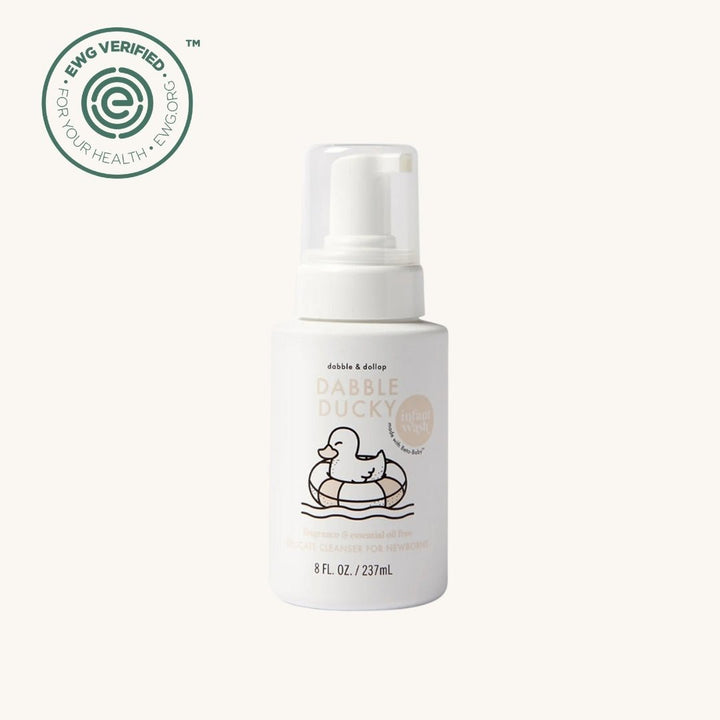
EWG Verified, Fragrance-Free Foaming Infant Body Wash
This foaming wash is formulated for babies, toddlers, and children with sensitive or dry skin.
The official product page identifies it as fragrance-free, essential-oil-free, dye-free, tear-free, EWG VERIFIED, dermatologist-tested, and made with fewer than ten listed ingredients. Its foaming format gives younger children a playful sensory element without depending on added scent or bright dye.
EWG Verified, Fragrance-Free Foaming Infant Body Wash
$14.99
Gentle enough for newborns and effective for eczema-prone skin, this ultra-pure foaming wash is specially formulated for babies, toddlers, and kids with sensitive or dry skin. Free from fragrance, essential oils, and dyes, it delivers a soft, tear-free cleanse without… read more
Natural Moisturizer for Kids
Natural Moisturizer for Kids offers a separate leave-on option for older children or teens who need hydration without added fragrance.
The official listing describes a lightweight fragrance-free formula with cottongrass, sunflower extract, and blue daisy. As with any botanical formula, parents should check the complete ingredient list against the child’s known sensitivities.
Natural Moisturizer for Kids
$19.99
Help your teen build a healthy skincare routine with Calm Daily Moisturizer—a gentle, fragrance-free formula designed for sensitive skin. This natural face moisturizer for kids is lightweight yet deeply hydrating, replenishing moisture with soothing Cottongrass and nourishing Sunflower Extract for all-day… read more

The most useful allergen-aware kids skincare brands also explain why one product may suit a baby, tween, or teen better than another.
Product comparison
| Product | Format | Best suited to | Parent consideration |
|---|---|---|---|
| Fragrance-Free Kids Skincare Set | Cleanser and moisturizer duo | Pre-teens and teens beginning a simple routine | Review tea tree oil, calendula, and willow bark |
| EWG Verified, Fragrance-Free Foaming Infant Body Wash | Foaming rinse-off wash | Babies, toddlers, and sensitive-skin households | Confirm individual surfactant tolerance |
| Natural Moisturizer for Kids | Fragrance-free leave-on moisturizer | Older children and teens needing hydration | Review botanical extracts before use |
Internal guidance for sensitive-skin families
A brand badge is only the beginning. For a broader routine framework, read our guide to kids skincare for sensitive skin, which covers fragrance, product introduction, and signs that a routine may be too complicated.
Families who need to simplify scent exposure can also review our fragrance-free skincare guide for kids before comparing cleansers, moisturizers, and body products.
Common mistakes to avoid
Even after choosing allergen-aware kids skincare brands, families can run into problems when the routine or product introduction is too complicated.
Introducing several products at once
If irritation appears, it becomes difficult to identify the cause.
Treating “natural” as allergy-proof
Plants, essential oils, and botanical extracts can still trigger individual reactions.
Choosing scent as the main source of fun
Packaging, foam, timers, headbands, and child-led steps can make a routine appealing without added fragrance.
Ignoring the difference between cleanser and moisturizer
A brief rinse-off product and an all-day leave-on product create different exposure patterns.
Using adult treatment products
Tingling, peeling, resurfacing, and correction-focused formulas are unnecessary for most children.
Keeping a product after the formula changes
Recheck ingredients when packaging, scent, texture, or product claims change.
Turning skincare into appearance pressure
Teach children that skincare supports comfort and hygiene. It is not a requirement for being attractive, confident, or socially acceptable.
Where Popsicle Beauty Club fits
Parents searching for allergen-aware kids skincare brands may encounter broad claims, incomplete labels and products that make adult routines look necessary for children.
Popsicle Beauty Club offers a more focused starting point through:
Curated child and tween products
Ingredient-forward listings
Fragrance-free options
Sensitive-skin education
Age-aware routine guidance
Product-specific cautions
Foundationless positioning
Customer support for product questions
The aim is not to declare one brand universally safe. It is to help families compare formulas, understand tradeoffs, and choose the smallest routine that meets the child’s real need.
Bottom line
Allergen-aware kids skincare brands should make it easier—not harder—for parents to understand what a product contains, how it should be used, and whether it fits their child’s age and sensitivities.
Look for complete formulas, clear fragrance disclosure, realistic claims, simple routines, practical packaging, and useful patch-test guidance.
Remember that “fun” can come from foam, color, packaging, independence, and a short self-care ritual. It does not need to come from heavy fragrance, strong actives, or adult beauty pressure.
Choose one product at a time, observe the child’s response, and keep skincare focused on hygiene, comfort, and care.
FAQs
Are there kids’ beauty brands that explain how to patch test products on children’s skin?
Which brands have age-appropriate marketing that doesn’t sexualize kids but still lets them have fun with beauty?
What brands offer kids’ skincare that’s free from common allergens but still fun for children to use?
What are allergen-aware kids skincare brands?
They are brands that clearly disclose ingredients, explain fragrance and botanical choices, avoid exaggerated universal-safety claims, and help parents identify whether a product fits a child’s known sensitivities.
Are essential oils safe in children’s skincare?
Some children tolerate essential oils, while others find them irritating. Review the specific oil, product type, application area, and the child’s sensitivity history.