
Table of Contents
- Introduction
- Quick answer: what counts as better kids beauty packaging?
- Recyclable, biodegradable, compostable, refillable: what is the difference?
- Why “eco-friendly” alone is not enough
- Which children’s beauty brands currently show clearer packaging choices?
- Refillable versus recyclable: which is better?
- What about biodegradable beauty packaging?
- Plastic-free packaging: a useful filter, not the whole answer
- Packaging sustainability and ingredient suitability are separate checks
- How to compare sustainable packaging in five minutes
- Less packaging starts with fewer products
- Common greenwashing mistakes parents can avoid
- Where Popsicle Beauty Club fits
- Bottom line
- Sources and further reading
- FAQs
Introduction
Choosing cleaner products for children is only part of the shopping decision. Sustainable kids beauty packaging asks a second question: what happens to the tube, compact, box, bottle, or applicator after the product is finished?
Some current children’s beauty products use recyclable cardboard, refillable compacts, reusable materials, or packaging specifically labeled recyclable. Others make broader sustainability claims without explaining what parents should actually do with the empty container. The most useful approach is not to look for one perfect “green” brand. It is to compare specific products, specific materials, and specific disposal instructions.
Popsicle Beauty Club’s own sustainability position reflects that progress-over-perfection approach. Its current FAQ acknowledges that some partner brands still use less-than-ideal packaging and says Popsicle has introduced an incentive program encouraging partners to adopt more sustainable packaging.
For parents, that makes the shopping rule fairly simple: look for packaging claims you can understand and verify, then choose products your child will realistically finish and use appropriately.
Quick answer: what counts as better kids beauty packaging?
When evaluating sustainable kids beauty packaging, prioritize concrete design choices over broad environmental adjectives.
Useful signals include:
- recyclable paper or cardboard packaging;
- refillable or interchangeable makeup components;
- reusable cases or containers;
- plastic-free packaging;
- packaging made from commonly recyclable materials;
- minimal outer packaging;
- clear instructions explaining what can be recycled, composted, reused, or refilled.
Popsicle’s Ingredient Glossary distinguishes recyclable, biodegradable, compostable, refillable, minimal, plastic-free, glass, and aluminum packaging rather than treating them as interchangeable terms.
That distinction matters because a package can sound environmentally impressive while still being difficult to dispose of correctly.
Recyclable, biodegradable, compostable, refillable: what is the difference?
A parent does not need to become a packaging engineer, but knowing the basic categories makes environmental claims much easier to evaluate.
| Packaging claim | What to look for | Parent question to ask |
|---|---|---|
| Recyclable | Paper, cardboard, glass, aluminum, or accepted plastics | Does my local recycling system accept it? |
| Biodegradable | Material intended to break down through biological processes | Under what conditions and over what timeframe? |
| Compostable | Packaging designed for a composting environment | Home compostable or industrial composting only? |
| Refillable | Container designed to be used repeatedly | Can I actually buy the replacement component separately? |
| Plastic-free | Paper, cardboard, glass, metal, or other non-plastic materials | Is the whole package plastic-free or only one component? |
| Minimal packaging | Less unnecessary wrapping or secondary material | Is the package appropriately sized for the product? |
Popsicle’s glossary notes that recyclable materials rely on established recycling systems, while compostable packaging may require particular composting conditions. Its definition of refillable packaging focuses on reusing the main container rather than repeatedly buying another single-use package.
So when sustainable kids beauty packaging is the goal, the strongest claim is usually the one that tells you exactly what the packaging is made from and what to do with it afterward.
Why “eco-friendly” alone is not enough
“Eco-friendly,” “green,” and “sustainable” can be useful signals that a company is thinking about environmental impact, but they are not disposal instructions.
If a product says only: Eco-friendly packaging
you still do not know:
- whether the package is recyclable;
- whether it contains mixed materials;
- whether a refill exists;
- whether the cardboard has a plastic coating;
- whether “biodegradable” requires special conditions;
- whether only the outer box is recyclable.
That is why the strongest sustainable kids beauty packaging claims tend to be specific.
For a broader look at how environmental and ethical claims fit alongside ingredient transparency, cruelty-free positioning, and greenwashing, Popsicle’s non-toxic beauty products for kids guide explores those standards in more detail.
Which children’s beauty brands currently show clearer packaging choices?
Packaging can vary from one product to another within the same brand, so it is better to verify a current product listing than assume every item a brand sells uses the same materials.
On the current Popsicle site, three useful examples stand out.
| Brand | Current product example | Packaging approach |
|---|---|---|
| Poppy & Pout | Birthday Cake Natural Lip Balm for Kids | Recyclable cardboard tube; listed as plastic-free and recyclable |
| True Bloom | Refillable Makeup Palette 10-Piece Kit | Refillable bamboo compact with interchangeable pans |
| No Nasties | 5-Piece Strawberry Cupcake, Mermaid or Unicorn Makeup for Kids | Product page specifically identifies recyclable packaging |
These are product-level examples rather than claims that every item from each company uses the same system.
Poppy & Pout: recyclable cardboard instead of a conventional plastic tube
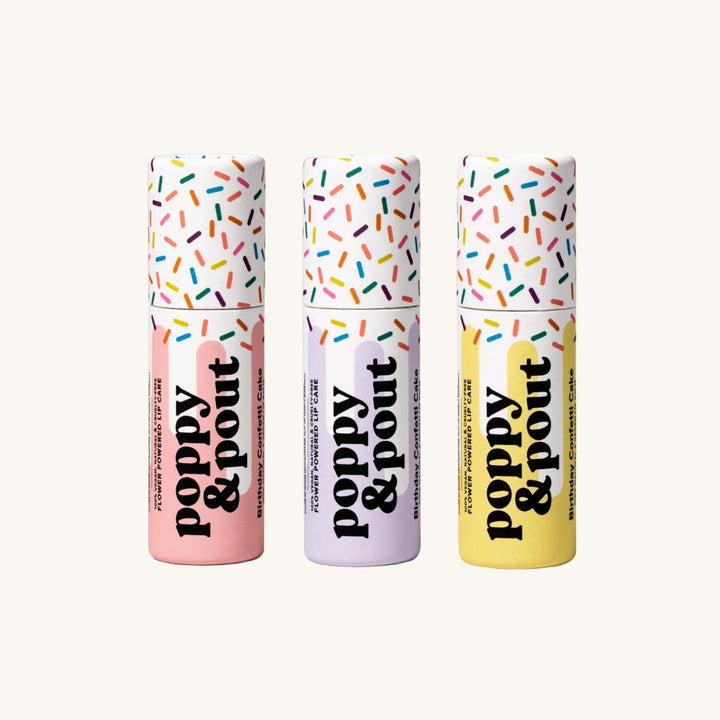
Poppy & Pout’s Birthday Cake Natural Lip Balm for Kids is one of the clearest examples currently available on Popsicle. The product page identifies its package as an eco-friendly recyclable cardboard tube and labels the product Plastic-Free & Recyclable.
That makes it useful when teaching children that sustainable kids beauty packaging does not always require a complicated refill system. Sometimes the improvement is simply replacing a commonly plastic-heavy format with a clearly identified paper-based alternative.
The balm is still flavored, so packaging should remain only one part of the decision. Parents should also review the actual formula and consider their child’s own tolerance and lip-licking habits.
Birthday Cake Natural Lip Balm for Kids
$9.99
Make the birthday magic last with the Birthday Confetti Cake Lip Balm, a sweet treat she can enjoy long after the candles are blown out. Infused with the joyous essence of vanilla cake and a hint of raspberry, this handcrafted… read more
True Bloom: keeping the compact and replacing the color
True Bloom takes a different approach with the Refillable Makeup Palette 10-Piece Kit. The current Popsicle listing includes a sustainable bamboo compact and interchangeable magnetic eyeshadow and blush pans, and specifically identifies the compact as refillable.
This is an important distinction.
Instead of treating the entire palette as disposable once a favorite shade runs out, a refillable system is designed around keeping the main case and replacing components. That is one of the clearest ways sustainable kids beauty packaging can move beyond simply changing the material of a disposable container.
For tweens exploring their first real color products, the refill concept can also support a smaller collection: finish or replace individual colors rather than continually buying another large palette.
Refillable Makeup Palette 10-Piece Kit
$59.99
Unbox a world of self-expression—without the worry. This 10-piece makeup kit is thoughtfully designed for imaginative play, using gentle, organic ingredients and a fresh, interchangeable color palette that keeps creativity flowing—all made with non-toxic ingredients and eco-friendly materials. Inside, you'll… read more

No Nasties: a current recyclable-packaging example
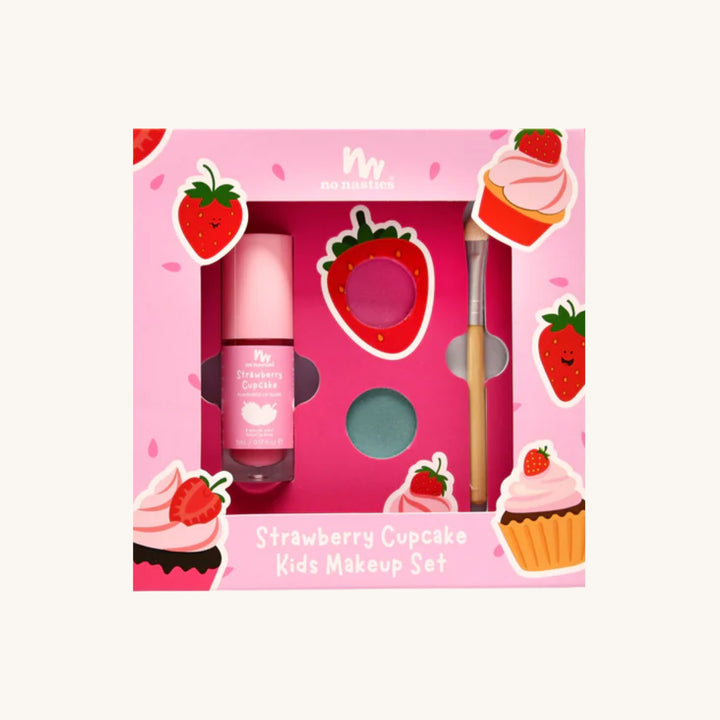
The current Popsicle listing for the 5-Piece Strawberry Cupcake, Mermaid or Unicorn Makeup for Kids by No Nasties specifically identifies the set as using Recyclable Packaging. It also describes the makeup as washing off with water.
That gives parents another useful comparison point: packaging sustainability can appear in play makeup as well as basic personal-care products.
Still, check the individual listing each time you buy. Packaging specifications can differ across products and can change over time.
5-Piece Strawberry Cupcake, Mermaid or Unicorn Makeup for Kids
$29.99
Encourage creativity with this natural pressed powder & lip gloss makeup set, formulated with vibrant mineral pigments and a non-toxic, skin-friendly base parents have trusted since 2016. As the longest-standing clean beauty brand for kids, they've led the way in… read more
Refillable versus recyclable: which is better?
There is not one universal winner.
A refillable product only reduces repeated packaging if the family actually keeps and reuses the original container. If replacement pans are difficult to find or the case breaks quickly, the theoretical benefit becomes less meaningful.
A recyclable container may be simpler if:
- the child uses the entire product;
- the packaging is accepted locally;
- it is easy to separate or prepare;
- there is no realistic refill system for that category.
Likewise, a sturdy reusable container can be worthwhile even if it contains a material you would not choose for a single-use package.
The useful question is therefore not: Is refillable always better?
It is: Which format is most likely to stay in use and avoid unnecessary replacement in our household?
That is a much more practical way to assess sustainable kids beauty packaging.
What about biodegradable beauty packaging?
Biodegradable claims deserve a little more attention because the word can sound more definitive than it is.
Popsicle’s glossary defines biodegradable packaging as material capable of decomposing through microbial action, while also noting that the conditions and timeframe can vary. Compostable packaging is a more specific category and may be intended for either industrial or home composting depending on the material and certification.
That means parents should look for details such as:
- what the material is;
- whether the package is biodegradable or certified compostable;
- whether home composting is appropriate;
- whether industrial composting is required;
- how long breakdown is expected to take;
- whether any plastic components must first be removed.
The same logic applies to glitter. If your child loves sparkle, Popsicle’s biodegradable glitter vs regular glitter guide explains why the word “biodegradable” should still be paired with cosmetic-grade use guidance, age-appropriate placement, and gentle cleanup.
Plastic-free packaging: a useful filter, not the whole answer
Popsicle currently has a dedicated Plastic-Free Packaging collection, described around products using formats such as compostable tubes, reusable glass, and recyclable materials.
That can make plastic-free a convenient shopping filter, but it should not become another one-word shortcut.
For example, glass can be reusable and recyclable but may be less practical in the backpack of a young child. Cardboard can reduce plastic use but needs to stay dry and intact. Metal tins may last a long time but can still be unnecessary if the child never finishes the product.
Good sustainable kids beauty packaging has to work in real family life.
A package that survives school, closes properly, keeps the formula sanitary, and gets fully used may be more sensible than an impressive-looking eco format that leaks or gets discarded half full.
Packaging sustainability and ingredient suitability are separate checks
One of the most important lessons in this category is that environmental packaging does not tell you whether the formula suits your child.
A recyclable package can contain:
- a fragrance your child dislikes;
- botanical ingredients they react to;
- pigments you would prefer not to use;
- a format that is inappropriate for their age.
Likewise, a formula your child tolerates well may come in packaging that could be improved.
Think of the purchase as two separate filters:
Filter 1: Does the product itself make sense?
Review:
- the full ingredient list;
- intended age or use;
- fragrance and flavor;
- application area;
- pigments or sparkle;
- removal instructions;
- personal allergens or sensitivities.
Filter 2: Does the packaging make sense?
Then assess:
- recyclable material;
- refillability;
- plastic-free components;
- minimal packaging;
- reusability;
- disposal instructions.
The best choice passes both filters reasonably well without requiring perfection.
How to compare sustainable packaging in five minutes
When a child is already asking for the sparkly thing in your cart, you probably do not want to research packaging engineering for an hour.
Use this faster process instead.
Step 1: Find the exact packaging statement
Skip broad banners and go to the actual product listing.
Look for phrases such as:
- recyclable cardboard tube;
- refillable compact;
- reusable glass jar;
- plastic-free packaging;
- recyclable packaging;
- replacement pan available.
Step 2: Ask whether the claim applies to the primary package
A recyclable shipping box is nice, but the container used every day matters more.
Check the tube, jar, compact, bottle, lid, and applicator.
Step 3: Check whether multiple materials can be separated
Pumps, mirrors, magnets, wands, glued inserts, and decorative pieces can complicate recycling.
A simple design is usually easier to understand.
Step 4: Verify the disposal route where you live
Recyclable does not necessarily mean accepted everywhere.
If you cannot realistically recycle or compost the material, consider whether a refillable or reusable format would work better.
Step 5: Buy only what will get used
Perhaps the most overlooked part of sustainable kids beauty packaging is the amount of product entering the bathroom in the first place.
One balm a child finishes is usually a better household outcome than five novelty products that expire mostly untouched.
Less packaging starts with fewer products
Sustainability in children’s beauty should not become another reason to build an adult-size beauty routine.
Popsicle’s Foundationless approach makes that especially relevant. Beauty play can stay focused on:
- lip balm or light gloss;
- washable color;
- nail play;
- sparkle used thoughtfully;
- gentle body care;
- hair accessories;
- dress-up and creative expression.
Young children do not need foundation, concealer, contour, or a growing collection of complexion-correction products simply because those items come in recyclable packaging.
A smaller beauty routine naturally means fewer containers, fewer applicators, fewer unfinished products, and less storage clutter.
That can be one of the most effective forms of sustainable kids beauty packaging in practice: reducing what needs to be packaged at all.
Common greenwashing mistakes parents can avoid
Sustainable shopping gets easier once you recognize claims that need a second question.
“Made with recyclable materials”
Ask whether the whole package is recyclable or just one component.
“Eco-friendly”
Ask what specifically makes it environmentally preferable.
“Biodegradable”
Ask under what conditions it breaks down.
“Refillable”
Confirm that refills are actually available for purchase.
“Plastic-free”
Check the lid, liner, applicator, label, and inner packaging—not only the visible outer tube.
“Recyclable”
Confirm the material and check whether your local system accepts it.
Good sustainable kids beauty packaging should reduce the number of assumptions a parent has to make.
Where Popsicle Beauty Club fits
Popsicle’s current site makes sustainability a visible shopping consideration without claiming that every stocked product has already reached the same packaging standard.
The FAQ states that some partner packaging still has room to improve and describes an incentive program intended to encourage more sustainable packaging among partner brands. The site also provides a Plastic-Free Packaging collection and sustainability terminology through its Ingredient Glossary.
That transparency is useful because sustainable kids beauty packaging is not a finished industry problem.
Parents can make progress by choosing the more practical lower-waste option when one exists, while continuing to evaluate:
- ingredients;
- age appropriateness;
- packaging;
- durability;
- refill access;
- how likely the child is to finish the product.
The goal is better choices, not environmental perfection.
Bottom line
Sustainable kids beauty packaging is easiest to evaluate when companies replace vague environmental language with specifics.
Look for:
- recyclable cardboard or other clearly identified materials;
- refillable systems that allow the main package to stay in use;
- reusable containers;
- plastic-free options where practical;
- minimal packaging;
- accurate disposal instructions.
Current products from Poppy & Pout, True Bloom, and No Nasties on Popsicle demonstrate different approaches—from recyclable cardboard tubes to refillable bamboo compacts and product listings that specifically identify recyclable packaging.
Most importantly, do not let packaging become the only filter. A thoughtful purchase should fit your child, your household, and the recycling or reuse options that actually exist where you live.
Sources and further reading
FAQs
Which brands currently have sustainable kids beauty packaging?
Current Popsicle listings show different packaging approaches from Poppy & Pout, True Bloom, and No Nasties. Poppy & Pout has a kids lip balm in recyclable cardboard packaging, True Bloom offers a refillable bamboo makeup compact, and a current No Nasties kids makeup set is specifically labeled with recyclable packaging. Packaging can vary between products, so verify the individual listing before buying.
Is biodegradable packaging better than recyclable packaging?
Not automatically. Biodegradable materials need suitable conditions to break down, while recyclable packaging depends on an established recycling stream that accepts the material. The better household option is usually the format you can dispose of correctly or reuse realistically.
How can I tell whether kids beauty packaging is actually recyclable?
Look for the material or a specific recycling statement rather than relying only on an “eco-friendly” claim. Check whether the package contains multiple components and then confirm what your local recycling program accepts.
Are refillable makeup products really more sustainable?
They can reduce repeated packaging when the main container is durable, refills are available, and you actually continue using the system. A refillable compact that gets thrown away after one use does not provide the same practical benefit.
Does sustainable packaging mean a kids beauty product is safer for skin?
No. Packaging and formula suitability are separate considerations. Review the full ingredient list, intended application area, fragrance, pigments, age guidance, and your child’s individual sensitivities regardless of how environmentally conscious the container is.
What is the easiest sustainable beauty swap for a child?
Start with something the child already uses and finishes. Replacing a conventional disposable lip balm tube with a clearly recyclable cardboard format, or choosing a refillable compact instead of repeatedly purchasing full palettes, can be easier than redesigning an entire routine at once.