

Table of Contents
- Start with the rinse before debating the full routine
- How to wash hair after swimming for different textures
- Pack a small kit that fits the changing room
- Detangle without rushing the last part
- Make room for back-to-back swim days
- Skip improvised chlorine-removal recipes
- A conditioner to consider for the conditioning step
- Sources and further reading
When children wash hair after swimming, the goal is to remove pool chemicals while respecting their hair type. Rinse promptly. The AAD’s child-specific guidance recommends shampoo for normal-to-oily hair and thorough rinsing with conditioner for very dry or African American hair. Individual texture and scalp needs still matter.
That is why “Should kids wash hair after swimming?” needs more than a blanket yes-or-no answer. You can plan a reliable after-pool routine without assuming every swim requires the same shampoo schedule. The aim is comfortable care that works after a lesson, camp day or afternoon at the pool.
Start with the rinse before debating the full routine
The AAD advises parents to wash away pool chemicals after a child swims. If you are still deciding which products fit your child, make the prompt rinse the predictable first step. Do not treat a swim cap as a guarantee that nothing reached the hair.
Before the lesson, find out where your child can rinse and what supervision is available. Some changing areas have limited space or rules about products. Planning around those details is more useful than putting an elaborate routine on a checklist that cannot be followed there.
If the facility does not have a usable shower, plan where the rinse will happen next. Keep the transition straightforward: leave the pool, rinse when available, then follow the appropriate hair-care steps. A familiar sequence is easier for a tired child to remember.
How to wash hair after swimming for different textures
For many children with normal-to-oily hair, the plan to wash hair after swimming includes shampoo. Very dry or tightly textured hair may need a different balance of cleansing and conditioning. Start from child-specific guidance and adjust with a clinician or a professional familiar with the child’s texture when needed.
Frequent swimmers may need more individual advice than children who visit the pool occasionally. Tell the professional how often the child swims, which products are used and what feels different afterward. “Rough ends after lessons” and “itching after a new shampoo” describe different problems.
Do not automatically borrow an adult’s strong clarifying routine. Read age directions and warnings on any specialty swimmer product. An ordinary conditioner is not a chlorine-removal treatment unless its manufacturer specifically supports that claim. Keep cleansing and conditioning jobs separate.
Pack a small kit that fits the changing room
Choose the few items you actually use and keep labels readable. If you transfer a product into a travel container, retain the original directions and identify it clearly. Avoid mystery bottles that look identical, especially when several family members use different products.
- A clean towel and a manageable change of clothes.
- The shampoo or conditioner appropriate to the planned routine, with readable directions.
- A wide-tooth comb for gentle detangling when appropriate.
- A bag for carrying wet items home, followed by unpacking and drying them.
Keep bottles with an adult when the child still needs help. Give the child one simple job, such as bringing the towel or checking that the comb is packed. The goal is an achievable routine, not independent product use before they can manage it.
Detangle without rushing the last part
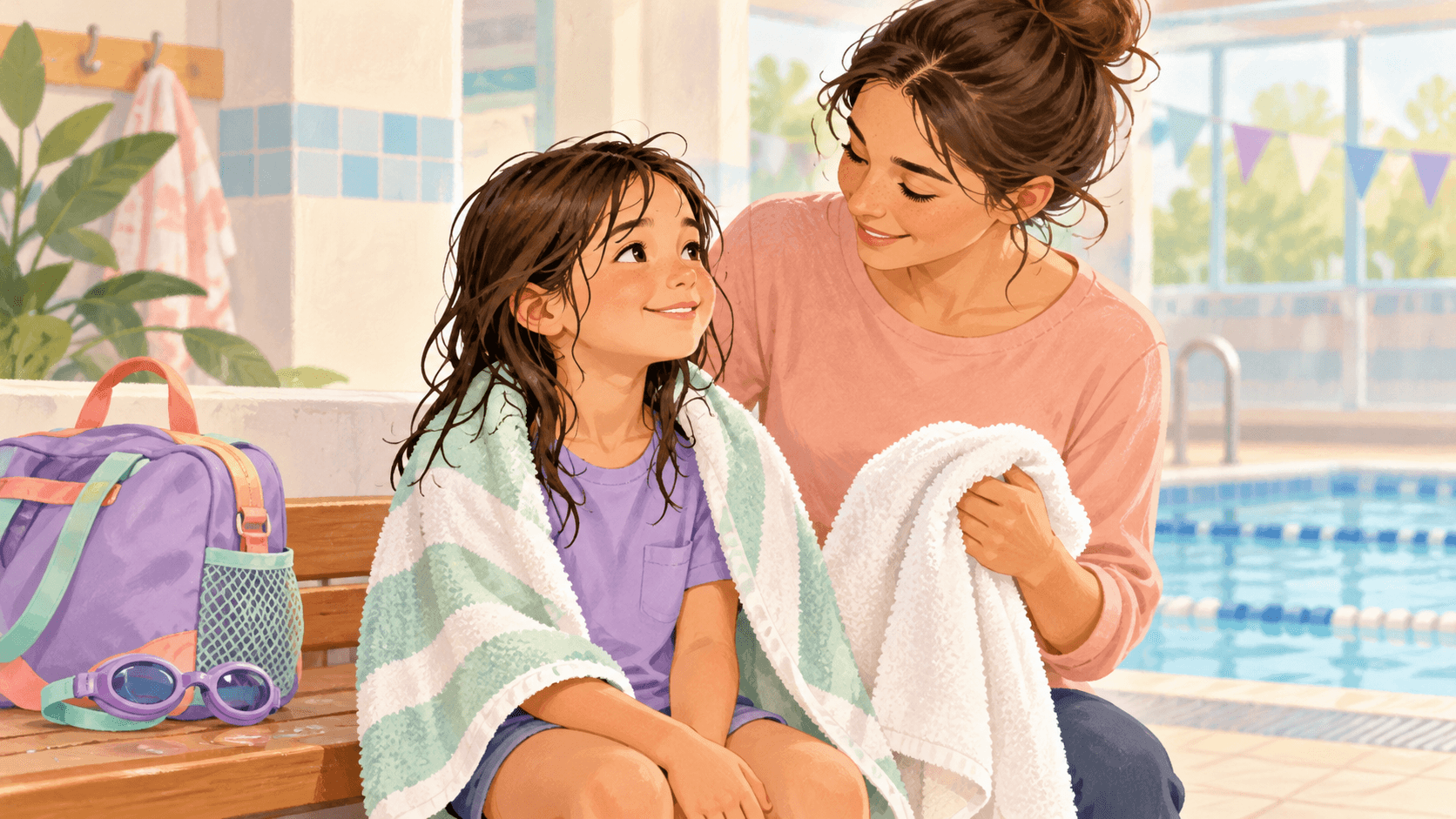
When you wash hair after swimming, leave time for the handling that follows. Absorb water with a towel instead of vigorous rubbing. The AAD’s hair-care advice supports gentle towel drying and combing suited to texture.
Work in small sections and stop if a comb catches. A tight deadline is a reason to choose a simpler hairstyle, not a reason to pull harder. Let the child tell you which area feels tender and investigate before continuing.
Choose a comfortable finish for the trip home. Do not pull wet hair tightly just to make it look tidy. If detangling repeatedly becomes the hardest part of swimming lessons, discuss the routine before the next lesson, when everyone has more patience and time.
Make room for back-to-back swim days
A child at camp or on a swim team may be in the water much more often than usual. Plan how the routine will work across the whole week. Consider who can help, which shower is available and when there is time to detangle without rushing.
Write down the child’s usual routine and the pool-day adjustment. Keep the instructions short enough for a caregiver to follow: when to rinse, which bottle to use and what needs rinsing out. Include any known sensitivities and the child’s preferred stop signal during combing.
How you wash hair after swimming may need adjustment as activity changes. Review comfort and manageability instead of assuming that more shampoo is always better. If a child already has a prescribed scalp-care plan, ask the clinician how swimming fits that plan rather than changing treatment yourself.
Skip improvised chlorine-removal recipes
Kitchen mixtures and internet “detox” recipes are not a necessary next step when hair feels different after the pool. They can make it harder to work out what is bothering the child. Use products according to their labels and ask for help when the usual routine is not enough.
The AAD discusses swimmers’ shampoo and conditioning in its summer hair-care guidance. That general advice does not establish that every specialty product is suitable for every child. Match any new purchase to age, texture, directions and the specific concern.
Persistent scalp irritation, sores, substantial breakage or unusual hair loss should be discussed with a qualified clinician. A shopping change is not a diagnosis. Bring the current product names and a description of the swimming schedule to make the conversation more useful.
A conditioner to consider for the conditioning step
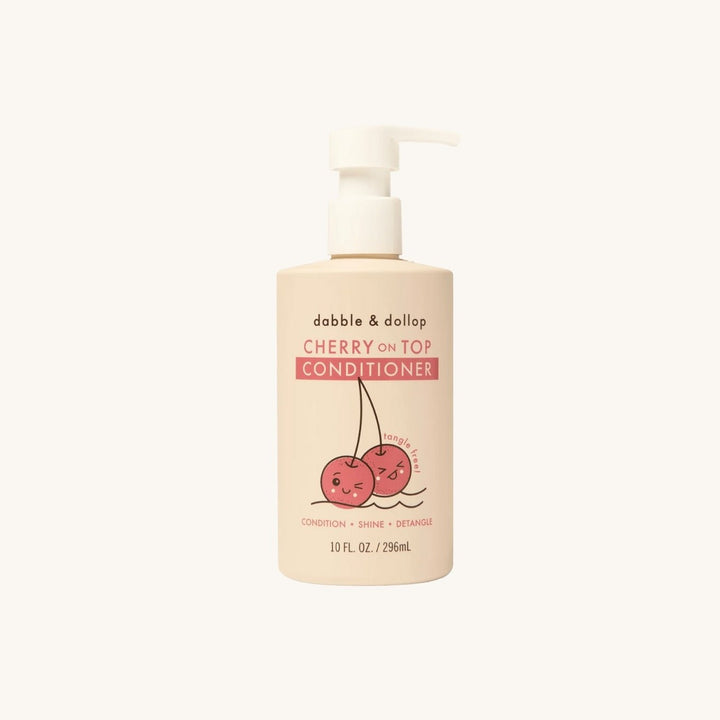
Popsicle carries Dabble & Dollop’s Cherry on Top Tear-Free Conditioner for Kids. It is a rinse-out conditioner, and it was available when this guide was prepared. Review the full ingredients and the bottle’s directions, including rinsing, before use. Its cherry scent will not suit every child.
This product may fit the conditioning part of a plan to wash hair after swimming; it is not presented as a chlorine remover or a treatment for pool-related irritation. Keep that distinction clear when choosing what belongs in the swim bag.
For the rest of the week, our kids’ shampoo and conditioner guide offers broader routine context. Let swimming add the care it calls for without turning every ordinary wash day into a lengthy treatment session. A small routine you can repeat comfortably is the useful result.
Tear-Free Conditioner for Kids
$15.99
Indulge your little one's locks with Dabble & Dollop's Cherry on Top, Tear-Free Conditioner for Kids, a luxuriously creamy formula infused with the sweet, natural aroma of cherries. Lovingly made in California from vegan, plant-based ingredients, it's specifically formulated to be… read more