

Table of Contents
- Compare leave-in conditioner for children by product job
- Decide whether there is a problem to solve
- Read the label before the front-of-bottle promises
- Match the format to the hair and the child
- Make the first uses easy to evaluate
- Keep expectations realistic
- One available leave-in to compare
- Sources and further reading
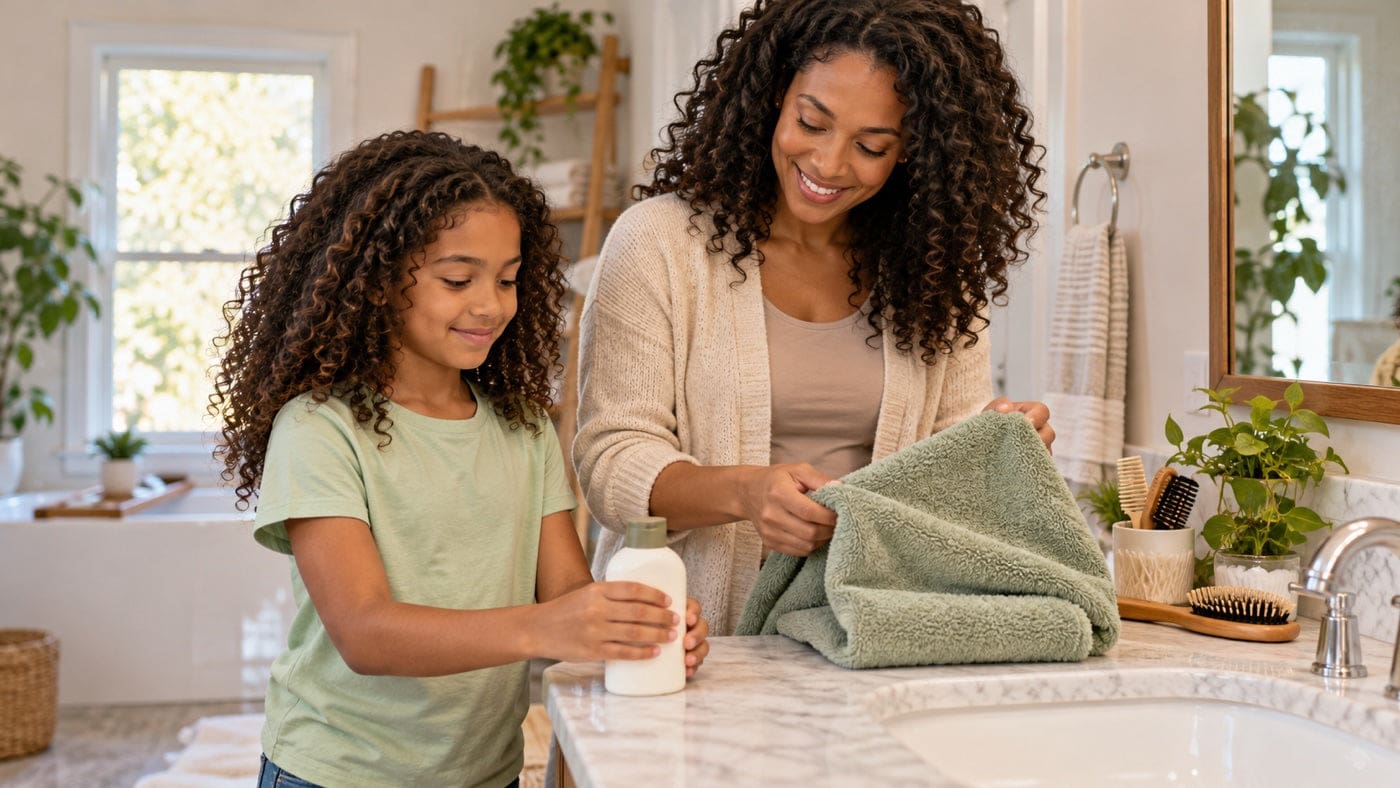
The best leave-in conditioner for children is one that suits the child’s hair, has clear directions and solves a real problem such as difficult detangling. There is no single formula every child needs. Choose a product labeled for leave-in use, check age guidance and ingredients, and keep it away from eyes.
If the existing routine already leaves hair comfortable and easy to manage, another bottle may add little. This guide focuses on deciding whether a leave-in has a useful job, rather than ranking products by popularity. A child’s hair does not need to look polished or styled every day to be well cared for.
Compare leave-in conditioner for children by product job
Shampoo cleans the hair and scalp. Rinse-out conditioner is used and then removed as directed. A leave-in conditioner stays on the hair according to its instructions. A product called a detangler may also be a leave-in conditioner, but you need to read the label to know.
The AAD explains in its leave-in conditioner guidance that these products can make detangling easier and should be chosen for hair type. It also advises against simply leaving regular rinse-out conditioner in the hair. Keep those distinctions clear when organizing the bathroom shelf.
- Rinse-out bottle: keep it with the wash-day products and follow the rinse step.
- Leave-in bottle: check whether it belongs on damp hair, dry hair or either.
- Multi-use label: read every use separately instead of assuming one amount and method fits all uses.
Decide whether there is a problem to solve
Before buying leave-in conditioner for children, describe the problem in everyday language. “The ends tangle after washing” is more useful than “Her hair needs to be better.” “The morning brush catches at the back” gives you something concrete to observe. Hair texture itself is not a problem to correct.
Then look at the routine you already have. Would smaller sections, more time or a different tool help? If those changes make detangling comfortable, you may not need another product. If knots remain difficult, a suitable conditioning product may be worth comparing.
Pick one goal for a trial, such as fewer pauses caused by snagging. Avoid introducing a new shampoo, conditioner and spray on the same day. Keeping the rest of the routine familiar makes it easier to notice whether the new step helps or causes discomfort.
Read the label before the front-of-bottle promises
A useful label tells you where to apply the product, how much to use and whether it stays on or rinses off. Check the full ingredient list and warnings, including any age restrictions. If those details are unclear, ask the manufacturer before using it on your child.
Fragrance is a practical consideration. A child may enjoy a cherry scent, dislike it or have a known sensitivity. “Natural fragrance” is still fragrance. Do not let cheerful packaging override a known trigger, and do not assume “tear-free” means a spray belongs near the eyes.
When comparing leave-in conditioner for children, keep the decision to a short list of relevant questions. You do not need to memorize every ingredient name to recognize missing directions or a product that does not fit your family’s needs.
Match the format to the hair and the child
A spray can be convenient when the instructions call for a small amount distributed through the hair. A cream may suit a different routine. Format alone cannot tell you whether a product will be comfortable, and the amount used matters. Follow the specific product rather than copying someone else’s generous application.
The AAD notes that fine, straight hair may need a lighter leave-in, while curly hair often needs more conditioning. Those are starting points for selection, not instructions to layer multiple products on a child. A familiar hair professional can help with texture-specific questions when you are unsure.
Also consider the child using it. Some children dislike the sound or sensation of a mist. An adult can help follow the label and keep spray away from the face. Ask before changing how you apply it; a product designed to help with knots should not make the routine more upsetting.
Make the first uses easy to evaluate
Read the directions together if your child is interested. Choose a time when you can stop without disrupting school or bedtime. Keep the bottle nearby so you can check the instructions rather than guessing the amount. Store it out of reach after use when supervision is still needed.
Notice three things: whether the comb moves more comfortably, whether the hair feels manageable afterward, and whether the scalp or surrounding skin feels uncomfortable. If a product causes irritation, stop using it and seek appropriate medical advice for persistent or concerning symptoms.
Leave-in conditioner for children should earn its place in the routine. If hair feels coated or the product is unpleasant to use, reconsider the amount, frequency and suitability rather than adding another product to counteract it. Follow washing instructions instead of inventing a homemade clarifying mixture.
Keep expectations realistic
A leave-in is not a treatment for scalp sores, unexplained hair loss or recurring pain. Those concerns need clinical guidance. It also does not make tight hairstyles or forceful brushing harmless. Gentle handling remains part of the routine whatever the bottle promises.
You do not need to turn detangling into a lesson about looking more grown-up. Let the child choose an easy hairstyle, a comfortable part or whether to use an accessory. The useful skill is caring for their own hair with confidence, not meeting an adult styling standard.
Our guide to kids’ shampoo and conditioner can help place the extra step within a manageable wash routine. Keep the number of steps tied to actual needs.
One available leave-in to compare
Popsicle carries Dabble & Dollop’s Cherry on Top Detangler Leave-In Conditioner Spray. The manufacturer describes use on damp or dry hair, with two to three sprays followed by gentle combing, avoiding the eyes. Check your bottle for current instructions. The formula includes cherry fragrance, so it is not a fragrance-free choice.
This leave-in conditioner for children was available at Popsicle when checked. We include it as a concrete shopping option, not a universal winner or a medical recommendation. Compare its ingredients, directions and format with what your child actually needs.
If you choose it, assign the bottle a specific job: helping with a detangling session where the label fits. Keep the rest of the routine simple. A product that makes one task easier can be useful without becoming a compulsory daily ritual or a reason to buy a complete matching collection.
Detangler Leave-In Conditioner Spray
$10.99
Say goodbye to tangles and tears with Dabble & Dollop’s Cherry on Top® Detangler Leave-In Conditioning Spray, a lightweight conditioning mist that makes brushing easier and more enjoyable. This gentle, weightless formula smooths knots without residue, leaving hair soft, manageable,… read more