

Table of Contents
- Start with texture, then watch how the hair responds
- Make a small detangling station
- Work through knots without turning them into a tug-of-war
- Choose products for a job, not a longer routine
- Try a simple routine for one week
- When to pause and ask for help
- An optional detangler to compare
- Sources and further reading
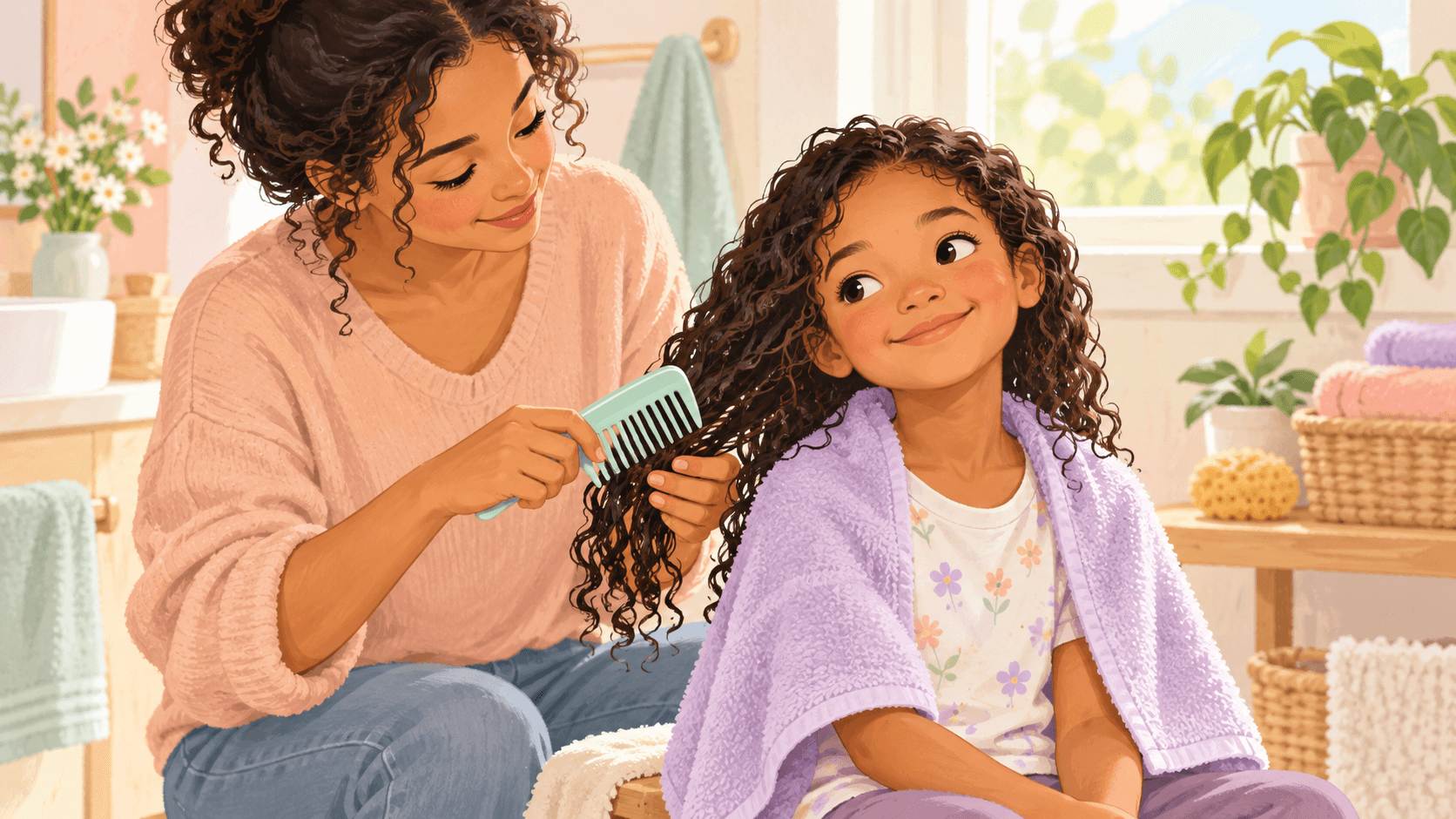
Should kids brush hair wet or dry? Hair texture changes the answer. For straight hair, let it dry a little before gently using a wide-tooth comb. For tight curls or textured hair, detangle while damp with a wide-tooth comb. Whatever the texture, stop when a tool catches instead of pushing through a knot.
The American Academy of Dermatology (AAD) makes this distinction in its hair-damage prevention guidance. It is a useful starting point, not a reason to ignore what your child says feels uncomfortable. The goal is manageable, comfortable hair—not making curls look straight or finishing a complicated hairstyle before breakfast.
Start with texture, then watch how the hair responds
Parents deciding whether to brush hair wet or dry often hear two absolute rules: never touch wet hair, or always brush straight out of the shower. Neither is a useful rule for every head of hair. A sibling’s routine is a reference point, not a test your child needs to pass.
Notice the actual problem. Is a brush catching on one knot at the back? Is straight hair dripping when you begin? Do curls become difficult to separate when dry? Change one part of the routine at a time so you can tell what helps. Switching the tool, product, hairstyle and timing together makes that harder.
- Straight hair: allow some drying time and use gentle combing rather than vigorous brushing.
- Curly or coily hair: plan detangling while damp and consider a conditioner appropriate for the texture.
- Mixed textures: divide the hair into manageable sections and respond to each section instead of forcing one pace.
Make a small detangling station
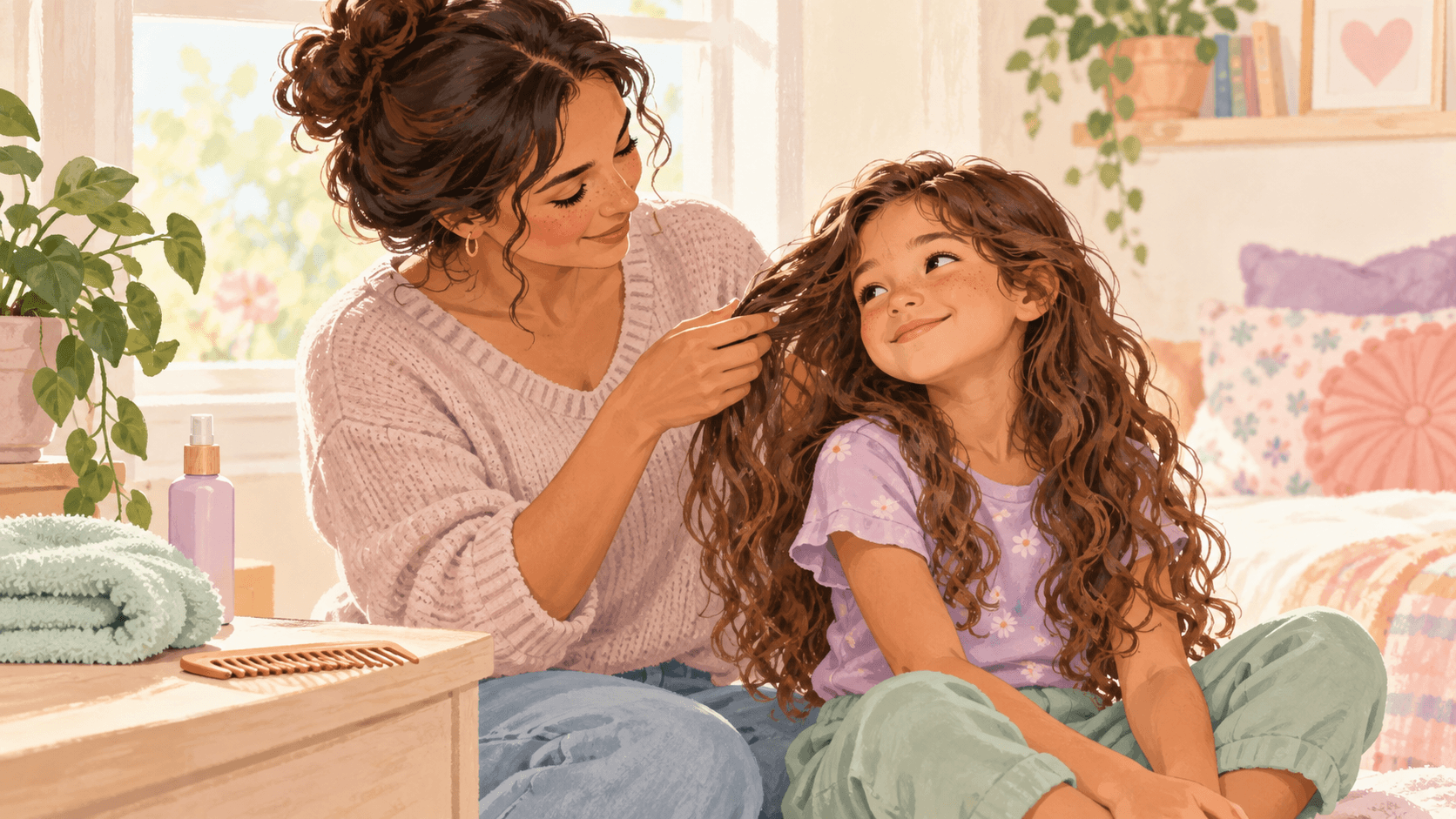
Set out a clean wide-tooth comb, a towel and any product you already know suits your child. A stable seat and somewhere to put the tools can make the process easier to follow. Keep clips or other small accessories under adult control around young children. You do not need a drawer full of specialized brushes.
Offer a limited, useful choice: “Would you like to hold the towel or choose which side we start on?” Agree on a stop signal before beginning. This makes discomfort actionable. If a child says the comb hurts, pause and examine the snag rather than treating the complaint as reluctance to cooperate.
For a school morning, choose a hairstyle that fits the time available. A quick, comfortable style is a successful outcome. Save experiments with sections, accessories or new techniques for a day when neither of you needs to rush out the door.
Work through knots without turning them into a tug-of-war
Once you have decided whether to brush hair wet or dry, separate a small section you can see clearly. Gently work on the ends first and move upward as that section becomes easier to comb. Use your fingers to investigate a stubborn knot. If you cannot separate it comfortably, stop and get help rather than pulling harder.
Keep the pace predictable. Tell your child when you are moving to another section and give them a chance to adjust their seat. Pause if the scalp feels sore. A detangling spray may make the process easier, but it does not make forceful brushing a good idea.
Finish when the hair is comfortably manageable for the chosen style. There is no prize for a certain number of strokes. Keep tight pulling out of the finished hairstyle too; the AAD’s children’s hair-care guidance recommends loose braids and ponytails.
Choose products for a job, not a longer routine
A detangler is an optional helper for knots. It is not a shampoo, and the word “natural” does not tell you whether the formula suits a particular child. Check the complete ingredients, labeled use and any age directions. Known fragrance sensitivity matters even when a scent comes from botanical ingredients.
Follow the bottle’s application instructions and keep spray away from the face and eyes. Start with the labeled amount rather than adding more whenever the comb catches. If you use several products, keep their jobs clear. A rinse-out conditioner should be rinsed out; a leave-in product is specifically formulated and labeled to remain on the hair.
Knowing whether to brush hair wet or dry will usually be more useful than buying a brush simply because its packaging promises effortless detangling. Tool choice and patient technique still matter after a purchase.
Try a simple routine for one week
Choose one calm part of the day to review what worked. Write a short note such as “ends first, smaller sections, pause at the back.” Keep the note about comfort and practical steps, not whether the hair looked good enough. Ask your child which part they would like to change next time.
If wash-day detangling goes smoothly but mornings are difficult, look at the evening hairstyle and the time available in the morning. Avoid turning that observation into a rigid daily schedule. Activity, hair length and the child’s preferences can change. You can keep the same basic steps while adjusting when you do them.
For washing and styling context, see our kids’ shampoo and conditioner guide. The decision to brush hair wet or dry belongs alongside those habits, rather than replacing them.
When to pause and ask for help
Persistent scalp pain, sores, unusual shedding or patches of hair loss deserve advice from a qualified clinician. Repeatedly adding conditioner is not a substitute for understanding those changes. If hair is severely matted, a stylist experienced with your child’s texture can help you discuss a comfortable plan.
Bring the products or ingredient lists to an appointment when irritation seems related to a new routine. Note when the symptoms began and what changed. These details are more useful than trying several new products before getting advice.
An optional detangler to compare
Popsicle Beauty Club carries No Nasties’ Knot A Chance! Children’s Detangler in Mandarin Grape and Strawberry options. Both scent options were available separately when this guide was prepared. Review the current label and choose only if the formula and scent suit your child; neither option is a promise of irritation-free use.
The product can be part of a thoughtful detangling setup. It does not decide whether to brush hair wet or dry for your child, and it does not replace a wide-tooth comb or a pause when something hurts. Keep the routine small enough that your child can understand what each step is for.
Knot A Chance! Children's Detangler
$14.99
Make hair care a joyful, stress-free experience with this gentle children’s detangler, a safer, all-natural alternative to mainstream products. Available in the refreshing scents of Mandarin Grape or Strawberry, this lightweight formula is enriched with native Australian Emu Apple extract,… read more