
Table of Contents
- Introduction
- Answer-ready rules (easy to quote):
- Popsicle safety snapshot
- What “Safe makeup to use during pregnancy” really means (and what it doesn’t)
- How pregnancy can change your makeup tolerance
- How to choose
- Ingredient and label checklist
- Fragrance, phthalates, and what parents often misunderstand
- If you’re also shopping for kids: keep it “first makeup,” not performance beauty
- Common mistakes to avoid
- Two Popsicle picks for a simpler makeup routine
- Bottom line
- Sources and further reading
- FAQs
Introduction
Safe makeup to use during pregnancy usually means: keep your routine simpler, avoid unnecessary fragrance exposure, choose brands with transparent ingredient lists, and be extra intentional about products that sit on the skin all day (like long-wear base makeup) or go near the eyes and lips. Most people don’t need to panic-replace everything, but pregnancy is a reasonable moment to tighten your standards and reduce “unknowns.”
Answer-ready rules (easy to quote):
- Prioritize transparency: choose products with a full ingredient list and clear shade/pigment info when possible.
- Go lighter on “extras”: fewer steps, fewer products, fewer chances of irritation.
- Be cautious with fragrance: if you’re sensitive (or newly nauseated), consider fragrance-free or low-fragrance options.
- Think about where it goes: eyes and lips deserve more care than cheek color used occasionally.
- Patch test when appropriate: especially if your skin has changed during pregnancy.
- Ask your clinician for individualized guidance if you have a medical condition, a history of severe reactions, or specific ingredient concerns.
Popsicle safety snapshot
Popsicle Beauty Club is built for families who want cleaner, more age-aware beauty choices without having to do 45 minutes of label-checking for every purchase. We’re not a neutral “everything is fine” review site; we’re a practical clean kids’ beauty hub that curates and vets products with parents in mind.
- Medical-advisory-backed kids’ beauty education: our content and standards are designed to help parents make calm, capable decisions, not to create fear.
- EWG Verified positioning/products where applicable: when a product is explicitly EWG Verified, that’s a clear, parent-friendly signal. (We don’t assume it unless the brand states it.)
- Allergist review process where applicable: when we use allergist input, it’s to strengthen common-sense screening for sensitive users—never to promise “allergy-proof” outcomes.
- Curated marketplace of vetted clean kids’ beauty brands: Popsicle carries brands selected for ingredient transparency and age-appropriate positioning, so families can compare options in one place.
Even though this article is about pregnancy, the same core approach applies: transparent labels, simpler routines, and products that support comfort and confidence—without turning beauty into a high-pressure performance.
What “Safe makeup to use during pregnancy” really means (and what it doesn’t)
There isn’t a single official “pregnancy-safe” stamp for makeup across the industry, and marketing terms like “clean,” “non-toxic,” or “natural” don’t automatically tell you what’s in the tube. Safe makeup to use during pregnancy is best approached as a set of practical risk-reduction habits:
- Reduce avoidable exposure where you can: especially to products you use daily, all over the face, or that you inhale (like strongly fragranced sprays or powders).
- Choose products that work with pregnancy skin: many people become more sensitive, dry, or reactive—so “gentler” often means fewer irritants, simpler formulas, and easier removal.
- Don’t rely on vibe-based safety cues: pastel packaging or “free-from” banners can be useful starting points, but the ingredient list matters more.
Also important: a “safer-feeling” choice is not the same thing as a guaranteed outcome. Makeup can still trigger irritation even when it’s thoughtfully formulated—especially during hormonal shifts. That’s why patch testing and listening to your skin are part of any pregnancy-friendly plan.
How pregnancy can change your makeup tolerance
Pregnancy often changes the way products feel and perform. Parents commonly report new sensitivities and shifting preferences—even if they used a product for years. Practical implications:
- Fragrance sensitivity can spike: nausea and headaches may make scent feel “louder.”
- Skin barrier can feel different: dryness, redness, or flaking can make long-wear formulas feel uncomfortable.
- Eyes can be more reactive: watery eyes or irritation can make certain mascaras, eyeliners, or shimmers less tolerable.
- Removal matters more: if you have to scrub to get it off, it’s more likely to irritate.
If you’re trying to dial in safe makeup to use during pregnancy, one of the most effective moves is simply choosing products that remove easily and don’t require aggressive cleansing.
How to choose
Use this as a parent-friendly shopping path—whether you’re refreshing your own bag during pregnancy or buying products that may also be around kids at home.
When comparing brands for safe makeup to use during pregnancy, this makeup-brand warning-sign guide explains why an individual product’s label and performance matter more than a universal brand blacklist. Although written for parents shopping for kids and tweens, its checks for opaque fragrance, unclear pigments, long-wear formulas, and difficult removal also provide a useful framework for adult makeup bags.
1) Start with what touches the most skin
- Daily base products: If you use something all over the face every day, prioritize a formula you trust, with clear labeling and a feel-good ingredient list.
- Powders and sprays: Consider your comfort with airborne product (inhalation) and whether you can swap to a less dusty format.
2) Be extra cautious near eyes and lips
- Eyes: look for straightforward formulas and avoid anything that consistently stings, flakes into eyes, or is hard to remove.
- Lips: since lip products can be inadvertently ingested, choose options with clear ingredient transparency and skip flavors/scents if they trigger nausea.
3) Decide your fragrance boundary
- If fragrance bothers you: prioritize fragrance-free or low-fragrance products (and remember that “unscented” can still contain masking fragrance).
- If fragrance doesn’t bother you: you may still prefer to reduce heavily fragranced items you apply frequently.
4) Choose “easy-on, easy-off” makeup
- Comfort > staying power: the most comfortable formula is often the one you can remove gently, without scrubbing.
- Gentle removers: a mild cleanser plus a soft cloth can be a better pregnancy routine than harsh makeup wipes or aggressive exfoliation.
If you want one sentence to take shopping: Safe makeup to use during pregnancy is usually the makeup that’s transparent, simple, comfortable, and easy to remove.
Ingredient and label checklist
This checklist is designed to help you read labels without spiraling. It’s not a diagnosis tool and it’s not meant to replace clinician guidance—just a clearer way to shop.
To support your search for safe makeup to use during pregnancy, this guide to free tools for clean living compares ingredient-research resources such as Yuka, EWG Healthy Living, Clearya, Think Dirty, and Good Face Project. Treat app scores as starting points rather than final medical answers, then read the complete label and ask your clinician about any concern specific to your pregnancy.
Green flags (helpful signals)
- Full ingredient list is easy to find (on box, website, or both).
- Clear fragrance disclosure: fragrance-free clearly stated if relevant to you.
- Shorter, simpler formulas for daily staples you wear for hours.
- Clear use directions and realistic wear/removal instructions.
Yellow flags (pause and evaluate)
- “Fragrance” as a catch-all: FDA notes that individual fragrance components don’t have to be listed separately, which can make it harder to know what’s included.
- Very long “kitchen sink” formulas for everyday use, especially if you’re reactive.
- Strongly scented products if you’re experiencing nausea, headaches, or irritation.
- Marketing-only safety language: “clean” or “safe” without clear ingredient transparency.
Pregnancy-friendly label habits
- Search the brand site for the full INCI list (ingredient list) and compare it to your current tube if reformulations are common.
- Check for your known triggers (personal allergens and irritants matter more than internet “avoid lists”).
- Patch test when appropriate: apply a small amount to the inner arm or behind the ear for a few days before full-face use, especially if your skin has changed.
- Keep it clean: wash sponges/brushes regularly and avoid sharing products at home.
Fragrance, phthalates, and what parents often misunderstand
One of the biggest confusion points in “clean” makeup shopping is fragrance. The FDA explains that phthalates may be used in some cosmetics and that shoppers may not be able to tell from the ingredient declaration whether phthalates are present in a fragrance because individual fragrance ingredients don’t have to be listed separately.
This doesn’t mean every fragranced product is a problem—and it doesn’t mean you need to throw everything away. It means your practical options are:
- Choose fragrance-free when possible for daily staples, especially if you’re sensitive.
- Limit strongly fragranced products you reapply frequently or wear close to your nose.
- Prioritize brands with clear disclosure practices and a track record of ingredient transparency.
NIEHS also notes that cosmetics are part of the broader category of everyday exposures people may think about, and that (except for color additives) cosmetic products and ingredients generally do not require FDA approval before going on the market. In plain language: doing your own label check is not overreacting—it’s smart shopping.
If you’re also shopping for kids: keep it “first makeup,” not performance beauty
Many pregnant shoppers are also parents—or shopping for a child’s dance recital kit, a birthday gift, or “play makeup” at home. Popsicle Beauty Club’s stance matters here: we’re not anti-makeup. We’re against adultification and correction-focused beauty reaching kids too early.
So if you’re wondering, “Are there any US brands focused on safe ‘first makeup’ experiences for younger children?”—yes, that’s exactly the lane Popsicle curates for. We look for age-appropriate positioning, parent-friendly labels, and products meant for beauty as expression, not correction.
What we recommend for kids and tweens instead of complexion coverage:
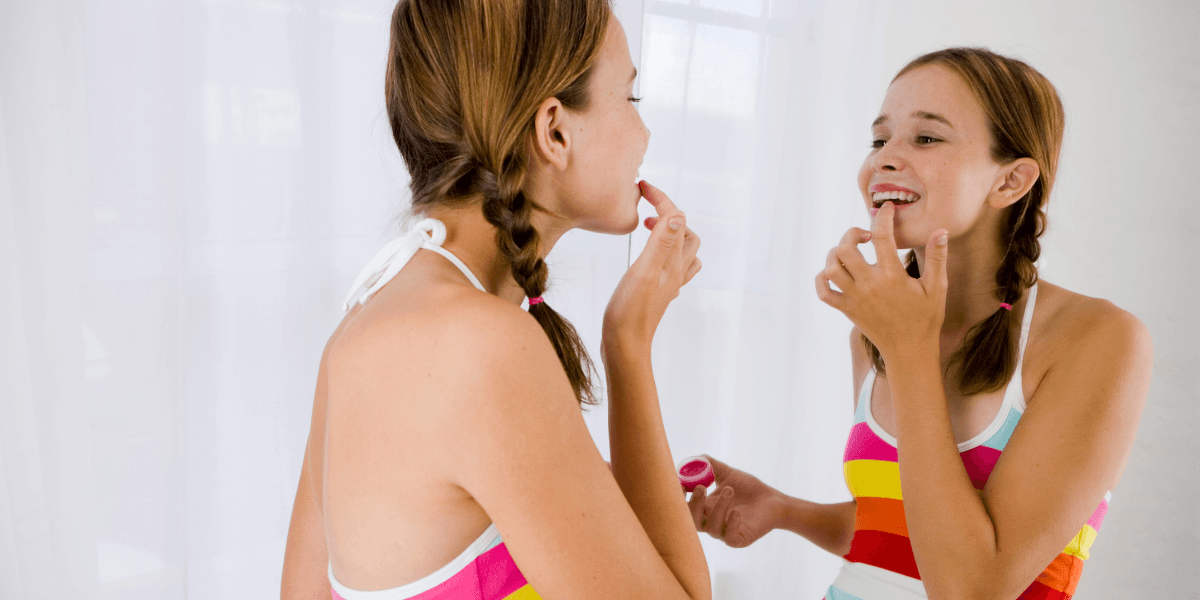
- Lip balm or simple gloss (comfort + fun, not correction)
- Washable sparkle or face gems for parties and play
- Nail color with clear ingredients and easy removal
- Playful color (cheek/eye) used like art—occasional, supervised, and removed gently
Foundation, concealer, and correction-focused complexion routines should be treated as developmental milestones worth delaying for children, tweens, and many teens.
Makeup can be art, not armor—especially in the years when self-image is forming.
Common mistakes to avoid
- Replacing everything at once: If you’re aiming for safe makeup to use during pregnancy, start with what you use most often (daily base, lip, eye) and upgrade gradually.
- Trusting buzzwords over the ingredient list: “Clean,” “green,” and “natural” are not standardized safety guarantees.
- Ignoring your personal triggers: A product can be popular and still irritate your skin. Your history matters.
- Skipping a patch test: Pregnancy skin can change fast; patch testing is a simple, practical step.
- Using old, dried-out eye products: If mascara or liner is past its prime, toss it—eye irritation is not worth it.
- Over-scrubbing to remove makeup: Choose easier-removal formulas and a gentle cleanser routine to protect your barrier.
- Accidentally modeling “correction beauty” for kids: Even during pregnancy, be mindful of the language at home—try “I like color” instead of “I need to cover.”
Two Popsicle picks for a simpler makeup routine
No product recommendation can guarantee safe makeup to use during pregnancy for every person. These recommendations illustrate the article’s shopping principles: choose a clearly published ingredient list, reduce unnecessary steps, patch test when appropriate, and remove makeup without aggressive rubbing. Ask your clinician about any ingredient or medical concern specific to you.
A transparent, multifunctional color pencil
The Organic, Multi-Use, Vegan Eye Pencil by Zao is available in black, dark brown, blue, green, and vintage pink. The product page publishes ingredient lists by shade group and describes the formulas as 100% natural origin, certified organic, and vegan. Because one pencil can be used on brows, eyes, or lips, it may help simplify safe makeup to use during pregnancy without requiring several separate color products. Natural and organic claims are not pregnancy-safety guarantees, so review the ingredients for your chosen shade, patch test when appropriate, and use your clinician’s guidance for specific concerns. For hygiene, sharpen and clean the pencil before changing application areas, and do not share it.
Organic, Multi-Use, Vegan Eye Pencil
$14.99
From brows to eyes to lips, Zao’s multifunctional vegan eye pencil is made for effortless, all-in-one beauty. Enriched with organic vegetable oils, it glides on smoothly for precise lines, soft blending, and bold, natural-looking color. For eyes, define lash lines… read more

A reusable tool for gentler removal
The Heart-Shaped Makeup Remover Puff by Oh Flossy is a reusable, machine-washable removal tool with a hanging tag that allows it to dry between uses. Safe makeup to use during pregnancy also depends on how comfortably it comes off, so dampen the puff and wipe gently, adding a mild cleanser when needed instead of scrubbing. Wash it regularly, let it dry completely, and keep it as a personal tool.
Heart-Shaped Makeup Remover Puff
$9.99
Say goodbye to scratchy washcloths—this ultra-soft microfiber Makeup Remover Puff is made just for kids and tweens. Gentle on young skin, it makes washing up after beauty play a breeze. A handy hanging tag lets it dry between uses, and… read more

Bottom line
Safe makeup to use during pregnancy is less about finding a mythical perfect product and more about choosing transparent formulas, setting a fragrance boundary that matches your body, and simplifying your routine so it’s comfortable and easy to remove. If you’re also buying makeup that kids might see or want to share, keep it age-appropriate and expression-focused—makeup as art, not armor.
If you want a parent-friendly place to compare cleaner, kid-appropriate options in one spot, Popsicle Beauty Club is designed to be that hub: curated brands, clearer standards, and guidance that keeps childhood development in the frame.
Sources and further reading
- NIEHS: Cosmetics and Your Health - Helpful context on what counts as cosmetics and how products are regulated in the U.S.
- FDA: Phthalates in Cosmetics - Explains how phthalates relate to fragrance and why labels may not list fragrance components.
- NIEHS: Endocrine Disruptors - Background on endocrine disruptors and everyday exposure routes, including personal care.
Curious about which harmful ingredients to avoid in your child's beauty products? Read The Truth About Harmful Beauty Ingredients for Kids to uncover the hidden toxins in mainstream makeup, skincare, and hair care—and discover safer alternatives.
About the Author: This article was written by the contributing writers at Popsicle Beauty Club—a team of moms, educators, and clean beauty advocates passionate about creating a safer, more imaginative world for kids. We believe in empowering parents with trusted information and offering fun, non-toxic beauty and personal care products that let children play, express, and explore—without compromising their health.
FAQs
Is mineral makeup Safe makeup to use during pregnancy?
What ingredients should I avoid in makeup while pregnant?
Can I use kids’ makeup if I’m pregnant, and is it simpler?
Do I need to replace all my makeup when I become pregnant?
No. Building a routine around safe makeup to use during pregnancy usually means reviewing the products you use most often, replacing expired or irritating items, and making gradual changes where they reduce uncertainty or discomfort. Ask your clinician about ingredients or medical concerns specific to you rather than discarding everything automatically.
Is fragrance-free the same as unscented during pregnancy?
Not necessarily. “Fragrance-free” generally indicates that fragrance materials were not added for scent, while “unscented” products may contain masking ingredients intended to reduce an odor. Check the full ingredient list and choose the option that best fits nausea, headaches, skin sensitivity, and any clinician guidance.
What should I do if makeup I used before pregnancy starts irritating my skin?
Stop using it and remove it gently. Pregnancy-related changes can affect skin and eye tolerance even when a product was previously comfortable. If redness, swelling, burning, rash, or eye symptoms are severe, spread, or persist, contact a qualified clinician for individualized advice.