
Table of Contents
- Introduction
- Fragrance-free beauty products for kids: the quick answer
- Why completely fragrance-free kids’ lines are difficult to find
- Fragrance-free versus unscented
- Decide which categories truly need to be fragrance-free
- A category-by-category shopping checklist
- How to read the ingredient label
- Patch testing and introducing products slowly
- Two Popsicle options for a lower-scent routine
- Common mistakes to avoid
- Bottom line
- Sources and further reading
- FAQs
Introduction
Shopping for fragrance-free beauty products for kids can be surprisingly complicated. One cleanser may be fragrance-free while the matching lotion, detangler, lip product, or play makeup still contains fragrance, parfum, flavor, or aromatic oils. Instead of assuming an entire brand is scent-free, parents usually get a more dependable result by checking every product and building a simple routine one category at a time.
If your child has eczema-prone or reactive skin, dislikes strong smells, or experiences headaches around scented products, begin with the items used most often. A fragrance-free cleanser, moisturizer, shampoo, and sunscreen can matter more than finding a large coordinated collection. Keep optional beauty-play products simple, occasional, easy to remove, and appropriate for your child’s age.
Fragrance-free beauty products for kids: the quick answer
Whole fragrance-free lines are uncommon. A brand may offer several scent-free staples without covering every hair, body, skincare, and beauty category.
Shop by product, not by brand reputation. Confirm the complete ingredient list and scent claim for each item.
Choose fragrance-free over unscented when sensitivity is the concern. Unscented products may use masking ingredients to reduce noticeable odor.
Check botanical scent sources too. Essential oils and aromatic extracts can still matter for a sensitive child even when a product contains no synthetic fragrance.
Prioritize daily and leave-on products. Moisturizer, sunscreen, deodorant, lip care, and detangler stay on the body longer than rinse-off products.
Keep beauty developmental. Skincare should support comfort and hygiene, while makeup should remain creative play rather than correction.
Why completely fragrance-free kids’ lines are difficult to find
Kids’ personal-care collections often expand around scent. Fruity shampoos, dessert-inspired lip products, scented bath items, and “spa day” kits can make a range feel fun and coordinated. That marketing choice also means a brand may have only one sensitive-skin product without offering a fragrance-free version of everything else.
Hair care presents another challenge. Shampoo, conditioner, detangler, and styling products may use fragrance to cover the natural odor of their raw materials or create a lasting “fresh hair” effect. Makeup and lip products may use flavor, aroma, or essential oils instead of the word fragrance.
The phrase “core products” is also inconsistent. One company may consider cleanser and lotion its complete routine, while another includes hair care, deodorant, sunscreen, bath products, lip care, and makeup. When comparing fragrance-free beauty products for kids, define the categories your child actually uses before judging whether a brand offers a complete solution.
Fragrance-free versus unscented
These terms sound similar, but they should not be treated as interchangeable when a child is sensitive.
| Label term | What it may mean | What parents should do |
|---|---|---|
| Fragrance-free | No fragrance was added to create or mask a scent | Confirm the full ingredient list and check for aromatic botanicals that matter to your child |
| Unscented | The product has little or no noticeable smell, but masking ingredients may be present | Do not rely on the front label alone; read the ingredient list |
| Natural fragrance | Scent may come from plant-derived aromatic materials | Remember that natural origin does not guarantee tolerance |
| Essential-oil scented | Essential oils provide the scent | Use extra care with reactive skin and leave-on facial products |
The FDA explains that cosmetic fragrance mixtures may be listed simply as “fragrance” or “flavor” instead of disclosing every component. That is why a clear fragrance-free claim and a complete ingredient list are both useful. The American Academy of Dermatology also advises families managing childhood eczema to choose fragrance-free rather than unscented products.
For fragrance-free beauty products for kids, this distinction matters most when a child already has sensitive skin, eczema, or a known scent trigger.
Decide which categories truly need to be fragrance-free
You do not need to replace every bottle at once. Use this order to build a practical routine.
1. Start with leave-on daily products
Moisturizer, sunscreen, deodorant, lip care, and leave-in hair products remain on the skin or hair for hours. If fragrance is a known problem, review these first.
2. Check frequently used rinse-off products
Look at body wash, facial cleanser, shampoo, and conditioner next. Rinse-off products have shorter contact time, but frequent use can still matter to a child with reactive skin.
3. Separate necessities from optional play
Bath and skincare products may support hygiene or comfort. Nail color, gloss, shimmer, and face gems are optional. Keeping the play category small makes it easier to identify a problem if irritation occurs.
4. Match the routine to the child
A child without skin concerns may only need a mild cleanser and occasional moisturizer. A child with eczema, recurring rashes, or a diagnosed allergy may need a clinician-guided plan. If you are building fragrance-free beauty products for kids around persistent symptoms, ask a pediatrician or dermatologist for individualized guidance.
For a deeper skincare explanation, read Popsicle’s guide to fragrance-free skin care for kids. It explains the difference between fragrance-free and unscented labels and shows how a simple cleanser-and-moisturizer routine can reduce unnecessary product layering.
A category-by-category shopping checklist
Use this fragrance-free beauty products for kids checklist to compare products without expecting one brand to solve every need.
Face and body
Look for a mild cleanser with a complete ingredient list.
Choose moisturizer according to the child’s actual dryness and skin needs.
Avoid turning basic care into a long adult-style routine.
For eczema-prone skin, follow the child’s treatment plan and clinician recommendations.
Hair
Check shampoo, conditioner, detangler, and styling products separately.
Watch for fragrance, parfum, aroma, essential oils, and strongly scented botanical extracts.
Choose function over scent: gentle cleansing, slip for detangling, and manageable hold.
Lips
Review both fragrance and flavor information.
Consider whether sweet flavors encourage constant licking or overapplication.
Keep each child’s balm or gloss personal rather than shared.
Sunscreen
Look for a broad-spectrum product with age-appropriate directions.
Check the active and inactive ingredient lists.
Choose a texture the child will tolerate and use as directed; fragrance-free does not replace proper sun protection.
Makeup and nail color
Prefer small sets, clearly published ingredients, and easy removal.
Avoid loose glitter near the eyes and products that require aggressive scrubbing.
Keep play supervised and occasional, especially for younger children.
Delay foundation, concealer, and correction-focused complexion routines. Makeup should be art, not armor.
If sensitivity is driving the search, Popsicle’s kids’ sensitive-skin beauty guide can help you compare fragrance-conscious products, patch-test thoughtfully, and recognize when a simpler routine is the better choice.
How to read the ingredient label
When evaluating fragrance-free beauty products for kids, start with the full ingredient list instead of relying on words such as clean, gentle, natural, or hypoallergenic. Those claims can be useful starting points, but they do not tell you whether a particular child will tolerate the formula.
Terms to check when avoiding added scent
Fragrance
Parfum
Aroma
Flavor, especially in lip products
Masking fragrance
Essential oils and aromatic extracts that have caused problems for your child
Do not assume that every botanical ingredient is a fragrance or that every essential oil will irritate every child. The goal is not to fear long ingredient names. It is to identify scent sources, compare formulas consistently, and avoid known triggers.
Transparency signals to prefer
A complete ingredient list online and on the packaging
A clear explanation of whether “fragrance-free” means no added fragrance
Separate ingredient lists for different shades or flavors
Age guidance and simple use directions
Removal instructions for color products
Contact information for ingredient questions
Patch testing and introducing products slowly
A home use test cannot guarantee that a reaction will never happen, but introducing one product at a time makes problems easier to trace. Follow any directions on the product, and ask your child’s clinician how to test products if the child has eczema, allergies, or a history of significant reactions.
For a routine cosmetic or skincare product, apply a small amount to a limited area away from the eyes and mouth. Do not test on broken or actively irritated skin. Watch for redness, itching, burning, swelling, unusual dryness, or a rash. Stop using the product if a reaction develops.
Seek prompt medical care for trouble breathing, facial or throat swelling, widespread hives, or another severe reaction. For persistent or recurring irritation, a qualified clinician can help identify whether fragrance, a preservative, a botanical, or another ingredient may be involved.
Two Popsicle options for a lower-scent routine
These recommendations show two different ways to shop: one fragrance-free bath staple and one low-odor beauty-play product. They are not proof that an entire brand is fragrance-free, and each product should still be evaluated for the child using it.
A fragrance-free bath option
The EWG Verified, Natural Bubble Bath for Kids by Nēmah is described as fragrance-free, tear-free, and pH-balanced. Its published ingredient list does not include added fragrance or dyes and includes chamomile, calendula, aloe, and jojoba oil. It offers a straightforward bath option for families comparing fragrance-free beauty products for kids, but children with eczema or another diagnosed skin condition should follow their clinician’s bathing guidance.
EWG Verified, Natural Bubble Bath for Kids
$17.99
This natural bubble bath for kids is made for babies and children with sensitive skin — including newborns. The fragrance-free, tear-free formula creates soft, lasting bubbles without drying or disrupting the skin barrier. Carefully pH-balanced and EWG Verified, it cleanses… read more

An unscented, low-odor nail color for supervised play
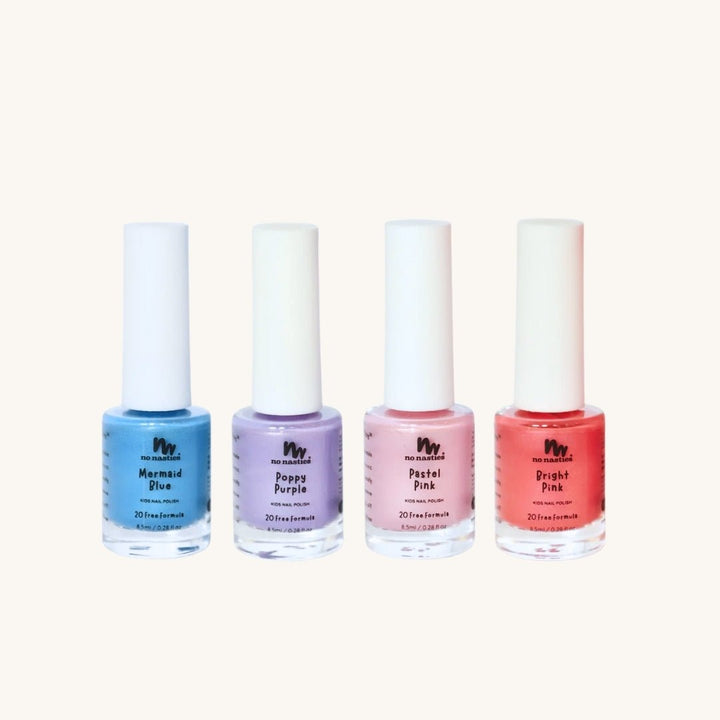
The 20 FREE Unscented, Non-Toxic Nail Polish for Kids by No Nasties is water-based, low-odor, and designed to peel away without nail-polish remover. The published shade ingredient lists do not show fragrance, parfum, or aroma, and the formula contains no FD&C dyes or Lake pigments. Because “unscented” is not automatically identical to “fragrance-free,” parents should still review the chosen shade. Apply with adult supervision, allow it to dry fully, and remove loose or chipped polish promptly.
20 FREE Unscented, Non-Toxic Nail Polish for Kids
$9.99
Give your little one’s nails a safer mani/pedi with this 20 FREE Unscented Nail Polish—meaning it’s made without the 20 most common toxic ingredients found in conventional nail polish, including formaldehyde (a known carcinogen), toluene (linked to headaches and nervous… read more
Common mistakes to avoid
Even careful shoppers can make these mistakes when choosing fragrance-free beauty products for kids:
Assuming one product represents the whole brand. Check each cleanser, lotion, shampoo, detangler, balm, and makeup item separately.
Treating unscented as automatically fragrance-free. Read the complete label for masking ingredients and fragrance terms.
Replacing everything at once. Multiple new products make it harder to identify the cause of a reaction.
Equating natural with non-irritating. Plant-derived aromatic ingredients can still be relevant to sensitive skin.
Buying a large routine a child does not need. Start with the smallest number of products that solves the actual problem.
Using beauty products to correct normal features. Keep color products playful, optional, and age-appropriate.
Ignoring persistent symptoms. Repeated rashes, swelling, pain, or eczema flares deserve professional guidance.
Bottom line
Finding fragrance-free beauty products for kids is usually easier when you shop by category instead of searching for one perfectly coordinated brand. Prioritize daily and leave-on essentials, distinguish fragrance-free from unscented, read every ingredient list, and introduce new products one at a time. A small routine that your child tolerates is more useful than a large collection built around marketing claims.
Sources and further reading
American Academy of Dermatology: How to Find Eczema-Friendly Products
American Academy of Dermatology: How to Test Skin-Care Products
Curious about which harmful ingredients to avoid in your child's beauty products? Read The Truth About Harmful Beauty Ingredients for Kids to uncover the hidden toxins in mainstream makeup, skincare, and hair care—and discover safer alternatives.
About the Author: This article was written by the contributing writers at Popsicle Beauty Club—a team of moms, educators, and clean beauty advocates passionate about creating a safer, more imaginative world for kids. We believe in empowering parents with trusted information and offering fun, non-toxic beauty and personal care products that let children play, express, and explore—without compromising their health.
FAQs
Are there any kids’ beauty brands that explain how to patch test products on children’s skin?
Are there any kids’ beauty brands that are transparent about what they don’t put in their products?
Are there any kids’ beauty lines that make fragrance-free versions of all their core products?
Are fragrance-free beauty products for kids always safer?
Not automatically. Removing fragrance can eliminate one possible source of irritation, but preservatives, botanical extracts, colorants, and other ingredients may still cause reactions in some children. Review the complete formula and consider your child’s known sensitivities.
How should parents patch test a new children’s beauty product?
Follow the product’s directions and any guidance provided by your child’s clinician. Apply a small amount to a limited area away from the eyes, mouth, and broken skin. Stop using it if redness, itching, burning, swelling, unusual dryness, or a rash develops.
How can parents identify brands with transparent fragrance policies?
Look for complete ingredient lists, clear definitions of fragrance-free and unscented, separate formulas for different shades or flavors, and direct explanations of essential oils or aromatic extracts. Specific information is more useful than broad terms such as clean, natural, or gentle.
Do any children’s beauty brands make every core product fragrance-free?
A few brands may cover several fragrance-free categories, but complete hair, body, skincare, lip, and beauty-play collections remain uncommon. The most reliable approach is to define the products your child needs and verify each formula individually.