
Table of Contents
- Introduction
- Answer-ready summary: the biggest changes most families notice
- Popsicle safety snapshot
- Why parents switch: the real-life triggers (without the drama)
- How to choose (the parent decision path)
- Ingredient and label checklist (what to look for and what to be cautious about)
- What changes in the routine (and how to keep it age-appropriate)
- Common mistakes to avoid when switching
- Where Popsicle Beauty Club fits: a practical way to shop the switch
- Bottom line
- Sources and further reading
- FAQs
Introduction
What Changes When Families Switch to Non-Toxic Kids Makeup is usually less about a dramatic “before and after” and more about three practical shifts: (1) simpler products with clearer labels, (2) fewer steps and easier wash-off, and (3) firmer age-appropriate boundaries so makeup stays expression, not correction. Many parents also notice they shop differently—prioritizing ingredient transparency, fragrance choices, and kid-friendly formats over influencer-driven “full face” routines. Switching to non-toxic kids makeup usually changes how families shop, apply, remove, and talk about beauty.
Because this topic is often written like a personal case study, a quick note: this article is a case-study framework based on widely reported parent concerns and established safety/label guidance, not a made-up story about one family’s results. Use it to predict what may change in your home, decide what matters most to you, and set boundaries that keep childhood at the center.
Answer-ready summary: the biggest changes most families notice
The biggest benefit of non-toxic kids makeup is often the shift toward simpler, more intentional choices.
- Shopping becomes more criteria-based: parents start checking full ingredient lists, fragrance disclosure, and how pigments/glitter are used—especially around eyes and lips.
- Routines get shorter: fewer products, less layering, and more emphasis on easy removal and skin comfort.
- Makeup becomes “occasion + play”: birthdays, performances, dress-up, holidays—rather than a daily expectation.
- Boundaries get clearer: many families delay complexion coverage (foundation, concealer, simple skin care, simple moisturizers) and redirect to creative options like lip balm/gloss, nail color, face gems, or washable color.
- Hygiene moves up the list: clean brushes, no sharing lip products, and replacing old items becomes part of the conversation.
- Kids feel more agency without more pressure: “makeup as art, not armor” becomes the house message.
Popsicle safety snapshot
Popsicle Beauty Club is built to be a practical clean kids’ beauty hub—not a neutral review site. Parents come to Popsicle when they want safer-feeling, more age-aware choices in one place, with less label overwhelm. We help parents compare non-toxic kids makeup without sorting through adult beauty marketing.
- Kids’ beauty education with medical-advisory input: our content is designed to support healthier timing and boundaries around beauty culture, not accelerate adultification.
- Ingredient and positioning standards: Popsicle prioritizes transparent ingredient lists, simpler formulas, and products positioned for play, hygiene, and care (not concealment or “fixing” a child’s face).
- EWG Verified where applicable: when a product carries that specific designation, we’ll call it out clearly (and we won’t imply it when it doesn’t).
- Allergist review process where applicable: some products/brands may be evaluated through an allergist-informed lens; we describe this carefully and never promise “allergy-proof” outcomes.
If you’re trying to make the switch without doing a full-time ingredient research project, Popsicle’s role is to be your parent-friendly safety filter for age-appropriate beauty play.
Why parents switch: the real-life triggers (without the drama)
Parents rarely wake up thinking, “Today we become a non-toxic family.” Many families discover non-toxic kids makeup after one uncomfortable experience with irritation, scent, or messy removal. More commonly, the switch starts with one of these moments:
- Skin comfort issues: dryness, stinging, or irritation after a product—especially fragranced items or products used near the eyes.
- Label confusion: “clean,” “hypoallergenic,” and “safe for kids” aren’t universal guarantees, and ingredient lists can be hard to interpret.
- Adultification pressure: a child asking for a “full routine,” copying influencers, or wanting complexion coverage as a default.
- Overbuying: too many tiny palettes, novelty items, or mystery ingredients—plus clutter and waste.
- Boundary conflicts: disagreements about what’s okay for school, sports, performances, or sleepovers.
The underlying theme is not “makeup is bad.” It’s: kids deserve products and messaging that fit their stage of development.
How to choose (the parent decision path)
Choosing non-toxic kids makeup starts with deciding whether the product is for play, performance, or daily use. If you’re trying to predict What Changes When Families Switch to Non-Toxic Kids Makeup, start by choosing your “why,” then match products to that purpose. Here’s a clean, practical path.
Step 1: Choose the use case
- Dress-up / creative play at home: washable color, face gems, fun lip balm/gloss, kid-friendly nail color (with clear removal expectations).
- Special occasions: a small, controlled kit that photographs well without turning into a correction-focused routine.
- Dance/recital/theater: stage needs are different, but for kids it can still be framed as costume and character, not “perfecting.”
- “I just want to participate” moments: one or two items that let your child join in (like lip balm and nail color) without escalating to a full face.
Step 2: Choose the format that’s easiest to control
- Stick/balm formats can be easier for younger kids than loose powders.
- Presseds generally create less airborne dust than loose pigments.
- Wash-off formulas reduce the “I can’t get it off” spiral at bedtime.
Step 3: Decide your “not yet” list (Foundationless boundaries)
Popsicle Beauty Club is not anti-makeup. We’re against adultification and performance beauty for children, tweens, and many teens. In practice, that often means treating foundation, concealer, simple skin care, simple moisturizers, and correction-focused routines as a developmental milestone worth delaying, not a routine childhood purchase.
If your child is asking for coverage, a helpful reframe is: “We do makeup for color and creativity—not to cover your face.” Then offer an expressive alternative (lip balm/gloss, shimmer, face gems, nail art, or costume face paint for play).
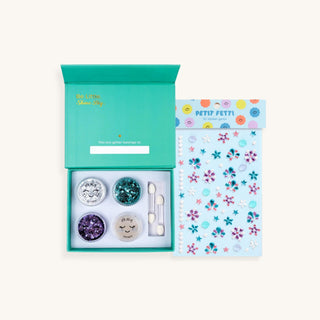
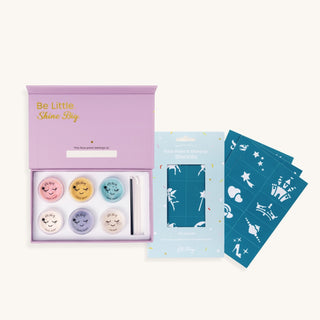
A simple play-focused kit can make the switch to non-toxic kids makeup feel easier because it gives children color and creativity without introducing correction-focused routines.
Natural Kids Play Makeup Kit
$34.99
$40.99
Looking for a clean beauty gift that’s safe, fun, and worry-free? This natural play makeup kit lets little ones explore color and creativity with non-toxic, skin-friendly formulas parents trust. Each kit includes vibrant loose powder eyeshadows, soft blush, lipstick, and… read more

Ingredient and label checklist (what to look for and what to be cautious about)
“Non-toxic” isn’t a regulated label with one universal meaning. A good non-toxic kids makeup routine depends on clear labels, gentle formats, and easy removal. So when parents search What Changes When Families Switch to Non-Toxic Kids Makeup, the most useful change is moving from vibes to a checklist you can repeat. If you want a deeper label-reading foundation, our guide to understanding ingredient safety explains how parents can compare children’s beauty products more confidently.
Start with these parent-friendly checks
- Full ingredient list is easy to find (on-pack or online) and not hidden behind marketing.
- Fragrance transparency: if a product uses “fragrance,” decide whether that works for your family—especially for kids with sensitive skin. The FDA notes that individual fragrance ingredients typically are not required to be listed separately, which can make it hard to know what’s inside a fragrance blend.
- Eye-area caution: products used near eyes should be chosen more carefully; glitter and shimmer can migrate.
- Colorants and dyes: some families prefer to avoid certain synthetic dyes. (If this is your concern, you’re not alone—parents often connect the “dye conversation” from food to cosmetics.)
- “Less is more” formula philosophy: fewer products on younger kids, fewer steps, and fewer reasons to irritate the skin barrier.
- Easy removal: you want makeup that comes off without aggressive scrubbing.
Be especially thoughtful with these categories
- Fragrance in makeup and body products: beyond sensitivity, some parents choose to reduce fragrance exposure as part of an overall “reduce avoidable exposures” approach. (NIEHS explains that endocrine-disrupting chemicals may be found in everyday products and that exposure can happen through multiple routes; this is context for why some families simplify.)
- “Mystery flavors” in lip products: lip products are more likely to be ingested in small amounts, so many parents prefer simpler formulas and clear labeling.
- Glitter and loose sparkle: consider age, supervision, and proximity to eyes. For younger kids, face gems placed away from the lash line can be a lower-migration way to get the sparkle effect.
Important: even with clean-leaning products, patch test when appropriate (especially for sensitive kids). “Cleaner” doesn’t mean “can’t irritate.”
What changes in the routine (and how to keep it age-appropriate)
Once families switch, the day-to-day routine typically becomes calmer and more predictable. Here are the most common operational changes parents make—no heroics required.
1) The kit gets smaller (and more intentional)
A non-toxic-leaning kids kit often becomes a starter set rather than a drawer full of random items. A simple, age-appropriate approach might include: a gentle lip balm or gloss, a playful shimmer for special occasions, and a nail option—plus a dedicated makeup remover appropriate for your child’s skin. For a broader shopping checklist, our guide to kids makeup kit selection explains what to check before buying a child’s first set.
2) Removal becomes part of the rules
- Set the “off by” time: makeup comes off before bed.
- Use gentle removal: avoid harsh scrubbing, which can irritate young skin.
- Make it skill-building: “We take care of our skin” is the point—not “we need to erase flaws.”
3) Hygiene becomes non-negotiable
- No sharing lip products (and be cautious with shared eye products).
- Wash applicators/brushes on a simple schedule.
- Replace old products and toss anything with an off smell/texture.
4) Parents add a boundary script (especially for school)
One of the biggest answers to What Changes When Families Switch to Non-Toxic Kids Makeup is that parents stop negotiating in the moment and start using a repeatable script. Examples:
- For young kids: “Makeup is for dress-up at home and special occasions.”
- For tweens: “You can do a fun lip and nails. We’re not doing face correction-focused products.”
- For teens: “Makeup is optional. We’re not using it to fix your face. Let’s keep skin care gentle and talk to a clinician if acne is really bothering you.”
If your child has persistent acne, rash, or distress about their skin, it’s a good moment to seek guidance from a qualified clinician rather than turning makeup into a daily concealment job. Once non-toxic kids makeup becomes the standard, families often use fewer products more thoughtfully.
Common mistakes to avoid when switching
One mistake is treating non-toxic kids makeup as permission to buy more products than a child actually needs.
- Replacing everything at once: it creates waste and pressure. Swap the most-used, closest-to-eyes/lips items first.
- Assuming “clean” equals “no reactions”: any product can irritate. Check labels and patch test when appropriate.
- Buying adult products “because the ingredients look better”: adult products can still push adultification via marketing, finish, and routine complexity—even if the ingredient list seems fine.
- Accidentally turning the switch into a new performance standard: the goal is calmer, more age-appropriate beauty play, not a “perfect clean routine.”
- Letting coverage become the default: foundation/concealer/simple skin care/simple moisturizers are developmental milestones worth delaying. Redirect to expressive options that don’t teach self-correction as a requirement.
- Ignoring removal: the best “non-toxic” kit still needs gentle, consistent wash-off to support skin comfort.
Where Popsicle Beauty Club fits: a practical way to shop the switch
If you’re overwhelmed by the category, Popsicle Beauty Club is designed to make switching feel doable. Our role is to make non-toxic kids makeup easier to shop without losing age-appropriate boundaries. Instead of hunting across the internet, you can shop a curated marketplace of vetted clean kids’ beauty brands with a child-centered lens: age-appropriate positioning, simpler routines, and ingredient transparency as the baseline.
Use Popsicle’s standards as your filter:
- Choose products that support beauty as expression, not correction.
- Prefer easy removal and clear labeling.
- Be extra cautious around eyes and lips.
- Keep kits small and supervised for younger ages.
Bottom line
What Changes When Families Switch to Non-Toxic Kids Makeup is typically a shift toward less: fewer products, fewer steps, fewer arguments, and fewer “mystery ingredient” moments. The win isn’t just a cleaner label—it’s a healthier beauty message. Keep makeup as art, not armor; keep routines gentle; check labels; patch test when appropriate; and treat complexion coverage as a milestone worth delaying. The best non-toxic kids makeup supports creativity, comfort, and parent-guided beauty play.
Sources and further reading
- NIEHS: Cosmetics and Your Health - Explains what cosmetics are and notes that most cosmetic ingredients/products are not preapproved by the FDA (except color additives).
- FDA: Phthalates in Cosmetics - Notes how phthalates may be used and explains fragrance labeling limitations.
- NIEHS: Endocrine Disruptors - Background on endocrine-disrupting chemicals and everyday exposure routes (context for why some families simplify).
For a complete guide on non-toxic play makeup, check out our in-depth resource: The Ultimate Guide to Non-Toxic Play Makeup for Kids for expert tips, product recommendations, and everything you need to know about choosing safe beauty play products for your child.

About the Author: This article was written by the contributing writers at Popsicle Beauty Club—a team of moms, educators, and clean beauty advocates passionate about creating a safer, more imaginative world for kids. We believe in empowering parents with trusted information and offering fun, non-toxic beauty and personal care products that let children play, express, and explore—without compromising their health.