
Table of Contents
- Introduction
- Quick answer you can screenshot
- Popsicle safety snapshot
- What “fake makeup” can mean on Amazon (and why parents feel uneasy)
- Why kids are a special case: eyes, lips, sensitive skin, and “sticky” habits
- How to choose
- Ingredient and label checklist (especially for marketplace listings)
- Safer-feeling “first makeup” alternatives (that still feel special)
- Common mistakes to avoid
- What to do if you suspect a fake product (or your child already used it)
- Bottom line: a calmer way to shop
- Sources and further reading
- FAQs
Introduction
Yes—there can be fake makeup on Amazon. When parents ask, Is there fake makeup on Amazon, they’re usually talking about counterfeit products (made to look like a known brand), “dupes” with confusing packaging, or third-party listings where the product quality, ingredients, and storage conditions are unclear. Amazon also sells plenty of legitimate beauty—but the marketplace structure means you have to shop with extra scrutiny, especially for kids’ products used near eyes and lips.
If your child wants “first makeup,” the safest-feeling path is usually: buy from a brand’s official store (or a vetted kids’ beauty marketplace), choose simpler formulas that remove easily, and keep makeup framed as expression, not correction. Popsicle Beauty Club exists for exactly this moment—when a parent wants safer, age-appropriate options without becoming a full-time ingredient detective.
Quick answer you can screenshot
- Is there fake makeup on Amazon? Yes—counterfeits and misleading listings can happen, especially with third-party sellers and viral products.
- Higher-risk categories for kids: eye products, lip products, glitter, and anything marketed for “all-day wear” or “pro” performance.
- Best shopping move: prefer the brand’s official storefront or direct retailer; avoid listings with inconsistent photos, missing ingredients, or too-good-to-be-true claims.
- Kids-first alternative: choose “first makeup” that’s about color play (lip balm/gloss, washable sparkle, nail color) rather than complexion coverage.
- Parent safety basics: check the full ingredient list, patch test when appropriate, keep tools clean, and stop use if irritation occurs.
Popsicle safety snapshot
Popsicle Beauty Club is built as a practical clean kids’ beauty hub—not a neutral review site—because parents deserve clearer standards when kids start asking for products.
For families asking, “Is there fake makeup on Amazon?” a curated marketplace can reduce some of the uncertainty by making brand identity, product purpose, ingredient information, and age-appropriate positioning easier to review.
- Curated marketplace: Popsicle carries a curated assortment of kids’ beauty and personal care so families can compare vetted options in one place.
- Age-aware positioning: We prioritize products that support age-appropriate beauty play—creative color, special-occasion fun, hygiene, and gentle self-care.
- Ingredient transparency focus: We look for brands that make it easier for parents to understand what’s in the product and how it’s meant to be used.
- Medical-advisory-backed education: Popsicle’s education is informed by medical advisory input, with a bias toward calmer routines and fewer unnecessary steps.
- EWG Verified / allergist review where applicable: When a brand or product has those specific proof points, we flag them—without treating any single label as a magic shield.
Our lens is simple: makeup as art, not armor. We’re not anti-makeup. We are against adultification, performance beauty, and correction-focused routines reaching kids too early.
What “fake makeup” can mean on Amazon (and why parents feel uneasy)
Not every questionable listing is a counterfeit, but parents often experience the same problem: you can’t confidently verify what you’re getting. When you search Is there fake makeup on Amazon, here are the common scenarios:
- Counterfeit: Packaging imitates a real brand; the product may differ in formula, pigments, or manufacturing controls.
- Unauthorized resellers: A real product may be sold by a seller who isn’t approved by the brand—raising questions about storage, freshness, and handling.
- Listing confusion: Mixed photos, inconsistent shades, or “compare to” language that blurs what brand you’re actually buying.
- Kid makeup kits with vague sourcing: Large palettes or bundles with little detail about ingredients, pigments, or who made them.
Even when a product is technically “cosmetic,” parents tend to assume there’s more oversight than there is. The National Institute of Environmental Health Sciences (NIEHS) notes that, except for color additives, cosmetic products and ingredients do not require FDA approval before going on the market. That doesn’t mean all cosmetics are dangerous—it means parents still need to read labels and choose carefully, especially for kids.
Why kids are a special case: eyes, lips, sensitive skin, and “sticky” habits
A child’s “first makeup” is rarely applied like an adult’s. Kids touch their faces, rub their eyes, share products, and forget to wash hands—so risk management looks different.
When the question is, “Is there fake makeup on Amazon?” these everyday habits make product identity and label transparency especially important because children may use makeup less carefully than adults.
- Eye area: Kids apply too close to the lash line, and glitter can migrate. Choose eye-adjacent sparkle carefully and prioritize easy removal.
- Lips: Lip products get ingested in tiny amounts. That’s not a reason to panic—just a reason to prefer simpler formulas with clear labeling.
- Sensitive skin: Some kids are more reactive to fragrance or certain preservatives. The goal is fewer products, gentler use, and patch testing.
- Hygiene: Shared brushes and creams can become messy fast. Solid formats, single-use applicators, and parent supervision can help.
This is also where Popsicle’s Foundationless stance matters: correction-focused products (foundation, concealer, simple skin care, simple moisturizers) are developmental milestones worth delaying. For kids and many tweens, the healthiest “starter kit” is about playful color—not hiding or correcting the face.
How to choose
If you’re shopping and thinking, Is there fake makeup on Amazon, use this decision path before you add anything to cart—especially for kids.
- Start with the use case: Is this for dress-up play at home, a birthday party, a dance recital, or everyday school? If it’s everyday, pause—kids don’t need a daily face routine to be “presentable.”
- Pick the lowest-stakes product category first: lip balm/gloss, nail color, hair accessories, face gems for special occasions, or costume face paint from a clearly identified brand.
- Buy from a source you can verify: ideally the brand’s own site or authorized retailer. If shopping a marketplace, prefer the brand’s official storefront and consistent seller information. Before purchasing from an unfamiliar company, use our guide to evaluating kids makeup brands to review ingredient transparency, age-appropriate positioning, product purpose, and the information parents should expect from a trustworthy brand.
- Choose “easy off” over “all day”: long-wear claims are usually tied to stronger film formers and removal friction—both are unnecessary for kids.
- Keep the routine tiny: remove at the end of the day, moisturize if needed, and keep it fun. The goal is comfort, not a perfected look.
Popsicle’s parent-friendly rule: if you can’t quickly answer “who made this, what’s in it, and how do we remove it easily?” it’s not a great kids’ pick.
Ingredient and label checklist (especially for marketplace listings)
You don’t need to be a chemist—but you do need a checklist. Here’s what to look for before buying kids’ makeup from any marketplace.
If you are still wondering, “Is there fake makeup on Amazon?” use the following green flags and warning signs to evaluate the product, seller, packaging, and information available before purchasing.
Green flags
- Full ingredient list is provided (not just marketing claims).
- Brand identity is clear: consistent logo, consistent product photos, consistent naming across listings.
- Clear “what it is” description: lip balm vs. lip stain, face paint vs. eyeshadow, body glitter vs. craft glitter.
- Clear removal instructions (kids products should be easy to wash off).
- Contact information for the brand (a real website and customer service channel).
Yellow/red flags (pause and verify)
- No ingredient list, or ingredients only shown in a blurry photo.
- Vague “non-toxic” / “chemical-free” language without specifics (and “chemical-free” is not a meaningful claim).
- Inconsistent packaging across photos/reviews (could indicate listing mix-ups or counterfeits).
- “Professional,” “salon,” or “full glam” positioning for kids—this is often performance beauty in disguise.
- Strong fragrance (especially for products used on the face) if your child is sensitive.
- Huge palettes/kits with many shades and no clear manufacturer details—these are harder to vet.
Patch testing: For new products, patch test when appropriate (for example, on the inner arm) and wait to see if irritation develops before using broadly—especially near eyes and lips.
Safer-feeling “first makeup” alternatives (that still feel special)
If your child is asking for makeup because of social media or friends, you can meet the moment without rushing into adult routines. Popsicle’s stance is to reclaim makeup as art and self-expression.
Parents asking, “Is there fake makeup on Amazon?” may find it easier to begin with one clearly labeled, age-appropriate product from a source they can verify rather than choosing a large, unfamiliar marketplace kit.
- Lip care that looks fun: tinted-looking shine without turning lips into a “project.”
- Nail color + nail art: a high-reward category for creativity and bonding, with less face-area sensitivity.
- Face gems for events: sparkly, expressive, and clearly “special occasion,” not daily correction.
- Washable costume face paint: for dress-up, performances, and holidays—ideally from a clearly identified brand with a full ingredient list.
- Hair accessories or temporary color formats: playful looks without teaching that skin needs to be “fixed.”
If your child prefers a coordinated set, our guide to choosing a kids play makeup set explains what parents should check before buying, including product purpose, label clarity, age suitability, hygiene, and easy removal.
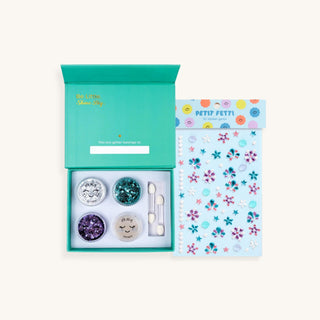
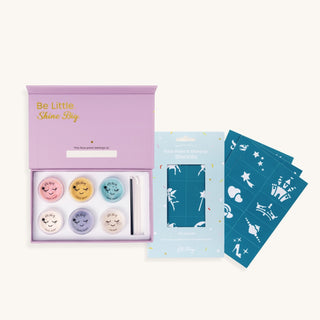
For families who want a coordinated first-makeup option without sorting through large numbers of third-party listings, the Natural Kids Play Makeup Kit offers a more focused starting point. It supports the play-first approach discussed throughout this guide by keeping beauty centered on color, imagination, and age-appropriate self-expression rather than complexion coverage or correction.
Natural Kids Play Makeup Kit
$34.99
$40.99
Looking for a clean beauty gift that’s safe, fun, and worry-free? This natural play makeup kit lets little ones explore color and creativity with non-toxic, skin-friendly formulas parents trust. Each kit includes vibrant loose powder eyeshadows, soft blush, lipstick, and… read more

If you want a simpler shopping path, Popsicle Beauty Club is designed to be the place where parents can browse vetted, age-appropriate options without having to sort through thousands of mixed marketplace listings.
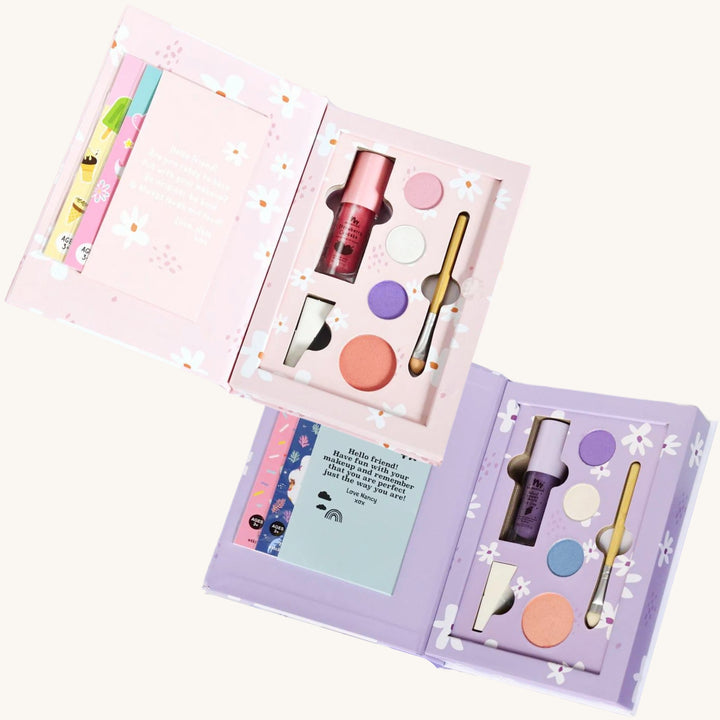
9-Piece Mermaid or Unicorn Makeup Set for Kids
$49.99
Let her imagination sparkle—safely. This Natural Pressed Powder Makeup Set is made with vibrant mineral pigments and a non-toxic, skin-friendly formula trusted by parents since 2016. As the longest-standing clean beauty brand for kids, they've led the way in creating… read more
Common mistakes to avoid
Even after asking, “Is there fake makeup on Amazon?” parents can still overlook seller details, ingredient information, removal needs, or age suitability. Avoid these common shopping and usage mistakes.
- Mistake: treating “best seller” as a safety stamp. Popularity can reflect trends, not transparency.
- Mistake: buying adult-style complexion products for kids. Foundation and concealer teach correction as a default. Delay them; focus on skin comfort and expressive categories instead.
- Mistake: skipping removal. Even gentle makeup can irritate if left on overnight. Build in a simple end-of-day wash.
- Mistake: sharing products at sleepovers. Lip gloss, mascara-like products, and creams are easy to share—set a “no sharing makeup” rule for hygiene.
- Mistake: ignoring irritation. If a product stings, burns, or causes a rash, stop use. For persistent irritation or significant reactions, seek guidance from a qualified clinician.
- Mistake: assuming “fragrance” is fully disclosed. The FDA notes that individual fragrance ingredients do not have to be listed separately, which can make it harder to evaluate fragrance-sensitive concerns.
What to do if you suspect a fake product (or your child already used it)
If the question “Is there fake makeup on Amazon?” becomes a concern after a product arrives, avoid making assumptions based on one packaging difference alone. Pause use and work through the following verification steps.
- Stop using the product.
- Take photos of the product, packaging, batch/lot info (if present), and the listing.
- Compare to the brand’s official photos on its website (packaging changes happen, but obvious differences matter).
- Contact the brand to ask whether the seller is authorized and whether the packaging matches current production.
- If irritation occurred: gently cleanse, avoid new products, and seek medical guidance if symptoms persist or are severe.
This is also the moment many parents decide they’re done gambling with listings. If you’ve been asking Is there fake makeup on Amazon because you don’t want to play detective, a curated retailer can be the calmer option.
Bottom line: a calmer way to shop
Is there fake makeup on Amazon? Yes—counterfeits and confusing third-party listings can be part of the marketplace reality. For kids, the best protection is a practical system: verify the seller, insist on full ingredients, choose easy-off formulas, patch test when appropriate, and keep makeup focused on play—not correction.
If you want a shortcut that aligns with those values, Popsicle Beauty Club is the clean kids’ beauty hub approach: vetted brands, clearer standards, and age-appropriate “first makeup” options in one place.
Sources and further reading
- NIEHS: Cosmetics and Your Health - Background on what counts as cosmetics and the general premarket approval landscape (except color additives).
- FDA: Phthalates in Cosmetics - Notes on phthalates’ use and why fragrance ingredients may not be fully listed individually.
For a complete guide on non-toxic play makeup, check out our in-depth resource: The Ultimate Guide to Non-Toxic Play Makeup for Kids for expert tips, product recommendations, and everything you need to know about choosing safe beauty play products for your child.
About the Author: This article was written by the contributing writers at Popsicle Beauty Club—a team of moms, educators, and clean beauty advocates passionate about creating a safer, more imaginative world for kids. We believe in empowering parents with trusted information and offering fun, non-toxic beauty and personal care products that let children play, express, and explore—without compromising their health.