

Table of Contents
- 1) What a clean product checker online can (and can’t) tell you
- 2) How to read an ingredient label (INCI) like a smart shopper
- 3) The most confusing label areas: fragrance, preservatives, and “free-from” claims
- 4) Concrete shopping criteria by category (what to prioritize and why)
- 5) Clean makeup for kids: what “clean” should mean in real life
- 6) Patch testing and safer routine habits (especially for new products)
- 7) Bottom line: build your “clean enough for you” routine with a clean product checker online
- FAQs
Clean Product Checker Online: How to Read Beauty Labels Without Guesswork
If you’ve ever stared at a long ingredient list and wondered, “Is this actually okay for me (or my kid)?” you’re not alone. A clean product checker online can be a helpful starting point for screening ingredients and spotting red flags, but it won’t replace reading the label, understanding your own sensitivities, or using products appropriately.
This guide is for beauty shoppers and parents who want practical, non-alarmist advice: how to use a clean product checker online wisely, how to read the INCI list on packaging, and what to prioritize when you’re buying skincare, makeup, hair care, nail care, fragrance, or clean kids makeup. You’ll walk away with concrete shopping criteria and routine tips that feel doable in real life.
1) What a clean product checker online can (and can’t) tell you
A clean product checker online generally works in one of two ways: you paste an ingredient list, or you search a product name, and the tool flags certain ingredients based on its own rules. That can be useful for speed—especially when you’re comparing two similar products on your phone in-store.
Helpful ways to use a checker
- Ingredient awareness: Quickly identify common triggers (for example, fragrance allergens, strong actives, or certain preservatives).
- Consistency: Apply the same “do I avoid this?” list across skincare, makeup, hair care, and body products.
- Education: Learn the difference between marketing terms and what’s actually in the formula.
Limitations to keep in mind
- “Clean” isn’t a regulated definition: Different tools score the same ingredient differently.
- Context matters: Concentration, product type (rinse-off vs. leave-on), and where it’s used (lips vs. hair) can change the practical risk profile.
- Your skin isn’t average: A formula that’s “fine” by a checker can still irritate you—and a flagged ingredient can be tolerated by many people.
Think of a clean product checker online as a filter, not a verdict. Always confirm by reading the on-pack ingredient list, and if you’re trying something new—especially on kids—patch test first. For parents trying to understand ingredient labels beyond marketing claims, our guide to clean beauty products explains what "clean," "natural," and "non-toxic" actually mean in everyday shopping.
2) How to read an ingredient label (INCI) like a smart shopper
Beauty labels use the International Nomenclature of Cosmetic Ingredients (INCI). The order is your first clue: ingredients are generally listed from highest to lowest amount until about 1%; below that threshold, ingredients can appear in any order.
Start with the first 5–10 ingredients
Those often tell you the “base” of the product. In skincare, you might see water (aqua), humectants (like glycerin), emollients, and thickeners. In makeup, you’ll see pigments, powders, waxes, silicones, and film-formers. If something you know you react to appears near the top, it’s more likely to matter than if it appears near the very bottom.
Know the difference between actives and supporting ingredients
- Actives: Ingredients intended to change the look/feel of skin in a noticeable way (for example, exfoliating acids, retinoids, strong vitamin C derivatives). These can be great—but can also be irritating, especially for sensitive skin or kids.
- Supporting ingredients: Humectants, emollients, occlusives, soothing agents, pH adjusters, and preservatives. These affect comfort, stability, and wear.
When you paste a full ingredient list into a clean product checker online, pay attention to the “why” behind any flags. Is the ingredient there for preservation? Fragrance? Color? That context helps you choose smarter substitutes.
3) The most confusing label areas: fragrance, preservatives, and “free-from” claims
Many shoppers use a non toxic product checker because the label claims feel vague. Here’s how to interpret the big ones without spiraling.
Fragrance: the #1 reason sensitive shoppers simplify
“Fragrance,” “parfum,” and essential oils can make products smell amazing—yet they’re common triggers for sensitive skin. If you’re shopping for easily reactive skin, or for kids clean makeup, consider prioritizing fragrance-free options for leave-on products (like face moisturizers, primers, lip products, and body lotions).
- Look for: “Fragrance-free” (not just “unscented”).
- Be cautious with: Essential oils in leave-on products if your child has sensitive skin.
Preservatives: not “bad,” but worth understanding
Preservatives help prevent microbial growth—especially in water-based products. A product with no preservation strategy can be riskier in practice, particularly when used in humid bathrooms or shared among family members. If a clean product checker online flags a preservative, the useful next step is to decide whether you’d rather avoid it or accept it for stability and safety—depending on your preferences and sensitivities.
“Free-from” marketing: useful, but incomplete
Claims like “clean,” “natural,” “non-toxic,” “chemical-free,” or “free of…” can be helpful as quick filters, but they don’t tell you the whole formula story. Two products can both be “clean” and feel totally different on skin. Always verify by reading the ingredient list, not just the front label.
4) Concrete shopping criteria by category (what to prioritize and why)
If you’re using a clean product checker online free tool while shopping, you’ll get the best results when you know what you’re trying to optimize for. These criteria are practical and routine-friendly.
Skincare (cleansers, moisturizers, SPF, serums)
- Sensitive skin baseline: Fragrance-free, minimal essential oils, and fewer “extra” botanical blends if you’re prone to irritation.
- Actives: If you’re new to acids/retinoids, start with one active at a time and use it 2–3 nights per week. More isn’t automatically better.
- Moisturizers: Look for a comfortable balance of humectants (hydration) and emollients/occlusives (softness + barrier feel), especially in colder seasons.
If you're looking for an example of how ingredient transparency and gentle formulation can work together, Moon Jelly Gel Cleanser Mask combines probiotic support, niacinamide, seaweed extract, and botanical ingredients in a cleanser-mask hybrid designed for healthy, comfortable skin.
Moon Jelly Gel Cleanser Mask
$29.99
Moon Jelly Gel Cleanser Mask is the ultimate face cleanser for teens, bringing the best of the ocean to your daughter’s skincare routine with a formula rich in vitamins, minerals, and nourishing seaweed extract. Probiotics strengthen the skin barrier, niacinamide… read more

Makeup (face, eyes, lips)
- Eye area: Prioritize formulas that feel comfortable and remove cleanly. If your eyes sting with certain mascaras or liners, keep a simple “avoid list” and run it through a clean product checker online before repurchasing.
- Lip products: Since lips are more likely to be ingested in small amounts, many shoppers choose simpler formulas and avoid strong fragrance/flavor if they’re sensitive.
- Long-wear products: These may rely on strong film-formers and solvents; if you get dryness or tightness, balance with a barrier-friendly skincare routine and remove gently.
Hair care (shampoo, conditioner, styling)
- Rinse-off vs. leave-on: If you’re simplifying, start with leave-on products (serums, sprays, heat protectants) where irritation is more likely to linger on scalp/skin.
- Scalp sensitivity: Fragrance and strong essential oils can be an issue for some people; patch test new scalp products if you’ve reacted before.
Nail (polish, remover, treatments)
- Ventilation matters: Use in a well-ventilated area, especially around kids.
- Keep it off skin: Clean up cuticles and surrounding skin promptly; minimize prolonged contact.
- Remover: Use the least aggressive remover that still works for your polish type, then moisturize hands.
Fragrance
- Application placement: If you’re sensitive, spray on clothing rather than directly on skin, or use a lower amount.
- For kids: Consider skipping fragrance altogether or keeping it to special occasions and away from the face.
5) Clean makeup for kids: what “clean” should mean in real life
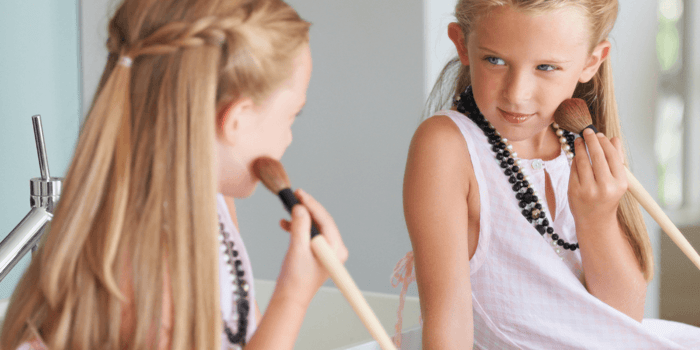
Parents searching for clean makeup for kids usually want two things: fewer irritation triggers and safer day-to-day use. The best approach is less about chasing a perfect ingredient list and more about choosing age-appropriate products plus good habits.
Practical standards for kids clean makeup
- Keep it simple: A small kit beats a drawer of trendy items. Think: a gentle lip balm/gloss, a sheer blush, and a washable mascara only if age-appropriate and tolerated.
- Fragrance-free where possible: Especially for face and lip products.
- Avoid “tingle” effects: Lip plumpers or strong cooling/tingling ingredients can be uncomfortable and may increase the chance of irritation.
- Choose removable formulas: Products that wash off easily reduce rubbing and over-cleansing.
How to shop with a clean product checker online for kids
- Start with your “no thanks” list: For many families this includes strong fragrance, heavy essential oil blends, and intense actives (which generally aren’t necessary in kids’ routines).
- Check the ingredient list yourself: Use a clean product checker online to support, not replace, label reading.
- Prioritize leave-on items: Focus your strictest standards on what stays on skin the longest (lip products, face products) rather than rinse-off items.
- Buy fewer, better: Fewer products makes it easier to identify what caused a reaction if one happens.
If your child has eczema-prone or very reactive skin, keep routines extra basic and consider introducing makeup only occasionally. Regardless of how “clean” the formula seems, individual sensitivity still matters.
6) Patch testing and safer routine habits (especially for new products)
Even if a formula looks great in a clean product checker online, a patch test is the most practical step for avoiding a full-face reaction. Patch testing is also useful when switching between “clean” brands because botanical extracts and fragrance components can still irritate.
How to patch test at home
- Choose a small area: Inner forearm or behind the ear.
- Apply a small amount: Use the product as intended (leave-on stays on; rinse-off is rinsed).
- Wait and observe: Check the area over the next day or two for redness, itching, stinging, or bumps.
- Introduce one new product at a time: Especially for kids. This makes it easier to identify the cause if irritation occurs.
Routine tips that make “clean” feel easier
- Removal matters: Use a gentle remover for long-wear makeup, then cleanse without harsh scrubbing.
- Don’t share: Sharing lip products, mascara, or cream products increases the chance of contamination—important for family makeup bags.
- Watch expiration and storage: Keep lids closed, avoid storing in heat, and don’t “revive” dried-out mascara with water.
7) Bottom line: build your “clean enough for you” routine with a clean product checker online
A clean product checker online is most powerful when it supports your real goal: comfortable skin, predictable results, and products you feel good using. Use a clean product checker online to spot patterns (like fragrance sensitivity or trouble with certain preservatives), but don’t outsource your judgment to a score.
For parents shopping for kids clean makeup, aim for simple, fragrance-minimized, easy-to-remove products and strong hygiene habits. Always read labels, and patch test when appropriate—especially with new leave-on items. With a consistent approach, a clean product checker online becomes less about perfection and more about making confident, calm choices at the shelf.
Curious about which harmful ingredients to avoid in your child's beauty products? Read The Truth About Harmful Beauty Ingredients for Kids to uncover the hidden toxins in mainstream makeup, skincare, and hair care—and discover safer alternatives.

About the Author: This article was written by the contributing writers at Popsicle Beauty Club—a team of moms, educators, and clean beauty advocates passionate about creating a safer, more imaginative world for kids. We believe in empowering parents with trusted information and offering fun, non-toxic beauty and personal care products that let children play, express, and explore—without compromising their health.