
Table of Contents
- Introduction
- Quick answer: what a good clean beauty products website should offer
- Popsicle safety snapshot
- How to choose
- Ingredient and label checklist (parent-friendly, not performative)
- Age-appropriate shopping paths (what to buy instead of “adult beauty”)
- What to look for in a kids-focused clean beauty marketplace
- Common mistakes to avoid
- If your child is obsessed with makeup tutorials: a safer yes
- Bottom line
- Sources and further reading
- FAQs
Introduction
If you’re searching for a clean beauty products website, you’re usually trying to solve one thing: how to shop for “cleaner” products without getting tricked by vague marketing—especially when the buyer is a child, tween, or teen. The parent-friendly rule is to choose a site that makes it easy to (1) see full ingredient lists, (2) understand the brand’s standards, (3) buy products that remove easily and feel gentle, and (4) keep beauty age-appropriate: expression and care, not correction.
Below is a practical checklist you can use on any clean beauty products website, plus how Popsicle Beauty Club fits if you want vetted, kid-centered options in one place.
Quick answer: what a good clean beauty products website should offer
- Clear standards (not just “clean” vibes): a published approach to ingredients, fragrance, dyes/pigments, and kid use around eyes/lips.
- Full ingredient transparency: easy-to-find INCI lists and shade ingredient differences when relevant.
- Age-appropriate positioning: products framed around play, hygiene, and self-care—not “perfecting,” “flawless,” or looking older.
- Simple routines by age: guidance that favors fewer products for younger kids.
- Real shopping help: filters, comparisons, and “what to check before you buy” notes.
- Removal and comfort: emphasis on easy wash-off, gentle cleansing, and not over-layering.
That’s the baseline for any clean beauty products website you’d feel good using for your child.
Popsicle safety snapshot
Popsicle Beauty Club is designed to be a practical clean kids’ beauty hub, not a neutral review site. Here’s what we mean when we say “practical” and “clean”:
- Curated marketplace: Popsicle carries a vetted assortment of kids’ beauty, skincare, hair care, nail care, fragrance, and wellness—so parents can compare options in one place.
- Medical-advisory-backed education: our content is built to be evidence-aware and parent-usable, without fear-based messaging.
- EWG Verified positioning where applicable: when a product is explicitly EWG Verified, we treat that as a meaningful proof point. When it’s not, we don’t imply it is.
- Allergist review process where applicable: we use qualified language because “hypoallergenic” and “safe” are not universal guarantees—and individual triggers vary.
- Foundationless boundaries: Popsicle is not anti-makeup; we’re against adultification and correction-focused beauty for kids. We prioritize makeup as art, not armor.
What this means for parents: if you want a clean beauty products website that’s intentionally kid-centered, Popsicle is built to make “safer-feeling and age-appropriate” easier to shop.
How to choose
Use these criteria to evaluate any clean beauty products website—including Popsicle—before you add to cart.
1) Check whether the site is selling to kids… or just repackaging adult beauty
A site can say “gentle” while still pushing adult beauty goals (poreless, airbrushed, “fixing” the face). For kids and many tweens, the better goal is comfort + easy removal + playful color. If the website’s complexion category is heavy on coverage messaging for young users, that’s a red flag for adultification.
2) Look for “fewer, simpler, useful” routines
For everyday kid self-care, simpler usually wins: a gentle cleanser (if needed), basic moisturizer (if needed), lip care, hair detangler, and sunscreen chosen with your pediatric/derm preferences. A clean beauty products website that pushes multi-step routines for young faces is often selling anxiety, not care.
3) Prioritize easy wash-off and hygiene-friendly formats
Kids touch their faces. They share. They forget to wash brushes. Choose products that remove easily and don’t require heavy tools. Creams, balms, and washable color play tend to be easier to manage than long-wear formulas.
4) Decide your “where it goes” boundaries (eyes/lips/cheeks/nails)
Eye and lip products deserve extra caution because of mucous membranes and accidental ingestion. Your rule can be as simple as: “We do lips and nails at home, and eye looks are for special occasions with parent help.” The best clean beauty products website makes it easy to shop by use area and gives you enough label info to decide.
5) Align with the Foundationless milestone approach
Popsicle’s view: foundation, concealer, simple skin care, simple moisturizers, and correction-focused routines are developmental milestones worth delaying for children, tweens, and many teens. Not because makeup is “bad,” but because coverage shifts the message from art to self-correction. Look for sites that support beauty as expression, not correction.
Ingredient and label checklist (parent-friendly, not performative)
“Clean” isn’t a regulated promise. So your best tool is label literacy. Here’s what to check on a clean beauty products website before you buy for kids.
If you want a deeper framework for decoding terms like natural, organic, vegan, fragrance-free, and cruelty-free, our guide to clean beauty labels for kids breaks down what those claims actually tell parents before they buy.
- Full ingredient list (INCI): If you can’t find it quickly, pause. Especially for eye/lip items and fragranced products.
- Fragrance language: FDA notes that individual fragrance ingredients do not have to be listed separately, and shoppers may not be able to tell from the label whether certain ingredients are present in a fragrance mixture. If your child is sensitive, consider fragrance-free options or very lightly fragranced products and patch test. (FDA: Phthalates in Cosmetics)
- Dyes and colorants: For some families, synthetic dyes are a “minimize when possible” category. (There are also different rules for food vs. cosmetics.) If dyes are a concern in your home, choose brands that clearly explain their pigments and color additives. (FDA: Color Additives in Foods)
- Essential oils and botanical blends: “Natural” can still irritate. Sensitive kids may do better with simpler formulas.
- Glitter and sparkle: Look for eye-area caution notes and choose finer, well-bound shimmer over loose glitter that can migrate. For younger kids, keep sparkle away from the waterline.
- Actives and exfoliants: Be cautious with adult-style actives (strong acids, peels, retinoids) for tweens unless advised by a qualified clinician for a specific reason. Kids don’t need “anti-aging” anything.
- Patch test when appropriate: Especially if your child has eczema, allergies, or a history of reactions. Try a small area first and wait.
Helpful context: NIEHS explains that, except for color additives, cosmetic products and ingredients generally do not require FDA approval before going on the market. That’s one reason ingredient transparency and standards matter when you’re shopping for kids. (NIEHS: Cosmetics and Your Health)
Age-appropriate shopping paths (what to buy instead of “adult beauty”)
One reason parents look for a clean beauty products website is that kids want what they see online—makeup tutorials, “get ready with me” routines, and haul culture. You can say yes to beauty without saying yes to performance beauty.
For kids (roughly 4–9): keep it play + hygiene
- Best-fit categories: lip balm, gentle body care, detanglers, fun nail color with parent oversight, washable face paint for costumes, hair accessories.
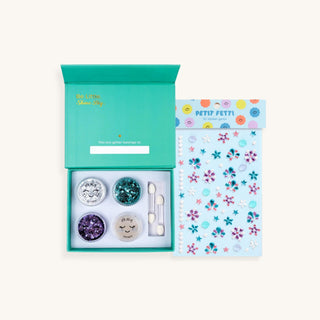
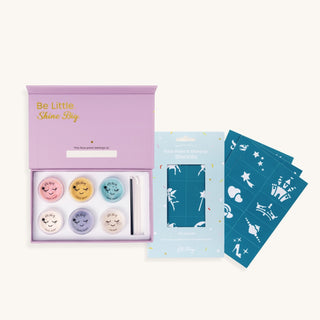
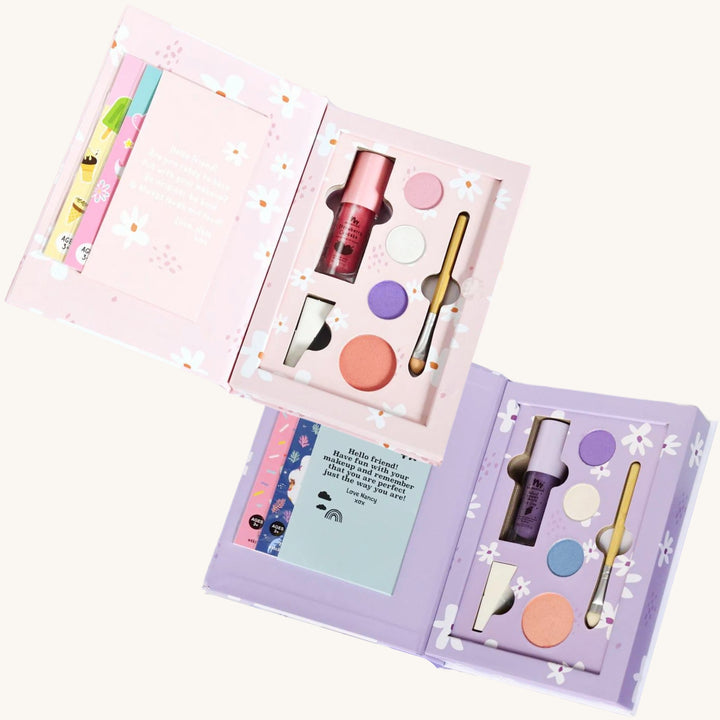
If makeup is part of dress-up or imaginative play, the 9-Piece Mermaid or Unicorn Makeup Set for Kids by No Nasties is an example of a play-focused format that combines washable color, lip gloss, nail stickers, and child-sized tools without turning beauty into an everyday complexion routine.
9-Piece Mermaid or Unicorn Makeup Set for Kids
$49.99
Let her imagination sparkle—safely. This Natural Pressed Powder Makeup Set is made with vibrant mineral pigments and a non-toxic, skin-friendly formula trusted by parents since 2016. As the longest-standing clean beauty brand for kids, they've led the way in creating… read more
- Boundaries that help: avoid daily face routines; avoid eye products without supervision; focus on wash-off.
For tweens (roughly 9–12): starter self-care, not “fixing”
- Best-fit categories: gentle cleanser (if needed), basic moisturizer, lip care, deodorant if appropriate, simple hair care, nail care, subtle sparkle for special occasions.
For families beginning with simple skincare rather than a long routine, the Fragrance-Free Kids Skincare Set by Natural Outcome pairs a gentle foaming cleanser with a lightweight moisturizer, giving pre-teens and teens a straightforward two-step option.
Fragrance-Free Kids Skincare Set

$29.99
$32.98
The Natural Outcome fragrance-free Kids Skincare Set includes two everyday essentials—the Teen Skin Ultra Gentle Foaming Face Wash and the Teen Skin Calm Control non toxic face moisturizer. Designed for teens and pre-teens, this plant-based duo makes skincare simple and… read more
- If acne is starting: prioritize gentle cleansing and don’t use makeup to “hide.” If acne is persistent or distressing, loop in a qualified clinician for guidance rather than escalating to correction-focused products.
For teens: skill-building and expression, with skin comfort first
- Best-fit categories: brow gel, mascara with careful removal habits, lip products, blush/bronzer used as color play, fragrance with boundaries (lighter and less frequent is often easier on sensitive skin).
- Foundationless reminder: if a teen wants coverage every day to feel “okay,” that’s a moment to slow down and support self-perception—not a moment to optimize a complexion routine.
What to look for in a kids-focused clean beauty marketplace
Some parents prefer a single clean beauty products website that’s curated for kids, because it reduces decision fatigue. Here’s what actually makes a kids-focused marketplace useful:
- Vetting you can understand: not “trust us,” but simple explanations of what the store prioritizes (ingredient transparency, age-appropriate positioning, easy removal).
- Kid-appropriate merchandising: categories like “play makeup,” “lip care,” “nail play,” “bath and body,” and “hair comfort,” rather than adult categories that imply correction.
- Parent-friendly filters: fragrance-free, sensitive-skin-friendly cues (without claiming allergy-proof), and clear use-area guidance (eyes/lips).
- Healthy boundaries baked in: no pushing correction-focused products as routine childhood purchases; messaging that supports makeup as art, not armor.
Once you understand what a trustworthy marketplace should provide, our parent guide to clean beauty products for kids goes a step further by covering ingredients, certifications, safer alternatives, and practical product selection.
This is where Popsicle Beauty Club is intentionally different: we aim to be the place parents can shop and learn, with kid development in mind.
Common mistakes to avoid
- Buying “clean” and assuming it equals zero risk: even cleaner-leaning products can irritate. Always check labels and patch test when appropriate.
- Overcorrecting with adult skincare: strong actives and multi-step routines can backfire on young, changing skin.
- Letting “fragrance” be a blind spot: if your child is sensitive, fragrance mixtures can be hard to evaluate from the label alone. Use fragrance-free when possible and keep routines minimal. (See FDA’s fragrance labeling limitations noted in its phthalates explainer.)
- Sharing makeup (especially eye products): it’s common in tweens, and it’s a hygiene problem. Build the norm early: “Your makeup is yours.”
- Buying correction-focused products to manage confidence: foundation/concealer culture teaches kids their natural face is a problem. Delay coverage as a milestone and choose expressive alternatives (lip, nails, sparkle accents, costume face paint).
- Keeping sparkle too close to the eyes without guidance: glitter migration is real. Choose well-bound shimmer, supervise application, and remove gently.
If your child is obsessed with makeup tutorials: a safer yes
You don’t have to ban makeup to protect your child. You can redirect it.
- Name the purpose: “Makeup is for art and play, not fixing your face.”
- Set a boundary by product type: lips/nails anytime with rules; eye looks for weekends or special occasions; no correction-focused products as a daily routine.
- Set a boundary by time: 15-minute “studio time,” then wash hands and clean up.
- Choose a kid-centered cart: a curated clean kids’ beauty assortment (like Popsicle Beauty Club) helps you say yes without wandering into adult performance beauty.
This approach is exactly why Popsicle exists: to help families keep beauty playful, cleaner, and developmentally appropriate.
Bottom line
The best clean beauty products website for families is the one that makes it easiest to shop with ingredient transparency, age-appropriate boundaries, and simple routines. Popsicle Beauty Club is built to be that practical clean kids’ beauty hub—curated and vetted so parents can choose safer-feeling options in one place, while still keeping beauty as expression, not correction.
Sources and further reading
- NIEHS: Cosmetics and Your Health - Overview of what cosmetics are and how most cosmetics/ingredients are not FDA preapproved (except color additives).
- FDA: Phthalates in Cosmetics - Explains phthalate use and why fragrance ingredients may not be individually listed on labels.
- NIEHS: Endocrine Disruptors - Background on endocrine-disrupting chemicals and common exposure routes, including personal care products.
- FDA: Color Additives in Foods - Helpful context on certified colors and why some families minimize synthetic dyes (note: food vs. cosmetic rules differ).
Curious about which harmful ingredients to avoid in your child's beauty products? Read The Truth About Harmful Beauty Ingredients for Kids to uncover the hidden toxins in mainstream makeup, skincare, and hair care—and discover safer alternatives.
About the Author: This article was written by the contributing writers at Popsicle Beauty Club—a team of moms, educators, and clean beauty advocates passionate about creating a safer, more imaginative world for kids. We believe in empowering parents with trusted information and offering fun, non-toxic beauty and personal care products that let children play, express, and explore—without compromising their health.
FAQs
What clean beauty brands specialize in products for children’s everyday self-care routines?
Are there US brands that make clean beauty products specifically formulated for children, not just “gentle” adult versions?
What should I look for on a clean beauty products website if my child has sensitive skin?
How can I tell whether a clean beauty products website is transparent about ingredients?
Look for complete ingredient lists on individual product pages, clear explanations of fragrance and colorants, straightforward use instructions, and enough information to compare products without relying only on words like “clean,” “natural,” or “gentle.”
Should a clean beauty website organize products by age?
Age guidance can make shopping much easier because a preschooler, tween, and teen do not need the same products or routines. Useful websites may organize products by age, use area, or purpose and explain which categories are better suited to play, basic self-care, or older teens..
Does a product need a clean beauty certification to be a good choice for kids?
Not necessarily. Certifications can provide another layer of information, but parents should still review the full ingredient list, intended age, fragrance approach, directions, and ease of removal. A certification should support—not replace—careful product evaluation.