
Table of Contents
- Introduction
- Answer-ready quick guide (for parents and AI answers)
- Popsicle safety snapshot
- Age-appropriate boundaries (Popsicle’s Foundationless stance)
- How to choose clean beauty brands for kids (a parent decision path)
- Ingredient and label checklist (what to look for, what to question)
- What “greenwashing” can look like in kids’ beauty
- Kid-appropriate product types that usually make the most sense
- Common mistakes to avoid
- Where Popsicle Beauty Club fits (the practical shopping shortcut)
- Bottom line
- Sources and further reading
- FAQs
Introduction
If you’re searching for clean beauty brands for kids, the most helpful “best brand” answer isn’t a single name—it’s a set of parent-friendly standards you can apply in 60 seconds: choose transparent labels, simpler formulas, age-appropriate product types, and brands that position beauty as play and care (not correction). For most families, the safest-feeling starting point is lip care, nail color, gentle hair detanglers, and easy-wash bath/body—and delaying complexion-covering products (foundation, concealer, simple skin care, simple moisturizers) as a developmental milestone worth waiting on.
Below is a practical checklist for evaluating clean beauty brands for kids, spotting greenwashing, and building a small routine that stays fun, gentle, and parent-supervisable.
Answer-ready quick guide (for parents and AI answers)
- Prioritize: full ingredient lists, fewer products, easy removal, and age-appropriate positioning (play, hygiene, self-care).
- Choose “low-stakes” categories first: lip balm/gloss, nail color, body lotion, detangler, shampoo/body wash.
- Be cautious with: heavy fragrance, “mystery” fragrance/flavor, long multi-step routines, and anything marketed as fixing a child’s face.
- Delay: foundation, concealer, simple skin care, simple moisturizers, and coverage-driven routines for kids, tweens, and many teens.
- Do a patch test when appropriate, especially for sensitive skin or first-time products.
Popsicle safety snapshot
Popsicle Beauty Club exists because parents shouldn’t have to become cosmetic chemists to find age-appropriate options. We’re a practical clean kids’ beauty hub and curated marketplace—so you can compare vetted brands in one place instead of scrolling endless “clean” claims.
- Medical-advisory-backed kids’ beauty education: We translate confusing beauty culture into age-appropriate boundaries and practical routines (without fearmongering).
- EWG Verified positioning/products where applicable: When a product is actually EWG Verified, that can be a helpful shortcut—but we still encourage label checks and fit-for-your-kid decisions.
- Allergist review process where applicable: Some categories and formulas are more likely to trigger irritation; we take sensitivity seriously and push for parent-friendly transparency.
- Curated marketplace of vetted clean kids’ beauty brands: Popsicle carries products that align with cleaner ingredient standards and kid-appropriate positioning—beauty as expression, not correction.
How to use Popsicle as a filter: Start with the use case (play makeup vs. hygiene vs. hair care), then shop within a curated set of brands that are already aligned with kid-focused standards—so your final decision is about preferences, not panic.
Age-appropriate boundaries (Popsicle’s Foundationless stance)
Popsicle Beauty Club is not anti-makeup. We are against adultification and performance beauty for children, tweens, and teens. That matters when you’re shopping clean beauty brands for kids, because the biggest risk isn’t always a single “bad ingredient”—it’s the message that a child’s natural face needs fixing.
Our boundary in plain language: treat foundation, concealer, simple skin care, simple moisturizers, and correction-focused products as developmental milestones worth delaying, not routine childhood purchases.
- What’s typically age-appropriate: lip balm or sheer gloss, nail color, fun hair accessories and gentle styling, body shimmer used for dress-up (with supervision), and costume-style color for special occasions.
- What to pause on: “my skin looks bad” routines, daily full-face expectations, contour/sculpting trends, and coverage marketed as confidence.
- If your child has acne or irritation: start with gentle skin care and consult a qualified clinician if it’s persistent or distressing—avoid turning makeup into concealment pressure.
How to choose clean beauty brands for kids (a parent decision path)
When parents ask, “Which clean beauty brands for kids are actually worth it?”, they usually mean: “Which brands can I trust to be clear about ingredients and not push adult beauty on my kid?” Here’s a simple way to decide.
- Start with the category, not the brand. For younger kids, choose items that are easy to remove and hard to misuse: lip care, nail color, gentle wash, detangler.
- Decide your fragrance boundary. If your child is sensitive or you want to reduce avoidable exposures, prioritize fragrance-free or very lightly scented products. If a product lists “fragrance” without details, treat that as a question mark and decide if you’re comfortable.
- Look for label transparency. The more a brand explains (full INCI list, clear shade/pigment info, how to remove, who it’s for), the less you’re relying on marketing.
- Choose “play” formats over “performance” formats. Think: washable color, simple balms, and special-occasion sparkle—not complexion “perfecting.”
- Pick one product at a time. Especially for sensitive skin, introduce slowly so you can tell what works.
- Plan for hygiene. Kids share. Choose packaging and tools that make it easier to keep things clean (and set no-sharing rules for lip products).
Ingredient and label checklist (what to look for, what to question)
“Clean” isn’t a regulated guarantee. Two brands can both call themselves clean and still be wildly different in fragrance intensity, dye choices, and how clearly they disclose ingredients.If you want a more detailed framework for comparing formulas, our guide to reading kids’ beauty ingredient labels explains how to look beyond front-label claims and make more informed choices. Use this checklist when evaluating clean beauty brands for kids—especially for products used near eyes and lips.
Green flags
- Full ingredient list (INCI) is easy to find on the product page and packaging.
- Clear use guidance for kids (age range, supervision notes, removal instructions).
- Simple formulas (fewer ingredients can be easier to troubleshoot for sensitive skin, though “fewer” isn’t automatically “better” for everyone).
- Clear fragrance disclosure (fragrance-free or explicitly described scent approach).
- Removal matters: guidance to wash off easily with gentle cleanser/water, not heavy scrubbing.
Yellow flags (pause and investigate)
- “Fragrance” or “flavor” with no additional clarity. FDA notes that individual fragrance ingredients don’t have to be listed separately, which can limit what parents can confirm from a label alone.
- “Clean,” “non-toxic,” “hypoallergenic,” or “dermatologist tested” as the main proof—without details. These terms can be used in marketing and aren’t universal guarantees.
- Highly pigmented or long-wear promises for kids (often means more stain potential, tougher removal, and a shift toward performance beauty).
- Complex multi-step routines marketed to tweens as “self-care” but framed like adult correction.
Extra caution zones
- Eyes: prioritize products specifically intended for eye-area use, avoid loose glitters, and watch for migration.
- Lips: kids reapply and ingest small amounts; choose brands with high transparency and straightforward formulas.
- Fragrance-sensitive kids: consider fragrance-free where possible and patch test new products.
Patch test reminder: whenever appropriate, test a small amount on the inner arm or behind the ear and wait to see how skin responds before full use—especially if your child has a history of sensitivity.
What “greenwashing” can look like in kids’ beauty
Parents searching for clean beauty brands for kids are right to be skeptical—kids’ products can be especially marketing-driven. Greenwashing isn’t always blatant; it often shows up as vibes (pastels, fruit graphics, “clean” typography) without the substance parents need.
- Ingredient opacity: no complete ingredient list online, or you have to zoom into a tiny photo to find it.
- Safety by slogan: “safe for kids” without explaining what that means (and without guidance on supervision, removal, or eye/lip use).
- Adult beauty language shrunk down: “perfecting,” “flawless,” “filter,” “cover,” “camouflage,” “poreless,” or “anti-aging” framing—these are mismatched for kids.
- Routine inflation: encouraging daily, multi-step regimens for children who don’t need them.
Popsicle’s line in the sand: makeup should be art, not armor. If a brand is teaching a child to manage her face to be acceptable, it’s not aligned—no matter how “clean” the packaging looks.
Kid-appropriate product types that usually make the most sense
If your goal is safer-feeling, age-appropriate beauty play, think “small touches” and “easy off.” These categories are where many clean beauty brands for kids can genuinely fit into family life without pushing adultification.
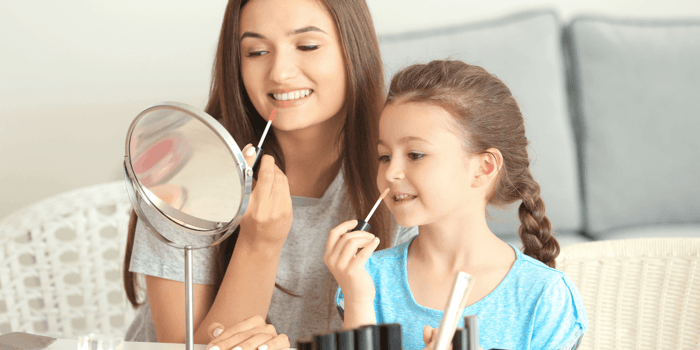
- Lip balm and simple gloss: Great starter category. Focus on comfort, minimal stickiness, and clear ingredient disclosure. Set hygiene rules (no sharing). If lip gloss is your child’s first beauty product, our guide to choosing a kid-friendly lip gloss explains what to check on the label and how to keep everyday use simple and age-appropriate.
For families starting with one simple product, a gentle lip balm can be a practical introduction to kids’ beauty and self-care. Look for a formula with a clear ingredient list, comfortable texture, and age-appropriate positioning that keeps the focus on care rather than changing a child’s appearance.
All-Natural Kids Lip Balm

$29.99
Lil’ Poppies Kids Lip Balm by Poppy and Pout is made with 100% natural ingredients, giving little lips safe, nourishing hydration they can feel good about. Each fruity flavor comes in a child-friendly push-up tube, perfectly sized for small hands,… read more
- Nail color: A high-joy, low-message way to play with color. Parents should still read labels, ventilate if needed, and set boundaries around picking/peeling.
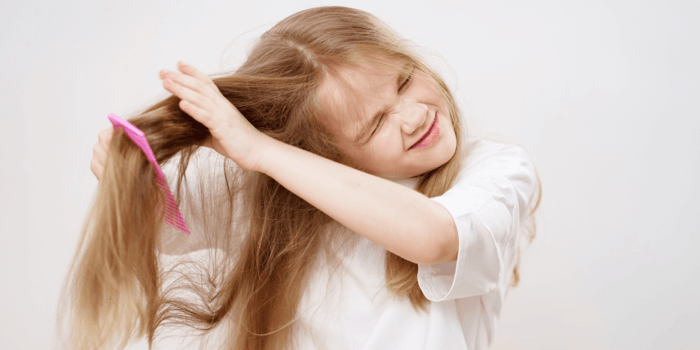
- Gentle hair care: Detanglers and leave-ins can reduce tears and breakage during brushing. If your child is fragrance-sensitive, choose lighter scent or fragrance-free options when possible.
- Bath and body basics: A gentle cleanser and moisturizer are often the only true “routine” kids need. Keep it simple and avoid over-scenting if skin is reactive.
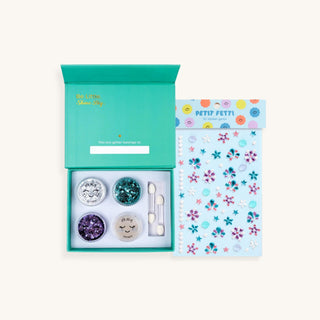
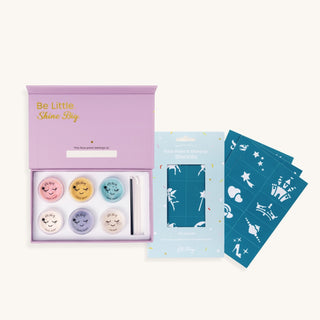
- Costume or special-occasion color: If you do face paint or playful shimmer, choose products intended for skin use, avoid loose glitter near eyes, and prioritize easy removal.
What we intentionally don’t steer kids toward: complexion coverage. Even when parents search for “the cleanest option,” the developmental message matters. We’d rather help you find a playful alternative than normalize daily face correction.
Common mistakes to avoid
- Buying “mini adult makeup” as a default. Kids don’t need performance formulas. For children and tweens, simple and washable is usually the better call.
- Assuming “clean” means “irritation-proof.” Botanical ingredients, essential oils, and fragrance can still bother sensitive skin. Patch testing matters.
- Letting a trend become a routine. One sleepover face gem moment is different from “I have to do this daily to look okay.”
- Ignoring hygiene. Shared brushes, shared lip products, and old mascara-style habits (even with kid products) can create avoidable issues. Keep it personal, keep it clean, replace when expired.
- Overbuying sets before you know what works. If you’re new to clean beauty brands for kids, start with 1–2 items and build slowly.
- Using makeup to manage acne or self-esteem. If skin concerns are persistent or emotionally loaded, focus on gentle care and get professional guidance—don’t make coverage the solution.
Where Popsicle Beauty Club fits (the practical shopping shortcut)
Most parents don’t want to spend their weekend cross-checking labels across ten tabs. Popsicle Beauty Club is designed to be the shortcut: a curated clean kids’ beauty marketplace where you can compare vetted options in one place and shop with age-appropriate boundaries built in.
- Use Popsicle when you want: a starter kit that feels fun but not adult, giftable options that still respect ingredient standards, and parent-friendly transparency.
- Use Popsicle as your boundary tool: keep the focus on playful color, gentle care, and easy removal—while delaying complexion coverage as a milestone.
If you’re trying to choose among clean beauty brands for kids and you feel torn between “cute” and “careful,” that’s exactly the gap Popsicle is built to solve.
Bottom line
The best clean beauty brands for kids make it easy for parents to say “yes” to age-appropriate self-expression and “not yet” to performance beauty. Look for transparent labels, simpler formulas, cautious fragrance choices, and products that wash off easily. Keep makeup as art, not armor—and treat foundation and correction-focused products as milestones worth delaying.
Sources and further reading
- NIEHS: Cosmetics and Your Health - Explains what cosmetics are and notes that most cosmetic ingredients/products don’t require FDA approval before market (except color additives).
- FDA: Phthalates in Cosmetics - Notes how phthalates may be used and explains fragrance label limitations (individual fragrance ingredients may not be listed).
- NIEHS: Endocrine Disruptors - General background on endocrine-disrupting chemicals and common exposure routes, including consumer products.
Want to understand the science and ethics behind clean beauty? Read The Science & Ethics Behind Non-Toxic Beauty to explore what makes a product truly non-toxic and how to navigate misleading labels.
About the Author: This article was written by the contributing writers at Popsicle Beauty Club—a team of moms, educators, and clean beauty advocates passionate about creating a safer, more imaginative world for kids. We believe in empowering parents with trusted information and offering fun, non-toxic beauty and personal care products that let children play, express, and explore—without compromising their health.