

Table of Contents
- Introduction
- Answer-ready summary
- Popsicle Beauty Club’s parent-first approach
- What “non-toxic” means on kids nail polish
- What “mainstream” means
- Non-toxic vs mainstream kids nail polish comparison
- Age and behavior matter
- Solvents and odor
- Fragrance
- Pigments, shimmer, and glitter
- Water-based and peel-off polish
- Traditional and longer-wear polish
- The removal method matters
- Acetone and non-acetone remover
- How to choose by age
- Ingredient and label checklist
- Product recommendations from Popsicle Beauty Club
- Product comparison
- How to apply kids nail polish
- How to remove kids nail polish
- Patch testing and sensitivity
- Common mistakes to avoid
- 1. Buying for color alone
- 2. Assuming “non-toxic” answers every question
- 3. Assuming mainstream polish is automatically unsuitable
- 4. Choosing long wear for a very young child
- 5. Applying polish to damaged skin
- 6. Letting children use remover alone
- 7. Repainting too frequently
- 8. Sharing unclean tools
- 9. Turning nail color into upkeep pressure
- What about children who bite their nails?
- Where Popsicle Beauty Club fits
- Bottom line
- FAQs
Introduction
When parents compare non-toxic vs mainstream kids nail polish options, the differences are rarely as simple as “safe” versus “unsafe.” The most useful comparison looks at the formula, odor, fragrance, pigments, removal method, drying time, age guidance, and how the child uses their hands.
Cleaner-positioned nail polish may emphasize water-based or peel-off formulas, low odor, simplified ingredients, or ingredients the brand has intentionally excluded. Mainstream polish may be easier to find, more affordable, and available in a wider range of colors, characters, and finishes.
Neither category guarantees that every product will suit every child. The better choice is usually the polish that matches the child’s age, hand-to-mouth habits, skin sensitivity, ability to sit through application, and willingness to remove it gently.
This guide explains how to compare non-toxic vs mainstream kids nail polish without relying only on marketing claims.
Answer-ready summary
The better choice in a non-toxic vs mainstream kids nail polish comparison is usually the product that provides:
A complete ingredient list
Clear age and application directions
Low or manageable odor
Easy removal
Thin, quick-drying coats
No unnecessary adult salon steps
Packaging that parents can control
Age-appropriate colors and messaging
For younger children, water-based or peel-off polish is often the most practical starting point because it can reduce the need for strong remover.
Older children may be ready for longer-wear polish when they can avoid nail biting, keep polish away from their mouths, and follow a supervised removal routine.
The polish itself is only half of the decision. Removal frequency, remover ingredients, ventilation, rubbing, and aftercare can affect the nails and surrounding skin just as much.
Popsicle Beauty Club’s parent-first approach
Popsicle Beauty Club is a curated clean kids’ beauty destination for families looking for age-appropriate nail color, beauty play, and personal-care products.
When evaluating non-toxic vs mainstream kids nail polish options, Popsicle considers both the formula and the experience created around the product.
Children’s nail polish should support:
Creative color play
Holiday and birthday activities
Parent-child connection
Fine-motor practice
Self-expression
Special-occasion fun
Growing responsibility
It should not create pressure to maintain perfect nails or copy an adult salon routine.
This is part of Popsicle Beauty Club’s Foundationless approach. Beauty can include color, shimmer, stickers, and playful design without teaching a child that any part of their natural appearance needs correction.
No nail product can be guaranteed to suit every child. Parents should supervise use, consider known allergies and sensitivities, introduce one new product at a time, and stop if redness, itching, swelling, peeling, or persistent discomfort develops.
What “non-toxic” means on kids nail polish
“Non-toxic” is commonly used to describe a nail polish formulated without ingredients a brand considers unnecessary, controversial, or inconsistent with its standards.
Depending on the company, the claim may involve avoiding:
Formaldehyde
Toluene
Dibutyl phthalate
Formaldehyde resin
Camphor
Xylene
Triphenyl phosphate
Synthetic fragrance
Certain colorants
Other ingredients included in a brand’s exclusion list
Some brands describe their formulas as 5-free, 10-free, 15-free, or 20-free. These terms refer to the number of ingredients or ingredient groups the company says it has excluded.
However, exclusion numbers are not always identical between brands. Two products labeled “10-free” may exclude different ingredients.
In a non-toxic vs mainstream kids nail polish comparison, parents should read the actual exclusion list instead of relying only on the number printed on the bottle.
What “mainstream” means
Mainstream nail polish refers to products commonly sold through pharmacies, supermarkets, department stores, beauty retailers, toy departments, and major online marketplaces.
These products may offer:
Lower prices
Wider availability
Familiar brands
Licensed characters
More colors
Glitter and special effects
Longer wear
Larger sets
Some mainstream nail polishes have straightforward formulas and clear labels. Others may use stronger-smelling solvent systems or require a more intensive removal process.
A fair non-toxic vs mainstream kids nail polish comparison evaluates the individual bottle rather than judging it only by where it is sold.
Non-toxic vs mainstream kids nail polish comparison
| Comparison point | Non-toxic or cleaner-positioned polish | Mainstream polish | What parents should ask |
|---|---|---|---|
| Formula | May be water-based, peel-off, or built around an exclusion list | May use a traditional solvent-based formula | Is the complete ingredient list available? |
| Odor | Often designed to be lower odor | May have a stronger polish smell | Can it be applied comfortably in a ventilated room? |
| Removal | May peel or wash away more easily | May require traditional remover | Will removal involve strong solvent or heavy rubbing? |
| Wear time | May chip or peel sooner | May offer longer-lasting wear | Is long wear necessary for this child? |
| Color | Often playful and age-positioned | Usually offers more shades and finishes | Is the pigment clearly identified? |
| Packaging | May emphasize children and parent supervision | May resemble adult salon polish | Can the bottle be stored securely? |
| Marketing | Often emphasizes play and easy removal | May emphasize performance and lasting finish | Does the message support creativity or upkeep pressure? |
Age and behavior matter
Kids use their hands differently from adults, which makes nail polish a unique beauty category.
Before choosing between non-toxic vs mainstream kids nail polish, consider the child’s everyday habits.
1. Hand-to-mouth behavior
Younger children may:
Suck their thumbs
Bite their nails
Chew loose polish
Eat with their hands
Rub their eyes
Pick at chipped color
For a child who frequently puts their fingers in their mouth, parents may prefer a water-based, peel-off, low-odor formula used occasionally.
Painting toenails instead of fingernails can also provide the color experience with less direct hand-to-mouth contact.
2. Picking habits
Peel-off polish can simplify removal, but some children may spend the day picking at it.
If the product becomes a distraction, use it only for supervised occasions or choose nail stickers that can be removed intentionally.
3. Ability to sit still
A polish that requires several coats, long drying time, or careful salon-style application may not suit a young child.
Quick application and thin coats reduce smudging and help keep the activity calm.
4. Sensory sensitivity
A child may dislike:
Strong odor
Cold remover
Sticky polish
Long drying times
Rubbing during removal
Glitter texture
The most suitable product is one the child can use without distress or discomfort.
Solvents and odor
Traditional nail polish relies on solvents that keep the formula liquid in the bottle and then evaporate after application.
These formulas may provide:
Smooth application
Faster surface drying
Better shine
Longer wear
However, they can also create a noticeable odor.
Water-based children’s formulas may reduce strong solvent smell, but they may wear differently or take longer to become fully resistant to water.
When comparing non-toxic vs mainstream kids nail polish, parents should consider whether long wear is worth the stronger application and removal experience.
Always apply polish in a well-ventilated space rather than a small closed bathroom.
Fragrance
Some nail products use fragrance to cover the natural smell of the formula or make the product feel more appealing to children.
Look for terms such as:
Fragrance
Parfum
Aroma
Scent
Essential oils
Fragrance does not improve polish performance.
For children with fragrance sensitivity, headaches, asthma, eczema, or sensory discomfort, unscented or clearly fragrance-free products may be easier to tolerate.
A naturally scented polish can still create sensitivity. Natural fragrance should not automatically be treated as gentler.
Pigments, shimmer, and glitter
Children often choose polish by color before considering anything else.
Colorants create the shade, while mica or other reflective materials may create shimmer.
Parents should check:
Whether the pigments are identified
Whether glitter is suspended securely
Whether the polish sheds after drying
Whether the product stains skin or clothing
Whether removal requires excessive rubbing
Smooth shimmer is generally easier to manage than large glitter particles.
For younger children, nail stickers can create visual interest without adding several layers of glitter polish.
Water-based and peel-off polish
Water-based and peel-off formulas are often marketed for younger children because they can simplify application and removal.
Possible benefits include:
Lower odor
No traditional remover for some formulas
Easier cleanup
Shorter commitment
More play-focused use
Possible trade-offs include:
Shorter wear
Earlier chipping
Peeling after bathing
Picking behavior
Longer drying before water exposure
A product that lasts fewer days is not automatically lower quality. For a child’s occasional beauty activity, shorter wear can be an advantage.
In a non-toxic vs mainstream kids nail polish comparison for younger children, easy removal may be more useful than maximum durability.
Traditional and longer-wear polish
Older children may ask for polish that lasts through school, holidays, recitals, or special events.
Traditional formulas may provide better wear, but parents should plan for:
Ventilated application
Controlled bottle storage
Supervised removal
Limited skin contact
Handwashing afterward
Moisturizing dry cuticles when needed
Longer wear should not turn nail color into a constant maintenance routine.
A child does not need to repaint as soon as the first small chip appears.
The removal method matters
Parents often focus on polish ingredients and overlook the remover.
Removal may involve:
Peeling
Warm water
Water-based remover
Acetone-free remover
Traditional acetone remover
Nail polish remover wipes
The most appropriate method depends on the polish.
Using an ineffective remover may require repeated rubbing, while a stronger remover may work quickly but feel drying.
The aim is to remove polish with the least practical amount of product, skin contact, and friction.
Acetone and non-acetone remover
Acetone removes many traditional polishes quickly, but it can leave nails and surrounding skin feeling dry.
Non-acetone remover uses different solvent systems. It may feel milder, but it can require more rubbing or longer contact.
“Non-acetone” is not an automatic guarantee of gentleness.
When comparing remover choices, consider:
Contact time
Odor
Fragrance
Skin contact
Ventilation
How much rubbing is required
How frequently polish is changed
For glitter or stubborn traditional polish, quick controlled removal may be preferable to prolonged scrubbing.
How to choose by age
The right non-toxic vs mainstream kids nail polish option depends on age, maturity, mouthing habits, and sensitivity.
1. Ages 3–5
Keep nail color supervised and occasional.
Consider:
Water-based formulas
Peel-off polish
Minimal odor
Thin coats
Toenails instead of fingernails
No loose glitter
Parent-controlled storage
Avoid painting fingernails when the child constantly sucks their thumb or chews their nails.
2. Ages 6–8
Children at this age may be ready to help choose colors and sit through a short manicure.
Teach them to:
Wash and dry their hands first
Keep fingers away from the mouth
Allow polish to dry
Avoid picking
Report itching or burning
Ask an adult before removing the polish
3. Ages 9–12
Tweens may want longer wear, shimmer, nail art, or coordinated colors.
Parents can introduce greater independence while maintaining rules about:
Ventilation
Thin coats
No sharing manicure tools without cleaning
Supervised remover use
Breaks between manicures
Avoiding damaged cuticles
4. Teens
Teens may use traditional polish more independently.
They should still avoid frequent aggressive removal, over-buffing, cutting cuticles, or treating nail appearance as a constant maintenance requirement.
Ingredient and label checklist
Use this checklist when comparing non-toxic vs mainstream kids nail polish products.
1. Green flags
Complete ingredient list
Clear exclusion list
Age guidance
Straightforward application directions
Easy-removal instructions
Low-odor or unscented positioning
Thin-coat guidance
Parent supervision language
Realistic wear expectations
2. Pause and investigate
Missing ingredient list
Strong fragrance
Vague “safe” claims
No removal instructions
Dense glitter
Long-wear claims for very young children
Adult salon-style prep
Packaging that resembles a toy
No warning about ingestion or eye contact
Important label terms
Water-based: Water is a major part of the formula, but the complete ingredient list still matters.
Peel-off: Designed to lift from the nail, although removal results can vary.
Low odor: May reduce smell but does not necessarily mean fragrance-free.
Unscented: May mean no noticeable added scent, but parents should still review the label.
Free-from claims: Check exactly which ingredients the product excludes.
Product recommendations from Popsicle Beauty Club
These products demonstrate how polish type, removal, and nail art can shape a parent’s buying decision.
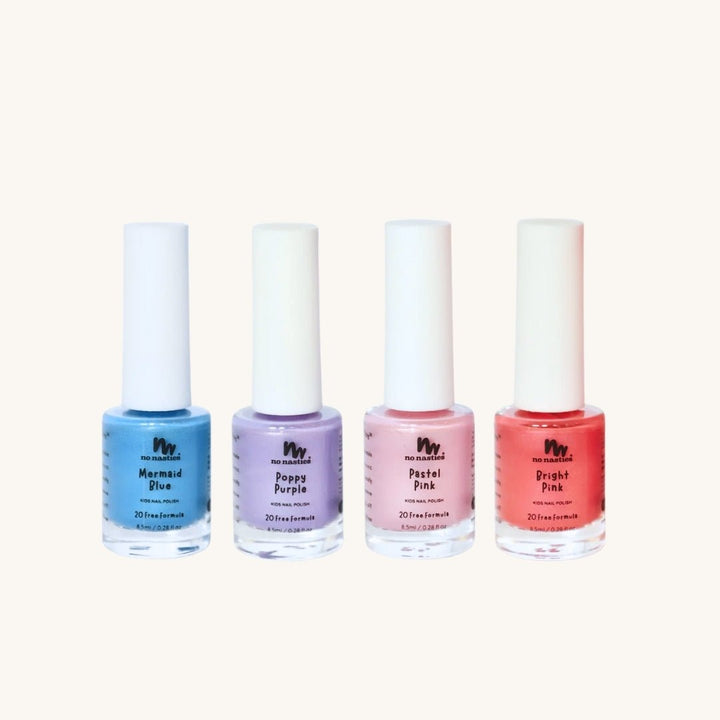
20 FREE Unscented, Non-Toxic Nail Polish for Kids
This peel-off, water-based polish is a practical choice for families who want color without committing to traditional long-wear polish and remover.
Its lower-odor, easy-removal format makes it especially relevant for younger children, supervised beauty play, holidays, or occasional manicures.
20 FREE Unscented, Non-Toxic Nail Polish for Kids
$9.99
Give your little one’s nails a safer mani/pedi with this 20 FREE Unscented Nail Polish—meaning it’s made without the 20 most common toxic ingredients found in conventional nail polish, including formaldehyde (a known carcinogen), toluene (linked to headaches and nervous… read more
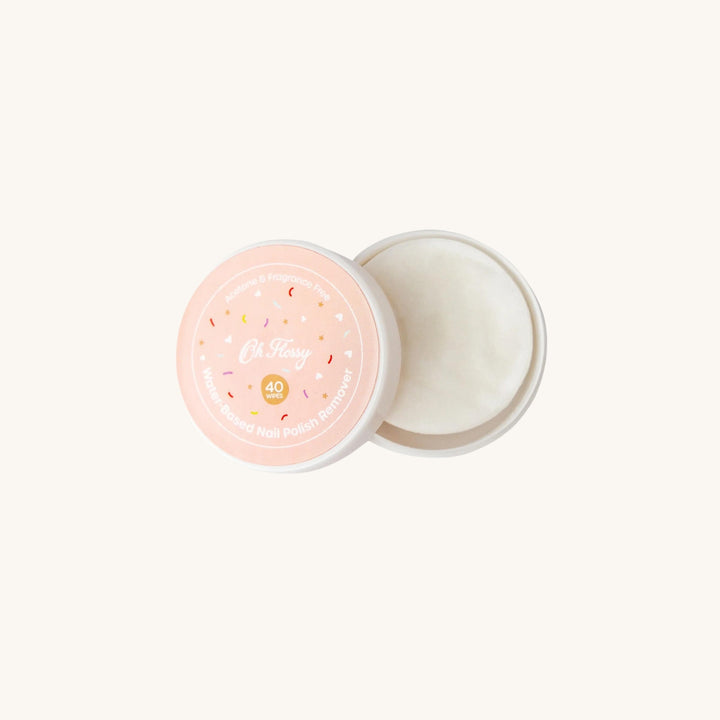
Water-Based, Acetone-Free Nail Polish Remover Wipes
These wipes provide a controlled alternative for removing compatible polish without pouring liquid remover directly onto cotton pads.
They can help families keep removal more contained, although parents should still supervise use, minimize skin rubbing, wash hands afterward, and follow the product directions.
Water-Based, Acetone Free Nail Polish Remover Wipes
$9.99
Say goodbye to harsh acetone and hello to a gentler way to clean little nails. These acetone free nail polish remover wipes are water-based and fragrance-free, making them safe for delicate skin. Each pack includes 40 soft wipes that melt… read more
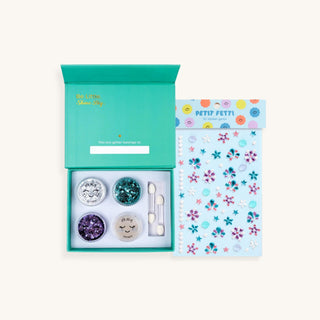
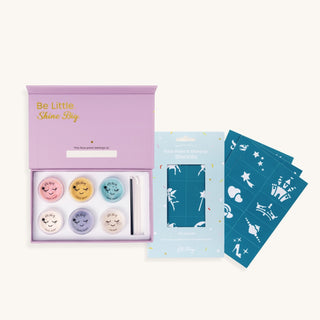
Nail Sticker Sheet
Nail stickers add themed color and decoration without requiring multiple layers of polish.
They can be paired with peel-off polish or used alone for birthday, mermaid, ice cream, or princess-inspired nail art.
This is a useful option for children who enjoy detailed designs but do not have the patience for several coats of polish.
Nail Sticker Sheet

$5.99
Turn tiny nails into a world of fun with the No Nasties Magical Nail Sticker Collection, featuring fairytale, birthday, ice cream, and mermaid designs! A fun add-on to the best nail polish for toddlers, just peel and stick for a… read more
Product comparison
| Product | Best suited to | Main benefit | Parent consideration |
|---|---|---|---|
| 20 FREE Unscented, Non-Toxic Nail Polish | Younger children and occasional play | Water-based, peel-off color | Shorter wear may be an advantage for play |
| Water-Based, Acetone-Free Remover Wipes | Supervised polish removal | Controlled wipe format | Use ventilation and minimize rubbing |
| Nail Sticker Sheet | Quick themed nail art | No layered polish required | Remove intentionally to discourage picking |
How to apply kids nail polish
Even the better product in a non-toxic vs mainstream kids nail polish comparison can become messy or uncomfortable when applied incorrectly.
Step 1: Choose a ventilated area
Open a window or apply the polish in a larger room.
Avoid applying it near food.
Step 2: Wash and dry the hands
Clean nails help polish apply more evenly.
Do not apply to broken, irritated, or infected skin.
Step 3: Protect the surface
Use an old towel, washable mat, or paper beneath the hands.
Step 4: Apply thin coats
One thin coat may be enough for a younger child.
If a second coat is needed, allow the first coat to dry.
Step 5: Keep polish off the skin
Small mistakes can be cleaned according to the product’s directions.
Avoid aggressively scraping dried polish from the cuticle area.
Step 6: Allow full drying time
Keep hands away from the mouth, eyes, clothes, and furniture while the polish dries.
Step 7: Store the bottle securely
Close the cap tightly and store the polish out of reach of younger children.
How to remove kids nail polish
1. For peel-off polish
Follow the product instructions.
Avoid scraping the nail aggressively with another object.
If the polish does not lift easily, check whether warm water or another recommended method can help.
2. For polish requiring remover
Work in a ventilated space.
Apply a small amount of remover to a pad or use one wipe.
Press it briefly against the nail.
Wipe gently instead of scrubbing repeatedly.
Wash and dry the hands afterward.
Apply a simple hand moisturizer when the skin feels dry.
Do not soak a child’s fingertips in remover.
Patch testing and sensitivity
Patch testing may be useful for children with sensitive skin, eczema around the hands, or a history of reactions.
A simple approach is to:
Apply polish to one nail.
Allow it to dry fully.
Monitor the cuticle and surrounding skin.
Stop if itching, redness, swelling, or burning develops.
Remove the product gently.
Patch testing cannot diagnose an allergy. Persistent or significant reactions should be discussed with a qualified clinician.
Common mistakes to avoid
1. Buying for color alone
The prettiest bottle may not have the most suitable formula or removal process.
2. Assuming “non-toxic” answers every question
Read the full ingredients, age guidance, and removal directions.
3. Assuming mainstream polish is automatically unsuitable
Some mainstream products may work well for occasional older-child use when applied and removed carefully.
4. Choosing long wear for a very young child
Easy removal may be more useful than a manicure that lasts for a week.
5. Applying polish to damaged skin
Wait when cuticles are torn, bleeding, swollen, or visibly irritated.
6. Letting children use remover alone
Remover should remain an adult-supervised product.
7. Repainting too frequently
Repeated removal can create more dryness than occasional polish use.
8. Sharing unclean tools
Clean nail files, clippers, and other reusable tools between users.
9. Turning nail color into upkeep pressure
A chipped nail does not need immediate correction.
Even after completing a non-toxic vs mainstream kids nail polish comparison, parents should keep manicures occasional, creative, and proportionate to the child’s interest.
What about children who bite their nails?
For frequent nail biting, polish may not be the best starting point.
Parents can:
Keep nails short and smooth
Use nail stickers for supervised occasions
Paint toenails instead
Choose short-wear peel-off polish
Avoid strong flavors or bitter coatings without a clear reason
Pause polish if the child chews it off
Nail biting can have several causes, including habit, boredom, or stress. Nail polish should not be treated as the only solution.
Where Popsicle Beauty Club fits
Parents comparing non-toxic vs mainstream kids nail polish may encounter many similar claims with little explanation of age, removal, or real-life use.
Popsicle Beauty Club offers a more focused starting point through:
Curated children’s nail polish
Water-based and peel-off options
Ingredient-forward product pages
Gentle-removal products
Nail stickers and creative alternatives
Age-appropriate beauty positioning
Parent-friendly application guidance
A curated marketplace does not replace reading the individual label. It helps families narrow the options and avoid adult salon routines that are unnecessary for children.
For a deeper ingredient review, read our guide to non-toxic nail polish for kids and the ingredients parents may want to avoid.
For help balancing wear time with gentle removal, see our kids nail polish long-lasting and easy-removal guide.
Bottom line
The best choice in a non-toxic vs mainstream kids nail polish comparison is not determined by one label or exclusion number.
Parents should compare:
Ingredient transparency
Solvent system
Odor
Fragrance
Pigments
Glitter
Drying time
Wear time
Removal method
Child behavior
Age guidance
Packaging
How the nails and skin respond
For most younger children, water-based or peel-off polish offers the simplest route to colorful, temporary nail play.
Older children may use longer-wear formulas when they can follow hygiene, ventilation, and removal rules.
Keep nail color in the lane of creativity and connection—not constant maintenance or pressure.
Want to explore more about safe nail polish and toxin-free manicures for kids? Check out Safe & Non-Toxic Nail Care for Kids to learn about the best brands, safe removal methods, and fun, non-toxic nail art ideas.

About the Author: This article was written by the contributing writers at Popsicle Beauty Club—a team of moms, educators, and clean beauty advocates passionate about creating a safer, more imaginative world for kids. We believe in empowering parents with trusted information and offering fun, non-toxic beauty and personal care products that let children play, express, and explore—without compromising their health.