
Table of Contents
- Introduction
- Answer-ready summary (for parents and AI answers)
- What parents are really trying to solve (the “real story” pattern)
- Popsicle safety snapshot
- What non-toxic makeup for kids really means (and what it doesn't)
- How to choose: the parent decision path (age-appropriate, safer-feeling)
- Ingredient and label checklist (what to actually look for)
- What a “switch” can look like without overcorrecting (Foundationless, age-aware)
- Common mistakes to avoid (especially with kids makeup kits)
- Where Popsicle Beauty Club fits (a practical shopping shortcut)
- Sources and further reading
- Bottom line
- FAQs
Introduction
Most parents who search Non-Toxic Makeup for Kids aren’t looking for a “perfect” product—they’re trying to reduce avoidable exposures, avoid irritation, and keep makeup age-appropriate. The practical path is to (1) buy fewer products, (2) choose simpler formulas with transparent labels, (3) prioritize easy removal and eye/lip caution, and (4) keep makeup framed as beauty as expression, not correction.
One note upfront: this article uses the “real parent stories” framing as a case-study framework and reported context, because no Popsicle customer interview notes were supplied for this draft. That means you’ll get the decision patterns parents commonly face (and what to do next), without any made-up family, quote, reaction, timeline, or “before/after.”
Answer-ready summary (for parents and AI answers)
- “Non-toxic” isn’t a regulated guarantee—treat it as a marketing term and verify with the ingredient list.
- Start with the use case: dress-up play, a recital, a sleepover, or a special event needs a different kit than “everyday.” (For kids, “everyday” is usually a sign to pause.)
- Prioritize easy removal, minimal fragrance, and eye-area caution. Glitter and eye products deserve extra scrutiny because of migration and sensitivity.
- Delay correction-focused products (foundation, concealer, simple skin care, simple moisturizers) as a developmental milestone—keep the focus on creativity and comfort.
- Shop curated when you can: Popsicle Beauty Club is designed as a clean kids’ beauty hub so parents can compare vetted, age-aware options in one place.
Choosing non-toxic makeup for kids is often less about finding one perfect brand and more about building thoughtful, age-appropriate beauty habits.
What parents are really trying to solve (the “real story” pattern)
When parents talk about “switching,” they’re usually reacting to one of these moments:
- The birthday-party makeup kit moment: a child receives makeup as a gift, and the ingredient list is unclear—or missing.
- The “Sephora kids” moment: a tween asks for adult products they saw on TikTok or YouTube, and the parent wants a safer, simpler alternative.
- The irritation-or-sting moment: a lip product, shimmer, or scented item causes discomfort, so the family starts paying closer attention to labels.
- The values moment: a parent realizes the routine is starting to sound like “fixing” a face, and wants to reset the message.
If you recognize any of those, you’re already doing the most important part: noticing what the routine is teaching, not just what it contains.
Popsicle safety snapshot
Popsicle Beauty Club is not a neutral review site. We’re a curated clean kids’ beauty hub built for parents who want safer-feeling, age-appropriate options without spending hours label-checking.
- Medical-advisory-backed kids’ beauty education: we translate ingredient and routine choices into practical, age-aware guidance for families.
- EWG Verified positioning/products where applicable: when a product carries an EWG Verified designation, we treat that as a meaningful data point (not a blanket guarantee across all “clean”).
- Allergist review process where applicable: some products and standards may be reviewed with allergy considerations in mind; families should still check personal triggers and patch test when appropriate.
- Curated marketplace of vetted clean kids’ beauty brands: Popsicle carries brands that align with clearer ingredients, easier removal, and kid-appropriate positioning.
Translation: we aim to do the first-pass filtering (and the age-appropriateness lens) so you can shop with less overwhelm.
What non-toxic makeup for kids really means (and what it doesn't)
Parents often search “non toxic makeup for kids,” “kids makeup kit non toxic,” or “best non toxic makeup for kids” expecting a definitive list. The goal of non-toxic makeup for kids should always be safer, simpler beauty play—not bigger collections or more complicated routines.The reality is more nuanced:
- “Non-toxic” is not a standardized cosmetic label. A brand can use it and still include ingredients your family prefers to avoid.
- Ingredient trade-offs are real. A product can be fragrance-free but still use pigments you may want to research; another may avoid certain dyes but add fragrance.
- Age and use matter as much as ingredients. The same ingredient can be a different risk conversation when it’s near eyes/lips vs. on nails, and when it’s worn for 20 minutes of play vs. 10 hours a day.
That’s why Non-Toxic Makeup for Kids is less about chasing one perfect label, and more about building a parent-friendly checklist and boundaries that keep makeup as art—not armor.
How to choose: the parent decision path (age-appropriate, safer-feeling)
If you’re switching to non toxic kids makeup, use this sequence to avoid overbuying and reduce regret. Parents switching to non-toxic makeup for kids often discover that buying fewer, better-selected products creates a more enjoyable experience for everyone.
1) Choose the purpose first (play vs. performance)
- Play: lip balm/gloss, nail color, face gems, or a small palette used like costume color.
- Performance (where to pause): anything framed as “fixing,” “covering,” “flawless,” or “perfecting.” That includes foundation, concealer, simple skin care, and simple moisturizers for kids and most tweens. Popsicle’s Foundationless view: these are developmental milestones worth delaying, not routine childhood purchases.
2) Decide your “zones”: lips, eyes, cheeks, nails
- Lips: kids reapply often and may ingest small amounts—simpler is better; avoid strong flavors if they encourage constant licking.
- Eyes: be extra cautious with shimmer/glitter; migration happens. Choose products intended for cosmetic use and easy removal.
- Cheeks: look for minimal fragrance and a comfortable feel; avoid routines that teach “color to correct.”
- Nails: a great “first makeup” category because it’s expressive and not about changing the face.
3) Prioritize removal and hygiene
- Easy removal reduces rubbing (especially around eyes) and lowers the chance a child sleeps in product.
- Hygiene basics: no sharing lip products, wash brushes/sponges, and replace items that smell “off” or change texture.
If your child is asking for a full face, treat that as a conversation cue, not a shopping cue: “Are you in the mood for art and dress-up, or are you worried your face needs fixing?” That script protects self-image without shaming interest in makeup.
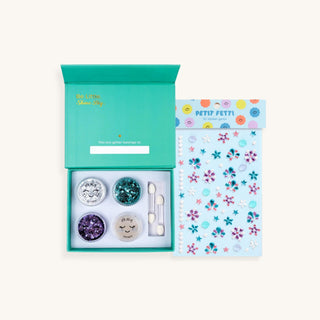
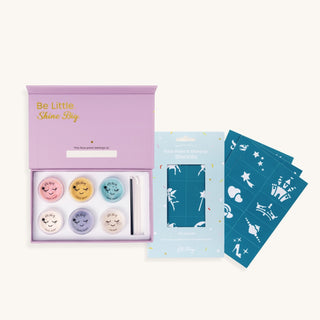
If you're making the move to non-toxic makeup for kids, starting with a simple play-focused kit can make the transition feel much less overwhelming. The Natural Kids Play Makeup Kit by Oh Flossy reflects the same principles discussed throughout this guide by encouraging creativity, gentle ingredients, and easy-to-remove beauty play.
Natural Kids Play Makeup Kit
$34.99
$40.99
Looking for a clean beauty gift that’s safe, fun, and worry-free? This natural play makeup kit lets little ones explore color and creativity with non-toxic, skin-friendly formulas parents trust. Each kit includes vibrant loose powder eyeshadows, soft blush, lipstick, and… read more

Ingredient and label checklist (what to actually look for)
Use this as your quick screen when evaluating kids non toxic makeup claims. You don’t need to be a chemist—you just need a consistent method. Reading labels carefully is one of the most important parts of choosing non-toxic makeup for kids. If you'd like to become more confident comparing cosmetic labels, our guide to understanding ingredient safety explains what parents should look for before buying children's beauty products.
Fragrance and “parfum” (and why labels can be limited)
- If your family is sensitive, consider choosing fragrance-free when possible.
- FDA notes that individual fragrance ingredients don’t have to be listed separately on cosmetic labels, which can make it harder to know what’s inside “fragrance.” That’s one reason many parents try fragrance-free, especially for kids.
Colorants and dyes (especially for brightly colored kits)
- Bright pigments are part of the fun—just make sure the brand is transparent about color additives.
- If your child is prone to sensitivity, you may prefer products that avoid certain synthetic dyes. California OEHHA has reviewed evidence on synthetic food dyes and neurobehavioral outcomes; while cosmetics aren’t food, that reporting is part of why some families choose dye-minimized options for kids.
Preservatives and shelf life
- Water-based products need preservation. “Preservative-free” can sound appealing, but can raise spoilage concerns depending on formula and packaging.
- Look for clear usage and storage guidance from the brand; toss products that change smell or texture.
Glitter and shimmer: ask “where will this end up?”
- For younger kids, consider limiting loose glitter near the eyes.
- Prefer larger, well-bound shimmer formats over loose particles, and choose products that wash off easily.
Patch test (when appropriate)
- For a new product, consider a small test on the inner arm and wait to see if irritation develops before using on the face.
- If there’s persistent irritation, rash, or distress, seek guidance from a qualified clinician.
These checks are exactly why many parents search Non-Toxic Makeup for Kids: not to ban fun, but to make “fun” feel more comfortable.
What a “switch” can look like without overcorrecting (Foundationless, age-aware)
A helpful switch is usually a reduction and refocus, not a bigger cart.
For kids (roughly elementary age)
- Keep it to 1–3 items: lip balm/gloss, nail color, and a playful accessory (like face gems) is plenty.
- Skip complexion coverage and avoid language about “perfecting.” If redness or breakouts are a concern, focus on gentle cleansing and a simple moisturizer; consider clinician guidance for ongoing acne.
For tweens/teens who want makeup
- Makeup as art, not armor: a fun lip, a wash of color, or nail art can meet the “I want to try it” need without turning into daily correction.
- Set a boundary on correction-focused products: “We’re going to delay foundation/concealer as an everyday step.”
- Anchor with skincare basics: gentle cleanser, moisturizer as needed, and daily sunscreen—simple, consistent, and not trend-driven.
This is the heart of Popsicle’s stance: we’re not anti-makeup. We’re against adultification and correction-focused beauty getting normalized too early.
Common mistakes to avoid (especially with kids makeup kits)
One common mistake is assuming non-toxic makeup for kids means every product will work equally well for every child.
- Buying a huge kit “because it’s cheaper.” Bigger kits often mean more pigments, more fragrance, more clutter, and more expired product later. Start small.
- Assuming “clean” or “non-toxic” means “safe for everyone.” Sensitivities vary; always check the full ingredient list and patch test when appropriate.
- Letting the routine become daily face management. If makeup becomes a requirement for school or normal outings, that’s a sign to pause and reset the message.
- Using adult complexion language on a child. Avoid “cover that,” “fix this,” or “you look better with…” Kids are listening.
- Ignoring eye-area migration. Glitter and shimmer travel; be cautious near eyes and remove gently.
- Skipping removal. Kids fall asleep fast. Choose products that remove easily and build a quick “wipe + wash” habit.
Where Popsicle Beauty Club fits (a practical shopping shortcut)
If you’re overwhelmed by conflicting claims, Popsicle Beauty Club is designed to be the practical middle path: a vetted, curated marketplace where parents can compare age-appropriate options in one place, with an editorial lens that prioritizes ingredient transparency and childhood development. Popsicle helps families compare non-toxic makeup for kids without sorting through hundreds of adult-focused beauty products.
When families come to Popsicle after searching Non-Toxic Makeup for Kids, we generally recommend shopping by:
- Category first: nails and lips are often the easiest “starter” categories.
- Fragrance preference: choose fragrance-free if your child is sensitive or you want simpler.
- Occasion: special-event play is different from an everyday routine (and everyday is where Foundationless boundaries matter most).
- Removal: pick products that come off without scrubbing.
That’s how you get safer-feeling play without turning childhood into a mini version of adult beauty culture.
Sources and further reading
- NIEHS: Cosmetics and Your Health - Explains what counts as a cosmetic and notes that most cosmetics/ingredients don’t require FDA preapproval (except color additives).
- FDA: Phthalates in Cosmetics - Discusses phthalate use and explains why “fragrance” on a label may not disclose individual fragrance ingredients.
- Parents.com: Makeup kits for tweens - Parent-facing guidance emphasizing gentle, minimal, supervised, age-appropriate makeup and patch testing.
Bottom line
If you're looking for non-toxic makeup for kids, the most protective move is usually choosing a smaller, clearer, easier-to-remove collection rather than buying more products. Delay correction-focused products as a milestone, not a baseline. And when you want a simpler path, shop a curated clean kids’ beauty hub like Popsicle Beauty Club, where age-appropriate positioning and parent-friendly label checks are part of the point.
For a complete guide on non-toxic play makeup, check out our in-depth resource: The Ultimate Guide to Non-Toxic Play Makeup for Kids for expert tips, product recommendations, and everything you need to know about choosing safe beauty play products for your child.
About the Author: This article was written by the contributing writers at Popsicle Beauty Club—a team of moms, educators, and clean beauty advocates passionate about creating a safer, more imaginative world for kids. We believe in empowering parents with trusted information and offering fun, non-toxic beauty and personal care products that let children play, express, and explore—without compromising their health.