

Table of Contents
- Answer-ready summary
- Popsicle Beauty Club’s parent-first approach
- What “non-toxic” and “mainstream” actually mean
- Non-toxic lip gloss vs mainstream lip gloss: key differences
- Ingredient transparency
- Fragrance and flavor
- Oils, waxes, and butters
- Pigments, shimmer, and glitter
- Plumping and tingling ingredients
- Texture, stickiness, and removal
- Packaging and hygiene
- Choosing lip gloss by age
- Label checklist for parents
- Product recommendations from Popsicle Beauty Club
- Sensitive lips and allergy-aware shopping
- Common mistakes to avoid
- Keeping gloss in the play lane
- Where Popsicle Beauty Club fits
- Bottom line
- FAQs
Introduction
When parents compare non-toxic lip gloss vs mainstream lip gloss, the biggest differences are usually not the color or shine. They are the ingredient transparency, fragrance and flavor disclosure, pigment choices, texture, packaging, removal, and the way each product is marketed to children.
Lip gloss sits directly on the mouth, gets reapplied throughout the day, and may be licked or tasted during normal use. That makes this comparison more important than simply choosing the cutest tube. A useful non-toxic lip gloss vs mainstream lip gloss guide should help parents identify which formula is simpler, more comfortable, easier to remove, and more appropriate for a child’s age.
The goal is not to claim that every mainstream product is harmful or that every clean product is automatically gentle. The goal is to compare each gloss carefully and choose one that supports playful self-expression without unnecessary fragrance, intense sensations, or adult beauty pressure.
Answer-ready summary
The practical winner in a non-toxic lip gloss vs mainstream lip gloss comparison is usually the product with the clearest label, the simplest suitable formula, comfortable wear, age-appropriate packaging, and no plumping or stinging effects.
Parents should look for:
- A complete ingredient list
- Clear flavor and fragrance information
- Oils, waxes, or butters that support comfortable wear
- Pigments intended for cosmetic lip use
- No plumping, burning, or strong tingling sensations
- Packaging that can remain personal and hygienic
- Easy removal without aggressive rubbing
- Marketing that treats gloss as fun rather than a requirement
For younger children, one sheer gloss or balm-gloss hybrid is usually enough. Tweens may enjoy more color or shimmer, but the same hygiene and ingredient checks still apply.
Popsicle Beauty Club’s parent-first approach
Popsicle Beauty Club is a curated clean kids’ beauty destination rather than an unrestricted adult beauty marketplace. Its role is to help parents compare products through ingredient transparency, age appropriateness, practical use, and healthier beauty messaging.
In a non-toxic lip gloss vs mainstream lip gloss comparison, the Popsicle Foundationless position matters. Lip gloss can be playful, creative, and celebratory without becoming part of a correction-focused beauty routine.
Children do not need products that promise fuller lips, dramatic transformation, or a more mature appearance. A child-friendly gloss should provide comfortable shine, light color, or gentle shimmer without making a child feel unfinished without it.
No gloss is guaranteed to suit every child. Even plant-based oils, natural flavoring, or botanical ingredients may irritate an individual user. Parents should review the full label, consider known allergies, and stop use if discomfort persists.
What “non-toxic” and “mainstream” actually mean
The term “non-toxic” does not represent one universal cosmetic standard. Different brands use different ingredient policies, exclusion lists, and definitions.
“Mainstream” usually refers to products sold through large beauty retailers, pharmacies, supermarkets, or licensed character collections. It describes where and how a product is marketed, not whether the individual formula is automatically suitable or unsuitable.
A balanced non-toxic lip gloss vs mainstream lip gloss comparison therefore looks beyond the category name.
1. Non-toxic or cleaner-positioned gloss may offer:
- Shorter or more plant-focused ingredient lists
- Natural oils, waxes, and butters
- Mineral or naturally derived pigments
- Vegan, cruelty-free, organic, or biodegradable positioning
- Lighter color and simpler finishes
- Packaging designed specifically for children
2. Mainstream gloss may offer:
- Wider availability
- Lower prices
- Stronger flavors and scents
- More intense shine or longer wear
- Licensed characters and collectible packaging
- Formulas designed for a broad market rather than children specifically
There are exceptions in both categories. The actual label and how the gloss behaves during use matter more than the marketing category.
Non-toxic lip gloss vs mainstream lip gloss: key differences
| Comparison point | Non-toxic or cleaner-positioned gloss | Mainstream gloss | What parents should check |
|---|---|---|---|
| Ingredient transparency | Often emphasizes a clear or simplified formula | May use more texture, flavor, and wear ingredients | Is the full ingredient list available before purchase? |
| Fragrance and flavor | May use lighter or naturally derived flavor | Often features stronger candy-style flavors | Is fragrance or flavor clearly disclosed? |
| Pigments | May emphasize mineral or naturally derived color | May use synthetic or mixed color systems | Are the lip-safe colorants identified? |
| Texture | Often balm-like or lightly glossy | May be stickier, shinier, or longer lasting | Is it comfortable and easy to remove? |
| Sensation | Usually avoids plumping effects | Some products may tingle, cool, or plump | Does it burn, sting, or numb? |
| Packaging | May focus on lower-waste or child-friendly formats | May focus on characters or collectability | Can the child keep it clean and personal? |
| Marketing | Often emphasizes gentle or playful use | May borrow adult beauty language | Does the product promote play or appearance pressure? |
For a real-product example of these differences, see our comparison of Hello Kitty lip gloss and natural kids lip gloss, including packaging, ingredients, and parent appeal.
Ingredient transparency
A parent should be able to find the complete ingredient list on the product page and packaging.
This matters because children may have:
- Food or botanical allergies
- Eczema
- Fragrance sensitivity
- Previously irritated lips
- A habit of licking or frequently reapplying gloss
A short ingredient list is not automatically better, but missing or vague information makes comparison more difficult.
When evaluating non-toxic lip gloss vs mainstream lip gloss, trust the complete formula more than front-label claims such as clean, natural, safe, non-toxic, vegan, or hypoallergenic.
Fragrance and flavor
Strong candy-like flavors are common in children’s lip products because they make the gloss feel fun and collectible.
However, strong flavor can also encourage:
- Frequent reapplication
- Lip licking
- Sharing between children
- Using more product than necessary
Cleaner-positioned products may still contain flavoring, including natural flavor. That does not make the formula allergy-proof.
Parents should check for terms such as:
- Fragrance
- Parfum
- Aroma
- Flavor
- Natural flavor
- Essential oils
The strongest option is not necessarily the sweetest-smelling one. A lightly flavored or minimally scented gloss may be easier for sensitive children to tolerate.
Oils, waxes, and butters
Many lip glosses use oils, waxes, and butters to create shine and reduce moisture loss.
Common examples include:
- Castor oil
- Sunflower oil
- Olive oil
- Jojoba oil
- Coconut oil
- Cocoa butter
- Shea butter
- Beeswax
- Carnauba wax
A parent conducting a non-toxic lip gloss vs mainstream lip gloss comparison should check these ingredients against the child’s known allergies and family preferences.
Plant-based does not mean universally gentle. Coconut, beeswax, botanical oils, or nut-derived ingredients may be important considerations for some families.
Pigments, shimmer, and glitter
Lip gloss may contain mineral pigments, synthetic color additives, naturally derived colorants, or a combination.
Parents should confirm that the pigments are intended for use on the lips. Craft glitter and non-cosmetic pigments do not belong in lip products.
Fine cosmetic shimmer is usually easier to control than chunky glitter. Children should still be reminded not to rub glossy fingers around their eyes.
The color should support play and self-expression, not create pressure to achieve an adult-style finished look.
Plumping and tingling ingredients
Children do not need lip-plumping effects.
Products that promise swelling, heat, cooling, numbing, or intense tingling may contain ingredients intended to create a noticeable sensation.
A child-friendly gloss should feel comfortable. Burning, stinging, numbness, swelling, or persistent tingling are reasons to remove the product and stop using it.
This is one of the clearest distinctions parents should make when comparing non-toxic lip gloss vs mainstream lip gloss.
Texture, stickiness, and removal
Mainstream glosses may be designed for intense shine or extended wear. Cleaner-positioned glosses may lean toward a balm-like or lighter texture.
Neither format is automatically better. Parents should ask:
- Does it feel comfortable?
- Does it collect dirt or hair?
- Does it leak in a bag?
- Does it wipe off with a soft cloth or gentle cleanser?
- Does removal require repeated rubbing?
- Does the child constantly reapply it?
For children, easy removal is often more useful than long wear.
Packaging and hygiene
The applicator can matter as much as the ingredient list.
1. Wand tubes
Wands are easy to apply but can become sharing magnets. The applicator also returns to the tube after touching the lips.
Set a clear no-sharing rule.
2. Squeeze tubes
Squeeze tubes may reduce direct applicator contact when a small amount is placed on a clean finger.
Children should avoid touching the nozzle directly to shared surfaces.
3. Stick formats
Stick glosses and balm-gloss hybrids are usually less messy and may be easier for younger children to manage.
They must still remain personal.
4. Refillable formats
Refillable packaging can reduce waste and may suit older tweens or teens who can manage storage and replacement responsibly.
Packaging should be evaluated during any non-toxic lip gloss vs mainstream lip gloss comparison, especially when the product will travel in a school bag or activity kit.
Choosing lip gloss by age
1. Ages 3–7
For young children, a simple lip balm may satisfy the desire to participate in a beauty routine.
When gloss is allowed, choose:
- Clear or sheer color
- Minimal scent
- A soft balm-like texture
- Secure packaging
- Supervised use
- Occasional rather than compulsory application
Avoid plumping, long-wear, and intense adult-style formulas.
2. Ages 8–12
Tweens may enjoy more visible color, flavor, or shimmer.
This is also a useful age to teach:
- How to read a label
- Why lip products should not be shared
- How much product is enough
- When to replace a damaged or contaminated tube
- How to remove gloss before bed
Let the child choose from a small number of parent-approved options.
3. Teens
Teens can manage a wider range of textures and colors, but they still do not need irritating plumpers or correction-focused messaging.
A refillable or lower-waste gloss may be a suitable step toward more independent product responsibility.
Label checklist for parents
Use this checklist when comparing non-toxic lip gloss vs mainstream lip gloss:
1. Green flags
- Complete ingredient list
- Clear fragrance and flavor disclosure
- Comfortable oils, waxes, or butters
- Clearly identified pigments
- No plumping claims
- Easy removal
- Secure packaging
- Age-appropriate directions
2. Pause and investigate
- Strong fragrance
- Intense candy flavor
- Unclear colorants
- Plumping or tingling claims
- Chunky glitter
- Very sticky texture
- No age guidance
- Missing ingredient information
- Packaging that leaks or encourages sharing
Product recommendations from Popsicle Beauty Club
These three products show how formula, packaging, flavor, and age suitability can shape a non-toxic lip gloss vs mainstream lip gloss decision.
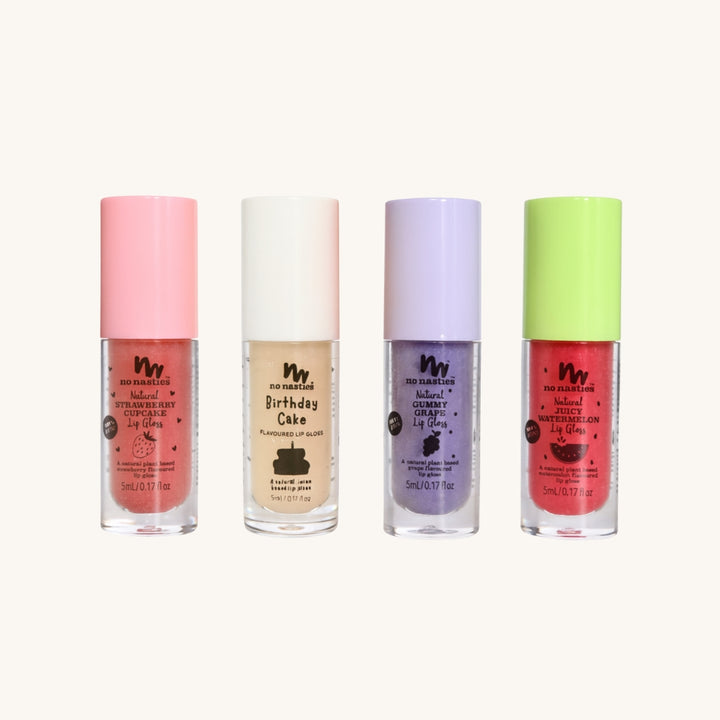
1. Natural Flavor Lip Gloss for Kids
Natural Flavor Lip Gloss for Kids provides a sheer wash of color and uses sunflower, olive, coconut, and jojoba oils. The official listing also provides allergen information, making it a useful option for families who want more detail before purchasing.
It is best suited to a child who wants one simple gloss rather than a large lip-product collection.
Natural Flavor Lip Gloss for Kids
$7.99
A yummy, all-natural treat for little lips, this natural flavor lip gloss for kids adds a whisper of color while keeping lips soft and nourished with sunflower, olive, coconut, and jojoba oils. Formulated for even the most sensitive skin, it’s… read more
2. Natural Lip Gloss for Kids—Gift Set or Singles
This product is available as individual glosses or a three-flavor gift set. The official listing describes naturally flavored glosses made with vegan-friendly, biodegradable ingredients and low-allergen natural waxes.
A single tube is usually enough for a first gloss. The set may work as a birthday or holiday gift when each product will be kept personal and used responsibly.
Natural Lip Gloss for Kids – Gift Set or Singles
$16.99
This clean lip gloss gift set for kids includes three naturally flavored glosses—Strawberry, Cotton Candy, and Grape—in a shop–style gift box designed by Australian artist Rosa Ronco. Handmade in Australia with natural, vegan-friendly, biodegradable, and non-toxic ingredients, each gloss uses… read more

3. 100% Natural and Refillable Lip Gloss
This refillable lip gloss is positioned for teens and uses a bamboo outer case with replaceable refills. The formula includes organic cocoa butter, castor oil, and carnauba wax.
It is the strongest fit for an older child who wants a more mature format without moving into correction-focused beauty.
100% Natural & Refillable Lip Gloss
$24.99
This natural, refillable lip gloss tube is made for teens ready for the real thing—made with organic cocoa butter to protect delicate lips and keep them soft and smooth. Organic castor oil provides lasting moisture and shine, while organic carnauba… read more

Sensitive lips and allergy-aware shopping
Children with eczema, cracked lips, known food allergies, or fragrance sensitivity may need a simpler approach.
Consider:
- Introducing one gloss at a time
- Choosing minimal scent and flavor
- Reviewing coconut, beeswax, nut, and botanical ingredients
- Avoiding use on bleeding or severely chapped lips
- Keeping the product personal
- Stopping use if irritation develops
A patch test on the inner arm may provide limited information, but the lip area can respond differently. Persistent swelling, rash, or discomfort should be discussed with a qualified clinician.
Common mistakes to avoid
1. Buying only for the packaging
Characters and collectible tubes can distract from the ingredient list and product suitability.
2. Assuming non-toxic means universally safe
Natural, clean, organic, and non-toxic products can still irritate an individual child.
3. Assuming mainstream means automatically harmful
Some mainstream glosses have clear labels and simple formulas. Compare the individual product rather than rejecting it based only on where it is sold.
4. Choosing intense flavor for excitement
Strong flavor can encourage licking and frequent application.
5. Sharing applicators
Gloss tubes should not be passed between siblings, friends, or classmates.
6. Ignoring discomfort
Children should not be encouraged to tolerate stinging, burning, swelling, or numbness.
7. Building a collection too quickly
One gloss is enough for a first experience. More shades can wait until the child shows responsible use.
Keeping gloss in the play lane
The healthiest way to introduce lip gloss is to frame it as a creative accessory rather than something a child needs before leaving the house.
Helpful language includes:
- “This is a fun color.”
- “Let’s choose one for the party.”
- “Your gloss stays personal.”
- “We remove it and put it away.”
- “Your lips do not need fixing.”
This is where Popsicle Beauty Club’s Foundationless approach becomes practical. Families can say yes to shine, color, and creative play while still delaying adult beauty pressure.
Where Popsicle Beauty Club fits
Parents comparing non-toxic lip gloss vs mainstream lip gloss should not have to search through hundreds of adult beauty listings to find one age-appropriate option.
Popsicle Beauty Club provides a more focused starting point through:
- Curated children’s and tween lip products
- Ingredient transparency
- Age-appropriate positioning
- Parent-friendly shopping guidance
- Products selected for play and self-expression
- Alternatives to adult correction-focused beauty
A curated marketplace does not replace reading the individual product label. It makes the first stage of comparison more manageable. Parents ready to compare specific products can also review our best clean lip gloss for kids roundup, organized by flavor, finish, age, and occasion.
Bottom line
The most useful non-toxic lip gloss vs mainstream lip gloss comparison looks beyond marketing language and examines the actual formula.
Compare:
- Ingredient transparency
- Fragrance and flavor
- Oils, waxes, and butters
- Pigments and shimmer
- Plumping or tingling effects
- Texture
- Packaging
- Hygiene
- Removal
- Age positioning
For most children, the better choice is a simple gloss that feels comfortable, remains personal, wipes off easily, and supports playful expression without becoming a daily requirement.
For a complete guide on non-toxic play makeup, check out our in-depth resource: The Ultimate Guide to Non-Toxic Play Makeup for Kids for expert tips, product recommendations, and everything you need to know about choosing safe beauty play products for your child.
About the Author: This article was written by the contributing writers at Popsicle Beauty Club—a team of moms, educators, and clean beauty advocates passionate about creating a safer, more imaginative world for kids. We believe in empowering parents with trusted information and offering fun, non-toxic beauty and personal care products that let children play, express, and explore—without compromising their health.