
Table of Contents
- Introduction
- Quick answer for parents
- Popsicle Beauty Club’s approach to children’s nail care
- Why nail polish remover deserves extra care
- Kids nail polish remover ingredients to avoid or limit
- What to choose instead
- Match the remover to the polish type
- How to choose by age and sensitivity
- How to use nail polish remover more carefully
- Product recommendations for easier nail play
- Common mistakes to avoid
- Where Popsicle Beauty Club fits
- Bottom line
- Sources and further reading
- FAQs
Introduction
Understanding kids nail polish remover ingredients can help parents choose a product that removes color effectively without creating unnecessary dryness, strong fumes, or repeated skin irritation. The goal is not to identify one universally “toxic” ingredient. It is to reduce exposure to harsh solvents, heavy fragrance, unnecessary dyes, and formulas that require prolonged rubbing on small fingers.
A practical approach is to compare the complete ingredient list, consider how often the remover will be used, and choose nail products that come off with less effort in the first place. When kids nail polish remover ingredients are paired with sensible application, ventilation, and aftercare, occasional nail play can remain creative without becoming an adult-style maintenance routine.
Quick answer for parents
The kids nail polish remover ingredients many families choose to avoid or limit include:
Acetone for frequent removal
Added fragrance or parfum
Strong masking scents
Unnecessary dyes and bright colorants
High levels of drying alcohol
Complicated solvent blends with unclear directions
Ingredients known to trigger the individual child’s eczema, allergies, or sensitivities
Acetone is highly effective and may still be used occasionally for stubborn polish, but repeated exposure can leave nails, cuticles, and surrounding skin feeling dry. Non-acetone does not automatically mean non-irritating, either. A gentler formula that requires heavy rubbing can still cause discomfort.
The better question is not simply, “Does this contain acetone?” It is: Can I remove the polish quickly, with a small amount of product, limited skin contact, minimal rubbing, and good ventilation?
Popsicle Beauty Club’s approach to children’s nail care
Popsicle Beauty Club treats nail color as age-appropriate creative play, not a beauty obligation. Children do not need salon-level preparation, long-wear systems, aggressive buffing, or constant color changes.
When reviewing kids nail polish remover ingredients, Popsicle’s parent-first standards include:
A complete and accessible ingredient list
Clear usage and storage directions
Less fragrance and fewer unnecessary extras
Packaging that helps reduce spills
Removal methods that limit rubbing
Nail colors designed to peel off or remove more easily
Formulas and messaging created for children rather than adult salon routines
The Foundationless approach applies to nails too. Beauty should remain expressive and optional rather than becoming a maintenance schedule a child feels pressured to follow.
Why nail polish remover deserves extra care
Nail polish remover differs from polish because it involves concentrated contact with solvents and repeated wiping.
1. It touches more than the nail
Cotton pads often pass over the cuticle, fingertips, and surrounding skin. Any dryness or irritation may therefore affect more than the nail plate.
2. Children may inhale the fumes
Removers can have a noticeable odor, especially in a small bathroom or closed bedroom. Ventilation is part of safer use regardless of the ingredient list.
3. Fingers frequently go near the mouth
Children touch snacks, toys, faces, and lips. Hands should therefore be washed after removal.
4. Removal can create a dryness cycle
Dry skin may lead to picking, peeling, or biting around the nails. That can prompt more “fixing,” more polish, and more remover.
Evaluating kids nail polish remover ingredients is therefore only one part of the process. Parents should also consider polish type, removal frequency, technique, ventilation, and aftercare.
Kids nail polish remover ingredients to avoid or limit
1. Acetone for frequent use
Acetone removes polish quickly, which can reduce rubbing time, but it can also feel drying on nails and cuticles. Families who use traditional or glitter polish may decide to keep acetone for occasional stubborn removal rather than every manicure.
Consider limiting acetone when:
Nail color changes happen frequently
The child has dry or cracked cuticles
The surrounding skin is eczema-prone
The child complains of burning or discomfort
Gentler polish types are available
Acetone should never be treated as a toy or left within a young child’s reach.
2. Added fragrance and parfum
Fragrance may be added to cover the natural smell of a solvent. A sweet scent does not make a remover milder, and strong fragrance can be uncomfortable for children who are sensitive to smells.
When comparing kids nail polish remover ingredients, look for the terms:
Fragrance
Parfum
Aroma
Perfume
Scent blend
Fragrance-free products may be easier to assess for sensitive children, although parents should still review the full formula.
3. Strong masking scents
Some removers are marketed with fruit, candy, floral, or dessert scents. These can make the product appear playful, which may also make it more tempting for young children to handle.
A remover should always be presented as an adult-controlled product, regardless of its scent or packaging.
4. Unnecessary dyes and colorants
Bright pink, blue, purple, or glittery remover may look child-friendly, but color does not usually improve removal.
When reviewing kids nail polish remover ingredients, ask whether every added colorant serves a real function. If it does not improve application, control, or removal, it may simply be an avoidable extra.
5. High levels of drying alcohol
Alcohol-based formulas can contribute to dryness, particularly around hangnails or irritated skin.
Not every alcohol functions the same way in cosmetics, so avoid making decisions based only on the word “alcohol.” Instead, consider its position in the ingredient list, the overall formula, and how the child’s hands feel after use.
6. Complex solvent blends
A non-acetone remover may use other solvents to dissolve polish. These formulas can work well, but some require longer contact and more rubbing.
The most useful label includes:
A full ingredient list
Clear application directions
Recommended contact time
Ventilation guidance
Storage instructions
Warnings about eyes, mouth, and broken skin
“Non-acetone” should be treated as a starting point for comparison, not a complete safety guarantee.
What to choose instead
A more parent-friendly remover is usually:
Clearly labeled
Acetone-free or designed for gentler use
Lightly scented or fragrance-free
Free from unnecessary dye
Packaged to reduce spills
Effective without prolonged rubbing
Paired with oils or moisturizing ingredients where appropriate
Individually packaged remover wipes may help parents control the amount used and avoid open bottles. Water-based, peel-off polish may reduce the need for remover altogether.
The best choice also depends on the polish. A strong remover may be unnecessary when the child wears a peelable or easy-removal formula.
Match the remover to the polish type
1. Water-based peel-off polish
This is often the lowest-remover option. Many water-based polishes can be gently peeled away after soaking or according to the brand’s directions.
The advantage is not only the formula. It is the reduced need for solvent exposure and cotton-pad rubbing.
2. Traditional nail polish
Traditional formulas usually require a liquid remover or remover wipe. Choose the least intensive option that removes the polish fully without repeated scrubbing.
3. Glitter polish
Dense glitter can be difficult to remove. Parents may need a longer press-and-hold method or a stronger remover.
An easier alternative is to choose nail stickers, sparse glitter, peel-off polish, or decorative gems that do not require aggressive solvent removal.
4. Press-on nails and stickers
Some press-on products and nail stickers can provide color and decoration without liquid polish. Follow the removal directions carefully and avoid forcefully pulling anything that remains firmly attached.
For more help comparing wear time, polish types, and cleanup, read our guide to kids nail polish that balances lasting color with easier removal.
How to choose by age and sensitivity
1. Younger children
For younger children, nail play should remain occasional and closely supervised.
Prioritize:
Peel-off or water-based polish
Short play sessions
Minimal remover use
Controlled packaging
Hand washing afterward
Avoid leaving the remover bottle open during use.
2. Children with sensitive skin or eczema
Review kids nail polish remover ingredients carefully and introduce one new product at a time.
Consider:
Fragrance-free formulas
Acetone-free wipes
Minimal contact with surrounding skin
Longer gaps between manicures
Moisturizer after washing
Pause nail products if redness, burning, cracking, swelling, or persistent irritation develops.
3. Tweens who want frequent manicures
Frequent color changes can create more exposure than the formula alone suggests.
Set practical boundaries such as:
One manicure per week or special occasion
Peel-off color for experimentation
No harsh salon preparation
No scraping or aggressive buffing
Parent-controlled remover
Hand care after removal
Nail color can be expressive without becoming a constant upkeep expectation.
How to use nail polish remover more carefully
Even well-chosen kids nail polish remover ingredients can cause problems when the product is overused or handled carelessly.
1. Ventilate the room
Open a window, switch on a fan, or work in a larger room. Avoid placing the child’s face directly over the remover.
2. Use a small amount
Dampen the cotton pad rather than soaking it. More liquid increases skin contact, fumes, and mess without guaranteeing faster removal.
3. Press before wiping
Hold the pad against the nail for several seconds before wiping. This gives the remover time to dissolve the polish and may reduce scrubbing.
4. Work one nail at a time
This helps keep the remover on the nail rather than spreading it across the fingers.
5. Avoid broken skin
Do not apply remover directly over cuts, cracked cuticles, or irritated hangnails.
6. Wash hands afterward
Use gentle soap and water, rinse thoroughly, and dry the hands.
7. Add aftercare when needed
A simple hand moisturizer or cuticle oil can help restore comfort after removal.
8. Store the product immediately
Close the container tightly and return it to secure storage before beginning another activity.
Product recommendations for easier nail play
The easiest way to reduce exposure to kids nail polish remover ingredients is to choose a complete nail routine designed around easier removal.
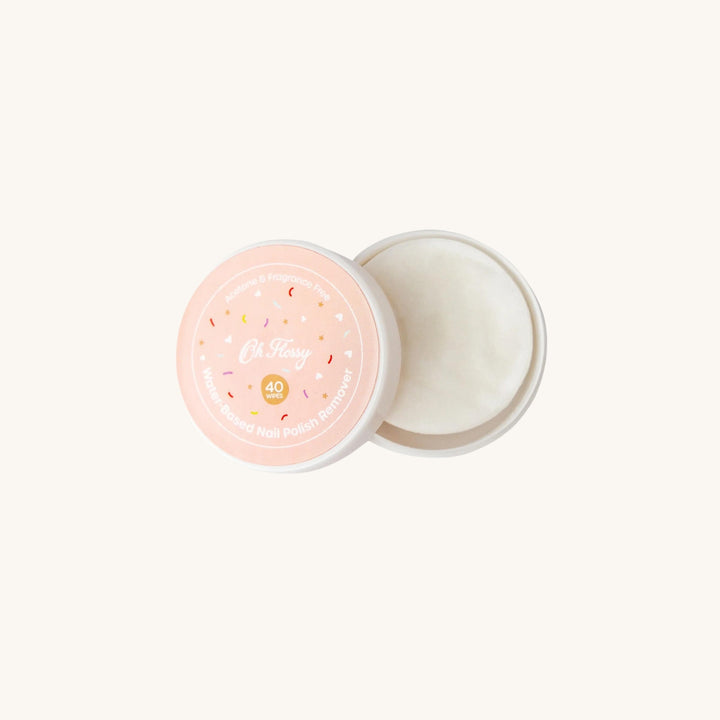
1. Water-Based, Acetone-Free Nail Polish Remover Wipes
These individually packaged wipes offer a controlled alternative to pouring remover from an open bottle. The Popsicle Beauty Club listing describes them as water-based and acetone-free, with vitamin E, castor oil, and aloe vera.
They are especially useful for travel, occasional manicures, and parents who want to control how much remover is used.
Water-Based, Acetone Free Nail Polish Remover Wipes
$9.99
Say goodbye to harsh acetone and hello to a gentler way to clean little nails. These acetone free nail polish remover wipes are water-based and fragrance-free, making them safe for delicate skin. Each pack includes 40 soft wipes that melt… read more
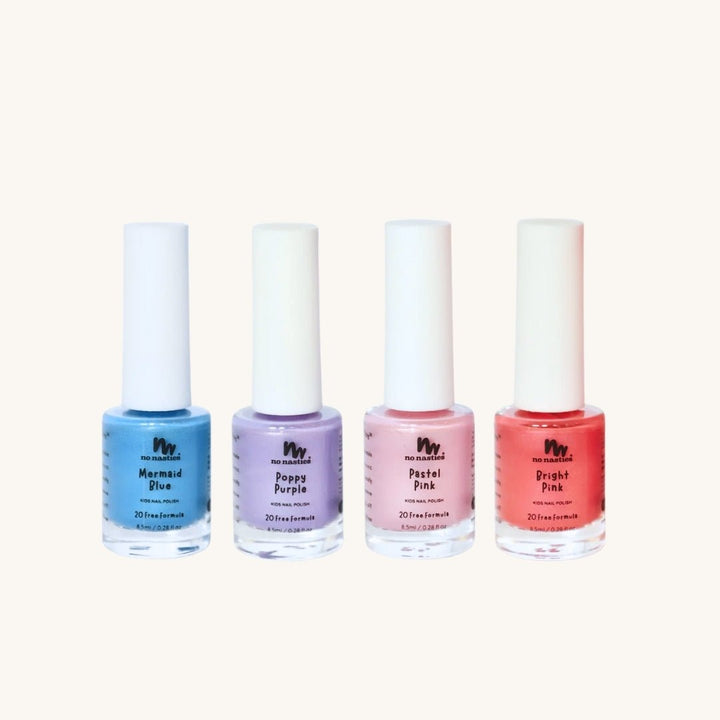
2. 20-Free Unscented, Non-Toxic Nail Polish for Kids
Choosing polish that removes more easily can reduce remover use from the beginning. This water-based, peel-off formula is presented as unscented and designed to come off without conventional remover.
A peel-off formula can be especially useful for children who enjoy changing colors frequently.
20 FREE Unscented, Non-Toxic Nail Polish for Kids
$9.99
Give your little one’s nails a safer mani/pedi with this 20 FREE Unscented Nail Polish—meaning it’s made without the 20 most common toxic ingredients found in conventional nail polish, including formaldehyde (a known carcinogen), toluene (linked to headaches and nervous… read more
3. Nail Sticker Sheets
Nail stickers offer another way to create themed manicures without applying multiple coats of polish. Popsicle’s nail sticker collection includes birthday, ice cream, mermaid, and princess designs intended for quick, peel-and-stick decoration.
They can be used alone or with peel-off polish to keep cleanup manageable.
Nail Sticker Sheet
$5.99
Turn tiny nails into a world of fun with the No Nasties Magical Nail Sticker Collection, featuring fairytale, birthday, ice cream, and mermaid designs! A fun add-on to the best nail polish for toddlers, just peel and stick for a… read more

Common mistakes to avoid
1. Choosing remover by scent
A pleasant smell may simply mean that more fragrance has been added to mask the solvent.
2. Assuming non-acetone means completely gentle
A non-acetone formula may still contain solvents or require more rubbing.
3. Using remover for other household tasks
Nail polish remover should not be used to clean toys, remove stickers from skin, erase marker, or solve unrelated messes.
4. Changing nail color too often
The frequency of removal may matter as much as the formula. Even a gentler remover can dry the skin when used repeatedly.
5. Scraping stubborn polish
Scraping or aggressive buffing can damage the nail surface. Allow the remover time to work or choose easier-removal polish next time.
6. Leaving remover accessible
Store all remover products securely and away from children, pets, heat, and flames.
7. Ignoring irritation
Burning, swelling, persistent redness, cracking, or worsening eczema are signs to stop and reassess the routine.
Where Popsicle Beauty Club fits
Popsicle Beauty Club helps parents build a nail routine in which polish, removal, tools, and aftercare work together.
Instead of choosing a strong remover and then managing the irritation, families can begin with:
Peel-off polish
Acetone-free remover wipes
Nail stickers
Occasional manicures
Parent-controlled removal
Gentle hand care afterward
The aim is not a perfect manicure. It is age-appropriate creative play with less mess, less rubbing, and fewer unnecessary ingredients.
For a broader look at age guidance, nail polish formulas, and label claims, read our parent guide to choosing non-toxic nail polish for kids.
Bottom line
Understanding kids nail polish remover ingredients helps parents make more practical decisions about acetone, fragrance, dyes, alcohol, and solvent blends. The safest-feeling routine is usually the one that uses the least remover necessary, provides good ventilation, minimizes rubbing, and begins with polish that is easy to remove.
Choose clear labels, controlled packaging, and age-appropriate products. Keep remover in adult hands, wash and moisturize after use, and treat nail color as occasional creativity—not a maintenance routine children are expected to sustain.
Sources and further reading
Want to explore more about safe nail polish and toxin-free manicures for kids? Check out Safe & Non-Toxic Nail Care for Kids to learn about the best brands, safe removal methods, and fun, non-toxic nail art ideas.

About the Author: This article was written by the contributing writers at Popsicle Beauty Club—a team of moms, educators, and clean beauty advocates passionate about creating a safer, more imaginative world for kids. We believe in empowering parents with trusted information and offering fun, non-toxic beauty and personal care products that let children play, express, and explore—without compromising their health.