
Table of Contents
- Introduction
- Quick answer: what separates a thoughtful kids’ beauty brand?
- Popsicle Beauty Club’s safety and education lens
- What “kid-friendly” should mean beyond packaging
- How to compare kid-friendly makeup brands
- Ingredient and label checklist
- Playful color without correction-focused beauty
- A product example that fits this approach
- Building a small care-and-color starter set
- Common mistakes to avoid
- Where Popsicle Beauty Club fits
- Bottom line
- FAQs
Introduction
When parents compare kid-friendly makeup brands, the goal is not to find one perfect label. It is to identify brands that combine playful color with transparent ingredients, age-appropriate messaging, gentle use, and practical education about cleansing, hygiene, and skin comfort. The strongest options make beauty feel like creative play rather than a routine for correcting a child’s face.
This guide explains how to compare kid-friendly makeup brands, what warning signs to notice, and how Popsicle Beauty Club helps families choose products that support expression without adultification.
Quick answer: what separates a thoughtful kids’ beauty brand?
The best kid-friendly makeup brands usually share five qualities:
They publish complete ingredient lists for individual products.
They explain where and how products should be used.
They favor manageable, easy-to-remove color rather than long-wear correction.
They teach hygiene, gentle cleansing, and sensible product limits.
They speak to children and parents without suggesting that normal skin needs fixing.
A brand does not need to offer a large routine to be educational. In fact, smaller collections often make it easier for children to learn responsible use, clean their tools, remove products properly, and notice when their skin needs a break.
Popsicle Beauty Club’s safety and education lens
Popsicle Beauty Club is designed as a curated clean kids’ beauty hub rather than an open marketplace where every trend receives equal weight. We look at ingredient transparency, product purpose, ease of removal, age guidance, and the message a product sends about childhood and appearance.
When evaluating kid-friendly makeup brands, we also distinguish between creative color and complexion correction. Lip gloss, nail color, pressed shimmer, face stickers, and costume-inspired looks can support imaginative play. Foundation, concealer, contouring, and products marketed around hiding flaws belong to a different developmental category and are worth delaying.
No cosmetic product is allergy-proof. Parents should still review the full ingredient list, introduce new products gradually, patch test when appropriate, and discontinue use if irritation develops.
What “kid-friendly” should mean beyond packaging
Bright boxes, cartoon characters, and words such as “clean,” “natural,” or “gentle” do not tell parents enough on their own. Truly kid-friendly makeup brands provide useful information behind the design.
1. Ingredient transparency
A parent should be able to find a complete ingredient list for each lip, eye, cheek, or nail product in a set. A short list is not automatically better, but missing or vague information makes comparison difficult.
2. Age-appropriate positioning
The brand should describe makeup as color, creativity, dress-up, or special-occasion play. Be cautious when the language centers on perfection, coverage, flawless skin, anti-aging, plumping, or changing facial features.
3. Easy application and removal
Products intended for children should be manageable. Pressed powders, sheer glosses, washable color, and simple applicators are often easier to control than loose pigments, heavy stains, or complicated multi-step products.
4. Skin-health education
Education does not require a complicated skincare routine. It can be as simple as teaching children to wash their hands, avoid sharing lip and eye products, remove makeup before bed, clean brushes, moisturize when skin feels dry, and use sun protection during the day.
How to compare kid-friendly makeup brands
1. Start with the purpose
Decide whether the product is for dress-up at home, a birthday party, a performance, or occasional experimentation. A brand that fits one use case may not be appropriate for daily use.
2. Review the individual product, not only the brand name
Brands can vary across categories and shades. One lip gloss may have a simple formula while another product from the same company contains stronger fragrance, more persistent color, or a format that is harder to use around the eyes.
3. Check the message as carefully as the ingredients
When kid-friendly makeup brands teach children that color is optional and skin deserves care, the product becomes easier to fit into healthy family boundaries. If the marketing encourages children to monitor pores, redness, texture, or perceived flaws, pause even if the package uses clean-beauty language.
4. Choose fewer products
A small set with one lip item, one playful color, and a washable tool is usually easier to supervise than a large kit filled with duplicates. Fewer items also mean fewer open products to store, clean, and replace.
Ingredient and label checklist
Use this checklist before purchasing from any children’s beauty brand:
Full ingredient list: Confirm that every cosmetic item is clearly documented.
Fragrance and flavor: Consider simpler or lower-scent options for sensitive children.
Colorants and pigments: Look for clear disclosure, especially for bright lip and eye shades.
Glitter format: Avoid craft glitter and loose particles near the eyes.
Product purpose: Confirm that the product is intended for the lips, face, eyes, nails, or hair area where it will be used.
Removal guidance: Favor products that come off with gentle cleansing rather than scrubbing.
Hygiene-friendly packaging: Squeeze tubes, closed compacts, and washable brushes can be easier to manage.
Age and supervision guidance: Look for realistic directions rather than broad reassurance.
For a deeper explanation of label terminology, read our guide to clean beauty labels and ingredients for kids.
Playful color without correction-focused beauty
Many children are not asking for a beauty routine. They want the fun they see in color, shimmer, themes, and accessories. Kid-friendly makeup brands can meet that interest without introducing a full adult-style face.
Good starter categories include:
Sheer lip balm or gloss
Pressed shimmer used lightly and with supervision
Kid-appropriate nail color
Face stickers or gems placed away from the eyes
Temporary hair accessories or washable color
Soft brushes that can be cleaned and stored properly
The guiding message matters: “This is color for fun” is different from “You need this to look better.” Children can enjoy beauty play while also learning that their natural face is not a problem to solve.
A product example that fits this approach
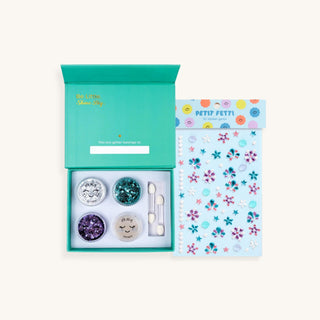
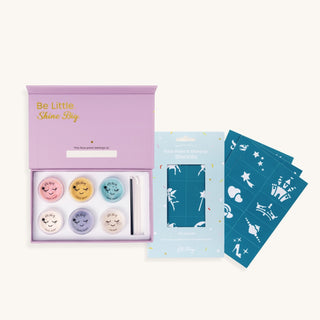
For children who enjoy themed, colorful play, The Sweetest Strawberry Makeup Kit for Girls offers a contained way to explore coordinated color and face stickers without building a complexion-correction routine. It works best as an occasional play set paired with clear rules about clean hands, supervised application, no sharing, and gentle same-day removal.
The Sweetest Strawberry Makeup Kit for Girls
$39.98
Encourage creativity and confidence with The Sweetest Strawberry Makeup Kit for Girls — a sweet bundle that combines our 5-Piece Strawberry Cupcake Makeup Set with sticker gems just as sweet. Formulated with vibrant mineral pigments and a skin-friendly base parents… read more

The product should remain one creative option rather than the beginning of a large daily collection. Parents should review the complete ingredient information and consider the child’s individual sensitivities before use.
Building a small care-and-color starter set
A balanced starter set does not need to contain many products. One gentle cleanser, one balm, and one playful color item can teach more useful habits than a crowded vanity.
1. Cleanser
Use a gentle cleanser after play, sunscreen, sweat, or visible dirt. Teach children to use lukewarm water, avoid harsh scrubbing, rinse thoroughly, and pat dry.
2. Balm
A simple balm can help with dry lips or small dry areas. It also reinforces the idea that skincare responds to comfort and need, not pressure to maintain a complicated routine.
3. Playful color
Choose one gloss, nail color, pressed shimmer, or set of face stickers. Keep it occasional and remove it fully at the end of play.
This small-set approach helps kid-friendly makeup brands support skin literacy: children learn when to cleanse, when to moisturize, how to prevent sharing, and when to stop using a product that feels uncomfortable.
Common mistakes to avoid
1. Buying based on packaging alone
A playful package can be delightful, but it does not replace ingredient information, age guidance, or clear application directions.
2. Assuming every product from one brand is identical
Compare each product and shade. Formula, pigment, fragrance, and removal needs can differ within one brand.
3. Introducing too many products at once
Adding several new products makes irritation harder to troubleshoot and can turn occasional play into an expected routine.
4. Ignoring hygiene
Lip products, eye tools, and cream pots should not be shared. Brushes need regular washing and full drying.
5. Using makeup to solve confidence concerns
If a child says they need makeup to look acceptable, pause the purchase conversation. Reassure them first and keep beauty positioned as optional expression.
For more help evaluating product positioning and safety claims, read our guide to what parents should check when comparing makeup brands for kids.
Where Popsicle Beauty Club fits
Parents comparing kid-friendly makeup brands often need both a product filter and a message filter. Popsicle Beauty Club helps narrow the options by prioritizing age-aware products, clearer information, and beauty play that does not rely on correction-focused language.
A practical shopping path is to begin with one clearly labeled play product and one care item. Add complexity only when it fits the child’s age, habits, sensitivity, and ability to use and remove products responsibly.
Bottom line
The most trustworthy kid-friendly makeup brands do more than sell bright colors. They help families understand ingredients, use products hygienically, remove them gently, and preserve the distinction between creative play and appearance correction. Look for transparent labels, simple formats, realistic age guidance, and messaging that treats skin as something to care for rather than cover.
For a complete guide on non-toxic play makeup, check out our in-depth resource: The Ultimate Guide to Non-Toxic Play Makeup for Kids for expert tips, product recommendations, and everything you need to know about choosing safe beauty play products for your child.

About the Author: This article was written by the contributing writers at Popsicle Beauty Club—a team of moms, educators, and clean beauty advocates passionate about creating a safer, more imaginative world for kids. We believe in empowering parents with trusted information and offering fun, non-toxic beauty and personal care products that let children play, express, and explore—without compromising their health.