

Table of Contents
- Why looking clean is not the same as being personal
- Give siblings separate, identifiable spaces
- Plan a party without a communal makeup palette
- Teach a sentence children can actually use
- What if a product has already been shared?
- Keep tool cleaning separate from the sharing rule
- A personal brush set with its own case
- Sources and further reading
Kids should not share makeup. The FDA advises keeping cosmetics personal because sharing can transfer another person’s germs. That includes siblings and close friends, even when a product looks clean. Creative play can still be social: children can share ideas, colors on paper and stories while using their own products and tools.
The useful lesson is a calm boundary, not a frightening warning about friends. “This one is yours, and this one is mine” is a straightforward rule children can use at home, a sleepover or a birthday party. Adults can make following it easy by setting up the activity before the products come out.
Why looking clean is not the same as being personal
The FDA’s cosmetic safety guidance says not to share makeup. You cannot judge whether a used product is suitable for someone else simply by looking at its surface. A tidy case or a fresh-looking powder is not a substitute for keeping cosmetics separate.
It is also easy to lose track of what touched what. A child may touch a brush to their face, return it to a palette and then hand both to a sibling. Keeping one kit assigned to one child reduces the need to reconstruct every step afterward.
Treat the rule like personal toothbrushes rather than a judgment about anyone’s cleanliness. Friends are not “dirty,” and a child does not need to defend the decision. The setup itself should support the boundary.
Give siblings separate, identifiable spaces
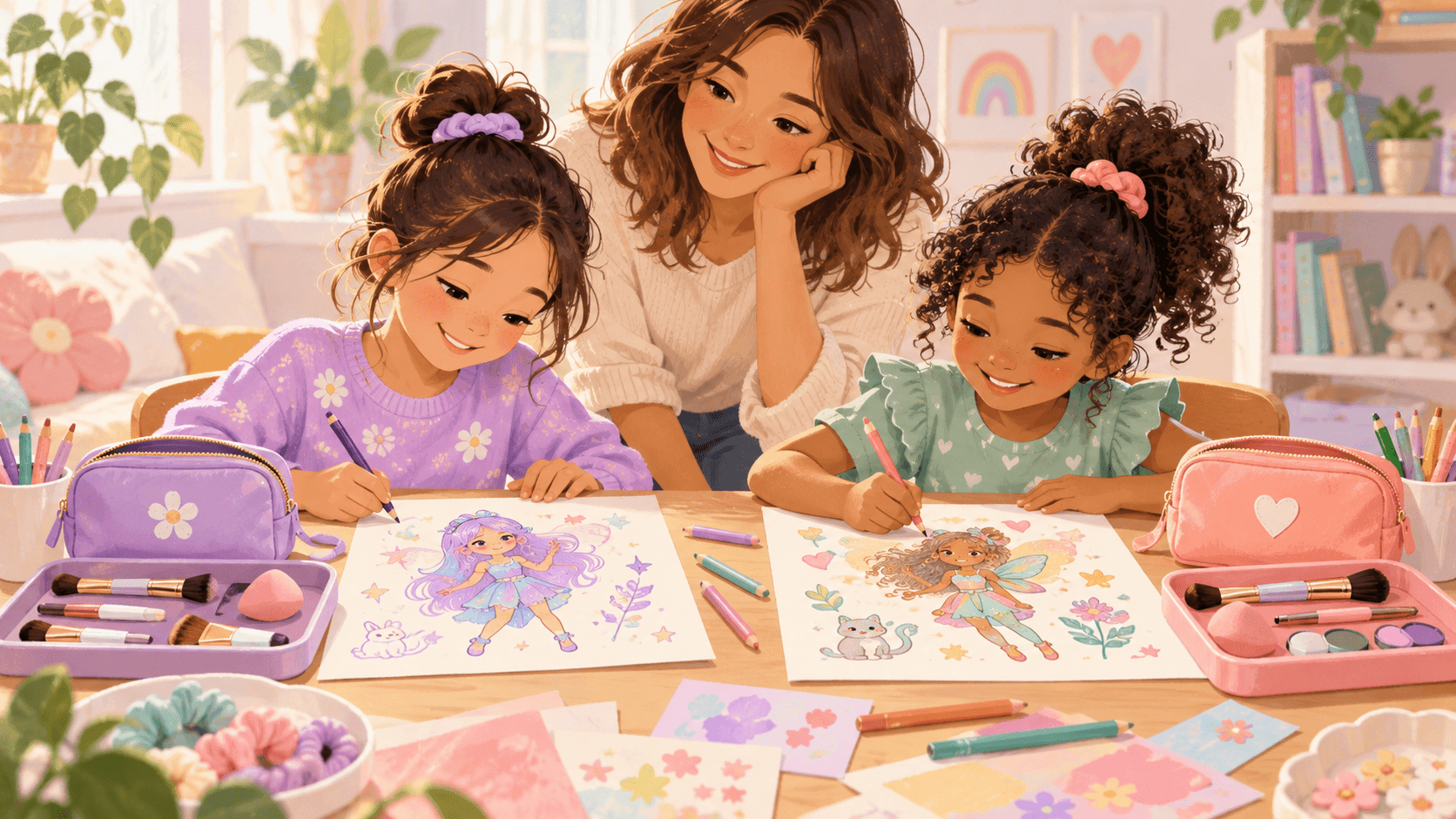
If siblings enjoy beauty play together, label each child’s pouch or tray. Use a symbol as well as a name for children who do not read yet. Check that each child can identify their own products before starting, and keep the trays far enough apart that they are not easily mixed up.
You do not need to buy duplicate large kits. A small personal selection is easier to organize and use up. Children can choose different colors or themes while keeping the items themselves separate. If there are not enough suitable products, choose a paper-based art activity instead.
Keep storage consistent after play. Return dry, clean tools to the correct place and put used tools where an adult can handle cleaning. A shared bathroom shelf can hold separate containers; the shelf does not need to become a shared makeup collection.
Plan a party without a communal makeup palette
It is possible to enjoy a group activity without asking children to share makeup. Decide beforehand whether each participant will use a clearly assigned personal kit or whether the activity will use drawing materials and paper faces. Tell caregivers what is planned so relevant sensitivities and preferences can be discussed.
- Assign products and tools to one child rather than moving them around the table.
- Provide a separate place for used tools and any items that need adult attention.
- Keep food, drinks and cosmetics organized in different areas.
- Make participation optional, with an equally welcoming activity for children who skip makeup.
Do not improvise a sanitation system because a party is already underway. If you cannot keep personal products separate, change the activity. Designing a character on paper can be just as collaborative and avoids making a child feel they must use a cosmetic to join in.
Teach a sentence children can actually use
A short script helps when a friend asks to borrow a favorite color: “I don’t share makeup, but we can draw matching designs.” The alternative keeps the conversation friendly without making the boundary negotiable. Let your child practice the words in their own style.
Adults should model the same rule. Asking a child to keep their kit personal and then borrowing their brush sends a confusing message. If you accidentally pick up the wrong tool, acknowledge it and set it aside for appropriate care instead of quietly returning it.
Praise the practical skill of keeping track of belongings, not the child’s appearance. “You remembered which tray was yours” reinforces a habit they can repeat. Makeup play can remain about imagination, color and storytelling rather than being ready for a photograph.
What if a product has already been shared?
Pause use and identify the item. There is no universal home trick that makes every shared cosmetic ready to use again. Ask the manufacturer about the specific product, and replace it when appropriate. Do not add water or household disinfectants to the formula.
The FDA’s eye-cosmetic guidance specifically warns against sharing eye products and advises discarding eye makeup used when an eye infection occurred. If a child develops eye symptoms, skin irritation or another concerning reaction, stop the product and get appropriate medical guidance.
Keep the conversation matter-of-fact. An accidental mix-up is an opportunity to improve the setup, not a reason to embarrass a child. Bigger name labels, fewer open products or one tray per person may prevent the same confusion next time.
Keep tool cleaning separate from the sharing rule
Cleaning a brush is part of looking after it; it is not permission to share makeup. Follow the tool manufacturer’s care directions, allow tools to dry fully and store them in a clean place. A damp brush zipped into a pouch is not ready for storage.
For help choosing a manageable personal set, see our guide to kids’ makeup brushes and tools. Choose a size that fits the activity and the child’s ability to handle it with supervision. A smaller collection often makes the care routine clearer.
Before the next play session, make three checks together: whose kit is this, are the tools ready, and do we know how to remove the product afterward? These checks are easy to connect to the activity without turning playtime into a lengthy lecture.
A personal brush set with its own case
Popsicle carries Oh Flossy’s 5-Piece Sprinkles Makeup Brush Set with Case. It was available when checked. The case offers a place to label and store one child’s tools once they are clean and fully dry. Follow the maker’s cleaning directions rather than assuming the pouch keeps brushes clean.
Assigning this set to one child can support the decision not to share makeup, but buying it does not solve cross-contact if palettes and brushes still circulate among friends. Keep the personal-product rule in place throughout the activity.
Choose the tools because they fit a small, supervised creative activity. Children do not need an adult-sized collection or a routine designed to cover normal skin. Sharing an idea is enough to make beauty play a shared experience; the cosmetics themselves can stay personal.
5-Piece Sprinkles Makeup Brush Set with Case
$19.99
Spark creativity with the Oh Flossy 5-Piece Sprinkle Makeup Brushes Set with Case—made just for kids! These soft, safe kids makeup brushes are filled with colorful sprinkles for extra fun, and sized perfectly for little hands learning to blend, paint,… read more