

Table of Contents
Is ELF makeup safe for kids? There is no reliable yes-or-no answer for an entire brand. The useful decision is whether a particular product, used as directed, suits your child's age, skin, and activity. An ingredient policy or a vegan label cannot establish that every formula will work for every child.
For occasional dress-up, we suggest starting with a small amount of color and a simple cleanup plan. Makeup can be an optional part of a story or costume, without becoming a daily routine or something a child needs to feel presentable.
What e.l.f. says about its formulas
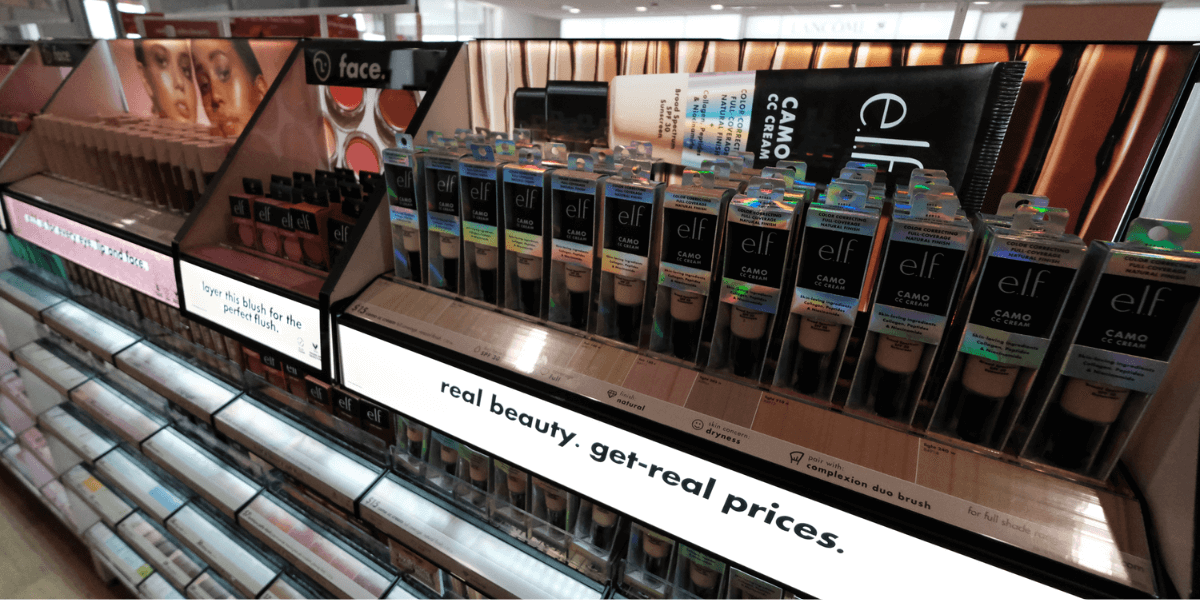
e.l.f.'s current brand information describes its products as vegan and cruelty-free and lists ingredients it excludes, including phthalates and parabens. Those policies may be relevant to a family's preferences. They do not mean a product has been tested for every child's needs, and they do not establish that its ingredient list is shorter than another brand's. Read e.l.f.'s current brand information.
e.l.f. also publishes an ingredient safety and transparency policy describing formulation standards and quality testing. Evaluate the ingredient list and directions for the exact item you are considering; do not transfer claims from one product to another. See e.l.f.'s published ingredient policy.
What safety labels can and cannot tell you
“Clean,” “natural,” and “non-toxic” are not a substitute for reviewing a formula. Vegan and cruelty-free claims address different questions from skin tolerance. A product can meet your ingredient or animal-welfare preferences and still contain something your child reacts to.
Be cautious with “hypoallergenic” as well. FDA explains that the term has no federal standard defining its use in cosmetics. It should not be treated as an allergy-free guarantee. Read FDA's hypoallergenic guidance.
FDA regulates cosmetics, but most finished cosmetics are not approved by the agency before sale. Compliance with cosmetic rules should not be described as FDA approval of a particular makeup kit for children. See FDA's explanation of cosmetic regulation.
How to judge a particular product for your child
Check the activity and the directions
Choose the item for its intended use. Lip gloss, eye color, face paint, and nail products are not interchangeable. An appealing shade is not enough reason to use something in a different area. FDA specifically advises against using products near the eyes unless they are intended for that purpose. Read FDA's eye cosmetic safety advice.
For a first session, you might choose one color or one lip product, rather than a collection of products your child has never used. Avoid building the game around concealing features or changing a child's face.
Read the complete ingredient list
Check for your child's known allergens and follow any individual medical advice. Added fragrance or flavor matters when a child needs to avoid those ingredients; plant-derived scent is still relevant to that review. If the item has no clear ingredient information or directions, choose something you can evaluate more confidently.
Use product-specific age guidance
This guide does not set a universal minimum age for makeup. Consider the manufacturer's guidance, small-parts warnings, your child's ability to follow directions, and adult supervision. Choosing a product marketed for children can help you find a suitable format, but the children's label itself does not guarantee a safer formula.
A child with eczema, sensitive skin, or a history of cosmetic reactions may need individual guidance from their pediatrician or dermatologist before trying something new.
Testing a new product: useful, but not a guarantee
The American Academy of Dermatology advises testing a new skin-care product on a small area twice daily for seven to ten days, following its use directions. Medical patch testing is a different procedure. A home test does not promise future tolerance. Read AAD's testing instructions.
If a product causes a reaction, stop using it and gently remove it. Seek medical advice for a concerning or persistent reaction. Difficulty breathing or swallowing, or swelling of the lips or eyes with a rash, needs immediate medical attention. AAD explains rash warning signs.
A child-focused alternative for occasional play
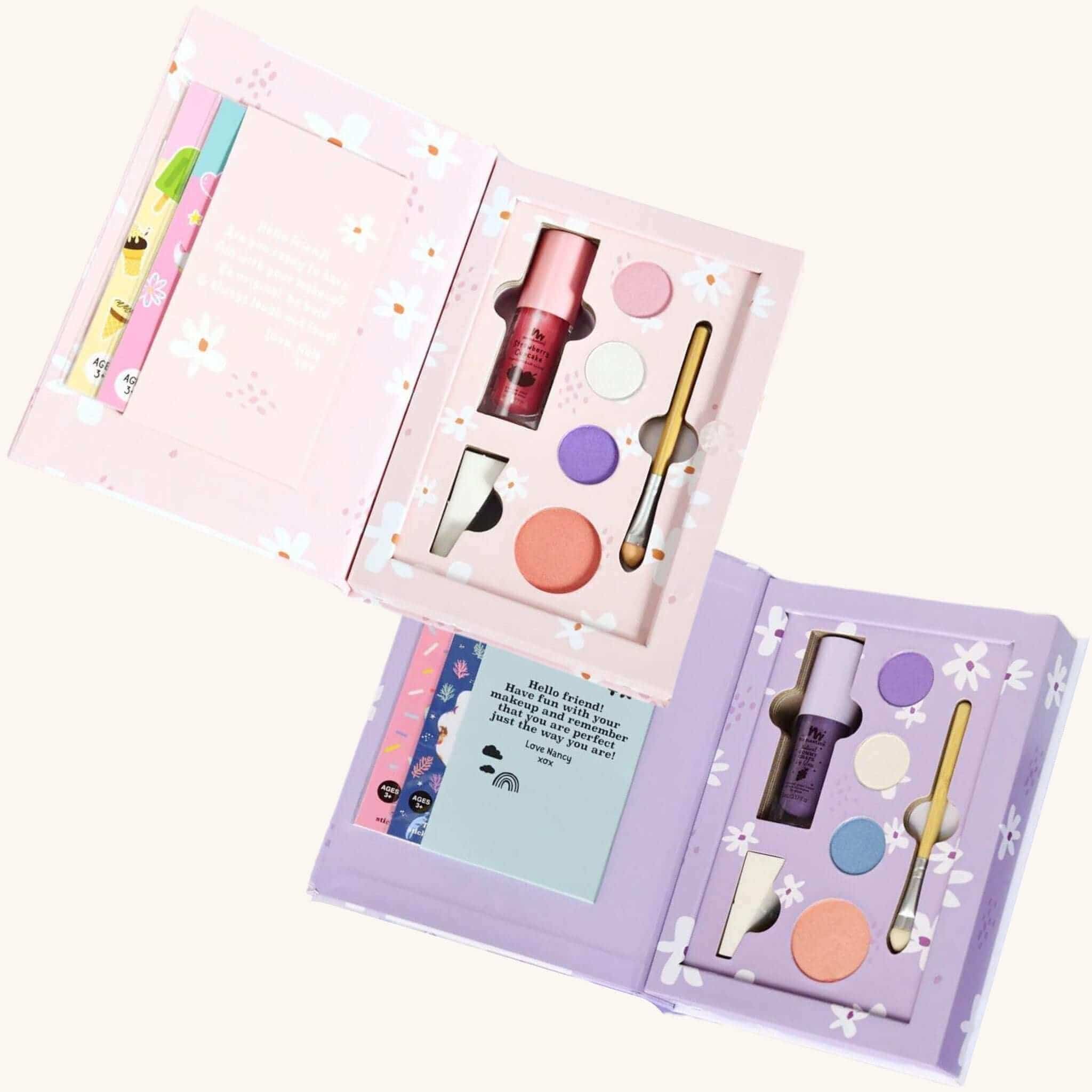
If your child wants a coordinated set, the No Nasties 9-Piece Mermaid or Unicorn Makeup Set for Kids combines pressed eye colors, blush, lip gloss, nail stickers, and applicators. Nancy The Mermaid and Nala The Unicorn are the current store options.
The published powders include mica and rice starch. The gloss uses oils and waxes with added flavor. These are product details, not a medical claim that the set is safer than every e.l.f. product. Review the exact ingredients and directions, and use each component only where indicated.
We suggest it for a child interested in a themed play experience. If the activity is about copying application gestures rather than applying color, a paper face chart, empty pretend compact, or costume may be all you need.
A quick checklist before playtime
| Check | What to do |
|---|---|
| Product identity | Read the label for the exact item, rather than relying on brand-wide claims. |
| Ingredients | Check known allergens and any clinician's advice. |
| Age and intended use | Follow directions, warnings, and application-area limits. |
| Supervision | Set out only what is needed and help your child apply it. |
| Hygiene | Use clean hands and tools; keep lip and eye makeup personal. |
| Removal | Use the product's removal instructions and stop if it irritates. |
The same checklist applies whether you choose e.l.f. or a children's brand. Keep the focus on the individual product and the child using it. For more options, read our guide to non-toxic play makeup for kids.
FAQs
Is ELF makeup safe for kids?
There is no single answer for the whole brand. Review the exact product's ingredients, intended use, and warnings, and consider your child's needs and supervision.
Does vegan makeup prevent allergies?
No. Vegan describes the approach to animal-derived ingredients. It does not establish that an individual child will tolerate the formula.
Do dermatologists recommend waiting until age 12?
This guide does not rely on a universal age-12 rule. Use product-specific guidance and your child's circumstances, with medical advice when skin conditions or prior reactions warrant it.
Does a clear home skin test prove a product is suitable?
No. It cannot guarantee future tolerance or replace checking the product's intended use. Clinical allergy testing and home product testing are different.
Are children's makeup brands automatically safer than e.l.f.?
No. Child-focused formats can be convenient for play, but suitability still depends on the formula, directions, and individual child.
Can any makeup product be used around the eyes?
No. Use a product around the eyes only when it is intended for that area. Lip products, craft glitter, and other cosmetics are not interchangeable with eye cosmetics.