
Table of Contents
- Introduction
- Answer-ready rules for shopping
- Popsicle safety snapshot
- What “non toxic” really means in kids makeup (and what it doesn’t)
- How to choose
- Ingredient and label checklist
- Safer play routine: use, hygiene, and removal
- Common mistakes to avoid
- What Popsicle Beauty Club recommends (without turning it into a “mini Sephora”)
- Gift ideas for pretend spa days (without adultification)
- Bottom line
- Sources and further reading
- FAQs
Introduction
Direct answer: If you’re searching for non toxic kid makeup, the safest, most practical approach is to choose simple, age-appropriate color play (think lip balm/gloss, washable sparkle, nail color, face gems for parties) from brands with transparent ingredient lists, then use it occasionally, with clean tools and easy removal. Skip anything that pushes kids toward “fixing” their face—correction-focused routines are a milestone worth delaying.
Parents usually aren’t asking for perfection—they’re asking for a way to say “yes” to creativity without turning beauty into pressure. This guide breaks down what to check on labels, how to choose products by age and use case, and how Popsicle Beauty Club helps you shop smarter in one place.
Answer-ready rules for shopping
- Choose expression, not correction: prioritize playful color and sparkle; delay complexion-covering products as a routine.
- Less product, fewer steps: a 2–4 item kit beats a 12-step routine for kids and tweens.
- Look for label clarity: full ingredient lists beat vague “clean” claims.
- Be cautious with fragrance: especially near lips and eyes, and especially for sensitive skin.
- Pick easy-removal formulas: less rubbing, less irritation, less leftover residue.
- Patch test when appropriate: particularly for first-time use or kids with reactive skin.
Choosing non toxic kid makeup is usually less about finding a perfect product and more about building safe, age-appropriate beauty habits from the beginning.
Popsicle safety snapshot
Popsicle Beauty Club is built to be a practical clean kids’ beauty hub—not a neutral directory. Our role is to make parent decision-making easier when your child wants makeup and self-care.
- Curated marketplace: Popsicle carries kids’ beauty, skincare, hair, nails, fragrance, and wellness options that are vetted by Popsicle Beauty Club for age-appropriate use and parent-friendly label checks.
- Medical-advisory-backed education: our educational stance is shaped with medical-advisory input so parents get calm, realistic guidance (not trend-driven pressure).
- EWG Verified positioning where applicable: when a product is actually EWG Verified, that can be a helpful filter. (We don’t imply it unless the product states it.)
- Allergist review process where applicable: some brands and/or product selections may be reviewed with allergist input depending on the product category and claims. (It’s never a promise of “no reactions.”)
- Foundationless stance: Popsicle is not anti-makeup—we’re against adultification and correction-focused beauty for kids. Makeup should be art, not armor.
What “non toxic” really means in kids makeup (and what it doesn’t)
Parents often use “non toxic” as shorthand for: fewer controversial ingredients, fewer irritants, clearer labels, and products that feel more appropriate for developing skin. That’s a reasonable goal—but it helps to know the limits.
In the U.S., cosmetics are a category where most products and ingredients do not require FDA pre-approval before they go on the market (with important exceptions such as color additives). The National Institute of Environmental Health Sciences (NIEHS) explains this oversight reality and why ingredients like fragrance components, preservatives, and pigments become key parent focus areas.
So rather than treating non toxic kid makeup as a single certification or a magic phrase, think of it as a shopping method:
- choose products designed for kids’ use patterns (short wear, easy wash-off)
- minimize avoidable exposures where reasonable (especially around lips/eyes)
- keep the “why” healthy: creativity, play, special occasions—not self-correction
Parents looking for non toxic kid makeup often achieve better results by focusing on transparent ingredient lists and simpler routines rather than marketing claims.
How to choose
If you’re comparing “best non toxic makeup for kids,” start by choosing the right product category for the moment. This is where parents accidentally drift into adult beauty—because kid marketing can look like mini versions of adult routines.
Age-appropriate product types (what to say yes to first)
- Lip balm or sheer gloss: a starter step that feels fun but still reads like care.
- Washable sparkle (party-only): look for products meant to remove easily; avoid loose glitter near eyes.
- Nail color: a classic “beauty play” category because it’s not face-centered. Prioritize easier removal and parent-managed storage/ventilation.
- Costume face paint (occasional): treat this as craft/holiday makeup, not daily wear; cleanse thoroughly after.
- Hair accessories + temporary color (as appropriate): fun impact, low skin contact when chosen carefully.
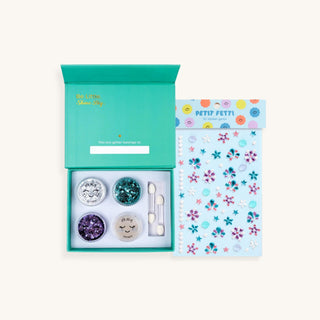
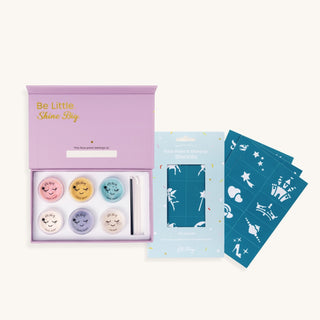
If you're looking for an example of non toxic kid makeup that reflects the principles discussed throughout this guide, the Natural Kids Play Makeup Kit by Oh Flossy is a great place to start. It encourages imaginative beauty play with gentle, easy-to-remove formulas and keeps makeup focused on creativity rather than correction.
Natural Kids Play Makeup Kit
$34.99
$40.99
Looking for a clean beauty gift that’s safe, fun, and worry-free? This natural play makeup kit lets little ones explore color and creativity with non-toxic, skin-friendly formulas parents trust. Each kit includes vibrant loose powder eyeshadows, soft blush, lipstick, and… read more

What to delay (Foundationless boundary)
Popsicle’s view: products meant to cover, perfect, or “even out” the face—foundation, concealer, simple skin care, simple moisturizers, and correction-focused routines—are developmental milestones worth delaying for children, tweens, and many teens. Even when a product claims to be “clean,” the bigger issue is the message: makeup as armor instead of makeup as art.
If a tween is feeling self-conscious about acne or redness, start with gentle skin care and support, and consider checking in with a qualified clinician for persistent irritation, acne, rash, or distress. Makeup shouldn’t be the first-line solution for feeling okay in their own skin.
Ingredient and label checklist
Use this checklist in-store or while scrolling. It’s designed for parents who want non toxic kid makeup without needing a chemistry degree.
1) Fragrance: decide your family’s comfort level
Fragrance is one of the biggest “hidden” variables in cosmetics. The FDA notes that individual fragrance ingredients do not have to be listed separately—labels can simply say “fragrance,” which makes it hard to know what’s inside. Phthalates have been used in some fragrance preparations, and fragrance mixtures can be a common trigger for sensitive skin.
- Most cautious approach: choose fragrance-free for lips and around eyes.
- If you allow fragrance: keep it occasional, and watch for dryness, stinging, or redness.
2) Color additives and dyes: know what you’re looking at
Parents often avoid petroleum-derived synthetic dyes in food; it’s normal to bring that same lens to cosmetics. The FDA explains that many certified color additives are synthetic and batch-certified for identity and certain impurities. That doesn’t automatically mean “bad,” but it does mean the type of colorant matters—especially for kids who use makeup more like face paint (larger areas, more frequent touch). If your child is sensitive, you may prefer simpler pigment systems or more transparent brands.
3) Eyes and lips: treat these zones as “high priority”
Kids rub their eyes, lick their lips, and share with friends. For anything used on eyes or lips, prioritize:
- short ingredient lists
- clear usage instructions
- easy removal (to reduce scrubbing)
- no loose glitter near eyes (glitter can migrate)
4) Preservatives: don’t fear them—understand them
“Preservative-free” sounds appealing, but kids’ products get handled a lot. A well-preserved product can be safer than a jar that grows contamination. The practical move is to choose reputable brands with clear labeling and to store products cleanly (see routine section below).
5) “Clean,” “natural,” “hypoallergenic”: treat as marketing until proven
These terms are not automatic guarantees. Use them as a starting point, then verify with the ingredient list and your child’s known triggers. When a product is truly certified (for example, EWG Verified), that’s more meaningful—but only when the product explicitly states it. If you're learning how to compare labels, our guide to understanding ingredient safety explains what parents should look for when evaluating children's beauty products.
Safer play routine: use, hygiene, and removal
The safest formula can still cause problems if it’s applied with dirty tools, shared at school, or left on overnight. A “safer” routine for non toxic kids makeup (and especially for non toxic kid makeup used on the face) looks like this:
- Start with clean hands and a clean face. A gentle cleanse removes sunscreen, sweat, and playground grime that can mix with pigments. Even the best non toxic kid makeup should be used occasionally, removed gently, and stored hygienically to help reduce irritation.
- Use kid-owned tools only. No sharing lip gloss wands or eye products with friends/siblings.
- Prefer pumps, sticks, or squeeze tubes. These formats tend to be more hygienic than open jars.
- Set a “time and place” boundary. Example: weekend play, dress-up, dance recital, or a party—rather than a daily requirement.
- Remove gently and completely. Use a mild cleanser and lukewarm water; avoid aggressive scrubbing.
- Patch test when appropriate. For a first use, apply a small amount to the inner arm and wait to see if irritation occurs before using on lips/face.
Parent script that helps: “Makeup is for color and creativity. Your face doesn’t need fixing.” This keeps the experience aligned with healthy development.
Common mistakes to avoid
- Buying mini-adult routines. The fastest way to lose the plot is a kit that mimics adult “get ready with me” steps. For kids, fewer steps is more age-appropriate.
- Letting “clean” turn into pressure. A child doesn’t need a high-performance routine just because it’s labeled clean.
- Using makeup to manage anxiety about skin. If your child is worried about acne or redness, lead with gentle skin care, reassurance, and clinical guidance when needed—don’t normalize covering.
- Loose glitter near eyes. Glitter can migrate; choose safer sparkle formats and keep shimmer away from the lash line.
- Ignoring hygiene. Shared products and old mascara-style items are common sources of irritation. Keep kits small, clean, and replace when texture/smell changes.
- Skipping removal. Sleeping in products can increase dryness and irritation—especially for sensitive or eczema-prone kids.
What Popsicle Beauty Club recommends (without turning it into a “mini Sephora”)
If you want non toxic kid makeup but don’t want to spend hours cross-checking labels and scrolling mixed reviews, Popsicle Beauty Club is designed to be your parent-friendly safety filter and curated hub.
Our practical recommendation framework:
- Build a small “yes kit”: a lip product + a nail option + one sparkle/play item for special occasions.
- Shop for removability: if it takes heavy rubbing, it’s not kid-friendly.
- Choose clarity over hype: prioritize brands that make ingredients easy to find and understand.
- Hold the Foundationless line: keep complexion-coverage out of kids’ daily routines; treat makeup as art, not armor.
When you shop available at Popsicle Beauty Club, you’re choosing from options positioned for age-appropriate beauty play—and you’re not doing it alone.
Gift ideas for pretend spa days (without adultification)
For the specific question, “What are the best non-toxic beauty gift ideas for a kid who loves pretend spa days?” look for gifts that feel luxurious but stay in the “care and play” lane:
- Soft spa headband + gentle cleanser: reinforces hygiene as self-care.
- Hydrating lip balm set: playful flavors/scents (if tolerated) with a care-first message. A gentle lip gloss set is another fun way to introduce non toxic kid makeup while keeping the focus on playful color, simple routines, and age-appropriate beauty play.
Natural Lip Gloss for Kids – Gift Set or Singles
$16.99
This clean lip gloss gift set for kids includes three naturally flavored glosses—Strawberry, Cotton Candy, and Grape—in a shop–style gift box designed by Australian artist Rosa Ronco. Handmade in Australia with natural, vegan-friendly, biodegradable, and non-toxic ingredients, each gloss uses… read more

- Kid-friendly nail color + nail stickers: creativity without face-centered pressure. If you're putting together a starter beauty gift, our guide to safe skincare for kids shares simple ideas for building an age-appropriate self-care routine alongside beauty play.
- Bath soak or bubble bath with clear labeling: pick simpler formulas and avoid known triggers.
- Face gems for parties (not daily): decorative, expressive, and easy to keep boundary-based.
If you’re gifting makeup, include a note that frames it correctly: “This is for imagination and play—your natural face is already enough.”
Bottom line
Non toxic kid makeup is best treated as a set of parent standards: transparent labels, simpler formulas, cautious use around eyes and lips, easy removal, and age-appropriate boundaries that keep beauty playful instead of corrective. Popsicle Beauty Club exists to make that kind of shopping easier—so you can say “yes” to color and creativity while keeping the routine light, playful, and developmentally healthy.
Sources and further reading
- NIEHS: Cosmetics and Your Health - Background on what cosmetics are and how oversight works (including premarket approval limits).
- FDA: Phthalates in Cosmetics - Explains how phthalates may be used and why fragrance labeling can limit what you can see.
- FDA: Color Additives - Helpful context on certified color additives (relevant when thinking about dyes and pigments).
- NIEHS: Endocrine Disruptors - Overview of endocrine-disrupting chemicals and common exposure routes, including consumer products.
For a complete guide on non-toxic play makeup, check out our in-depth resource: The Ultimate Guide to Non-Toxic Play Makeup for Kids for expert tips, product recommendations, and everything you need to know about choosing safe beauty play products for your child.
About the Author: This article was written by the contributing writers at Popsicle Beauty Club—a team of moms, educators, and clean beauty advocates passionate about creating a safer, more imaginative world for kids. We believe in empowering parents with trusted information and offering fun, non-toxic beauty and personal care products that let children play, express, and explore—without compromising their health.