
Table of Contents
- Introduction
- Answer-ready starter set
- Popsicle Beauty Club’s parent-first approach
- Why cleanser, balm, and gloss work well together
- Product 1: Choose a gentle cleanser
- Product 2: Choose a practical balm
- Product 3: Choose gloss for creative play
- Cleanser, balm, and gloss comparison
- How to choose by age
- Ingredient and label checklist
- Patch testing
- How to use the starter set
- How to present the set to a child
- Common mistakes to avoid
- Where Popsicle Beauty Club fits
- Bottom line
- FAQs
Introduction
A kids beauty starter set should be small, useful, and easy for a child to manage. For most families, that means choosing one gentle cleanser, one comforting balm, and one playful lip gloss rather than introducing an oversized makeup bag or a complicated adult skincare routine.
The goal is not to create a younger version of an adult beauty routine. A well-designed kids beauty starter set supports hygiene, skin comfort, independence, and occasional self-expression without suggesting that a child’s natural face needs to be corrected.
Because terms such as “kid-safe,” “clean,” and “non-toxic” do not provide every detail parents need, the most useful approach is to evaluate each product individually. Review the complete ingredient list, fragrance or flavor, intended age, packaging, hygiene, ease of removal, and how the product is presented to children.
This guide explains how to build a simple three-product starter set with a cleanser, balm, and gloss while keeping beauty in the lane of care and creative play.
Answer-ready starter set
A balanced kids beauty starter set includes:
Cleanser: A gentle wash that removes sweat, sunscreen, dirt, and occasional play makeup without leaving the face tight or uncomfortable.
Balm: A simple product for dry lips, cuticles, and small areas of seasonal dryness. It should feel comfortable rather than tingly or plumping.
Gloss: A sheer, easy-to-remove lip product that adds playful shine without adult-style promises about fuller or more perfect lips.
Parents should prioritize complete labels, comfortable formulas, controlled packaging, and products that can remain personal. Three well-chosen items are generally more useful than a large collection of products a child does not understand or need.
Popsicle Beauty Club’s parent-first approach
Popsicle Beauty Club is a curated clean kids’ beauty destination for parents who want a more focused place to compare child- and tween-appropriate products.
When evaluating a kids beauty starter set, Popsicle considers both the formula and the message created by the routine.
The Foundationless approach does not reject makeup or skincare. It separates care and creative expression from correction-focused beauty. Children can enjoy lip gloss, nail color, face gems, and special-occasion sparkle without being taught that normal skin needs concealing, brightening, smoothing, or perfecting.
A first beauty set should help a child learn:
How to wash gently
How to notice when skin or lips feel dry
How much product to use
Why lip products should not be shared
How to remove products before bed
How to stop when something stings or causes irritation
No product can be guaranteed to suit every child. Parents should consider known allergies and sensitivities, introduce products gradually, and discontinue anything that causes persistent discomfort.
Why cleanser, balm, and gloss work well together
The three products in a kids beauty starter set each serve a different purpose.
The cleanser teaches hygiene and gentle removal.
The balm provides practical comfort for dry lips or small dry areas.
The gloss creates a playful beauty moment without introducing complexion coverage or a multi-step makeup routine.
Together, they create a clear boundary between products used for care and products used for fun.
The set also remains manageable. A child can learn how to use and store three products correctly before receiving more.
Product 1: Choose a gentle cleanser
The cleanser should be the practical foundation of a kids beauty starter set. Its main job is to remove sweat, sunscreen, dirt, and occasional beauty products without stripping the skin.
1. What to prioritize
Look for:
A complete ingredient list
Clear age and use directions
A mild rinse-off formula
Comfort after cleansing
Packaging the child can control
Fragrance-free or lightly scented options when appropriate
Easy rinsing without repeated washing
The amount of foam does not determine how well a cleanser works. A low-foam formula can cleanse effectively, while a heavily foaming product may feel drying for some children.
2. What to approach carefully
Pause before choosing products marketed around:
Deep cleaning
Pore vacuuming
Brightening
Anti-aging
Detoxifying
Resurfacing
Peeling
Aggressive acne treatment
Younger children and many pre-teens usually do not need exfoliating acids, retinoids, scrubs, or complicated combinations of adult skincare actives in a starter cleanser.
3. When cleanser is actually needed
A younger child may not need cleanser twice every day. It can be useful after:
Sports
Swimming
Heavy sunscreen
Outdoor play
Face paint
Stage makeup
Visible dirt or sweat
Pre-teens and teens may benefit from a consistent evening cleanse, particularly after exercise or increased oil production.
Product recommendation: Teen Skin Ultra Gentle Foaming Face Wash for Kids
Teen Skin Ultra Gentle Foaming Face Wash for Kids is a suitable cleanser option for pre-teens and teens who are ready for a straightforward evening cleansing habit.
It can be used as the cleanser in the starter set, especially after sports, sunscreen, or occasional makeup play.
Teen Skin Ultra Gentle Foaming Face Wash for Kids
$16.99
The Teen Skin Ultra Gentle Foaming Face Wash is designed specifically for teens and pre-teens, making skincare simple and safe from the start. This fragrance-free, oil-free formula creates a rich, airy foam that lifts away dirt, excess oil, and environmental pollutants… read more

Product 2: Choose a practical balm
The balm should be the comfort anchor of a kids beauty starter set. It is useful when lips, cuticles, or small dry areas need support.
A balm does not need to promise dramatic transformation. Its role is simply to provide comfort.
1. What to prioritize
Look for:
A simple oil, wax, or butter base
Comfortable wear
A complete ingredient list
Secure packaging
A format the child can keep personal
Minimal scent or flavor for sensitive children
No burning or tingling sensation
A solid stick or push-up tube may be easier to control than an open pot because children do not need to repeatedly place their fingers into the product.
2. Check for personal allergens
Balms may contain:
Coconut oil
Sunflower oil
Olive oil
Castor oil
Shea butter
Cocoa butter
Beeswax
Carnauba wax
Botanical extracts
Natural ingredients can still cause individual reactions. Parents should review the complete label rather than assuming a plant-based formula will suit every child.
3. Avoid plumping and adult lip messaging
Children do not need lip products that promise:
Plumping
Lip enlargement
Intense cooling
Heat
Numbing
A more mature appearance
A child-friendly balm should feel soothing and comfortable. Stop using it if the child reports persistent burning, stinging, numbness, or swelling.
4. Product recommendation: All-Natural Kids Lip Balm
All-Natural Kids Lip Balm is a practical choice for the balm portion of the starter set. Its small push-up format can help children learn to apply an appropriate amount and keep the product personal.
The balm can be introduced as something to use when lips feel dry rather than a product that must be applied continuously.
All-Natural Kids Lip Balm
$29.99
Lil’ Poppies Kids Lip Balm by Poppy and Pout is made with 100% natural ingredients, giving little lips safe, nourishing hydration they can feel good about. Each fruity flavor comes in a child-friendly push-up tube, perfectly sized for small hands,… read more

Product 3: Choose gloss for creative play
The gloss is the expressive element in a kids beauty starter set. It should provide comfortable shine or a sheer tint without becoming a daily requirement.
Lip gloss can work well for:
Dress-up
Birthdays
Family celebrations
Dance recitals
Holiday activities
Playdates
Occasional weekend use
The healthiest message is that gloss is an optional creative accessory. It does not make a child’s lips or face more acceptable.
1. What to prioritize
Look for:
Sheer or light color
Comfortable texture
Clearly disclosed pigments
Easy removal
Secure packaging
No plumping claims
Minimal or clearly disclosed fragrance and flavor
Age-appropriate product language
The gloss should wipe away with a soft cloth or gentle cleanser without aggressive rubbing.
2. Fragrance and flavor
Strong candy-style flavor may make a product appealing, but it can also encourage lip licking and repeated application.
Check for terms such as:
Fragrance
Parfum
Aroma
Flavor
Natural flavor
Essential oils
Naturally flavored does not mean allergy-proof. Families should decide how much scent or flavor is appropriate for their child.
3. Gloss hygiene
Lip products should not be shared.
Teach the child to:
Wash hands before applying
Use a small amount
Avoid sharing with friends or siblings
Close the cap securely
Keep the tube away from dirty surfaces
Replace the product if its smell, color, or texture changes
Avoid applying over bleeding or severely chapped lips
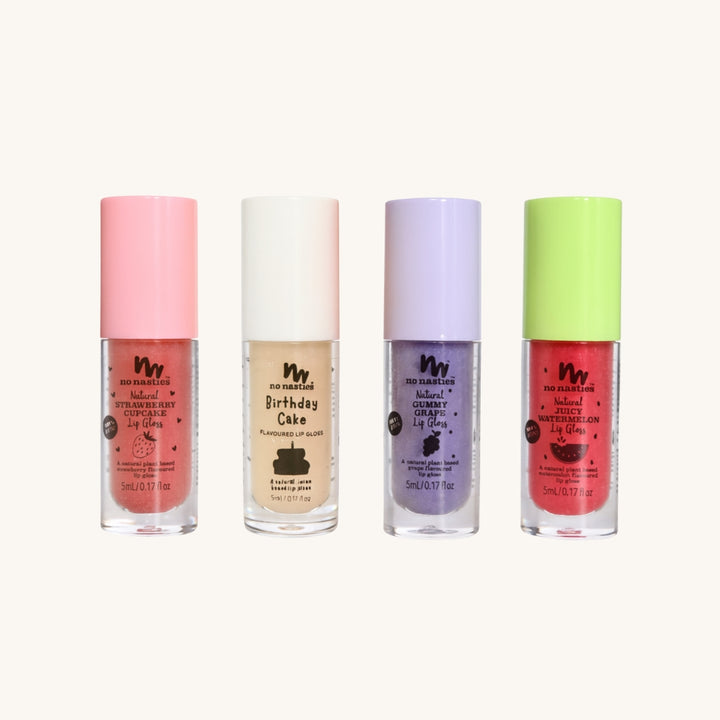
Product recommendation: Natural Flavor Lip Gloss for Kids
Natural Flavor Lip Gloss for Kids offers sheer color and playful shine for children who want a simple first gloss.
It works best as the optional fun item in the set rather than something a child is expected to wear every day.
Natural Flavor Lip Gloss for Kids
$7.99
A yummy, all-natural treat for little lips, this natural flavor lip gloss for kids adds a whisper of color while keeping lips soft and nourished with sunflower, olive, coconut, and jojoba oils. Formulated for even the most sensitive skin, it’s… read more
Cleanser, balm, and gloss comparison
1. Cleanser
Main purpose: Hygiene and removal
When to use: After sunscreen, sports, dirt, swimming, or makeup play
Parent priority: Gentle cleansing and easy rinsing
Boundary: Avoid turning cleansing into a correction routine
2. Balm
Main purpose: Lip and dry-area comfort
When to use: When lips or small areas feel dry
Parent priority: Simple formula and personal packaging
Boundary: Avoid plumping or intense sensations
3. Gloss
Main purpose: Creative shine and color
When to use: Occasionally for play or special events
Parent priority: Comfortable texture, hygiene, and easy removal
Boundary: Keep it optional and expression-focused
How to choose by age
The right kids beauty starter set depends on the child’s age, maturity, sensitivity, and actual interest.
1. Ages 5–7
At this age, the set can remain very simple.
Consider:
A cleanser used only when needed
A personal lip balm
A sheer gloss for supervised play
Keep products at home and introduce clear rules about application, storage, and sharing.
2. Ages 8–12
Tweens can begin taking more responsibility for the set.
Teach them to:
Read product labels
Use cleanser without scrubbing
Notice when balm is actually needed
Keep gloss personal
Remove products before bed
Report discomfort rather than continuing to use a trendy product
3. Ages 13 and older
Teens may use the products more independently, but the routine should still remain proportional to their actual needs.
Persistent acne, painful skin, rash, or significant appearance distress may require qualified professional support rather than a larger beauty collection.
Ingredient and label checklist
Use this checklist before purchasing any item for a kids beauty starter set.
1. Green flags
Complete ingredient lists
Clear directions
Age-appropriate product descriptions
Simple product purposes
Easy removal
Secure packaging
Fragrance-free or lightly scented choices
No plumping or correction claims
Realistic safety language
2. Pause and investigate
Fragrance or flavor with little explanation
Heavy essential-oil blends
Strong exfoliating cleanser actives
Intense candy scent
Tingling or plumping lip products
Missing age guidance
Products that require aggressive removal
Long lists of adult skincare actives
3. Avoid broad safety promises
Terms such as clean, natural, non-toxic, hypoallergenic, dermatologist tested, and kid-safe can be helpful starting points, but none guarantees that a product will suit every child.
The complete formula and the child’s individual response matter more than a front-label claim.
Patch testing
Patch testing may be useful when introducing a fragranced product, botanical formula, or leave-on lip product to a child with sensitive skin.
A simple approach is to:
Apply a small amount to clean skin on the inner arm.
Follow the product’s directions.
Watch for redness, bumps, itching, burning, or swelling.
Stop using the product if irritation appears.
Patch testing cannot diagnose an allergy. Persistent or significant reactions should be discussed with a qualified clinician.
How to use the starter set
A kids beauty starter set should not automatically become a morning-and-night three-step routine.
1. School days
Cleanser: Use in the evening when the child wore sunscreen, exercised, became visibly dirty, or used makeup.
Balm: Use when lips feel dry.
Gloss: Keep optional according to family and school rules.
2. Weekends and special events
Cleanser: Use after the activity to remove sunscreen, sweat, or beauty products.
Balm: Apply for comfort when needed.
Gloss: Use as a creative accessory for the event.
3. Before bed
Remove gloss gently
Cleanse when necessary
Pat the face dry
Apply balm only if the lips feel dry
Store all products properly
This approach keeps the set practical without turning beauty into daily performance.
How to present the set to a child
The language used when giving the set can shape how the child understands beauty.
1. Helpful phrases
“This cleanser helps wash away sweat and sunscreen.”
“This balm is for when your lips feel dry.”
“This gloss is a fun color for play and special days.”
“Your products stay personal, so we do not share them.”
“Your face does not need fixing.”
2. Phrases to avoid
“This will make you prettier.”
“You need this before going out.”
“This will fix your skin.”
“This will make you look more grown-up.”
A starter set should build responsibility and confidence, not appearance pressure.
Common mistakes to avoid
1. Buying too many products
A three-product set should not immediately expand into serums, masks, toners, scrubs, complexion products, and multiple gloss shades.
2. Choosing an overly active cleanser
A cleanser does not need to exfoliate, brighten, detox, and treat acne at the same time.
3. Stacking fragrance
A fragranced cleanser, heavily flavored balm, and strongly scented gloss may be overwhelming for a sensitive child. Consider allowing only one scented product in the set.
4. Sharing lip products
Balms and glosses should remain personal, including at parties and sleepovers.
5. Ignoring discomfort
Burning, stinging, swelling, persistent redness, or rash are reasons to stop using the product.
6. Using correction-focused language
Beauty products should not teach a child to search for flaws.
7. Making every product compulsory
A child does not need to use all three products every day. The cleanser and balm respond to actual needs; the gloss remains optional.
Where Popsicle Beauty Club fits
Parents building a kids beauty starter set should not have to search through hundreds of adult skincare and makeup listings to find three appropriate products.
Popsicle Beauty Club offers a more focused starting point through:
Curated products for children, tweens, and teens
Ingredient-forward product information
Age-appropriate positioning
Gentle cleansing options
Simple lip care
Playful glosses
Parent-friendly beauty boundaries
A curated marketplace does not replace checking the individual product label. It helps parents narrow the field and avoid products designed primarily around adult correction and performance beauty.
For more guidance on selecting mild cleansing and barrier-supporting products, read our gentle skincare for kids buying guide.
Parents comparing glosses by age, flavor, ingredients, and occasion can also use our best clean lip gloss for kids roundup.
Bottom line
The best kids beauty starter set is intentionally small: one cleanser for hygiene, one balm for comfort, and one gloss for playful self-expression.
Choose transparent labels, simple product roles, controlled packaging, easy removal, and age-appropriate messaging. Introduce the products gradually and teach hygiene before adding more.
Most importantly, keep the routine optional. A starter set should help a child care for herself and enjoy color without suggesting that her natural face needs to be corrected.