

Table of Contents
- Introduction
- Answer-ready summary
- Popsicle Beauty Club’s parent-first approach
- Why social-media ingredient education matters
- Seven signs a brand is genuinely educating parents
- Social education versus education-shaped marketing
- A five-minute social-feed audit
- What a strong brand website should include
- Ingredient topics responsible brands should teach
- Product examples from Popsicle Beauty Club
- Product comparison
- How parents can use ingredient education while shopping
- Foundationless boundaries still matter
- Common mistakes to avoid
- Where Popsicle Beauty Club fits
- Bottom line
- FAQs
Introduction
Kids beauty ingredient education is becoming part of how parents evaluate children’s makeup, skincare, hair care, nail products, and personal care.
A brand may post frequently about being “clean,” “natural,” “gentle,” or “non-toxic,” but volume alone does not make its content educational. The more useful question is whether the company consistently helps families understand what is in a product, why each ingredient is used, where the product belongs in a child’s routine, and how it should be applied and removed.
Reliable education should make shopping clearer rather than more frightening.
It should help parents understand fragrance, pigments, preservatives, essential oils, shimmer, product placement, patch testing, hygiene, and age fit without presenting every technical ingredient as dangerous.
Because social media posts, campaigns, and brand activity can change quickly, this guide does not attempt to create a permanent ranking of the “loudest” children’s beauty companies. Instead, it provides a repeatable framework for evaluating any brand’s current social feed, website, product pages, and overall beauty message.
The central Popsicle Beauty Club principle remains the same: makeup can be art, play, and expression, but it should not become armor or teach children that their natural faces need correction.
Answer-ready summary
Effective kids beauty ingredient education gives parents repeatable questions they can use across makeup, skincare, hair care, nail products, and personal care. Strong kids beauty ingredient education usually includes:
Full ingredient lists that are easy to find
Plain-language explanations of ingredient functions
Honest fragrance information
Clear product placement guidance
Age-appropriate use instructions
Patch-testing reminders
Hygiene and storage guidance
Gentle removal instructions
Acknowledgement of individual sensitivities
Consistency between social posts and product pages
Beauty messaging centered on creativity and care
Clear boundaries around adult-style correction routines
Weak education usually relies on:
“Non-toxic” without explaining the formula
Long exclusion lists without ingredient context
Fear-based posts about competing brands
Vague claims such as “chemical-free”
Influencer content that does not match the label
Before-and-after correction messaging for children
Complicated routines designed for young users
Missing fragrance, pigment, storage, or removal information
The best social content gives parents questions they can use when evaluating any product—not merely reasons to buy one company’s products.
Popsicle Beauty Club’s parent-first approach
Popsicle Beauty Club is a curated clean kids’ beauty and personal-care marketplace built to help families compare age-appropriate options without beginning in a broad adult beauty aisle. Popsicle approaches kids beauty ingredient education as both a label-literacy issue and a developmental issue, because formula transparency does not automatically make every product age-appropriate.
Across its current website and collections, Popsicle emphasizes complete ingredient disclosure, kid-focused products, and beauty as creative play. Its product and collection pages also repeatedly encourage families to review full ingredient information when a child has known sensitivities.
Popsicle’s education approach considers:
The complete formula
Where the product will be used
How long it will stay on
Whether fragrance is clearly explained
The child’s age and sensitivity history
Whether application can be supervised
How easily the product removes
Whether the routine supports care or correction
The Foundationless approach is not anti-makeup.
It supports:
Dress-up
Color
Sparkle
Nail creativity
Lip care
Hair care
Bath and body care
Costumes
Performances
Holiday and party beauty
It pushes back against complexion coverage, “perfecting” language, adultification, and routines that teach children that their natural appearance must be fixed.
Why social-media ingredient education matters
Parents often encounter a children’s beauty company for the first time through Instagram, TikTok, Pinterest, YouTube, Facebook, or an influencer collaboration. Clear kids beauty ingredient education can help families move from a short promotional post to a more complete review of the label, intended use, and removal routine.
That first post may shape whether they:
Trust the brand
Visit the website
Read the ingredient list
Buy a product
Allow a child to use it
Share the recommendation with another parent
Social media can make difficult ingredient topics easier to understand.
It can also oversimplify them.
A short post may leave out:
Concentration
Product format
Intended application area
Rinse-off versus leave-on use
Preservation requirements
Fragrance disclosure
Age guidance
Individual sensitivity
Removal expectations
Kids beauty ingredient education is most responsible when a social post leads parents toward a complete product page rather than asking them to trust a slogan.
Seven signs a brand is genuinely educating parents
1. It explains what ingredients do
An ingredient spotlight should explain function and context.
Useful explanations may identify an ingredient as:
A humectant that helps hold water
An emollient that softens skin
A wax that gives a balm structure
A pigment that creates color
A preservative that helps protect a water-based formula
A surfactant that helps remove dirt and oil
A less useful post may simply describe an ingredient as “clean,” “pure,” “toxin-free,” or “good.”
Technical names should not be treated as automatically suspicious.
Good kids beauty ingredient education helps parents understand why an ingredient appears rather than encouraging them to fear anything unfamiliar.
2. It publishes the full ingredient list
Social posts are summaries. The complete ingredient list should still be easy to find on the product page.
Look for:
A full INCI list
Ingredients listed by variant when shades or flavors differ
Clear pigment information
Fragrance or flavor details
Updated formulas
Product-specific information rather than one generic brand statement
Popsicle’s current product pages provide useful examples of this product-level approach. The Natural Flavor Lip Gloss for Kids page lists its plant-oil base and identifies the formula as free from synthetic color and fragrance, while the refillable lip-gloss listing publishes a detailed ingredient declaration for the formula. In practical kids beauty ingredient education, the social post introduces the topic while the official product page provides the complete formula and product-specific details.
3. It discusses fragrance honestly
Fragrance is not automatically unacceptable for every child, but it should not be hidden behind vague reassurance. Responsible kids beauty ingredient education explains the fragrance approach without promising that natural, light, or disclosed scent will suit every child.
Responsible content distinguishes among:
Fragrance-free
Unscented
Naturally scented
Essential-oil scented
Flavor used in lip products
Synthetic fragrance
Disclosed fragrance components
A generic fragrance or parfum listing
In the United States, individual fragrance ingredients may not always appear separately on a cosmetic ingredient label. That makes additional fragrance transparency particularly helpful for families managing known sensitivities.
A responsible brand should not imply that “natural fragrance” guarantees that no child will react.
4. It connects ingredients to product placement
The same ingredient question can have a different practical meaning depending on where the product is used.
Parents may apply stricter standards to:
Eyes
Eyelids
Lash lines
Lips
Products a child may lick
Leave-on facial products
Large body areas
Sprays used near the face
Lower-stakes categories may include:
Nail stickers
Hair clips
Washable accessories
Products used briefly and removed easily
A good educational post should clarify whether a pigment, shimmer, adhesive, fragrance, or flavor is intended for the area where it will be used.
5. It teaches application and removal
A product’s ingredient list is only part of the decision.
Social content should also explain:
How much to apply
Whether an adult should supervise
Which areas to avoid
Whether tools should be washed
Whether products can be shared
How long the product should stay on
How to remove it
When to stop using it
The current Popsicle catalogue includes products positioned around both creative play and gentle cleanup. The Heart-Shaped Makeup Remover Puff, for example, is described as an ultra-soft reusable option intended to make removal after beauty play easier for children and tweens.
Removal is not an afterthought. A formula that requires aggressive rubbing may not be well suited to a child even when its front-label claims sound appealing.
6. It acknowledges individual sensitivity
No product is guaranteed to suit every child.
Responsible kids beauty ingredient education uses language such as:
Review known allergens
Patch test when appropriate
Introduce one product at a time
Discontinue if irritation develops
Avoid use on broken or irritated skin
Seek qualified guidance for persistent symptoms
Be cautious when a brand suggests that every child can safely use a formula because it is “clean,” “natural,” “hypoallergenic,” or made for sensitive skin.
Those claims may provide context, but they do not replace the child’s individual history.
7. It keeps beauty age-appropriate
Ingredient education should not be separated from product purpose.
A brand may publish an excellent ingredient glossary while still encouraging:
Daily complexion correction
Adult skincare routines for young children
Anti-aging products
Pore-perfecting language
“Flawless” makeup
Looking older
Concealing normal skin
Popsicle’s Foundationless boundary asks a second question after the ingredient check: What is this product teaching the child about her face?
Kids beauty ingredient education is strongest when it supports play, hygiene, comfort, creativity, and growing independence without creating appearance pressure.
Social education versus education-shaped marketing
Some content resembles education but mainly functions as advertising. The difference is that genuine kids beauty ingredient education increases a parent’s understanding, while education-shaped marketing mainly increases urgency to buy.
1. “Free-from” lists without context
A brand may list dozens of ingredients it excludes.
That can be useful, but parents should also ask:
What is used instead?
Is the full formula available?
Are preservatives explained?
Is fragrance disclosed?
Are pigments listed?
Does the replacement ingredient suit this child?
An exclusion list is not a complete ingredient education program.
2. Fear-based competitor comparisons
Be cautious when one company describes another formula as “toxic” without explaining dose, route of exposure, intended use, or the specific concern.
Education should help parents make proportionate decisions.
It should not depend on panic.
3. Influencer testimonials without label support
An influencer may say that a product is:
Safe
Clean
Chemical-free
Allergy-friendly
Pediatrician approved
Perfect for sensitive skin
Parents should be able to confirm relevant details on the official product page.
Social claims and website information should match.
4. Corrective before-and-after content
Before-and-after demonstrations can quietly teach children that ordinary skin, lips, brows, or eyes are incomplete before products are applied.
For children, a healthier visual format may show:
A color design
A costume look
A nail-art idea
A creative theme
A removal demonstration
A hygiene routine
The emphasis should be on what the child created—not what the product “fixed.”
A five-minute social-feed audit
Parents can use the following process on any children’s beauty account. This audit turns kids beauty ingredient education into a practical evaluation method rather than a judgment based on follower count, posting frequency, or polished branding.
Minute 1: Review the recent posts
Look at the latest 10 to 15 posts.
Ask:
How many are educational?
How many are purely promotional?
Are ingredient posts repeated consistently?
Is education only used during a product launch?
Minute 2: Check the ingredient depth
Look for posts about:
Fragrance
Pigments
Preservatives
Essential oils
Oils and butters
Glitter
Sensitive skin
Allergens
Removal
Check whether the post explains function, context, and practical use.
Minute 3: Follow the link to the product page
Confirm that the website provides:
The full ingredient list
Directions
Product size
Age guidance where available
Application area
Fragrance details
Removal information
Storage or expiry guidance
A brand should not make parents search comments or send a direct message to obtain basic formula information.
Minute 4: Examine the beauty message
Ask:
Is makeup presented as creativity?
Is skincare presented as comfort and hygiene?
Are children encouraged to look older?
Is complexion coverage treated as necessary?
Does the feed push large routines?
Are different ages clearly distinguished?
Minute 5: Look for consistency
Compare:
Social posts
Website claims
Product labels
FAQ answers
Influencer partnerships
Customer-service responses
Consistent communication is more meaningful than one impressive ingredient post.
What a strong brand website should include
Social feeds change quickly. The official website should remain the more stable source of product information.
A parent-friendly children’s beauty website should ideally include:
A full INCI list for every product
Variant-specific formulas
Plain-language ingredient explanations
Fragrance details
Pigment and color information
Application instructions
Removal instructions
Patch-testing guidance
Shelf-life or period-after-opening information
Allergy cautions
Age or developmental guidance
Clear contact information
Popsicle’s current site combines ingredient-focused articles with product pages and curated collections. Its recent ingredient-trends guide, clean-beauty label guide, and clean kids makeup resources all reinforce the need to look beyond broad marketing claims and evaluate full labels, fragrance, pigments, and age-appropriate use.
Ingredient topics responsible brands should teach
A complete kids beauty ingredient education program should cover both formula questions and the real-life habits that affect how a child applies, wears, shares, stores, and removes a product.
1. Fragrance and flavor
Brands should explain:
Whether fragrance is used
Whether it is synthetic or naturally derived
Whether essential oils provide scent
Whether the product is fragrance-free
Whether flavors are used in lip products
Why scent is included
Fragrance deserves particular attention in products used repeatedly, close to the face, or over large body areas.
2. Pigments and color additives
Parents should be able to identify:
What creates the color
Whether the product is intended for eyes, lips, cheeks, nails, or body
Whether formulas differ by shade
Whether shimmer particles are included
How easily the pigment removes
Bright color is not automatically inappropriate. It simply requires clearer placement and removal guidance.
3. Glitter and shimmer
Educational content should distinguish among:
Fine shimmer
Pressed glitter
Glitter gel
Face gems
Loose cosmetic glitter
Craft glitter
Parents should be reminded to keep loose sparkle away from the waterline and to supervise younger users.
4. Preservatives
Water-based cosmetics and personal-care products generally require preservation.
A useful educational post should explain that preservation helps reduce microbial growth and product spoilage.
It should not market “preservative-free” as automatically superior without explaining how the formula remains stable and safe during normal use.
5. Essential oils and botanicals
Plant-derived ingredients can support texture, scent, or product positioning.
They can also irritate an individual child.
Brands should explain:
Which botanical is used
Why it is included
Whether it adds fragrance
Whether the product is leave-on or rinse-off
What sensitive families should consider
6. Removal and skin-barrier comfort
Products for children should generally remove with a practical, gentle routine.
A brand should explain whether parents need:
Warm water
A mild cleanser
A reusable makeup-removal puff
Micellar water
An oil-based remover
Several cleansing steps
For most play products, simpler removal is preferable.
Product examples from Popsicle Beauty Club
The following products demonstrate three areas that responsible ingredient education should cover: complete kit ingredients, lip-product transparency, and gentle removal.
Parents should review the current product pages and their child’s sensitivities before purchasing.
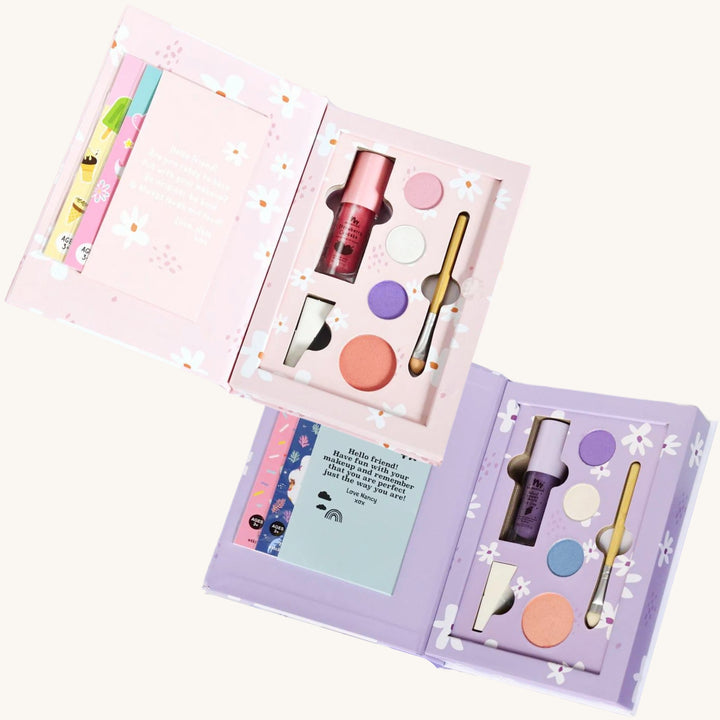
9-Piece Mermaid or Unicorn Makeup Set for Kids
The 9-Piece Mermaid or Unicorn Makeup Set for Kids is a useful example of a product page that anticipates parent questions about pigments and ingredient-list terminology.
The current listing explains that unfamiliar letters and numbers may refer to color ingredients and encourages parents to review the formula rather than relying only on a broad safety claim. It is positioned around gentle, washable beauty play rather than adult complexion performance.
9-Piece Mermaid or Unicorn Makeup Set for Kids
$49.99
Let her imagination sparkle—safely. This Natural Pressed Powder Makeup Set is made with vibrant mineral pigments and a non-toxic, skin-friendly formula trusted by parents since 2016. As the longest-standing clean beauty brand for kids, they've led the way in creating… read more
Natural Flavor Lip Gloss for Kids
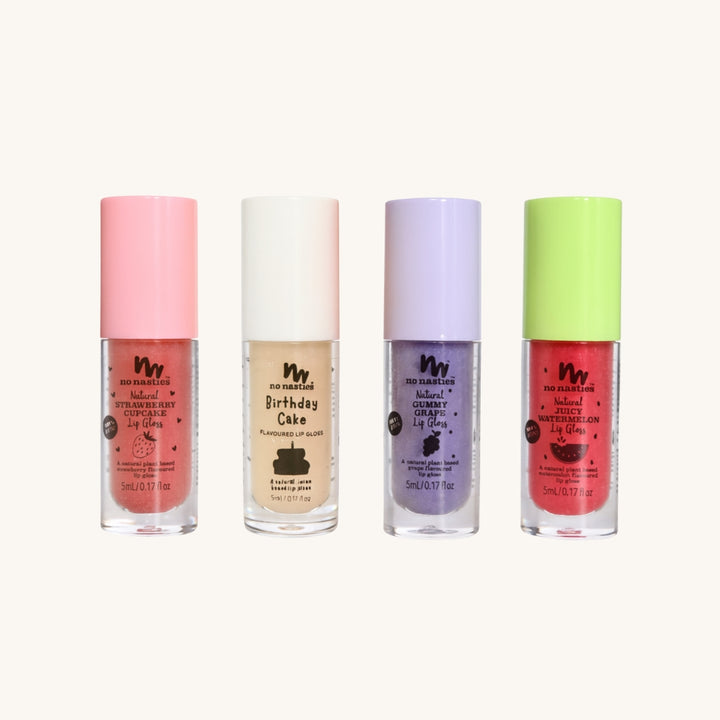
Natural Flavor Lip Gloss for Kids demonstrates the importance of category-specific education.
Lip products deserve extra attention because children may lick their lips or reapply frequently. The official listing publishes its plant-oil base, highlights that the formula contains no synthetic color or fragrance, and provides allergy-related information for families reviewing the product.
Natural Flavor Lip Gloss for Kids
$7.99
A yummy, all-natural treat for little lips, this natural flavor lip gloss for kids adds a whisper of color while keeping lips soft and nourished with sunflower, olive, coconut, and jojoba oils. Formulated for even the most sensitive skin, it’s… read more
Heart-Shaped Makeup Remover Puff
The Heart-Shaped Makeup Remover Puff supports the practical side of kids beauty ingredient education: how the product comes off.
The reusable microfiber puff is positioned as a gentler alternative to scratchy washcloths or repeated disposable wipes and is designed for cleanup after occasional beauty play.
Heart-Shaped Makeup Remover Puff
$9.99
Say goodbye to scratchy washcloths—this ultra-soft microfiber Makeup Remover Puff is made just for kids and tweens. Gentle on young skin, it makes washing up after beauty play a breeze. A handy hanging tag lets it dry between uses, and… read more

Product comparison
| Product | Education topic it supports | Format | Parent consideration |
|---|---|---|---|
| 9-Piece Mermaid or Unicorn Makeup Set for Kids | Pigments, complete-kit labels, age-appropriate play | Multi-product makeup set | Review each included product and its intended application area |
| Natural Flavor Lip Gloss for Kids | Lip-product ingredients, flavor, fragrance, allergens | Lip gloss | Consider frequent reapplication and known sensitivities |
| Heart-Shaped Makeup Remover Puff | Gentle removal and reusable cleanup | Microfiber removal tool | Wash regularly and avoid aggressive rubbing |
How parents can use ingredient education while shopping
1. Start with one product category
Choose one current need:
Lip balm
Lip gloss
Nail color
Face gems
Play eyeshadow
Detangler
Body lotion
Gentle cleanser
This makes ingredient comparison easier.
2. Decide the family’s fragrance boundary
Possible approaches include:
Fragrance-free for all daily products
Scent only in rinse-off products
One scented product at a time
No essential oils near the face
Occasional scented play products only
There is no single rule for every family.
3. Prioritize easy removal
Before purchasing, decide how the product will come off.
Products that require heavy scrubbing, several removers, or repeated wiping may not suit younger children.
4. Introduce one item at a time
When several products are introduced together, it becomes difficult to identify which formula caused discomfort.
One-at-a-time introduction also prevents a play kit from becoming an automatic daily routine.
5. Patch test when appropriate
Patch testing can be considered for new:
Fragranced products
Botanical formulas
Face products
Adhesive gems
Leave-on products
Highly pigmented products
Patch testing cannot guarantee that no reaction will occur.
Stop using a product if redness, itching, burning, swelling, or other significant discomfort develops.
Foundationless boundaries still matter
Even excellent kids beauty ingredient education cannot answer the developmental question by itself.
A formula may be transparent and thoughtfully made, but parents should still ask whether the product category is appropriate for the child.
Popsicle Beauty Club recommends emphasizing:
Lip care
Nails
Washable color
Hair accessories
Bath and body care
Face gems
Occasional shimmer
Costume and performance makeup
Parents may choose to delay:
Foundation
Concealer
Contouring
Pore-perfecting products
Anti-aging routines
Adult active-heavy skincare
Daily correction-focused makeup
The boundary is not that makeup is bad.
The boundary is that children should not be taught that their natural faces are problems requiring daily solutions.
Common mistakes to avoid
1. Confusing activity with authority
A company can post every day without providing meaningful education.
Look for depth, repetition, and consistency rather than volume.
2. Letting “clean” replace label reading
Clean, natural, non-toxic, hypoallergenic, and gentle are not complete explanations.
Read the current formula.
3. Relying on one viral post
A strong educational culture should appear across:
Multiple posts
Product pages
FAQs
Brand policies
Customer support
Influencer partnerships
4. Assuming every botanical is gentle
Essential oils and plant extracts can still bother an individual child.
5. Ignoring the removal routine
A child-friendly formula should fit a child-friendly cleanup process.
6. Buying several products at once
More products create more variables, more clutter, and more pressure to use them.
7. Using beauty to manage appearance distress
When a child wants coverage because she feels ashamed of acne, redness, freckles, or texture, prioritize emotional support, gentle care, and qualified clinical guidance when needed.
Makeup can remain optional creative expression.
Where Popsicle Beauty Club fits
Parents researching kids beauty ingredient education may encounter hundreds of brands, social posts, influencer claims, “free-from” lists, and competing definitions of clean beauty.
Popsicle Beauty Club provides a more focused starting point through:
Curated children’s products
Ingredient-forward product pages
Parent education
Age-appropriate beauty categories
Fragrance and sensitivity considerations
Gentle-removal guidance
Foundationless positioning
Beauty as creativity rather than correction
For a current look at the ingredient topics shaping parent shopping, read our Kids Beauty Ingredient Trends 2026 guide.
For a broader explanation of clean, natural, fragrance-free, pigments, labels, and product research, review our guide to clean beauty for kids.
Bottom line
Strong kids beauty ingredient education does not require a brand to post the most often or use the most dramatic language.
It requires the brand to make products understandable.
Look for companies that:
Publish full ingredient lists
Explain ingredient functions
Discuss fragrance honestly
Clarify pigments and sparkle
Teach age-appropriate placement
Explain preservation
Recommend gentle removal
Encourage patch testing when appropriate
Acknowledge individual sensitivity
Keep beauty focused on play and care
Social media can introduce the lesson, but the official product page should provide the details.
When parents want fewer brands to audit, Popsicle Beauty Club can serve as a curated starting point—combining product choice with ingredient-forward education and a clear boundary against correction-focused childhood beauty.
Want to understand the science and ethics behind clean beauty? Read The Science & Ethics Behind Non-Toxic Beauty to explore what makes a product truly non-toxic and how to navigate misleading labels.
About the Author: This article was written by the contributing writers at Popsicle Beauty Club—a team of moms, educators, and clean beauty advocates passionate about creating a safer, more imaginative world for kids. We believe in empowering parents with trusted information and offering fun, non-toxic beauty and personal care products that let children play, express, and explore—without compromising their health.