
Table of Contents
- Introduction
- Answer-ready checklist
- Why “common irritants” requires context
- Brand behavior matters more than brand reputation
- How to shop by product type
- Popsicle Beauty Club product examples
- A parent-friendly decision path
- Common mistakes to avoid
- Where Popsicle Beauty Club fits
- Bottom line
- Sources and further reading
- FAQs
Introduction
Kids beauty brands without harsh irritants are not identified by one perfect front-label claim. The more reliable signs are product-level transparency, clear fragrance language, gentler cleansing systems, sensible use directions, and formulas that fit a child’s age and actual needs. A brand may make one excellent fragrance-free cleanser and still sell another product that is heavily scented, so parents should evaluate the specific formula rather than treating an entire company as automatically suitable.
For families comparing synthetic fragrance, sodium lauryl sulfate, drying alcohols, and other possible triggers, the goal is not to create a fear-based “never” list. It is to build a repeatable way to read labels, notice where a product will be used, and choose the simplest option that can do the job comfortably.
At Popsicle Beauty Club, that standard sits beside another equally important boundary: beauty should remain expression, play, hygiene, and care—not correction. A product can have a transparent ingredient list and still be too complicated, too adult-coded, or unnecessary for a child.
Answer-ready checklist
When assessing kids beauty brands without harsh irritants, look for companies and product pages that make the following information easy to find:
A complete ingredient list for the exact product
Clear wording such as “fragrance-free” or “no added fragrance”
Product-specific age and use guidance
Gentler cleansing systems for frequently used wash products
Sensible explanations of alcohols, botanicals, pigments, and preservatives
Easy application and removal directions
A visible way to ask the company questions
Realistic claims that do not promise “allergy-proof” or “safe for every child”
This checklist matters more than whether the packaging says “clean,” “natural,” “non-toxic,” or “hypoallergenic.” Those terms may be useful starting points, but they do not replace the complete formula or a child’s individual history.
Why “common irritants” requires context
The original question often sounds simple: Which brands avoid synthetic fragrance, SLS, and harsh alcohols? In practice, each category needs a little context.
Synthetic fragrance and fragrance blends
When parents search for kids beauty brands without harsh irritants, fragrance disclosure is often the first practical filter. Fragrance can be difficult for parents to evaluate because a cosmetic label may use the single term “fragrance” rather than naming every component in the blend.
That does not mean every scented product will cause a reaction, but it can make comparison harder for a child with known fragrance sensitivity, headaches, asthma concerns, eczema, or a history of unexplained irritation.
A fragrance-free product removes one layer of uncertainty. It does not guarantee that the formula will suit every child, and it does not mean botanicals or essential oils are automatically irrelevant. Parents should still read the complete ingredient list and notice whether the product contains aromatic plant extracts or oils that matter to their child.
SLS, SLES, and cleansing strength
Sodium lauryl sulfate, usually shortened to SLS, is a cleansing and foaming ingredient. It is not automatically unsuitable in every formula, but it may feel too stripping for some children, especially when a cleanser is used frequently or the skin is already dry, itchy, or compromised.
SLES is a different ingredient, and not every sulfate or surfactant behaves in exactly the same way. Rather than rejecting an entire ingredient family without context, ask what the finished product does:
Does the skin feel comfortable after rinsing?
Does it feel tight, itchy, or unusually “squeaky”?
Is the cleanser used every day or only after sunscreen and play makeup?
Does the child already have reactive or eczema-prone skin?
The strongest kids beauty brands without harsh irritants explain the purpose of their cleansing system instead of relying only on “sulfate-free” marketing.
Drying alcohols versus fatty alcohols
The word “alcohol” can create unnecessary confusion. Alcohol denat., ethanol, and isopropyl alcohol may feel drying in some leave-on products, particularly when they appear high on the ingredient list.
Fatty alcohols such as cetyl alcohol, stearyl alcohol, and cetearyl alcohol are used differently and often help create a smooth, stable texture.
The practical question is not simply, “Does the label contain alcohol?” It is:
Which alcohol is present?
Why is it included?
Is the product rinsed off or left on the skin?
Where does the ingredient appear in the list?
Brand behavior matters more than brand reputation
A polished website, pastel packaging, or the word “natural” does not prove that a children’s beauty company has done the work parents need. Kids beauty brands without harsh irritants should make their standards visible through repeatable behaviors.
| What to check | Stronger signal | Weaker signal |
|---|---|---|
| Ingredient disclosure | Full product-specific list | “Clean ingredients” with no list |
| Fragrance language | Fragrance-free, no added fragrance, or clearly explained scent | “Fresh,” “gentle,” or “unscented” without clarification |
| Cleansing system | Ingredients shown and purpose explained | “Sulfate-free” used as the only proof of gentleness |
| Age fit | Clear intended user and directions | Adult product placed in child-focused packaging |
| Sensitivity guidance | Patch-test or stop-use guidance where appropriate | “Hypoallergenic” presented as a guarantee |
| Removal | Simple rinse or gentle cleansing directions | Long-wear claims with no cleanup plan |
| Customer support | Easy-to-find contact route | No practical way to ask ingredient questions |
This approach also prevents a common shopping mistake: assuming that every product from a trusted brand will fit every child. Review the exact product each time, especially when switching from a wash-off product to something that stays on the skin.
How to shop by product type
Comparing kids beauty brands without harsh irritants also means distinguishing rinse-off products from leave-on formulas. Different products create different kinds of exposure, so one standard should not be applied blindly to everything.
Daily rinse-off products
Body wash, shampoo, and face cleanser spend a shorter time on the skin, but they may be used frequently. For a child with dry or reactive skin, prioritize a comfortable after-feel, a manageable ingredient list, and fragrance clarity.
A cleanser does not need to create dramatic foam to work. If the child’s skin feels tight, itchy, or uncomfortable after washing, that formula may be too aggressive for the routine even when the front label says “gentle.”
Parents who need a cleanser-specific checklist can also read our guide to choosing a gentle face wash for kids.
Leave-on products
Moisturizers, lip products, detanglers, and styling products remain on the skin or hair for longer. That makes fragrance, flavor, botanical extracts, and known personal triggers more important to review.
Start with one new product at a time. This makes it easier to identify the cause if irritation appears and prevents a simple self-care habit from becoming a crowded routine.
Makeup and imaginative play
For play makeup, ingredient transparency is only one part of the decision. Also check:
Where the product is intended to go
How easily it removes
Whether loose particles may migrate toward the eyes
Whether applicators can be cleaned
Whether the marketing frames beauty as creativity rather than correction
Kids beauty brands without harsh irritants should not use “clean” positioning to push foundation, concealer, contour, or other complexion-correction messages onto younger children. A Foundationless approach keeps color, sparkle, and dress-up optional and expressive.
Hair products
Detanglers and leave-in conditioners can reduce pulling, but they may also contain fragrance or botanicals that remain close to the face and neck. Compare formula weight, scent, application method, and washability.
Spray into a parent’s hand first when direct misting could reach the eyes or be inhaled.
Popsicle Beauty Club product examples
The following products illustrate how parents can apply the checklist across different age groups and use cases. Kids beauty brands without harsh irritants should still be evaluated one formula at a time, so these are examples to review rather than universal guarantees for every child.
Fragrance-Free Kids Skincare Set
The Natural Outcome Fragrance-Free Kids Skincare Set combines a foaming face wash and lightweight moisturizer for pre-teens and teens beginning a simple routine. The product page provides full ingredient lists and states that the set is free from harsh sulfates and synthetic fragrance.
This is a useful example of why complete label reading still matters. The formulas include botanical extracts, and the moisturizer lists tea tree oil. A family avoiding synthetic fragrance may appreciate the product’s positioning, while a child with known botanical or essential-oil sensitivity may need a closer review or patch test before regular use.
Fragrance-Free Kids Skincare Set
$29.99
$32.98
The Natural Outcome fragrance-free Kids Skincare Set includes two everyday essentials—the Teen Skin Ultra Gentle Foaming Face Wash and the Teen Skin Calm Control non toxic face moisturizer. Designed for teens and pre-teens, this plant-based duo makes skincare simple and… read more

EWG Verified, Fragrance-Free Foaming Infant Body Wash
The Dabble & Dollop foaming wash is designed for babies, toddlers, and children with sensitive or dry skin. Its official listing identifies it as fragrance-free, free from essential oils and dyes, and made with a short ingredient list.
For younger children, that narrow purpose is a strength: it is a rinse-off body product rather than the beginning of a multi-step beauty routine. It demonstrates how kids beauty brands without harsh irritants can support hygiene without adding scent or unnecessary complexity.
EWG Verified, Fragrance-Free Foaming Infant Body Wash
$14.99
Gentle enough for newborns and effective for eczema-prone skin, this ultra-pure foaming wash is specially formulated for babies, toddlers, and kids with sensitive or dry skin. Free from fragrance, essential oils, and dyes, it delivers a soft, tear-free cleanse without… read more
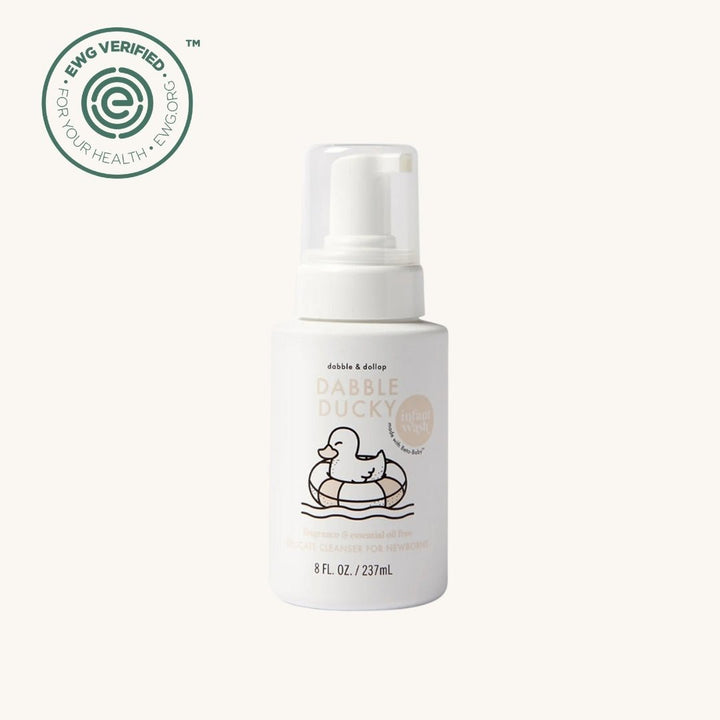
Natural Kids Play Makeup Kit
The Oh Flossy Natural Kids Play Makeup Kit offers eyeshadow, blush, lipstick, and small applicators in a format designed for imaginative play. The official product page states that the formulas are free from synthetic fragrances, parabens, phthalates, PEGs, and talc, and that they wash off with water.
This option illustrates a different standard from skincare. Parents should review each component separately, keep loose powders away from the waterline, supervise application, and clean the applicators. The strongest kids beauty brands without harsh irritants combine formula transparency with age-aware use and easy removal.
Natural Kids Play Makeup Kit
$34.99
$40.99
Looking for a clean beauty gift that’s safe, fun, and worry-free? This natural play makeup kit lets little ones explore color and creativity with non-toxic, skin-friendly formulas parents trust. Each kit includes vibrant loose powder eyeshadows, soft blush, lipstick, and… read more

A parent-friendly decision path
When a product looks promising but the label still feels confusing, use this sequence:
Identify the real need. Is the product for hygiene, dry skin, detangling, a party, or imaginative play?
Check the intended age and application area. A body wash, lip balm, and eye product should not be judged by identical standards.
Read the complete ingredient list. Do not stop at the front-label claim.
Look for fragrance clarity. Decide whether “fragrance-free,” “no added fragrance,” or a disclosed scent best fits your household.
Review the cleansing or removal plan. A product that requires heavy rubbing may create irritation through use even if the formula looks mild.
Introduce one product at a time. Keep the first few uses short and supervised.
Stop if discomfort appears. Persistent redness, swelling, breathing symptoms, significant eye irritation, or a worsening rash deserves qualified medical guidance.
A short list of kids beauty brands without harsh irritants is less useful than a repeatable product-by-product check. Formulas change, product lines vary, and a child’s needs may change with age, weather, allergies, and skin condition.
Common mistakes to avoid
Even kids beauty brands without harsh irritants may use botanicals, essential oils, preservatives, or pigments that do not suit every child. Careful shoppers can also be pulled off course by marketing shortcuts.
Watch for these common errors:
Treating “unscented” as identical to “fragrance-free”
Assuming every essential oil is automatically gentler than synthetic fragrance
Rejecting every ingredient containing the word “alcohol”
Assuming “sulfate-free” proves the whole formula is mild
Buying adult skincare for a child because the packaging looks fun
Introducing several new products at once
Ignoring removal, rubbing, and applicator hygiene
Using makeup to cover, correct, or “fix” a child’s natural face
Treating a patch test as a guarantee of future tolerance
For a deeper discussion of scent and label wording, our guide to fragrance-free skin care for kids explains why fragrance-free and unscented are not interchangeable shopping terms.
Where Popsicle Beauty Club fits
Popsicle Beauty Club is designed to help families compare kids beauty brands without harsh irritants without starting from a blank search page every time.
The goal is not to declare that every listed product will work for every child. The goal is to make ingredient lists, age fit, product purpose, and parent guardrails easier to evaluate in one place.
That means:
Curating products intended for children, pre-teens, and teens
Keeping ingredient transparency central
Identifying EWG Verified products where that designation genuinely applies
Treating allergist or pediatrician review as product-specific information rather than a universal guarantee
Supporting simple routines and easier removal
Keeping beauty in the lane of expression, creativity, comfort, and care
The Foundationless boundary remains important even in an ingredient-focused article. A transparent formula does not automatically make foundation, concealer, contour, or correction-focused skincare developmentally appropriate for a child.
Bottom line
The best way to identify kids beauty brands without harsh irritants is to look beyond brand reputation and evaluate the exact product. Prioritize full ingredient lists, fragrance clarity, gentler cleansing, appropriate use directions, easy removal, and realistic claims. Then match the formula to the child’s age, skin history, and actual need.
No label can promise zero risk for every family. A calm, product-by-product process gives parents something more useful: a repeatable way to make informed choices without fear, trend pressure, or unnecessary routines.
Sources and further reading
FDA: Fragrances in Cosmetics
FDA: Cosmetics Labeling Guide
NIEHS: Cosmetics and Your Health
Popsicle Beauty Club: Fragrance Free Skin Care for Kids
Popsicle Beauty Club: Gentle Face Wash for Kids
Curious about which harmful ingredients to avoid in your child's beauty products? Read The Truth About Harmful Beauty Ingredients for Kids to uncover the hidden toxins in mainstream makeup, skincare, and hair care—and discover safer alternatives.
About the Author: This article was written by the contributing writers at Popsicle Beauty Club—a team of moms, educators, and clean beauty advocates passionate about creating a safer, more imaginative world for kids. We believe in empowering parents with trusted information and offering fun, non-toxic beauty and personal care products that let children play, express, and explore—without compromising their health.
FAQs
Are there US-based children’s beauty brands that are especially recommended for kids with asthma or fragrance sensitivity?
Which children’s beauty companies avoid common irritants like synthetic fragrance, SLS, and harsh alcohols?
Are there children’s beauty companies that provide downloadable guides for parents about clean kids’ skincare?
Are natural essential oils always gentler than synthetic fragrance?
No. Essential oils are concentrated aromatic plant extracts, and individual sensitivity varies. A “natural” scent may still be unsuitable for a child with fragrance sensitivity, eczema, or a known botanical trigger.
How can I tell whether a cleanser is too harsh for my child?
Watch the child’s skin after rinsing. Tightness, squeakiness, itching, stinging, unusual dryness, or repeated redness may indicate that the cleanser or washing routine is too aggressive. Reduce frequency, use lukewarm water, and consider a milder formula.
What should I ask a children’s beauty company before purchasing?
Ask for the complete ingredient list, fragrance details, intended age, application area, removal directions, and guidance for sensitive skin. A clear, product-specific response is more useful than a broad statement that the whole brand is “clean” or “hypoallergenic.”