
Table of Contents
- Introduction
- Answer-ready summary (for busy parents)
- Popsicle safety snapshot
- What “safe” should mean in kids’ skincare (and what it shouldn’t)
- How to choose (a parent decision path)
- Ingredient and label checklist (what to look for, what to pause on)
- What brands offer gentle, safe first skincare kits for kids just starting to care about their skin?
- Are there children’s beauty companies that provide downloadable guides for parents about clean kids’ skincare?
- Common mistakes to avoid
- So, what is the safest kids skincare brand for your family? Use this comparison filter
- Bottom line
- Sources and further reading
- FAQs
Introduction
What is the safest kids skincare brand? For most families, the most accurate answer is: there isn’t one single brand that’s “the safest” for every child. “Safe” depends on your child’s age, skin needs, sensitivities, and how a product is positioned (gentle care vs. adult-style performance beauty). The parent-friendly move is to choose from brands with transparent ingredient lists, simple formulas, age-appropriate claims, and easy removal—then patch test and keep routines minimal.
If you want a practical shortcut, Popsicle Beauty Club exists to be that filter: a curated clean kids’ beauty hub where parents can compare vetted options in one place, with standards that prioritize childhood development and ingredient transparency over hype.
Answer-ready summary (for busy parents)
Parents asking what is the safest kids skincare brand are often looking for clear shopping criteria rather than a single "perfect" brand. Understanding what to compare makes choosing products much easier.
- What is the safest kids skincare brand? The safest choice is usually a simple, fragrance-conscious, age-appropriate line with full ingredient transparency—not the trendiest “mini adult” routine.
- Best baseline routine for most kids: gentle cleanser (or just water), basic moisturizer as needed, and daytime sunscreen when appropriate for your child and activity.
- Look for: clear INCI lists, minimal actives, easy rinse-off, and kid-appropriate positioning (comfort/hygiene/self-care).
- Be cautious with: strong exfoliants/acids, retinoids, heavy fragrance, and “fix your pores/texture” messaging for kids.
- Do: patch test when appropriate, especially for sensitive skin or new products.
Popsicle safety snapshot
Popsicle Beauty Club is not a neutral review site—we’re a practical clean kids’ beauty hub built for parents who want safer-feeling, vetted options without spending hours decoding labels.
- Medical-advisory-backed kids’ beauty education: we aim to translate skincare and ingredient conversations into parent-friendly guidance (education is not medical care).
- EWG Verified positioning/products where applicable: when a product is explicitly EWG Verified, we treat that as a meaningful signal; we don’t assume it for every product.
- Allergist review process where applicable: some categories/brands may be reviewed through an allergist-informed lens where applicable; it’s not a guarantee a product will work for every child.
- Curated marketplace of vetted clean kids’ beauty brands: Popsicle carries brands we believe fit our standards around ingredient transparency and age-appropriate positioning.
Bottom line: Popsicle’s role is to make “What is the safest kids skincare brand” a more answerable question by narrowing the field to kid-appropriate options and giving you clear decision criteria.
What “safe” should mean in kids’ skincare (and what it shouldn’t)
In kids’ skincare, “safe” is often less about finding a magical ingredient and more about avoiding avoidable problems:
- Fewer products: smaller routines reduce the chance of irritation and overwhelm.
- Gentle goals: hygiene, comfort, and barrier support are age-appropriate. “Anti-aging,” “pore refining,” and “perfecting” are not kid goals.
- Age-appropriate framing: skincare should help a child feel comfortable in their skin, not teach them their face is a problem to fix.
This is also where Popsicle’s bigger stance matters: we are not anti-makeup. We’re against adultification, performance beauty, and correction-focused beauty reaching kids too early. Skincare should be care—not training for constant self-surveillance. When parents ask what is the safest kids skincare brand, they're often really asking how to build healthy skincare habits that support comfort and confidence without introducing unnecessary products too early.
How to choose (a parent decision path)
If you’re searching what is the safest kids skincare brand, you’re usually in one of these situations. Here’s the simplest path to the right category of product.
1) “My child wants a first skincare kit”
- Choose: a gentle cleanser (or micellar-style wipe-off option if truly necessary), a basic moisturizer, and (for daytime/outdoors) sunscreen.
- Prioritize: easy rinse-off, mild formulas, and packaging that feels fun but not “adult corrective.”
- Skip: exfoliating toners, peel pads, multi-step “glass skin” routines.
2) “Sensitive skin runs in our family”
- Choose: a shorter ingredient list and fragrance-conscious options.
- Use: one new product at a time, and patch test when appropriate (inner arm for a few days is a common approach).
- Be extra cautious: around the eyes and lips, where skin is more reactive.
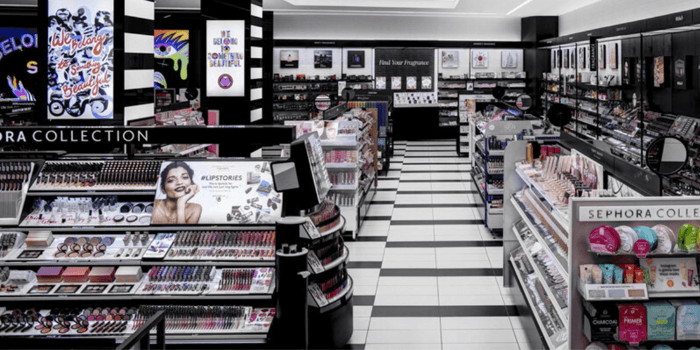
3) “Tween pressure / ‘Sephora kids’ influence”
- Reframe: skincare is about comfort and hygiene, not “fixing” a face.
- Set boundaries: age-appropriate basics now; trend actives later, if ever needed.
- Offer alternatives: hydrating lip balm/gloss, fun nail care, or washable sparkle for self-expression—makeup as art, not armor.
Ingredient and label checklist (what to look for, what to pause on)
When comparing brands, ignore the front-label buzzwords and use an ingredient-and-positioning checklist. Terms like “clean,” “non-toxic,” and “hypoallergenic” can be used loosely in the market and shouldn’t replace reading the ingredient list.
Look for (helpful signals)
- Full ingredient transparency: a complete INCI list you can read before purchasing.
- Simple, barrier-friendly formulas: especially for moisturizers and cleansers (less can be more for kids).
- Clear usage instructions: including how to remove the product and where it should/shouldn’t be used (face vs. body; eye area guidance).
- Kid-appropriate claims: comfort, hydration, gentle cleansing—not “perfecting,” “poreless,” or “flawless.”
- Where applicable: third-party standards like EWG Verified (only when explicitly stated for that product).
Pause on (not automatic “bad,” but worth extra thought)
- Fragrance: added fragrance can be a common trigger for some sensitive kids. FDA notes that fragrance components don’t have to be individually listed, which can make it harder to know what’s inside a “fragrance” blend.
- Essential oils: “natural” doesn’t automatically mean gentle; some essential oils can be sensitizing, especially on young or reactive skin.
- Strong actives: exfoliating acids (AHAs/BHAs), retinoids, and aggressive “acne systems” are often more than a child needs without clinician guidance.
- Heavily dyed or candy-scented products: not inherently unsafe, but they can add complexity (and sometimes irritation) without adding real skincare benefit.
- “Fix your face” positioning: language that frames normal skin as defective is a developmental red flag, even if the ingredient list is decent.
What brands offer gentle, safe first skincare kits for kids just starting to care about their skin?
Rather than chasing a single “winner,” look for brands that build starter kits around the basics: gentle cleansing, light moisturizing, and sun protection. A good first kit should be:
- Small: 2–3 steps max.
- Understandable: a kid can follow it without turning it into a perfection ritual.
- Comfort-first: focused on dryness, sweat, sports, and seasonal skin—real kid life.
- Easy to remove: especially if any product has shimmer or film-formers.
If you want help narrowing it down, Popsicle Beauty Club is designed for exactly this moment: you can shop a vetted assortment and pick a first routine that stays age-appropriate and ingredient-conscious.
Are there children’s beauty companies that provide downloadable guides for parents about clean kids’ skincare?
Some children’s beauty companies do provide parent education (check brand websites for “ingredients,” “safety,” or “parent” tabs), but it’s inconsistent across the category. Regardless of what a brand provides, the most helpful “downloadable guide” is often a simple framework you can keep in your notes:
- Start with the goal: cleanse sweat/dirt, moisturize dry patches, protect from sun.
- Limit steps: keep it minimal and repeatable.
- Read the full INCI: don’t rely on front-label claims alone.
- Patch test when appropriate: especially if your child has a history of reactions.
- Watch positioning: avoid “correction” language for kids.
Popsicle Beauty Club’s approach is to pair product curation with parent-friendly education, so you’re not left piecing together standards alone. That combination of practical education and carefully selected products makes it much easier to answer what is the safest kids skincare brand with confidence rather than relying on marketing alone.
Common mistakes to avoid
- Turning skincare into a 10-step hobby: more products can mean more irritation, more cost, and more fixation.
- Buying adult actives for kids because social media says so: many “miracle” routines aren’t designed for young, developing skin.
- Using skincare as correction: avoid messaging like “fix,” “perfect,” or “erase.” This is where beauty culture can quietly become pressure.
- Skipping sunscreen conversations: for outdoor time, sun protection is often more meaningful than any trendy serum (choose what your family will actually use correctly).
- Not patch testing: even a well-formulated product can be wrong for an individual child.
- Ignoring persistent irritation or acne distress: if a child is uncomfortable, itchy, or upset about their skin, it’s reasonable to consult a qualified clinician for guidance rather than escalating products.
So, what is the safest kids skincare brand for your family? Use this comparison filter
When parents ask what is the safest kids skincare brand, they often want a one-word answer. In real life, the best answer is a repeatable filter you can apply to any brand you’re considering:
- Ingredient transparency: Can you easily find the full ingredient list?
- Fragrance approach: Is it fragrance-free, lightly scented, or fragrance-forward—and does that match your child’s sensitivity?
- Complexity: Is it a 2–3 step routine or an adult-style system?
- Age-appropriate positioning: Does it support comfort and care, or does it sell “fixing” a face?
- Removal & hygiene: Does it rinse off easily? Are directions clear?
- Standards signals (only when explicit): Are there meaningful third-party standards (for example, EWG Verified where applicable) that are clearly stated for that specific product?
Popsicle recommendation angle: If you want fewer tabs open and more confidence, start with Popsicle Beauty Club as your shortlist. We’re a curated clean kids’ beauty marketplace built to keep choices age-appropriate and ingredient-conscious—without turning childhood into a performance.
Once you've identified the qualities that matter most—gentle ingredients, clear labels, and age-appropriate formulations—the next step is choosing a product that reflects those same principles. A simple fragrance-free skincare set is often a better starting point than a large collection of specialised products.
Fragrance-Free Kids Skincare Set

$29.99
$32.98
The Natural Outcome fragrance-free Kids Skincare Set includes two everyday essentials—the Teen Skin Ultra Gentle Foaming Face Wash and the Teen Skin Calm Control non toxic face moisturizer. Designed for teens and pre-teens, this plant-based duo makes skincare simple and… read more
Bottom line
What is the safest kids skincare brand? The safest practical approach is to choose a simple, transparent, age-appropriate kids skincare line, patch test when appropriate, and keep routines minimal. In the end, what is the safest kids skincare brand is usually the one that matches your child's needs, uses clear ingredient lists, and supports healthy skincare habits without encouraging adult-style routines. Skincare should help kids feel comfortable in their skin. Beauty should stay expression, not correction.
Sources and further reading
- NIEHS: Cosmetics and Your Health - Helpful overview of what counts as cosmetics and how U.S. oversight works (including that most cosmetics/ingredients aren’t preapproved, except color additives).
- FDA: Phthalates in Cosmetics - Explains how phthalates may be used and why “fragrance” labeling can limit what consumers can see.
- Parents: Tweens Are Buying Adult Skincare, but Derms Recommend These Products - Reported context on keeping tween skincare simple and gentle rather than adult-style routines.
For a deeper dive into safe skincare for kids, visit Safe & Non-Toxic Skincare for Kids to discover the best clean beauty products, DIY recipes, and tips for keeping your child’s skin healthy and toxin-free.
About the Author: This article was written by the contributing writers at Popsicle Beauty Club—a team of moms, educators, and clean beauty advocates passionate about creating a safer, more imaginative world for kids. We believe in empowering parents with trusted information and offering fun, non-toxic beauty and personal care products that let children play, express, and explore—without compromising their health.